Founding master
Adnan Şemiye18 years in the field
MYK-certified master
Adnan Şemiye reads this job in the field. The price is written before work starts.
Estimate 1,250–3,200 TRY
The residential consumer unit and main distribution board represent the central brain governing electrical safety, thermal overcurrent protection, and human life-safety across any home or workplace. Symptoms such as audible sizzling or buzzing from the panel, acrid burning plastic odors, primary main breakers refusing to latch, or chronic 30 mA residual current devices (RCD) tripping spontaneously during showers or evening peak hours confirm active contact arcing, loose busbar screw terminals, or severe neutral overheating. Bypassing RCDs or blindly upsizing breaker amperages creates catastrophic domestic fire and electrocution hazards. Compliant troubleshooting requires isolating faulty branches with calibrated True-RMS leakage clamp meters and digital insulation megohmmeters, replacing melted breakers with genuine TSE/VDE certified Schneider or Siemens MCBs, retorquing neutral busbars, and upgrading obsolete porcelain fuse boards to modern fire-rated DIN-rail modular enclosures. As the Asian Side's fastest and most reliable certified electrician network, coordinated from our central Pendik dispatch hub, we provide 24/7 on-demand response with certified technicians across Kadıköy, Üsküdar, Ümraniye, Ataşehir, Maltepe, Kartal, Pendik, Tuzla, Çekmeköy, Sancaktepe, Sultanbeyli, Beykoz, and Şile. When seeking an experienced electrician, all panel overhauls and breaker repairs carry our official 1 year workmanship guarantee and transparent upfront pricing. For urgent electrical loss, our nearest electrician and emergency electrician units arrive promptly.
Call a certified electrician
Asian side 24/7 emergency. European side by appointment. Arrival time is confirmed on the call.
Founding master
Adnan Şemiye18 years in the field
MYK-certified master
Adnan Şemiye reads this job in the field. The price is written before work starts.
From the field
 Emergency van · +90 582 403 10 87
01 / 08
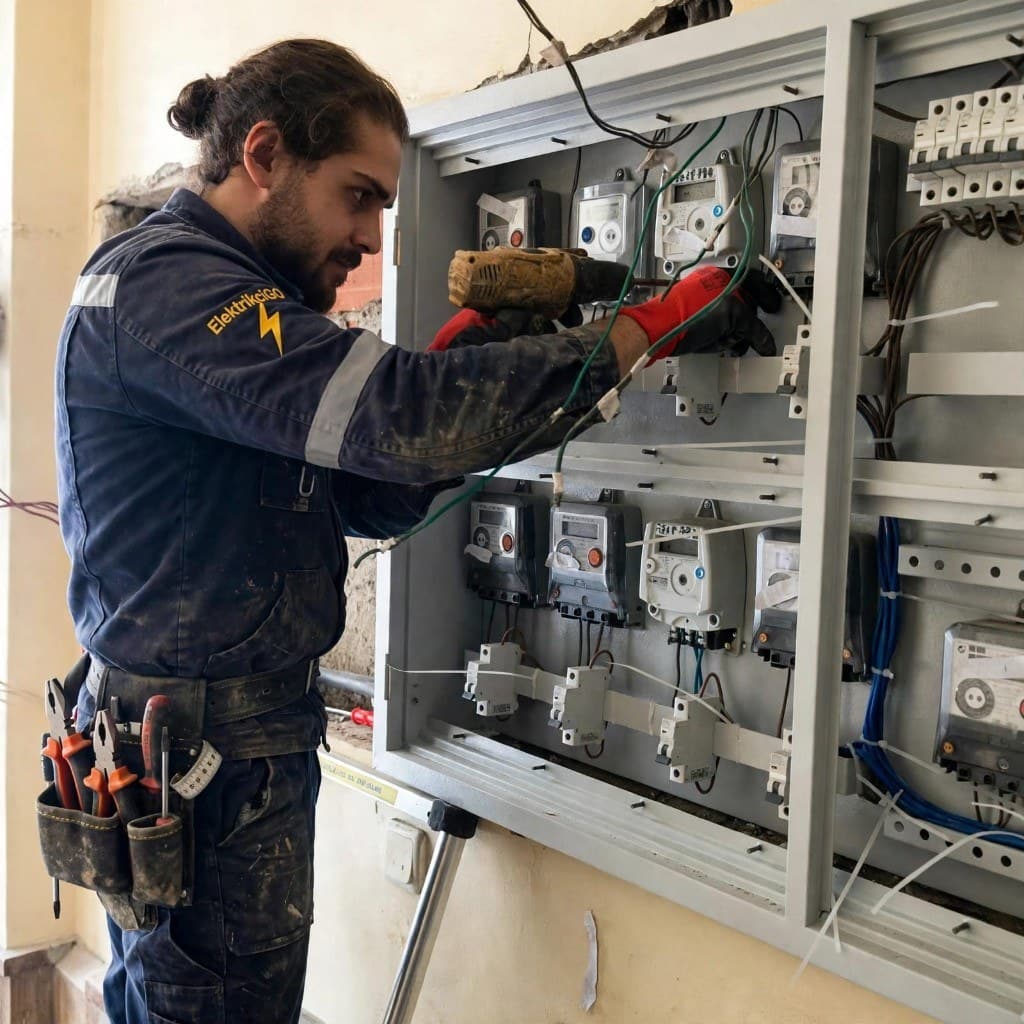
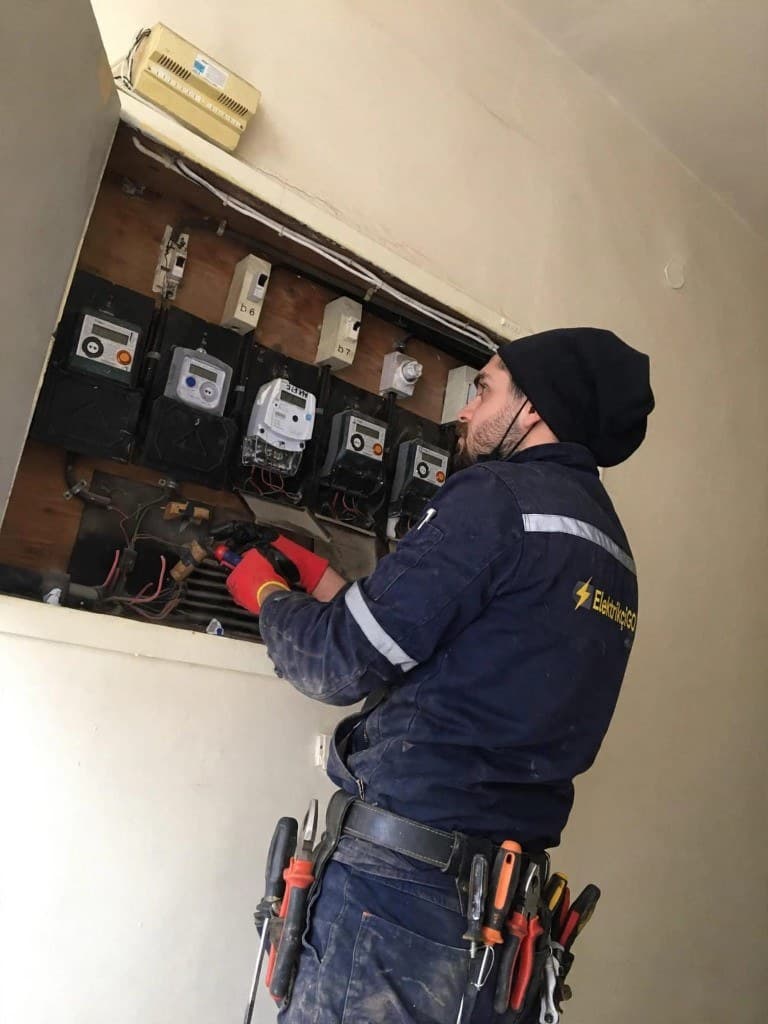
Adnan Şemiye, ElektrikçiGO electrician, fitting an Istanbul meter cabinet
A 30 mA residual current device (RCD) continuously compares outgoing phase current against returning neutral current through a high-permeability toroidal sensing core. Whenever a differential imbalance exceeding 30 milliamperes (0.03 Amps) occurs, the mechanism interprets this as current leaking into human skin or earth ground and snaps open within 30 milliseconds. In modern residences, chronic nuisance tripping is predominantly caused by cumulative parasitic micro-leakage escaping through electronic appliance EMC/RFI noise filters. Switch-mode power supplies in smart TVs, inverter refrigerators, desktop PCs, and LED drivers each bleed 1.5 to 3 mA to earth. When 10 to 12 electronic loads run simultaneously, background leakage exceeds 20mA, pushing obsolete Type AC RCDs past internal trip thresholds and plunging the home into darkness.
Other frequent leakage triggers include hot shower steam or balcony rainwater seeping into unsealed ceiling junction boxes, where moisture creates conductive bridges across terminal screws. Rather than guessing, our technicians clamp-meter every individual circuit using calibrated milliampere-range True-RMS leakage meters. The specific leaking branch is isolated and rectified; obsolete Type AC units are replaced with high-immunity Siemens 5SV or Schneider Acti9 30 mA Type A devices engineered to withstand pulsed DC harmonics and transient surges.
Audible sizzling noises or sharp melting plastic odors escaping consumer unit covers confirm that a breaker terminal screw has loosened and is actively arcing under heavy current. Loosened terminal screws drastically constrict contact surface area; contact resistance spikes, generating extreme localized temperatures ranging from 120°C to over 200°C. This intense heat melts the miniature breaker's thermoplastic housing, chars copper wire insulation, and initiates structural board fires. Panel terminations must be torqued onto DIN rails to exact 2.2 Nm specifications, with heat-damaged wire tails cut back to clean copper and re-terminated with insulated bootlace ferrules.
Furthermore, inter-breaker jumper links are replaced with single-piece insulated copper comb busbars, eliminating uneven dual-wire clamping errors and loose connections permanently.
The single most destructive domestic electrical catastrophe is a loose or broken neutral conductor (open-neutral fault). In properties fed by three-phase utility supplies, when the main neutral busbar loosens or severs, the operational neutral loses its zero-volt star point reference. Voltage divides unequally across phases based on real-time load resistance; lightly loaded circuits surge abruptly to 270–300 Volts. This extreme overvoltage destroys combi boiler control boards, inverter refrigerators, smart televisions, and broadband gateways within seconds.
To permanently protect homes from neutral disasters, neutral busbars are retorqued onto reinforced standoff insulators, and microprocessor digital over/undervoltage relays (V-Protector) commissioned at flat entrances. If voltage drops below 170V or surges above 255V, the relay cuts incoming mains in milliseconds, safeguarding household electronics from destruction.
Vintage porcelain screw-in fuse boards remaining in older housing stock cannot support contemporary electrical lifestyles. Ceramic fuse bases crack from thermal stress, and wrapping copper wires across blown fuses creates severe fire hazards. During our panel conversion, the old board is extracted, replaced with a fire-rated modular flush enclosure, populated with independent B10/B16 MCBs for each room, wired with a 30 mA Type A RCD, and labeled meticulously.
Consumer unit upgrades take approximately 1.5 to 2.5 hours in a standard apartment, concluded with digital RCD trip testing and socket earth loop impedance verification documented on a certified handover report.
In multi-phase residential and commercial distribution boards, clustering ovens, water heaters, and climate compressors onto one phase overloads that specific breaker and induces destructive phase-to-phase voltage imbalance. Loads are balanced symmetrically across L1, L2, and L3 phases using True-RMS instrumentation. Furthermore, Type 2 Surge Protective Devices (SPDs) are integrated at the main breaker to divert high-voltage lightning transients and switching surges safely to earth, protecting boiler boards and smart electronics.
A foundational engineering principle in consumer unit overhauls is selective trip curve discrimination. Fast-acting B10 MCBs protect lighting branches and B16 MCBs safeguard general socket rings, while high-inrush inductive loads such as air conditioners, washing machines, and culinary ovens receive delayed C16 or C20 motor-rated breakers. This precise coordination ensures an electrical short in one appliance isolates only that specific radial branch, preventing upstream main incoming breakers or building riser fuses from plunging the entire home into darkness.
As the certified ElektrikçiGO electrician network, we provide 24/7 consumer unit fault diagnostics, RCD testing, and distribution board modernization across Istanbul's Asian Side with certified technicians. Every breaker replacement, RCD install, and panel overhaul carries our official 1 Year Workmanship Guarantee with transparent upfront fixed pricing and zero surprise costs.
Upon completion, all panel screws are torqued, RCD trip speed validated in milliseconds, and the work area left spotless. For urgent electrical loss, our emergency electrician dispatch fleet operates 24/7.
The band below is the published 2026 list. It is an estimate. The binding figure is written on site after measurement, and the work starts after that.
The bands below are the labour ranges actually seen on recent call-outs and exclude materials. The binding figure is given in writing after on-site measurement, and no work starts without approval.
| Job | Typical price range | What is included |
|---|---|---|
| Fault diagnosis and measured survey | 750 TRY – 1,500 TRY | Diagnosis with a True-RMS clamp, megohmmeter and thermal camera; the survey fee is deducted if the repair is accepted. |
| Breaker / RCD replacement | 1,250 TRY – 3,200 TRY | A 30 mA Type A device; varies with the number of ways and whether Schneider or Siemens is specified. |
| Dedicated air conditioning circuit | 2,400 TRY – 5,500 TRY | 3x2.5 or 3x4 mm² solid copper with a C20-C25 breaker; varies with run length and trunking route. |
| Flat board renewal (modular DIN) | 6,500 TRY – 16,000 TRY | Varies with room count, circuit splitting and whether a surge arrester is included. |
| Chandelier, spot and socket installation | 650 TRY – 2,800 TRY | Priced per unit; heavy chandeliers include a steel anchor set into structural concrete. |
| Internet and Cat6 data cabling | 1,100 TRY – 4,200 TRY | Includes a Cat6 run per room, an RJ45 data outlet and verification with a cable tester. |
| Factory / power factor periodic maintenance | 4,500 TRY – 18,000 TRY | By panel and step count; includes a thermal sweep and a written measurement report. |
Prices are estimated labour ranges and exclude materials. A binding quote is issued in writing after the technician measures on site and before any work begins. Last updated: October 2026.
Service covers the neighborhoods of Istanbul's 39 districts. Not the whole of Turkey. A survey is not a binding quote.
Immediately turn off the main switch beneath the meter to isolate power. Do not touch the energized panel and contact our 24/7 emergency dispatch line for certified intervention.
Cumulative parasitic filter leakages from electronic appliances or bathroom box moisture trip the device. Clamping lines isolates the fault and installing high-immunity Type A RCDs cures it.
In a standard flat, dismantling the old ceramic board, installing the flush modular enclosure, wiring miniature breakers, and commissioning the RCD takes 1.5 to 2.5 hours.
Severing the neutral in a three-phase system shifts the star point; voltage on lightly loaded phases surges to 280–300V, frying combi boiler boards and refrigerators in seconds.
Whenever grid voltage strays beyond 170V–255V safety limits, the microprocessor relay disconnects mains in milliseconds, permanently protecting appliances from damage.
Absolutely not. Breakers protect cable thermal limits. Upsizing the rating stops breaker tripping but causes in-wall wiring to overheat and spark domestic fires.
Wire jumper loops loosen over time and generate contact arcing; single-piece insulated comb busbars ensure zero contact loosening and uniform current distribution.
Standard miniature circuit breaker and RCD terminal screws must be tightened to exact 2.0 to 2.4 Nm specifications using calibrated torque screwdrivers.
The lever is not forced. Plugs come out, that circuit stays off and the cover stays closed. The amp rating is not increased. A lever that will not hold is separated from a cable fault with a True-RMS clamp and a megohmmeter. Breaker or 30 mA residual-current replacement sits in the 2026 list at 1,250–3,200 TRY. The binding figure is written on site, then the work starts.
Our mobile service units coordinated from our Pendik operations hub reach your address within an average of no fixed minutes following call confirmation.
Yes. All component replacements, RCD installations, and distribution board overhauls carry our official 1 Year Workmanship Guarantee.
Type AC detects only sinusoidal AC currents; Type A also senses pulsating DC residual currents from modern inverter appliances, delivering comprehensive life safety.
It prevents multi-strand flexible copper wires from shearing under screw pressure, stopping terminal loosening and resistance-heating micro-arcs while ensuring solid electrical contact.
B-curve breakers trip instantaneously on general lighting and socket rings; C-curve delayed breakers absorb inductive motor inrush currents on air conditioners, refrigerators, and pumps.
Labeling strips map each breaker to its exact room and appliance load, enabling rapid circuit isolation during emergencies and streamlining safe maintenance.
In villas and commercial facilities drawing loads exceeding 50A, MCCBs with high breaking capacities (10kA–25kA) and adjustable trip units provide robust protection.
Once annually using digital loop testers, breaker trip thresholds and RCD test pushbuttons should be validated, replacing fatigued devices that stick mechanically.
You can request immediate certified service 24/7 by filling out our fast online form or calling our direct phone and WhatsApp dispatch lines.