Factory and workshop breakdown & maintenance contracts
Industrial Electrical, Automation and Maintenance Services
- On-call from Pendik · European side by appointment · no minute promise
- State-Certified Mastery Qualification · Invoiced With A 1 Year Guarantee
- No Surprise Charges · Clear Price Approval Before Work
- TSE & ISO referenced materials · Scan slots on the certificates page
We provide industrial electrical service to factories, plants and workshops across the Tuzla, Pendik, Dudullu, Ümraniye and Kartal industrial areas. In a facility with a stopped production line, the fault is found by measurement rather than guesswork: clamp current, motor nameplate rating, harmonic analysis and a thermal camera sweep. Heavy current installation, VFD drives, PLC automation panels, power factor correction and periodic maintenance contracts are handled from one place.
- 24/7 breakdown response
- Tuzla, Pendik, Dudullu
- Periodic maintenance contracts
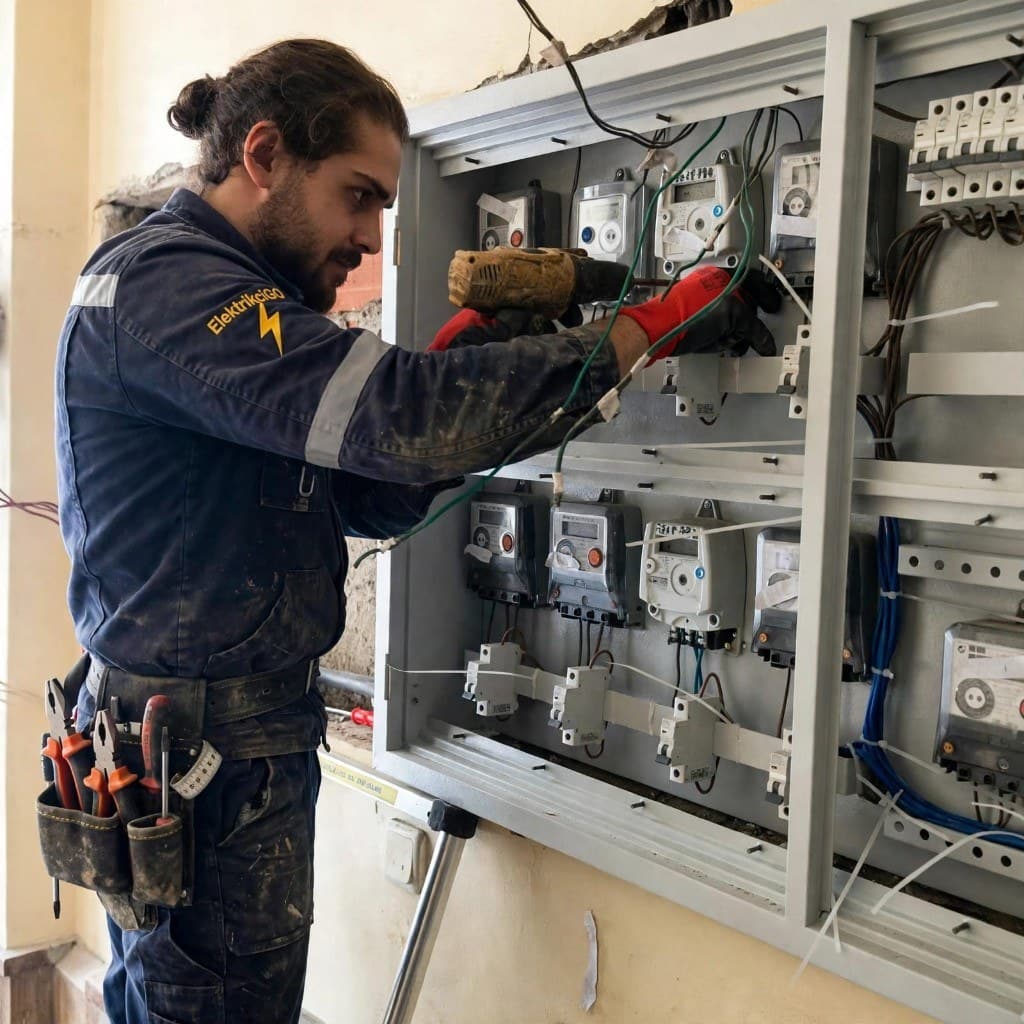
Call a certified electrician
Asian side 24/7 emergency. European side by appointment. Arrival time is confirmed on the call.
VFD / Inverter and Motor Drive Systems
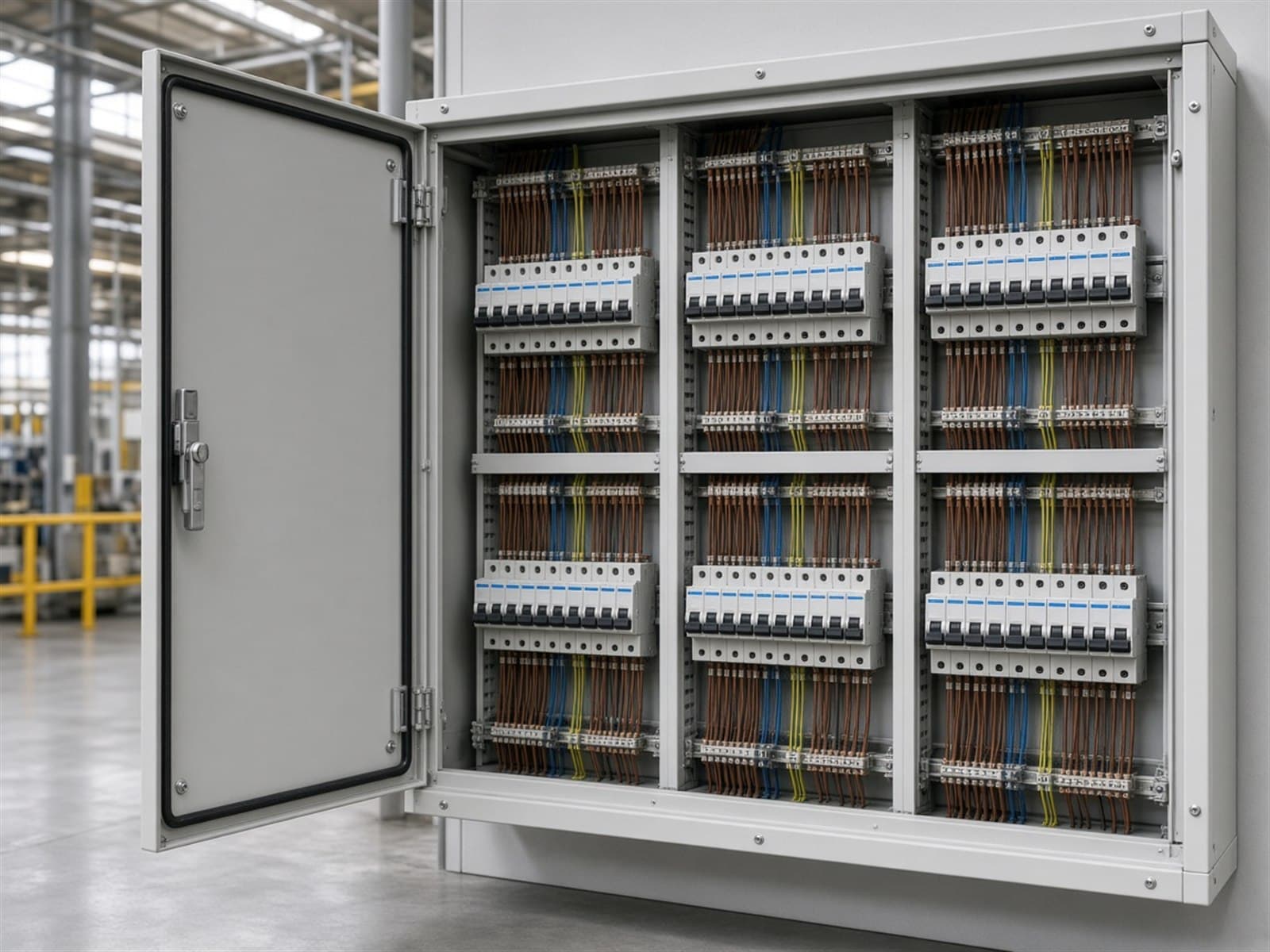
Drive Parameter Configuration and Ramp Settings
When commissioning a variable frequency drive, the motor nameplate values are entered first: rated voltage, rated current, rated frequency, speed and power factor. Entered wrongly, the drive magnetises the motor incorrectly, no-load current rises and the winding heats needlessly. Acceleration and deceleration ramps are then set to the load's inertia; on high-inertia loads such as conveyors and mixers a short ramp throws an overcurrent fault while an over-long ramp breaks the production cycle time.
The supply and output sides of a drive follow different rules. The output cable must be screened NYY or purpose-made VFD cable with the screen earthed at one point only; a screen earthed at both ends circulates current and corrupts measurement signals. A megohmmeter insulation test is never applied to the drive output, because the test voltage permanently destroys the IGBT modules in the output stage; readings are taken on the incoming side with the drive isolated.
Drive Fault Diagnosis: Overcurrent, Overvoltage and Earth Fault
The fault code on a drive display is a symptom rather than the fault itself. An overcurrent trip usually originates in a mechanical jam, a failed bearing or a wrong ramp setting; replace the drive while the motor is sound and the fault returns the same day. An overvoltage trip arises when the motor acts as a generator during deceleration and pushes energy back into the DC bus, and the remedy is adding a braking resistor or lengthening the deceleration ramp.
On an earth fault code the motor winding insulation is disconnected from the drive and measured with a 500 V megohmmeter; a reading below 1 Megaohm means damp or degraded insulation in the winding and the motor goes for rewinding. DC bus capacitors lose capacitance over the years, producing ripple and random faults; capacitor life is tracked from the drive's run-hour log. At the end of diagnosis the fault log, measured values and any parameter changes are recorded in a written service report.
Industrial Automation and PLC Control Panels
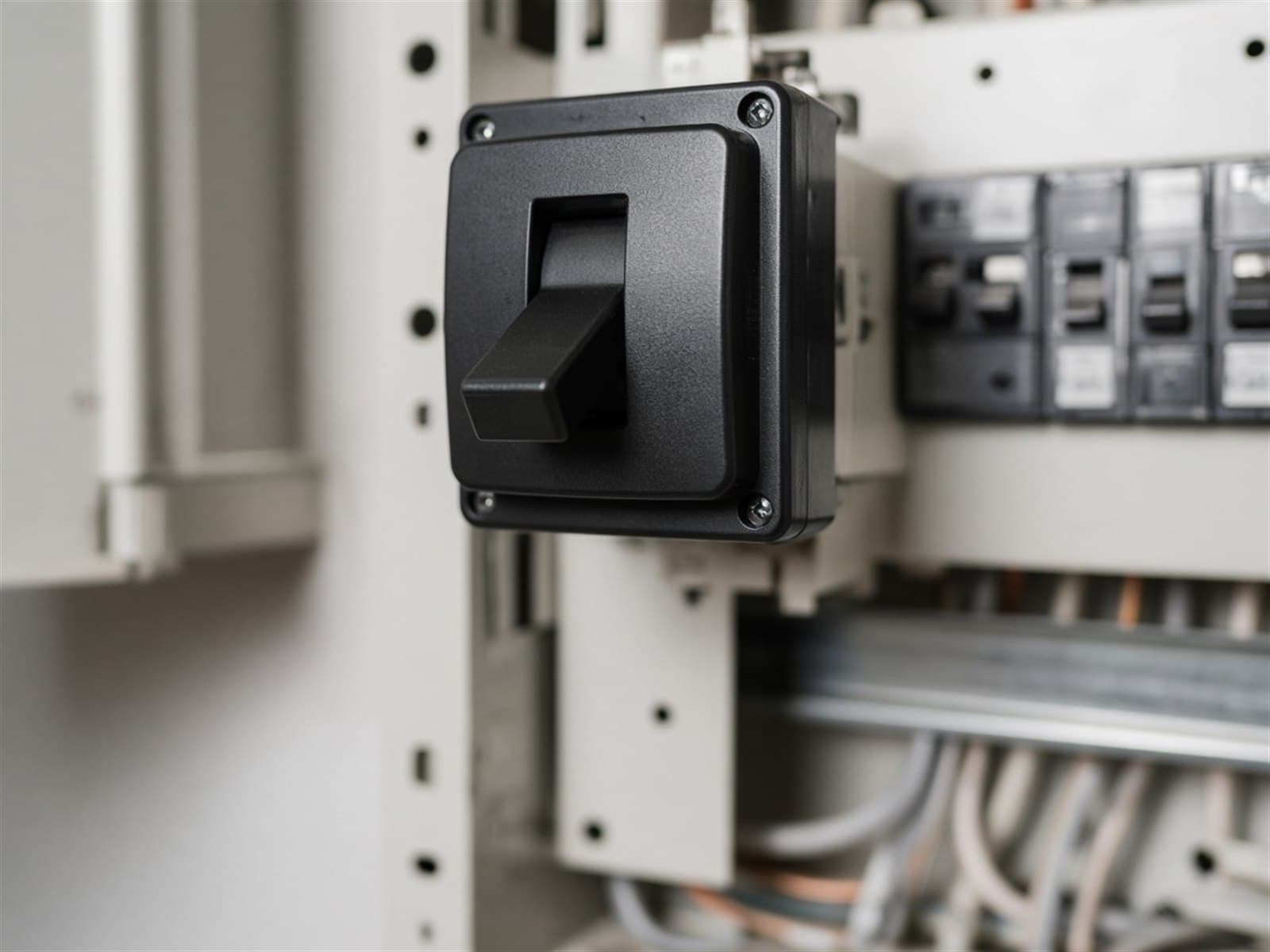
Control Panel Design, Relay Logic and Wiring Discipline
In an industrial control panel the power and control circuits are physically separated: the 380 V busbar and contactors in one compartment, the 24 V DC control, PLC and relay modules in another. Control wiring is specified at 24 V DC because 220 V control turns a single nicked conductor into a direct risk to life. Every core is numbered and the panel schematic kept inside the enclosure; in an unlabelled panel the time spent hunting a fault multiplies, and that time is lost production.
The choice between relay logic and a PLC follows the complexity of the process. A simple fixed-sequence process runs reliably on relay logic with spares available anywhere; where recipe changes, counting, timing and reporting are needed a PLC is unavoidable. The emergency stop chain is never left to PLC software under any circumstances; it is built in hardware through a safety relay, because a software lock-up would remove the emergency stop function entirely.
Contactors, Thermal Overloads and Machine Maintenance: Glass Processing, CNC, Furnaces and Lines
The contactor is the hardest-worked part of a panel. Heavy inrush scorches the contact faces, contact resistance rises and when coil voltage sags the contacts buzz and chatter; that chatter soon welds them together. On replacement the contactor rating is chosen from the motor nameplate and the thermal overload relay calibrated to the rated current. On frequently switched machines such as glass processing tables, CNC and furnaces, contactor life is limited by operation count, so replacement is planned periodically.
On furnace and heat treatment lines the heating element groups and the thermocouple circuit are assessed together: when one element group goes open circuit the setpoint is never reached and the PLC keeps calling for heat, overloading the remaining groups. In testing, the resistance of each group is read separately and thermocouple polarity checked. On a production line, synchronisation between belt motors relies on encoder signals; run the encoder cable in the same tray as power and the signal corrupts and the line stops at random.
Power Factor Correction and Reactive Power Control
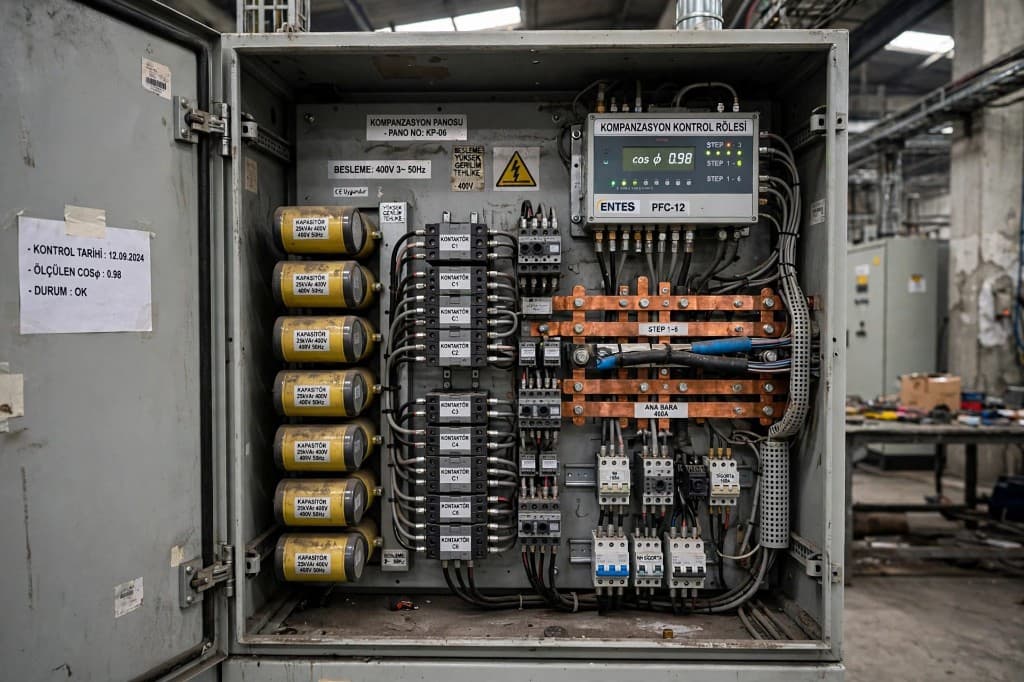
How a Reactive Power Penalty Arises and How It Is Prevented
Motors, transformers and inductive loads draw inductive reactive power from the grid. The distribution company applies a penalty when the ratio of inductive reactive energy to active energy exceeds its limit; equally, when production stops at night, capacitors left in circuit push capacitive reactive energy back and that is penalised separately. A compensation panel therefore cannot simply be installed: it has to be staged to the load profile and reviewed seasonally.
A site survey first compares the bill breakdown with in-panel measurement: a gap between the value the reactive power controller reads and the meter record usually points to a step that is not switching in. The capacitance of each capacitor group is then measured step by step; a bulged capacitor that has lost capacity may appear to be in circuit yet corrects nothing. The controller's current transformer connection and ratio are verified too, because a wrong ratio makes it select the wrong step continuously.
Capacitor Banks, Discharge-Resistor Contactors and Detuned Reactors
Capacitor switching cannot be done with an ordinary motor contactor. A capacitor coming into circuit draws a very high inrush charging current that welds a standard contactor's tips together, so a dedicated capacitor-switching contactor with discharge resistors is used. Before any work in the panel it is confirmed that no charge remains on the capacitors and the discharge period is observed, because a de-energised capacitor bank can still hold a lethal charge.
In plants dense with variable frequency drives, LED drivers and rectifiers, harmonic distortion is high and a standard capacitor resonates in that environment and burns through its life quickly. Total harmonic distortion is measured with an analyser; where the ratio is high, harmonic-rated capacitors with a series detuned reactor are recommended, and in severe cases an active filter. Because third and ninth order harmonics accumulate in the neutral, the neutral cross-section is checked and doubled relative to the phases where required.
Factory and Workshop Heavy Current Installation
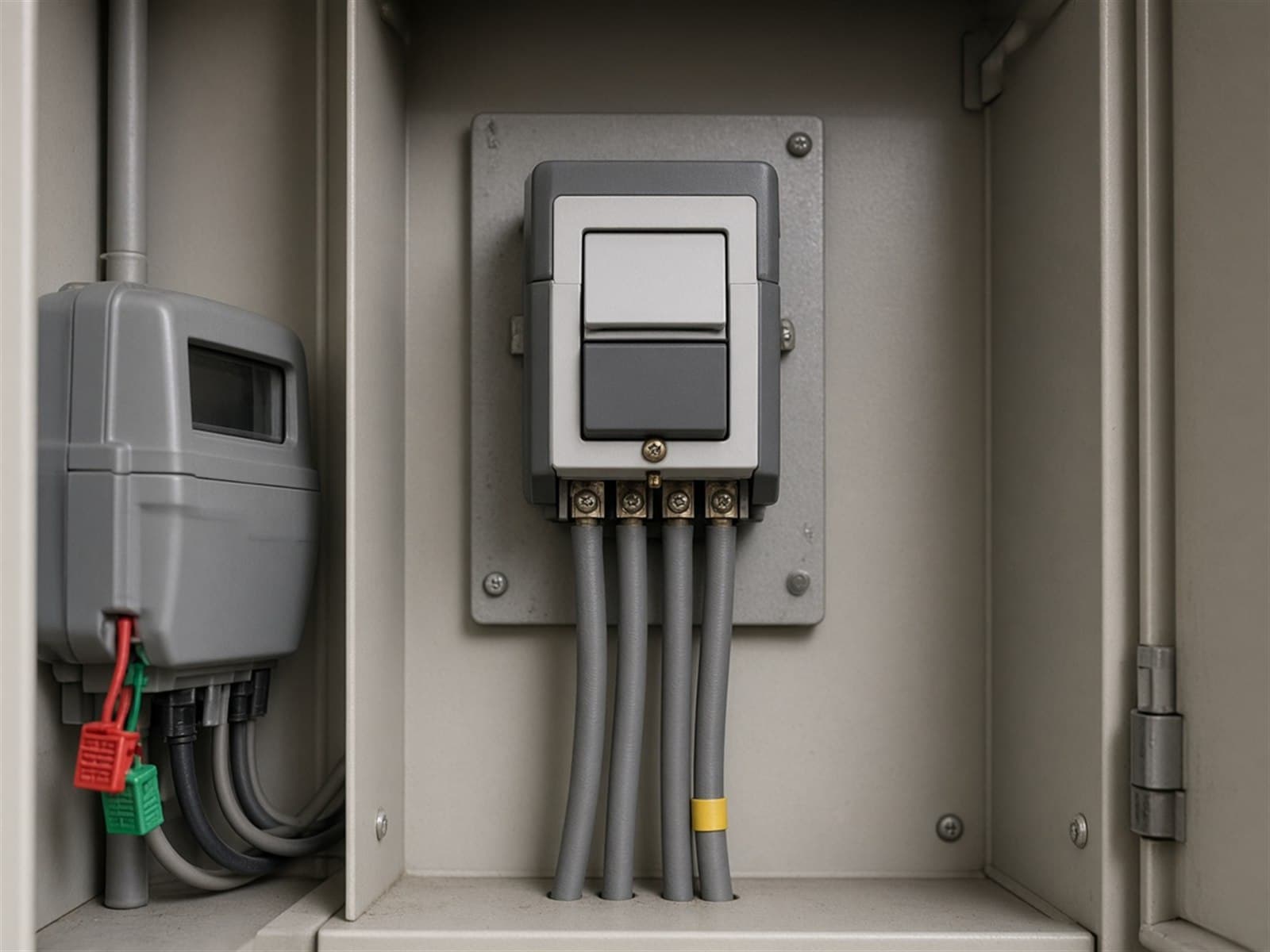
Busbar Systems, Cable Trays and Three-Phase Machine Hook-Ups
In a plant's main distribution a busbar system offers lower impedance than a cable bundle and a tidier path for growth; when a new machine is added, a tap-off box takes a feed from the bar and no work inside the panel is needed. Busbar joints are tightened with a torque wrench to the manufacturer's figure and diarised for a further check after six months, because thermal expansion and load cycling loosen the joint over time.
When laying cable tray, power and low-voltage cabling run in separate trays or in channels divided by a metal barrier within the tray; encoder, sensor and data lines running alongside power cable is the most common cause of signal corruption. Tray fill does not exceed forty percent, otherwise the cables heat each other and current carrying capacity falls. On a three-phase machine hook-up the phase sequence is always verified with a phase rotation meter, because a reversed sequence runs pumps and fans backwards and causes mechanical damage.
Thermal Imaging Periodic Maintenance and Measurement Reporting
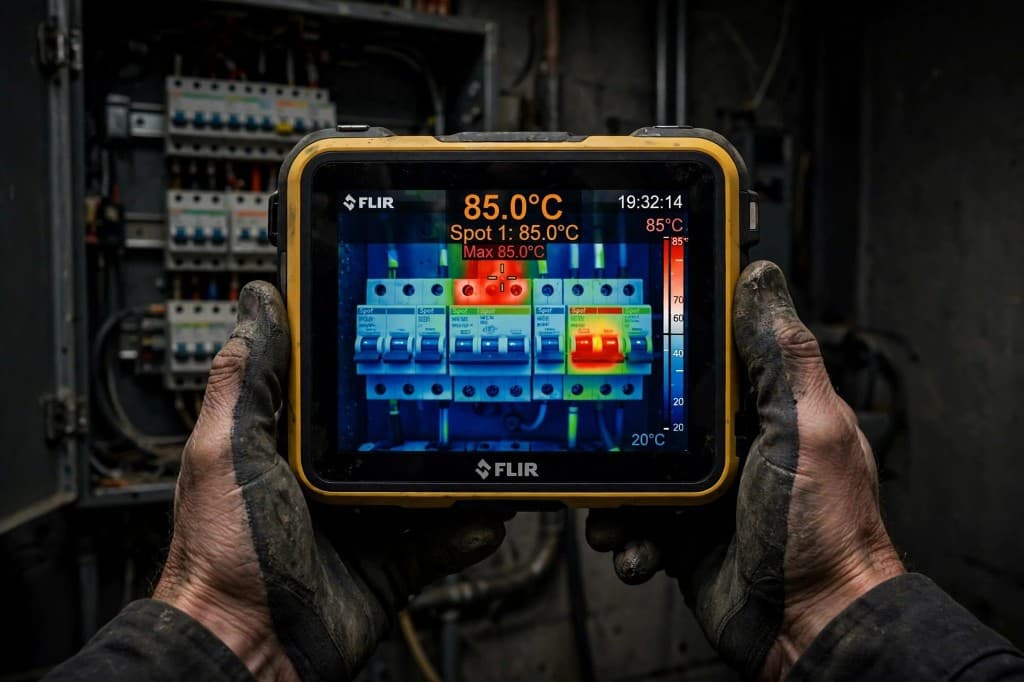
A fault in an industrial panel rarely arrives without warning: a loosening terminal heats for weeks and only announces itself when the insulation melts. Periodic thermal imaging catches that process early. The sweep is always carried out under load, because heating is invisible in a de-energised panel; every point above seventy degrees is recorded, re-torqued and compared at the next sweep. The same point heating again points to an underlying cross-section or load problem.
A periodic maintenance contract covers in-panel thermal imaging, compensation step measurement, thermal calibration of motor protection breakers, contactor tip inspection, earth and chassis continuity testing and emergency stop chain verification. Each visit ends with a written report listing measured values, components due for replacement and the next inspection date. Over time that record builds a trend and makes it possible to predict a failure before it stops the line.
From survey to measured handover: how a plant job is closed
01 · Survey
On arrival the production flow is read first: which line may stop, which may not, and in which shift a panel cover can open. True-RMS clamp, energy analyser and thermal camera readings are taken under load; the cover stays shut while live. On a reactive-penalty complaint the bill breakdown is compared with the in-panel reading in the same minute. That survey is not a price promise; it is a site note that records which measurement is still missing.
02 · Planning
A bill of materials comes out of the survey note: NYY / NYM cross-section, a Schneider or Siemens enclosure, a capacitor-switching contactor with discharge resistors, a detuned reactor where the analyser says so. The calendar is written to the plant's rhythm; the shutdown window is confirmed in writing with the technical officer. The binding figure is not written until those parts and that window hour are clear.
03 · Installation
Installation proceeds without breaking the shift pattern or the emergency-stop chain. Heavy current and 24 V DC control stay in separate compartments; cores are numbered. Compensation steps are connected to the measured load, not to a catalogue size. A megohmmeter is not applied to a drive output. New busbar joints are torqued to the manufacturer's figure.
04 · Measured handover
The job does not end; the measurement closes it. Power factor, step currents, thermal points, earth continuity and any drive-parameter delta go into the report. In-panel labels and the schematic stay in the enclosure. The next sweep date is written. Handover is a repeatable measurement record, not a photo album.
Site conditions and call practice by industrial zone
Tuzla industrial area and the organised leather zone
Two conditions on the Tuzla corridor tire a panel differently from other areas: salt in the sea air, and chemical vapour from the shipyards and leather works. Together they build an oxide layer on busbar faces and terminal screws; that layer raises contact resistance and lifts in-panel temperature without the load changing. So on Tuzla sites we shorten the thermal sweep interval from six months to three and specify an IP54 enclosure as a minimum where a panel faces the outdoors, IP65 where washdown happens. Because impulsive loads such as compressors and presses are dense here, the thermal calibration of motor protection breakers is re-read at every visit.
Dudullu organised industrial zone and Ümraniye workshops
The picture we meet most often in Dudullu and the workshops around it is a plant that has grown over years still running on a board sized for the day it was first built. Three CNC machines have been added while the main busbar stayed the same; the riser heats on the evening shift and, because the compensation steps no longer suffice, a reactive penalty appears on the bill. The work here begins with measurement: third and ninth harmonic content, neutral current and power factor are logged across a full shift with a harmonic analyser. Adding steps may not be enough; where harmonics are high, detuned steps are required, otherwise the new capacitors swell within the same year.
Kurtköy, Pendik industrial area and logistics sites around the airport
The Kurtköy and Pendik industrial corridor is the area closest to our operations centre. No arrival minute is promised. The character of the area is logistics warehousing and mid-scale manufacturing: high-roofed spaces, forklift charging stations and cold store loads. A forklift charging circuit gets its own way and its own ventilation, because hydrogen released during battery charging accumulates in an enclosed volume; a cold store, with its compressor and defrost elements, is the least stable load on a site and needs its own protection and monitoring arrangement.
Electrical work on an industrial site does not stop at heavy current. In the same facility the workplace telephone exchange, warehouse and production lighting, perimeter and facade lighting, and gas detection and fire alarm systems all fall within our scope and are assessed together in one survey. Calling a separate crew for each means opening the same suspended ceiling four times and stopping the shift four times; a maintenance window planned from one place reduces that to once.
Areas We Serve
Anatolian side
Questions from plants and workshops
Our production line has stopped. Can you attend the same day?
Yes. We provide 24/7 breakdown response to the Tuzla, Pendik, Dudullu, Ümraniye and Kartal industrial areas. On the call we ask for the machine type, panel make and the fault code on the drive display; that information lets the right spare travel with the van and avoids a second round trip. Because an outage during a running shift means stopped production, which circuit may be isolated and for how long is confirmed in writing with the plant's technical officer first.
We are paying reactive power penalties. Does the compensation panel have to be replaced?
In most cases the whole panel is not replaced. We first compare the bill breakdown with in-panel measurement, read the capacitance of each step and verify the controller's current transformer ratio. Frequently the problem is one bulged capacitor group, a welded step contactor or a wrong controller setting. Where harmonic distortion is high a standard capacitor is short-lived in that environment, and harmonic-rated capacitors with a series reactor are then recommended.
The drive keeps throwing an overcurrent fault. Should we replace the drive?
Measurement should come first; in most cases the drive is sound. An overcurrent fault usually originates in a mechanical jam, a failed bearing, a wrongly entered motor nameplate parameter or an acceleration ramp far too short for the load. The motor nameplate values are compared with the drive parameters, the actual running current read with a clamp meter and the motor winding insulation measured with a megohmmeter after disconnecting it from the drive. Replace the drive without finding the root cause and the fault returns the same day.
What does a periodic maintenance contract cover?
It covers thermal imaging of the panel under load, compensation step measurement, thermal calibration of motor protection breakers, contactor tip inspection, earth and machine chassis continuity testing, and verification of the emergency stop chain. Each visit ends with a written report listing measured values, components due for replacement and the next inspection date. Because those records build a trend over time, a failure becomes predictable before it stops the line.
What do you hand over when the job is finished?
A measurement record. Power factor, step currents, thermal points, earth continuity and any drive-parameter delta go into a written report. The panel schematic and core labels stay in the enclosure. The next sweep date is written. A photo album is not a handover.
Should we choose a PLC panel or relay logic?
Process complexity decides. A fixed-sequence process with few steps runs reliably on relay logic and its spares are available anywhere. If recipe changes, counting, timing, reporting or remote monitoring are needed, a PLC is unavoidable. Whichever is chosen, the emergency stop chain is not left to software; it is built in hardware through a safety relay, because a software lock-up would remove the emergency stop function. Control in the panel is specified at 24 V DC and every core numbered.