Reading estimate 2,500–8,000 TRY
I do not raise the fuse amps when a thermal trips
A thermal sees a motor's long overcurrent. A fuse or a magnetic breaker sees a short. A 30 mA residual-current device does not replace either. In Istanbul workshops and plants I do not hold the lever by raising the amps. When the lever holds, the conductor heats. The reading estimate is 2,500–8,000 TRY, not a quote.
On this page
Three protections are not the same lever
Thermal, magnetic, 30 mA
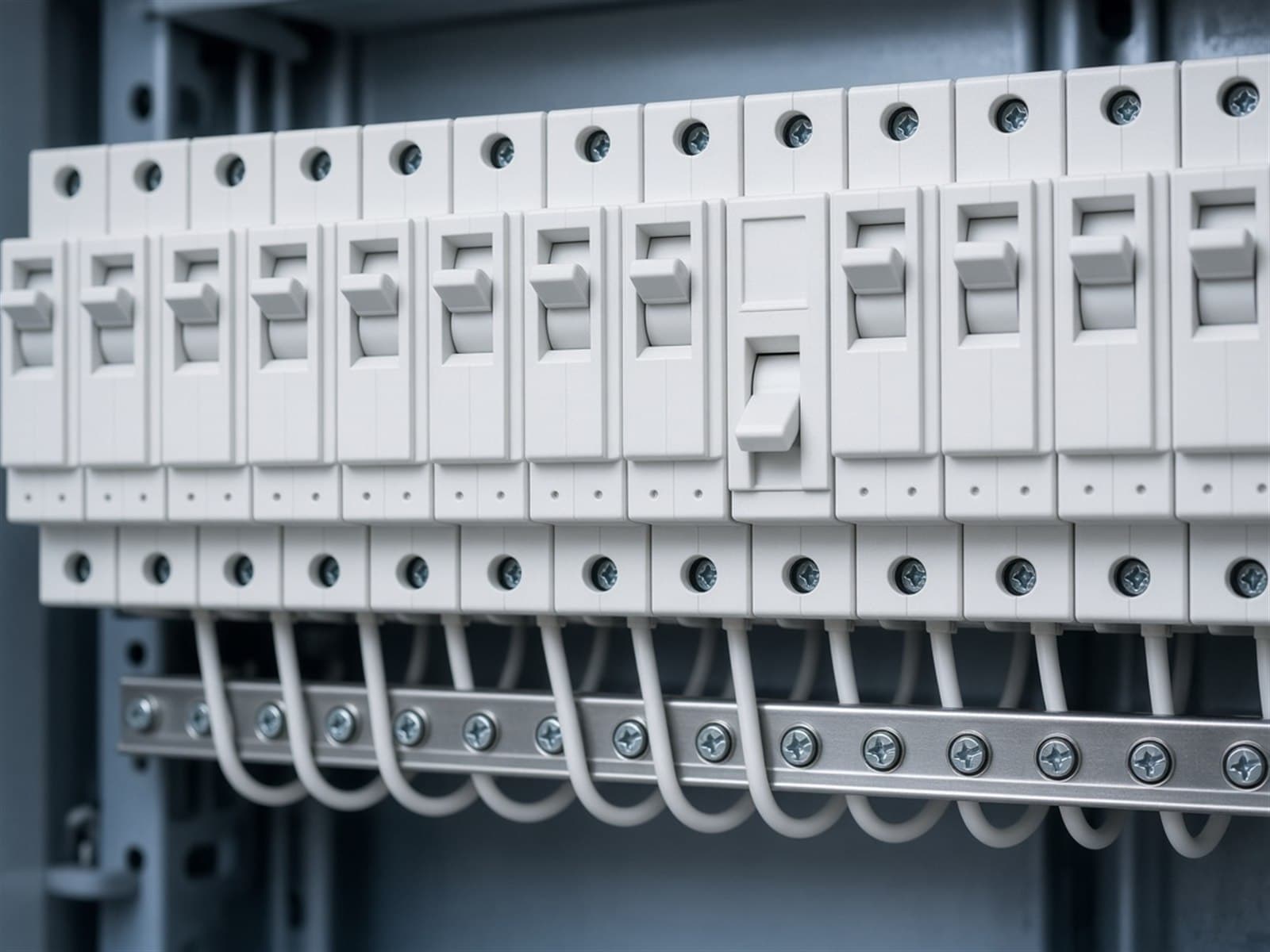
A thermal relay or the thermal side of a thermal-magnetic breaker sees a load that stayed above the nameplate current for too long. The magnetic side or a knife fuse cuts a short in milliseconds. A 30 mA residual-current device sees the difference between phase and earth. I do not write the three as one line that says the fuse blew. I read which lever dropped from the photo.
Raising the amps silences the thermal. It does not protect the conductor. A 32 A breaker on 4 mm² NYY hides the heat behind the lever. NYM is wall wiring, not a panel feed. NYA is a single core inside conduit. It is not left bent on a breaker outgoing. Cross-section, current and length are read together. I do not write a breaker larger than the cable.
The three things I want on the phone
Lever, label, smell
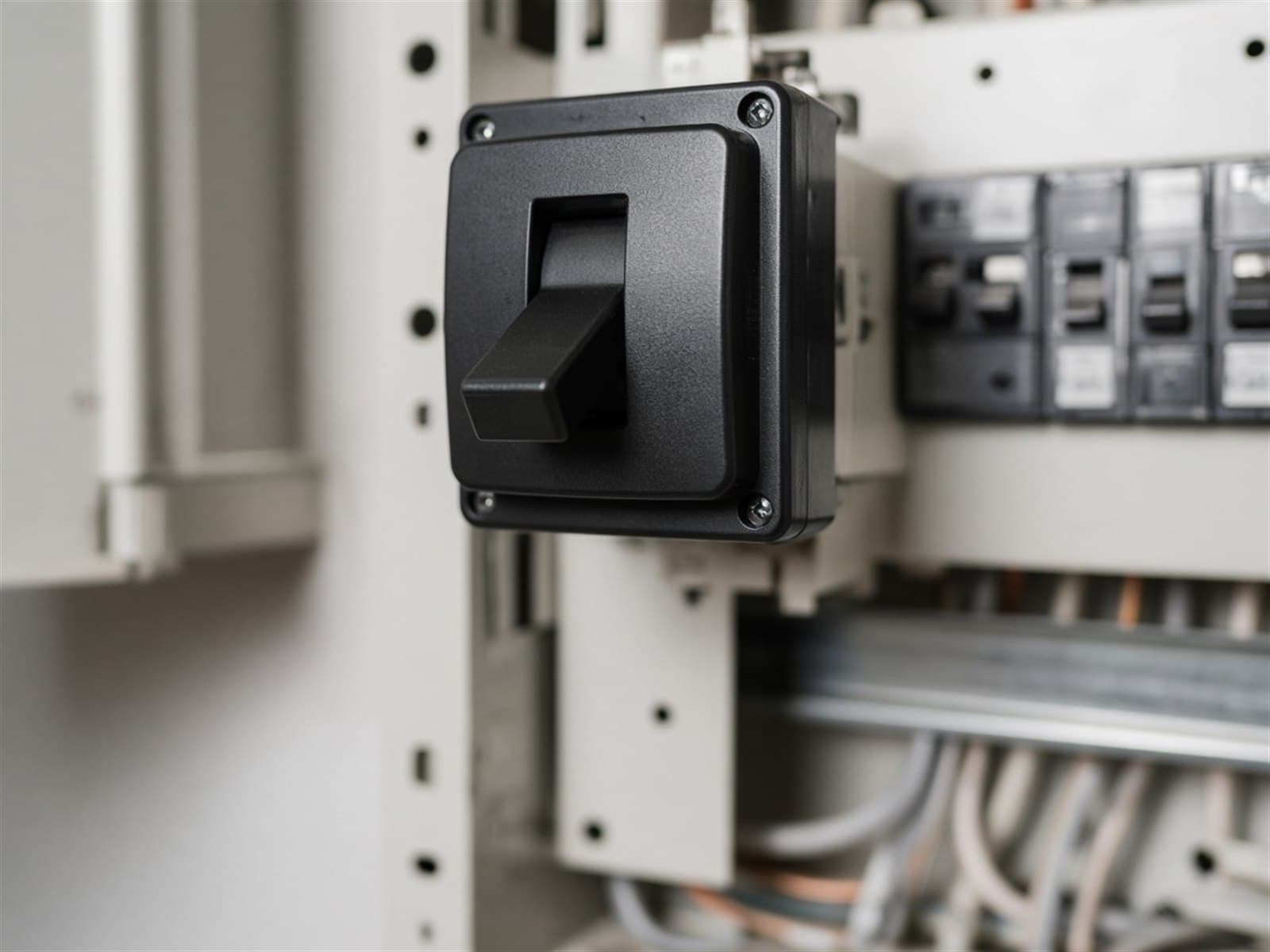
I want which lever dropped, the motor or circuit label, and whether there is a smell. If there is a smell or a hot terminal the lever is not raised again. Raising it again and again grows the arc. I do not have an Istanbul workshop closed from the phone with 'fit a bigger fuse'.
The cover opens with the supply off. A live bus is not touched. This page does not give a terminal bridge. I do not leave a thermal set to the middle. The setting is the amp on the motor plate. With no plate I do not touch the setting.
Current first, then the terminal, then the cable
Plate, clamp, loose lug
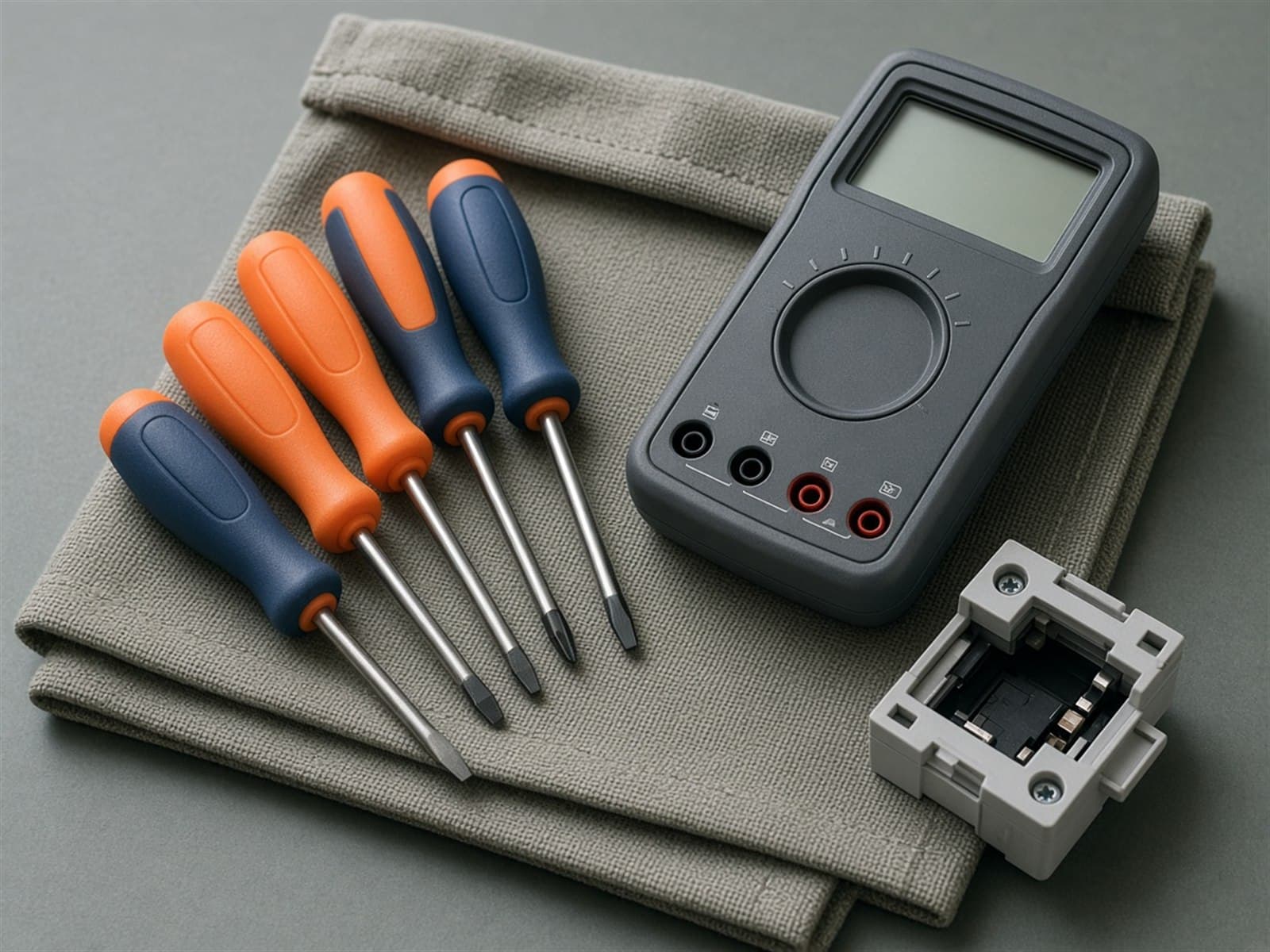
If the motor is running I read three-phase current with a clamp. A phase that stayed above the plate current for a long time proves the thermal right. One phase low and two high means a lost phase. A welded contactor or an open core does that. Raising the current does not protect that core.
A loose terminal heats. Resistance grows where it blackened, and the thermal trips. A blackened terminal is not cleaned and left. The conductor is shortened, a new ferrule is fitted, torque is applied. Torque for a Schneider, Siemens or equivalent frame is read off the label. The family name is not a substitute for torque.
If the motor is locked the breaker is innocent
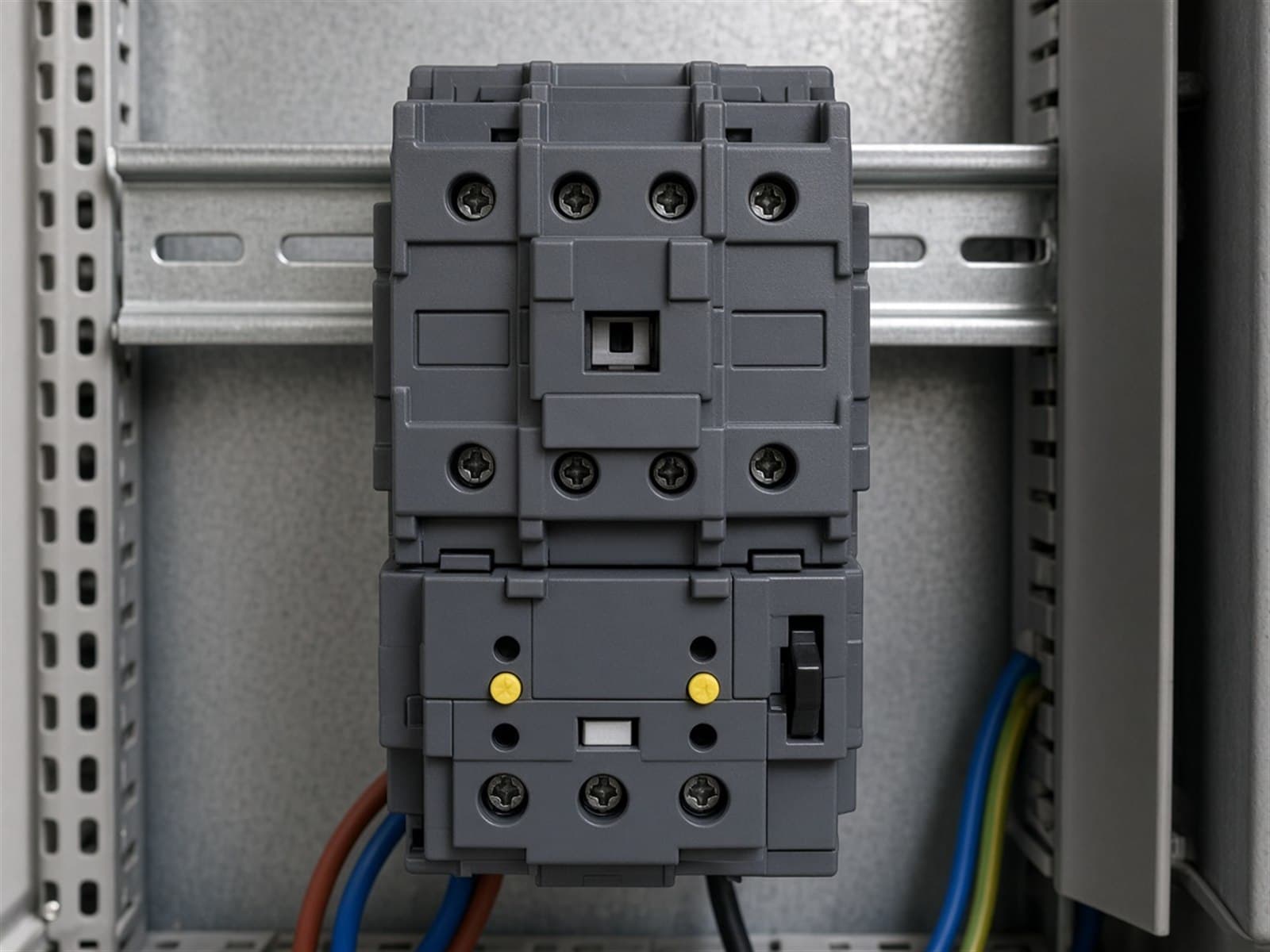
Shaft, bearing, valve
If the shaft does not turn, the thermal is mechanical before it is electrical. A tight bearing, a closed valve, a jammed box. I do not solve those by fitting 32 A in place of 20 A. If the shaft is free, winding and cable insulation are measured. Low insulation also concerns the residual-current device; that is another page. On this page insulation is there to show the thermal was not wrong.
If there is star-delta or a soft starter, starting current is read separately. A short star time or a failed soft start drops the thermal at start. Lengthening the time does not open a valve. Bridging the starter to test it puts the motor straight on the supply and blows the fuse.
The cable does not stay smaller than the breaker
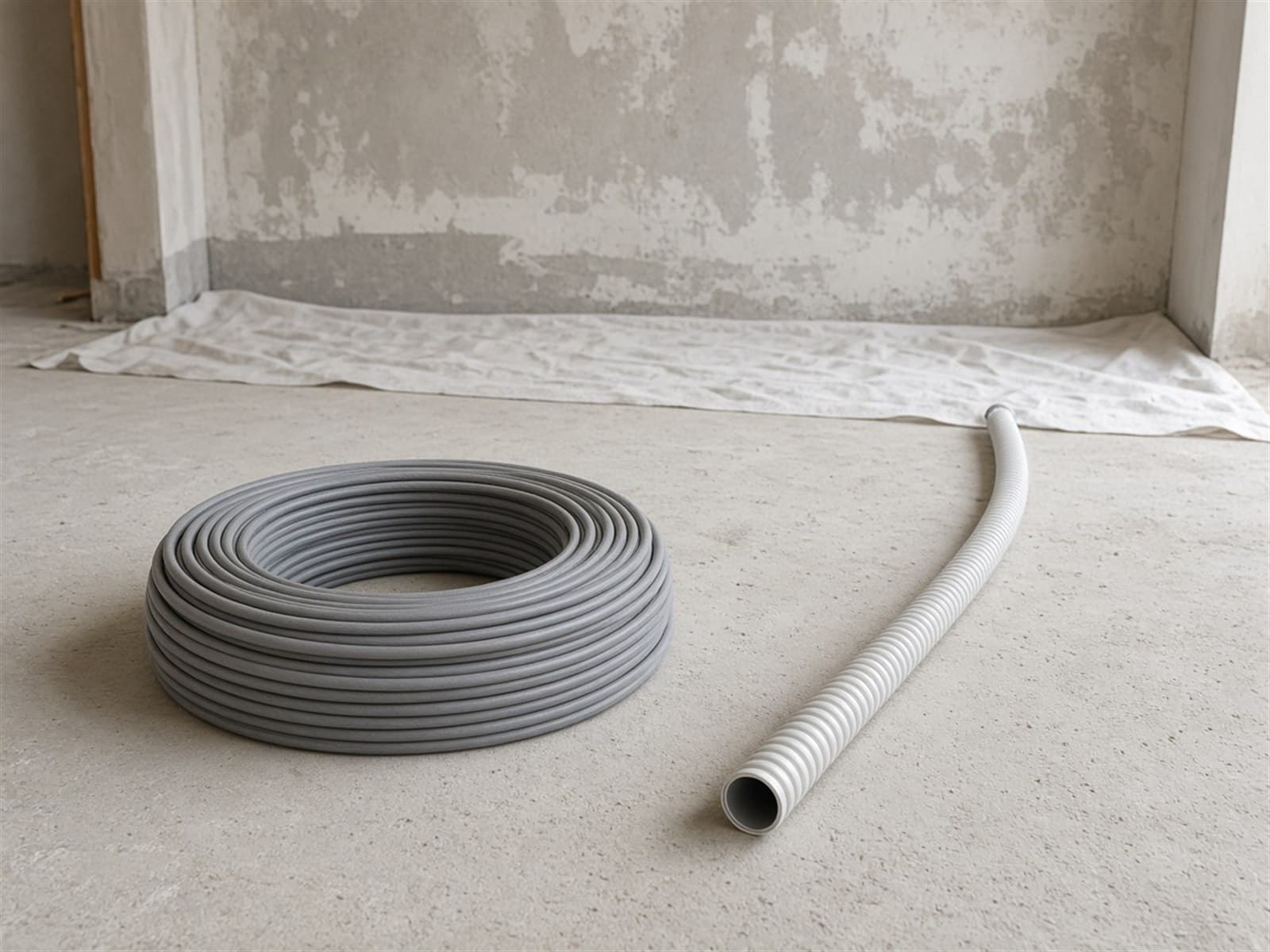
NYY, NYM, NYA
A panel feed is NYY by cross-section. A wall run is NYM. A single core in conduit is NYA. Swapping the three is half the heat. A large breaker on thin NYY holds the lever and melts the sheath. A melting smell is not closed as 'the fuse is sound'.
When the run lengthens, voltage drops, motor current rises, the thermal trips. The fix is not a bigger amp. It is the cross-section or the run. A coiled extension is not loaded. The reel heats, the clamp reads high, the lever drops. That is not an amp job either.
A hot busbar or comb is a separate job. A loose bus bolt burns the cable before the thermal relay. Torque is read off a Schneider or Siemens bus label. A blackened bar is not filed and left. The face is renewed, the bolt is changed. A compensation capacitor sits on the supply side. A capacitor on a drive output is a drive code, not a thermal. On this page compensation is read only if it is swelling incoming voltage.
The thermal behind a VFD or a soft starter is not the drive current threshold. If the drive writes OCF or OC, that code has its own page. If the thermal lever dropped, clamp and plate belong here. I do not close the two on one screw. A PLC output does not carry the thermal setting. A program stop flag does not replace a hot terminal. The flag stops the line. It does not apply torque.
On an İkitelli or Tuzla plot a common panel often hides the fault of several motors behind one thermal. A shared thermal does not say which shaft is locked. Each motor has its own thermal, its own cable, its own plate. Raising a shared lever leaves four conductors at once. That is why raising amps is not written as work in this book.
The same lever on three lines, three jobs
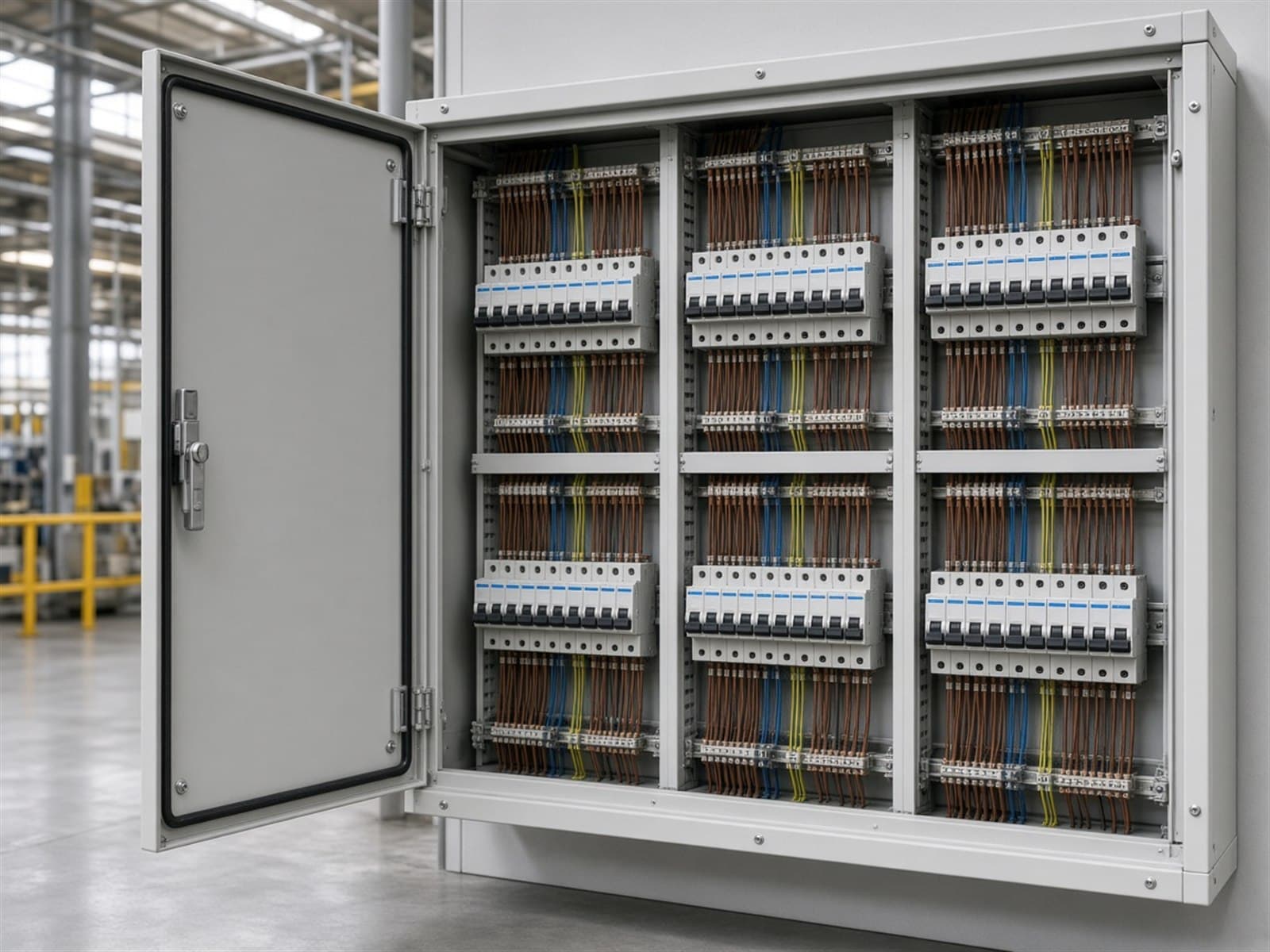
Compressor, saw, conveyor
On a compressor a closed discharge valve drops the thermal at start. On a saw jammed stock locks the shaft. On a conveyor a box does the same. The lever is the same in all three. Fitting 40 A in place of 25 A leaves the conductor in all three. Valve, stock and box are freed first.
I do not split the page by neighbourhood. On a Pendik Sanayi, Tuzla OSB or İkitelli panel the measurement walks in the same order. A thermal is not written as a door-phone or a socket job. This is a plant or a workplace panel.
No second lift before the check
Lever, clamp, torque, cable
The list is short. Which lever dropped. Is there a smell. Was the motor plate read. Is clamp current under the plate. Is terminal torque there. Is the cable not smaller than the breaker. Were the amps not raised. If one box is empty the lever stays down. The list does not change by neighbourhood.
If a knife-fuse body is hot, blade and holder are looked at separately. A loose blade arcs, the body blackens, the fuse blows on the next start. I do not fit a bigger blade into a burnt holder. The holder changes, the cable is read. A glass fuse is not the job of this industrial panel. Glass belongs on control or lighting. I do not mix them.
Turning residual current into 300 mA does not solve a thermal trip. 300 mA loosens human protection. It does not see motor current. On this page 30 mA is not raised, and thermal amps are not raised. Both raisings leave the conductor and the person in the same sentence. I do not write that sentence.
At handover which breaker stayed, which cable stayed and how many amps the clamp read sit on the same line. If one is empty the job does not close. If the lever in the photo is not a thermal I do not paste this page's sentences onto that job. 30 mA is separate. Drive OCF is separate. I do not close the four in one sentence that says the fuse blew.
What lands in the notebook at the close
Lever, amps, cable, approval
I write which lever dropped, the clamp current, the plate amps and the cross-section. If the breaker or the cable has to change I take a separate approval. Raising amps is not written as work in this book. 2,500–8,000 TRY is the reading band. Material sits outside it.
On a compressor the lever is usually a closed valve. On a saw it is jammed stock. On a conveyor it is a box. There are no letters in all three. There is a screw. If 30 mA dropped these sentences stop. That belongs to the leakage page. In Istanbul I do not ask the operator for a bigger fuse.
If a blackened terminal, thin NYY and a motor without a plate sit on the same day, the job splits into three approvals. Terminal torque is one line, the cable is one line, the plate is one line. I do not close the three on one invoice that says the breaker changed. Raising amps is not written on any of those three lines. It is not written on a night call either. Queue and traffic are said when you call. There is no promise of a minute.
I do not lock a price on the phone. The range I give is an estimate drawn from similar jobs. The binding figure is written after I have seen and measured the fault, before I start. Extra work does not begin without your approval. Payment is on completion, invoiced, in Turkish lira. Nights and public holidays are a separate rate, and I say so before I leave. We work as an approved technician network. I give you the arrival window for your district on the call, and a live location link is shared once the technician sets off.
Questions I hear on this fault
Questions I hear on this fault
If we raise the amps, will the lever hold?
It looks held. The conductor heats. I do not raise the amps. Cable and current are read together.
Are a thermal and a fuse the same?
No. The thermal sees long current. The fuse sees a short. 30 mA replaces neither.
If 30 mA trips, is that a thermal?
No. 30 mA is residual current. That is the leakage page. On this page the lever is thermal or fuse.
Should we lift the lever at once?
No if there is a smell or heat. Lifting it again and again grows the arc.
Is the setting left in the middle?
No. The setting is the amp on the motor plate. With no plate I do not touch it.
Does a loose terminal trip a thermal?
Yes. A blackened lug is not cleaned and left. Ferrule and torque are renewed.
If the shaft is locked, does the breaker change?
No. The mechanics are freed first. I do not fit a bigger fuse on a locked shaft.
Can 32 A sit on NYY?
Not if the cross-section cannot carry it. 32 A on 4 mm² hides the heat.
Is NYM a panel feed?
No. NYM is a wall run. A panel feed is NYY by cross-section.
If the compressor valve is closed?
The thermal drops at start. Raising amps without opening the valve delays the lever.
If star-delta is short?
Starting current lasts, the thermal drops. The starter is not bridged.
Is this page a diagram?
No. I do not write a bridge or a bigger amp. I read the terminal off the label.
A separate district page?
No. The measurement is the same on both sides of Istanbul. A neighbourhood name does not invent a new thermal.
Does an intercom technician come?
No. A thermal is panel work. It is not written onto a door-phone circuit.
Night rate?
The measurement does not change. The rate does. Amps are not raised at night either.
Does one person come?
Yes. The person who answers measures. No broker.
Do you write a note?
If you want, I write the lever, the clamp current and the cable shortly. A site note.
Open-cover photo?
No. Lever and label, cover closed, supply off.
Price band?
2,500–8,000 TRY is the reading estimate. Breaker and cable are approved separately.
If the cable changes, do the amps stay?
If the cross-section grows the breaker is read against the cable, looking down, not up.
Are Schneider and Siemens the same?
The family name is not a substitute for torque and setting. The label is read.
Do we test with a bridge?
No. A bridge cancels protection. The test is clamp and plate.
Does one thermal protect several motors?
No. It does not say which shaft is locked. Each motor has its own thermal, cable and plate. Raising a shared lever leaves four conductors.
Does 300 mA silence a thermal?
No. 300 mA loosens human protection. It does not see motor current. On this page neither 30 mA nor thermal amps are raised.
Other fault notes
The service page for this fault
- Complete Electrical Rewiring & Apartment Installation
- Emergency Electrical Fault Repair & Breaker Diagnostics
- Consumer Unit Installation & Distribution Board Maintenance
- Earthing System Installation, Ground Rods & Lightning Protection
- Air Conditioning Electrical Wiring & Dedicated Circuit Installation
- Security Camera System Installation & IP PoE Surveillance Setup
- Intercom & Doorbell Systems Repair & Video Intercom Installation
- Internet Cable Pulling, Cat6 Data Cabling & RJ45 Termination
- Chandelier Mounting & Lighting Repair, LED Downlight Installation
- Electric Vehicle (EV) Wallbox Charging Station Installation
- Smart Home Automation Installation & KNX / Zigbee Setup
- Consumer Unit & Breaker Fault Repair, RCD & Panel Upgrades
- A short circuit at home? I read it from the cable, not from the breaker