Reading estimate 3,000–10,000 TRY
I do not file a welded contactor as if it were a hum
A weld is the power poles fusing. The coil goes dark, A1-A2 voltage drops, the STOP lamp lights, and the shaft still turns. A hum is a different job: the magnet face does not seat, the shading ring breaks, the coil voltage drops on A1-A2. I do not solve the two on the same screw. A thermal overload or a motor-protection breaker does not undo a weld. Siemens 3RT, Schneider LC1D and ABB AF frames are not named before the label is read. NYY is the panel feed. A hot lug without a ferrule and torque goes to a weld. In Istanbul workshops and plants I do not open the cover live. After the stop command the shaft is not touched: the line is still treated as live. The reading estimate is 3,000–10,000 TRY. The body and the pole are approved separately. This page is not a quote.

On this page
A weld is not a hum
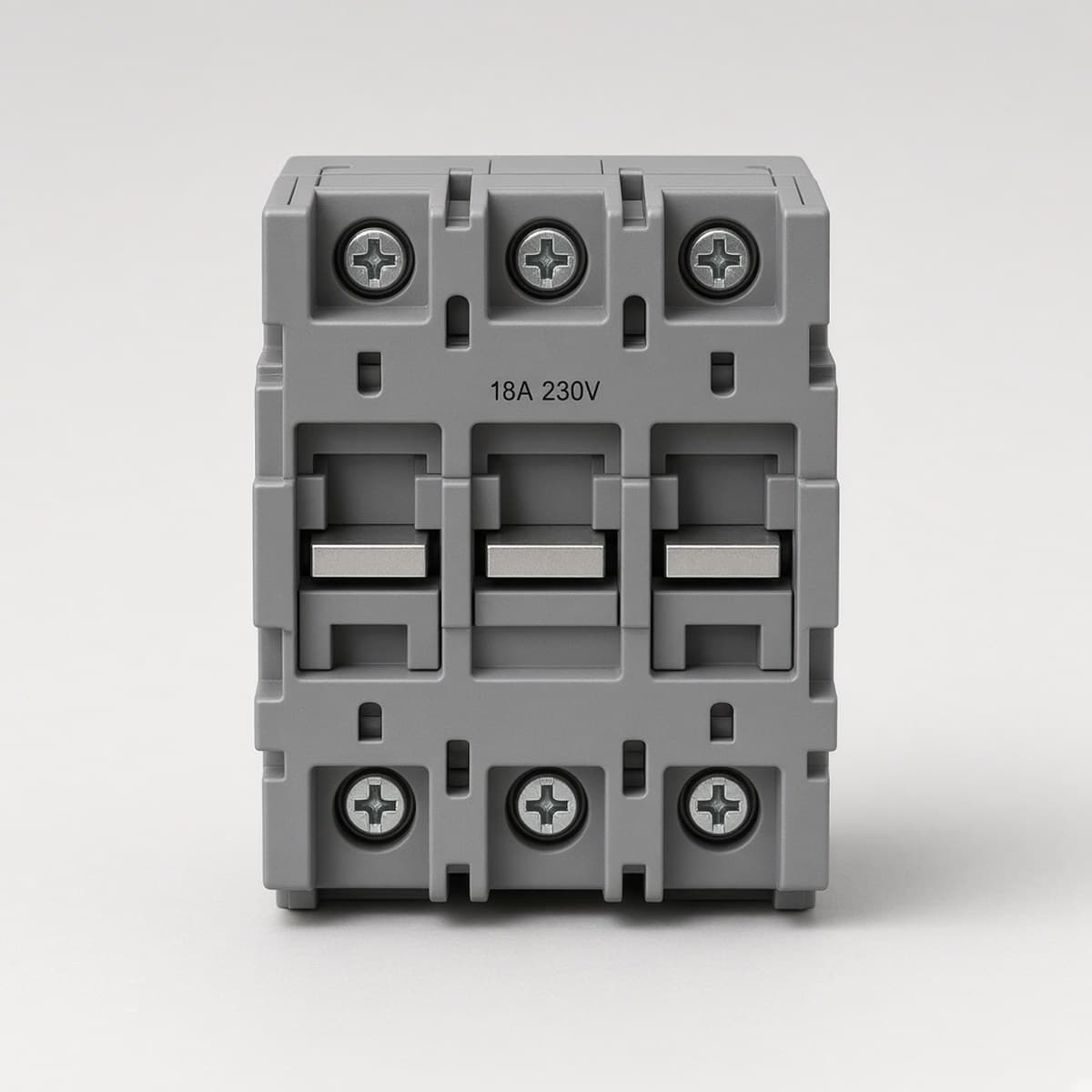
The power pole and the magnet face
On the hum page I described how the magnet seats and the voltage on A1-A2. I do not repeat that sentence here like an advert. Here there is a power pole. L1-T1, L2-T2, L3-T3 stay closed because the silver alloy melted and sat together. The coil does not pull. The spring cannot take it back. The operator presses STOP, the HMI stops, the PLC output goes dark, and the shaft keeps turning. That sentence is not the hum's sentence. On a hum the motor often fails to start cleanly or it vibrates. On a weld the motor does not stop where it should. I do not write the two as one line that says the contactor made a noise.
Filing the face is forbidden on a hum and on a weld. A file ruins the contact gap, grows the arc on the next start, and repeats the weld a week later. Dirt is wiped. If a weld nugget is seen, the pole or the body changes. A file, sandpaper and a junior hacksaw are not tools on this job. On Siemens 3RT frames whose pole card comes off, the card changes and the body can stay. On a Schneider LC1D the body is often one piece. I do not say 'three poles change' before the frame on the label is read. The same rule on an ABB AF: the writing first, the price after.
A thermal overload does not open a weld
A thermal trip has its own page. There the clamp, the plate and the cable are read, and the amps are not raised. Here, even if the thermal lever has dropped, a welded pole stays conductive. The thermal sits in series on the motor path. The weld sits on the contactor's power face. I do not treat a dropped lever as a stopped shaft. If it stopped, that is the thermal's job and this page goes quiet. If it is turning, this page speaks. A 30 mA residual-current device does not see a weld either. I do not bury the three protections in one invoice that says the fuse blew and the contactor made a noise.
The shaft after the stop command
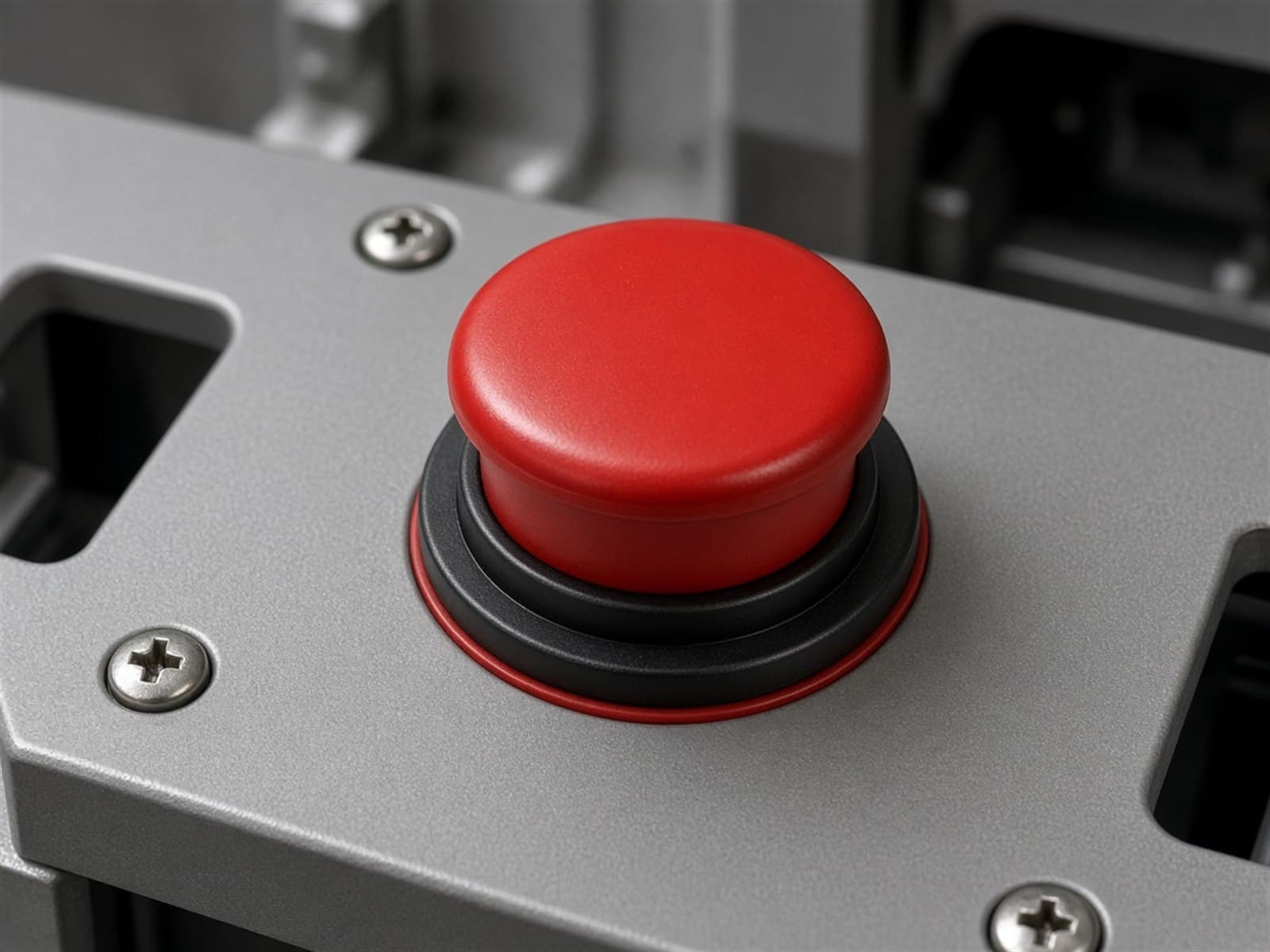
The coil went dark, the pole stayed conductive
The order of the measurement is short. The main breaker or the load-break switch is opened, locked, and the absence of voltage is confirmed. Then the coil voltage is read on A1-A2: zero or a leftover volt. Then continuity on L1-T1, L2-T2, L3-T3 is read with the coil dark. If there is continuity the pole is closed. A closed pole is where STOP is lying. Someone who skips this order opens the cover and puts a screwdriver on the face. I do not. I do not touch a power terminal with a wet hand. I do not put a hand on the shaft while the emergency stop is in: even with the stop in, a weld keeps the shaft live.
A reversing starter has a mechanical interlock. If the forward contactor has welded, the reverse command tries to pull the second body, and the two bodies sit in a short on the same busbar. That short drops a knife fuse or a magnetic breaker and hides the weld. I do not file the interlock. I do not bridge the interlock. First I write which body's pole is closed. I do not sell two bodies in one sentence that says both change the same day. The label, the frame, the coil voltage — 24 volt and 230 volt do not sit on the same invoice.
Why a weld sits
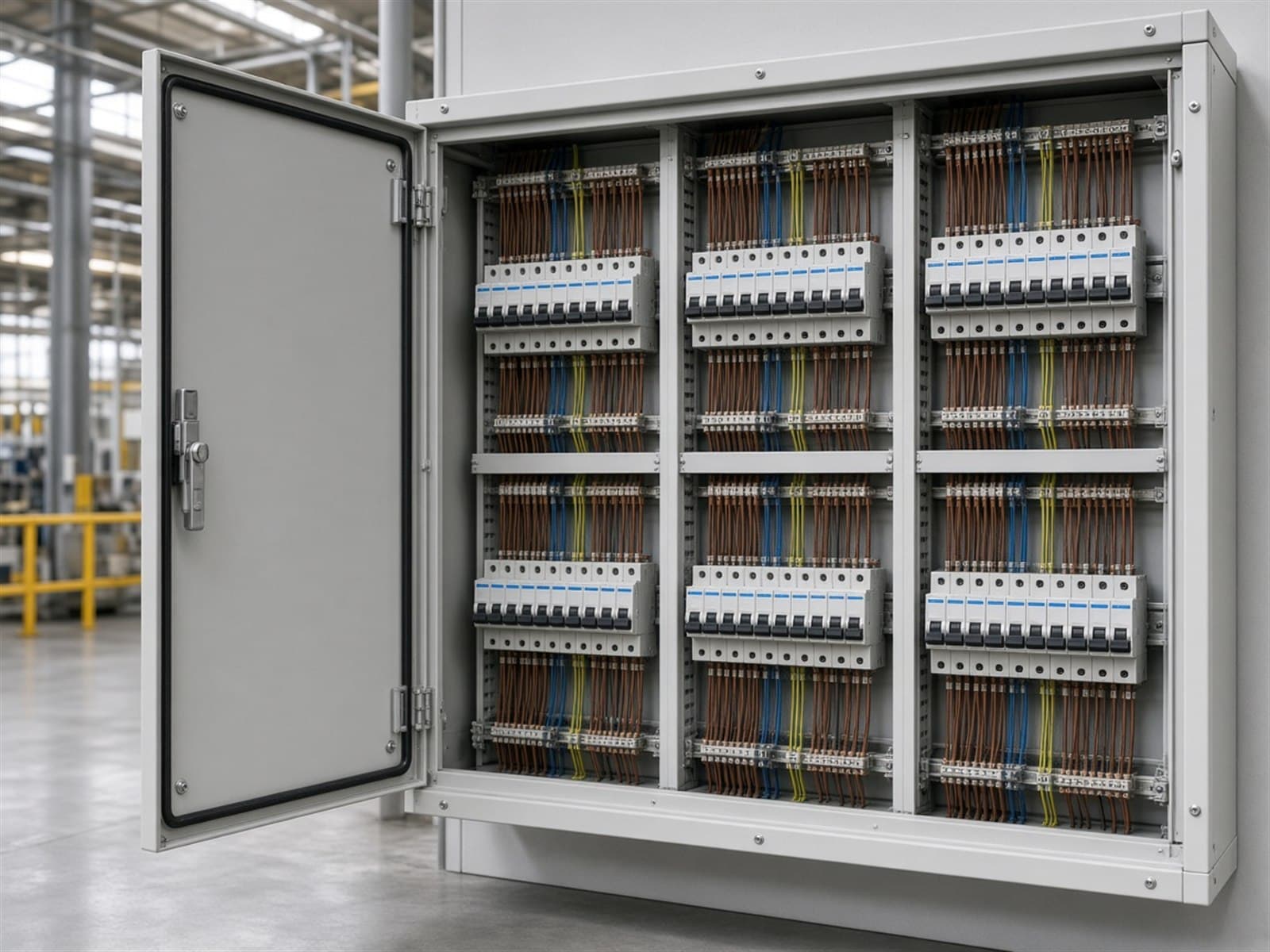
Jog, a small frame, a missing arc chute
Frequent jog and inching put the pole through an arc once a second. The silver-cadmium or silver-tin-oxide face melts in that arc and sits together as it cools. An undersized frame finishes the same job in a day: an 18 kW motor plate on a 12 A contactor frame. I do not name a body before the plate is read. A broken or removed arc chute leaves the arc on the pole. I do not repair the chute with wire and insulating tape. If the chute is gone the body changes.
If the coil voltage is low the body chatters. Chatter belongs to the hum page. Here I only separate this: a chattering magnet does not press the pole fully, the arc lasts, and a lasting arc goes to a weld. Changing the body before the coil voltage is corrected on A1-A2 welds the new body in a week on the same low voltage. Someone who takes 230 to a 24 volt coil burns the body; they do not weld it. That is a separate note. I do not read coil voltage from colour. The label is read.
A locked shaft and a closed compressor valve lengthen starting current. A long start holds the pole inside the arc. The body does not change before the valve is opened and the shaft is free. If it changes, the new body welds on the same valve. A star-delta time that is too short is the same family: the time left in star is not enough, current lasts in delta, the pole heats. The starter is not bridged. A bridge cancels the thermal and the contactor in the same sentence.
The notebook of the measurement
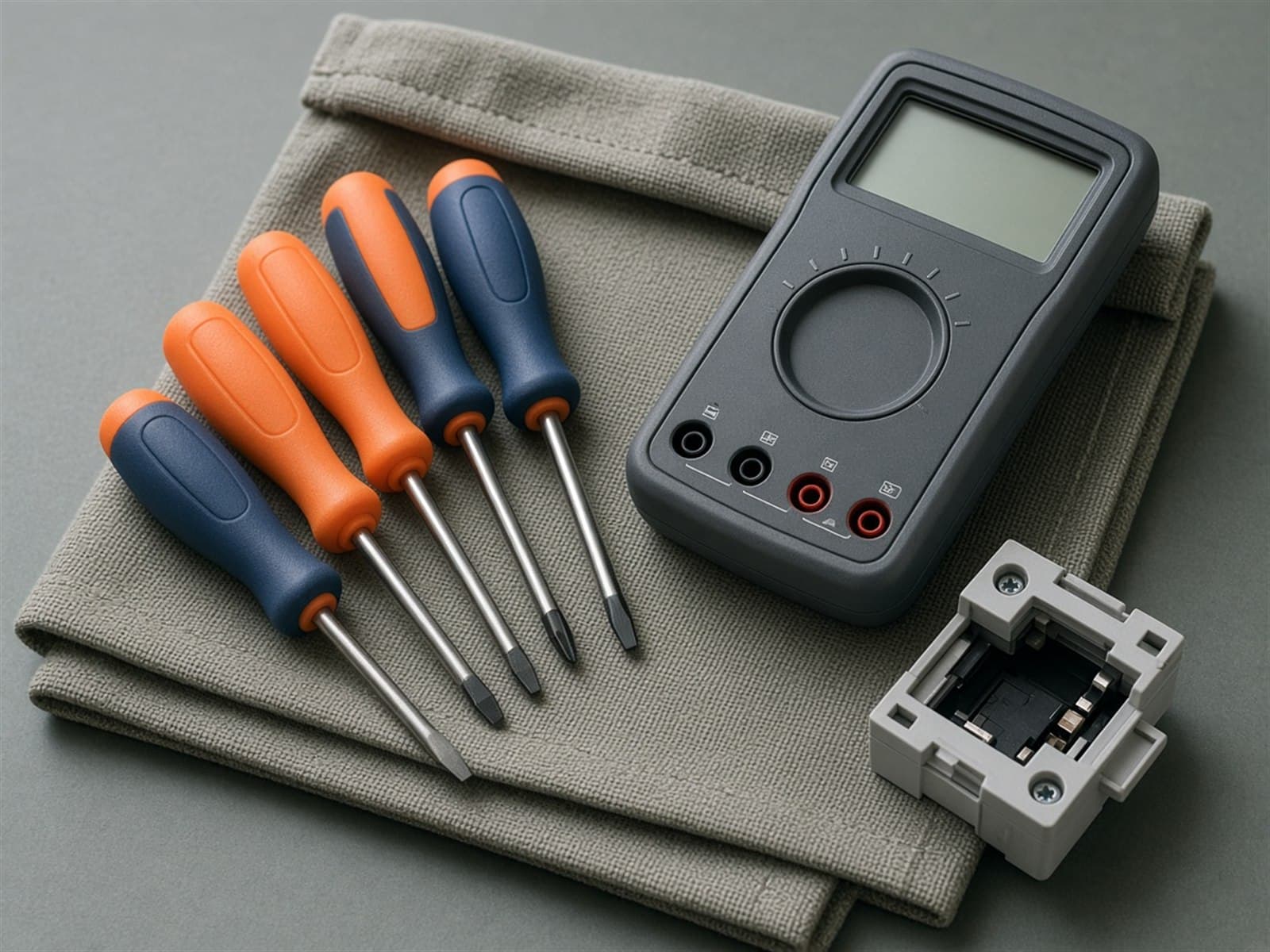
Lock, read, see the face, do not file
Four lines land in the notebook. Which STOP was pressed. How many volts on A1-A2 with the coil dark. Whether L1-T1 has continuity. Whether there is a nugget on the face. If one line is empty the body does not come off the shelf. The photo is with the cover closed, supply off, the label readable. An open busbar is not shot with a flash. The list is the same in Pendik and in Tuzla. A neighbourhood name does not invent a new weld. The order does not change on either side of Istanbul. What changes is the time on the road.
If there is no ferrule, if the terminal has blackened, if there is no torque, the lug is renewed first. A loose lug heats, the heat walks to the pole, the pole walks toward a weld. Tightening the lug and leaving the body is sometimes enough. Sometimes it is not, because the face has already sat. Continuity says whether it was enough, not the eye. The eye sees colour. Colour alone is not a part code. Schneider and Siemens torque is read from the N·m on the label, not from a habit of the hand.
The frame family is read off the label
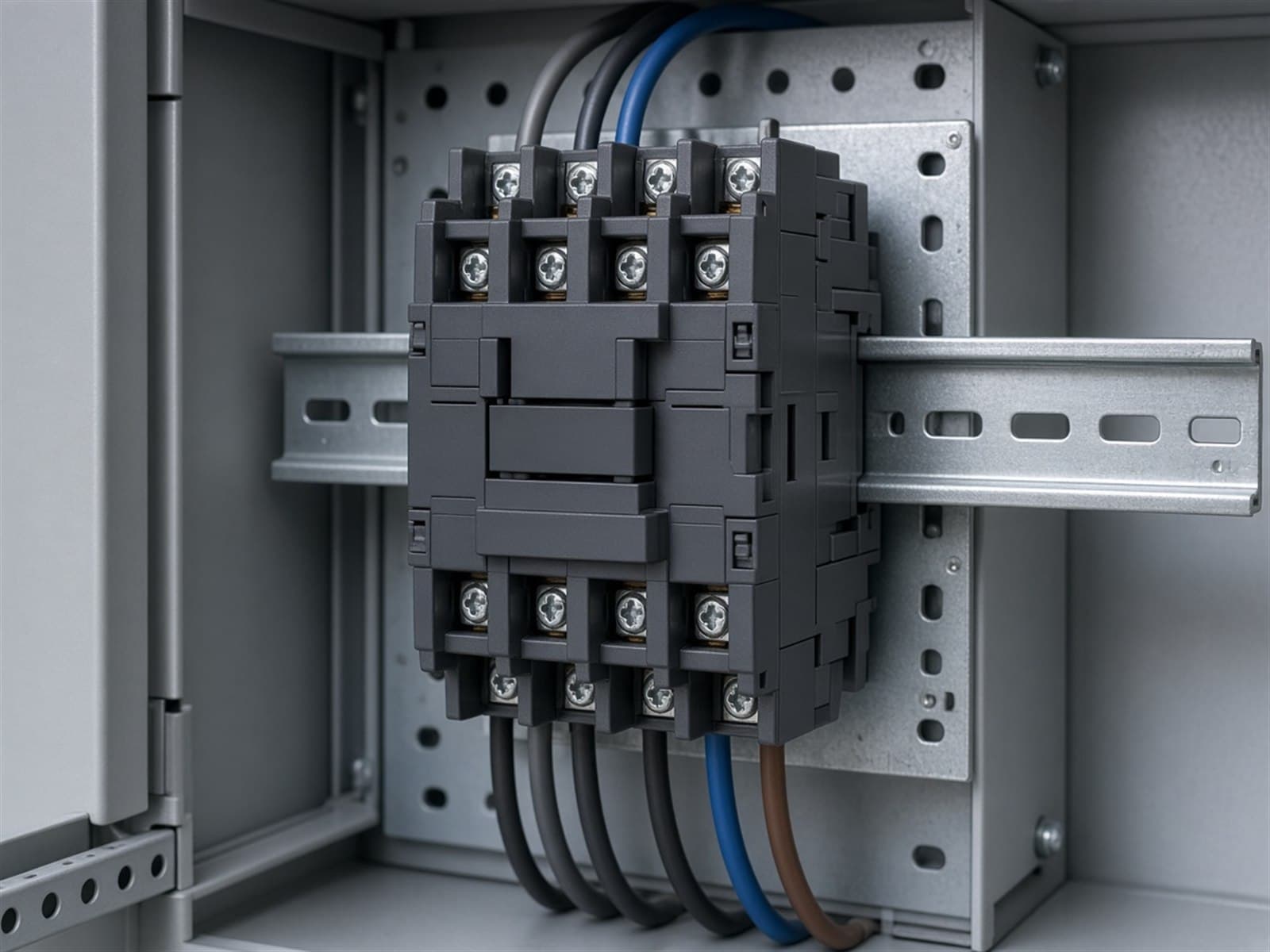
3RT, LC1D, AF — writing first
In the Siemens Sirius 3RT family the pole card and the coil are separate order codes. If the card comes off I do not change the whole body. If it does not, the frame code comes off the shelf. On Schneider TeSys LC1D most bodies stay one piece. The auxiliary block is separate. I do not assume the power pole is not sold separately. I read the label. ABB AF bodies with an electronic coil have a wide 24–60 V AC/DC range. I do not mix that range with a 230 volt coil. I do not write the three brands as one price that says they are all contactors.
A welded auxiliary contact is separate from a power pole. The auxiliary lies to a PLC input. The shaft may have stopped. A welded power pole is where the shaft has not stopped. I do not treat the two as the same card. Continuity on 13-14 or 21-22 does not describe the power face. The power face is L1-T1. If they are mixed, people call a programmer and leave the contactor. I do not leave it. The PLC I/O page is separate, drive OCF is separate, the hum is separate. I do not close the four in one WhatsApp line.
Cross-section, ferrule, torque
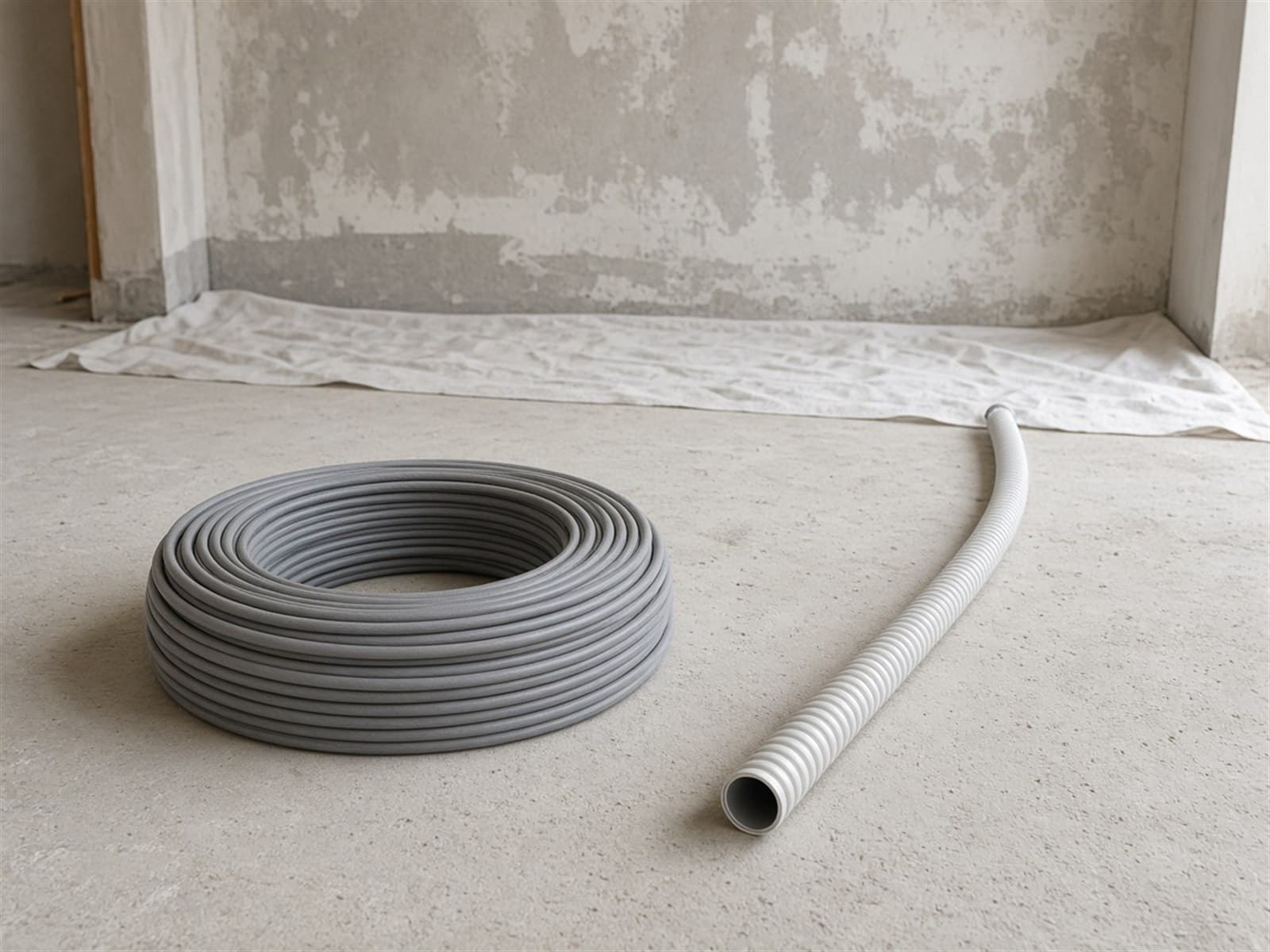
If NYY heats, the pole heats too
The panel feed and the motor outgoing are NYY by cross-section. NYM is a wall run. It is not written onto contactor power. NYA is a single core inside conduit. It is not bent onto a terminal without a ferrule. 32 A on 4 mm² hides the heat behind the screw. A hot screw anneals the silver face. An annealed face sits on the next start. A breaker larger than the cable and a contactor smaller than the plate do not sit in the same sentence. I do not raise either. I read the cross-section and I choose the body against the plate.
A contactor in a compensation panel is the same family. Capacitor switching puts the pole through a high inrush on every close. If a motor body has been fitted in place of a capacitor contactor, the weld comes early. I do not pass that as 'they are all 18 A'. The label and the utilisation category AC-3 or AC-6b are read. If there is no category the body is not the body for this job. Even if compensation is a separate job, the weld sits here, because the pole is the same metal.
What lands in the notebook at handover
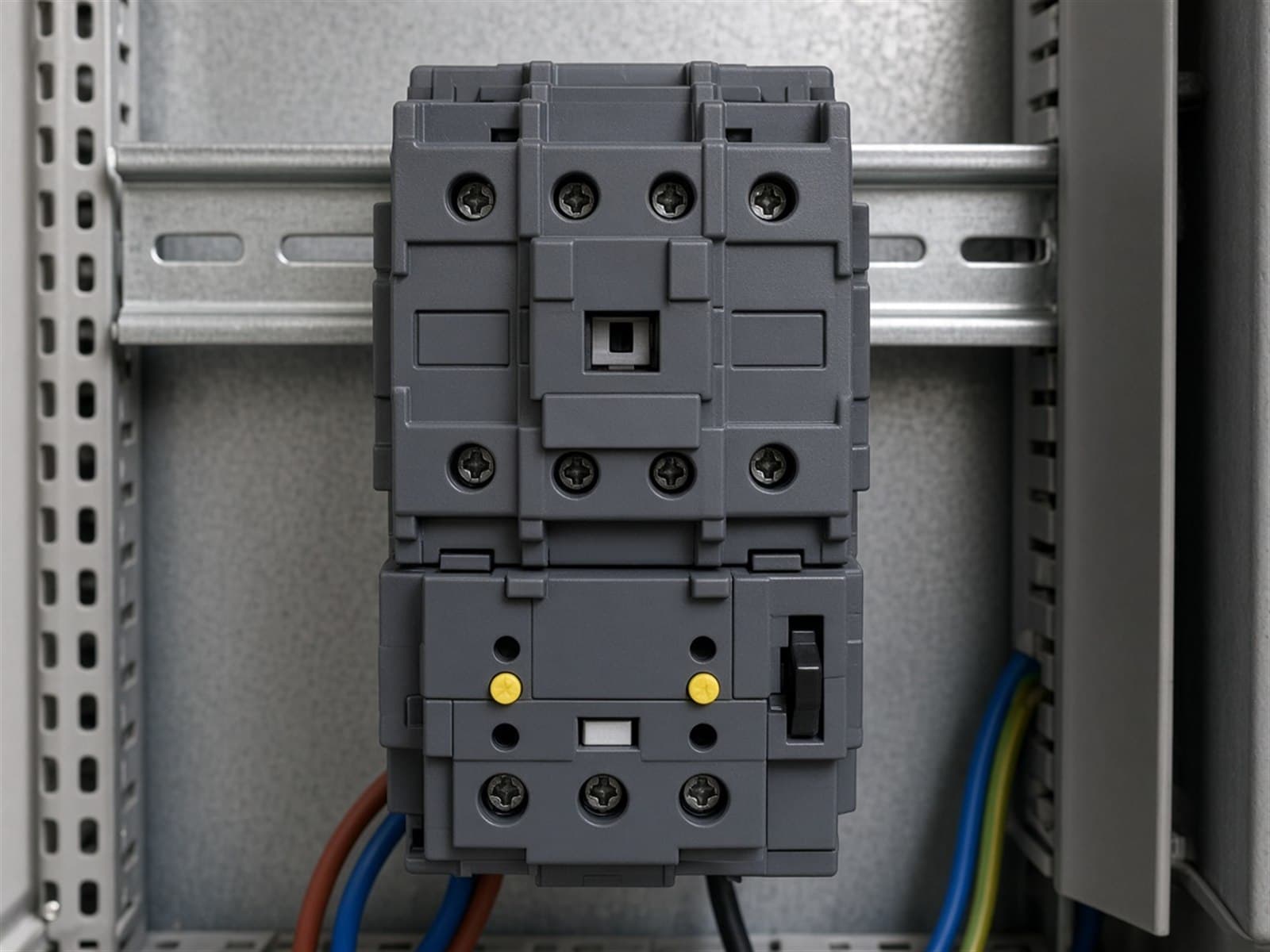
Which pole, which body, which approval
I write which STOP was pressed, the voltage on A1-A2, which pole had continuity and the frame code. If the body or the pole has to change I take a separate approval. A file and a bridge are not written as work in this book. 3,000–10,000 TRY is the reading band. Material sits outside it. Nights and public holidays are a separate rate. The difference is said before I leave. We work as an approved technician network. There is no promise of a minute. Queue and traffic are said when you call.
On a compressor, if the valve is closed, the valve first. On a saw, if the stock is jammed, the shaft first. On a conveyor, if a box is jammed, the box first. There are no letters in all three. There is a screw and a mechanic. The body does not change before the mechanic is free. If it changes, the new body welds on the same shaft. If the drive is writing OCF that writing has its own page. If the PLC output is dark and the shaft is turning, this page speaks and the program page goes quiet. I do not leave for Gebze from this page. I look in Istanbul.
I do not lock a price on the phone. The range I give is an estimate drawn from similar jobs. The binding figure is written after I have seen and measured the fault, before I start. Extra work does not begin without your approval. Payment is on completion, invoiced, in Turkish lira. Nights and public holidays are a separate rate, and I say so before I leave. We work as an approved technician network. I give you the arrival window for your district on the call, and a live location link is shared once the technician sets off.
What this page does not write
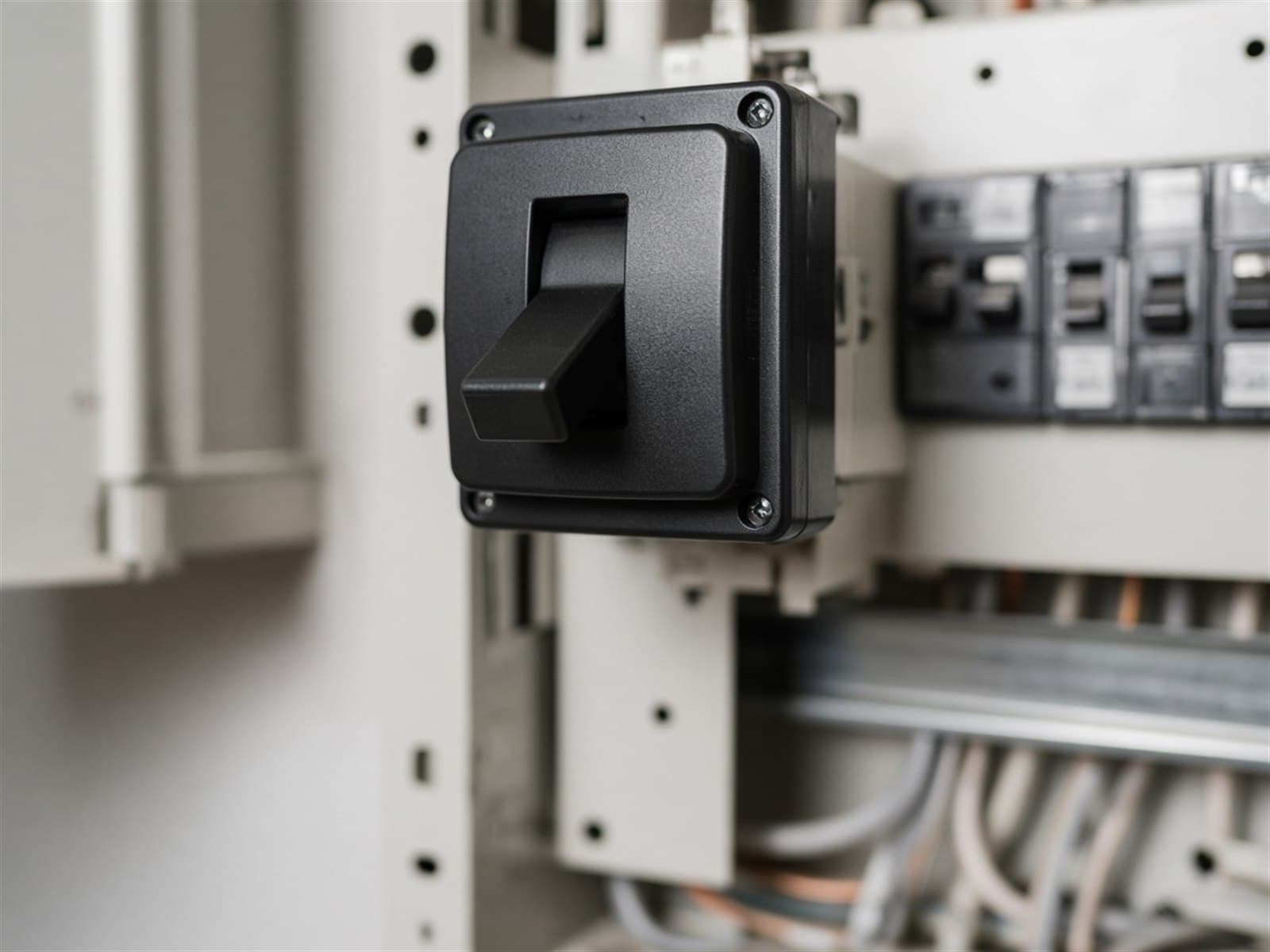
Colour, a bridge, a district copy
I do not write which colour goes to which terminal. I read the terminal from the print on the body. A half diagram gets connected wrong. Raising amps, a bridge from a phase, a file and 'a little noise is fine' are not work on this page. A district name does not invent a new weld. I read the same fault in Kadıköy and in Pendik in the same order. I do not publish the page by copying it and changing the neighbourhood name. A socket cover does not close this job. It is not written onto a door-phone circuit.
If the body in the photo is a Sirius hum I do not paste this page's sentences onto that job. The hum has its own path. If the writing in the photo is OCF the drive page speaks. If the card in the photo is a PLC input the automation page speaks. I do not stuff the four into one semantic sack that says panel fault. The panel service page points here and to the thermal page. That pointer is not a new neighbourhood route.
Questions I hear on this fault
Questions I hear on this fault
I pressed STOP and the shaft is turning. Is it the program?
No. If the coil is dark and the pole is closed it is a weld. The program output may have gone dark. Continuity on L1-T1 first.
Is it the same job as the hum?
No. A hum is the magnet face and A1-A2. A weld is the power pole. I do not solve the two on the same file.
Should I file the face?
No. A file ruins the gap, grows the arc and repeats the weld in a week. If there is a nugget the pole or the body changes.
The thermal dropped. Does the shaft stop?
It may not. A thermal does not open a weld. I do not put a hand on the shaft because the lever dropped.
Does 30 mA see a weld?
No. 30 mA is residual current. A weld is a pole closed from phase to motor.
Is a Siemens 3RT pole separate?
On many frames the card comes off. I do not say 'the whole body' before the label is read.
Is a Schneider LC1D one piece?
Most bodies are. Still the label. I do not sell three poles on an assumption.
Can an ABB AF 24–60 volt be mixed?
If it is, the coil burns or does not pull. I read the range off the label, not the colour.
Do both change on a reversing starter?
No. First which body's pole is closed. I do not file or bridge the interlock.
Does jog speed up a weld?
Yes. Every jog is an arc. On frequent jog the body is not just enlarged. Jog is cut or the category is read.
Can the arc chute be wire?
No. If the chute is gone the body changes. Wire grows the arc.
If coil voltage is low, the body first?
No. A1-A2 first. On low voltage a new body welds in a week.
Does the body change while the valve is closed?
No. The mechanic is freed. A new body welds on the same valve.
Is star-delta bridged?
No. A bridge cancels the thermal and the contactor.
Is a welded auxiliary the same?
No. The auxiliary lies to the PLC. The power pole is what fails to stop the shaft.
Can NYM replace NYY?
No. NYM is a wall run. Contactor power is NYY by cross-section.
Can a motor body sit as a capacitor contactor?
No. AC-6b is a separate category. I do not pass it as 'they are all 18 A'.
Is this page a diagram?
No. I do not write a colour or a terminal bridge. I read the terminal from the print.
A separate district page?
No. The measurement is the same on both sides of Istanbul. A neighbourhood name does not invent a weld.
Gebze?
No. Istanbul.
Night rate?
The measurement does not change. The rate does. It is not filed or bridged at night either.
One person?
Yes. The person who answers measures. No broker. The arrival window is stated clearly on the call.
Price band?
3,000–10,000 TRY is the reading estimate. Body and pole are approved separately.
Do you write a note?
If you want, I write the STOP, A1-A2, continuity and the frame code shortly. A site note.
Open-cover photo?
No. The label, cover closed, supply off.
Is drive OCF closed here?
No. It has its own page. Here pole continuity is separated.