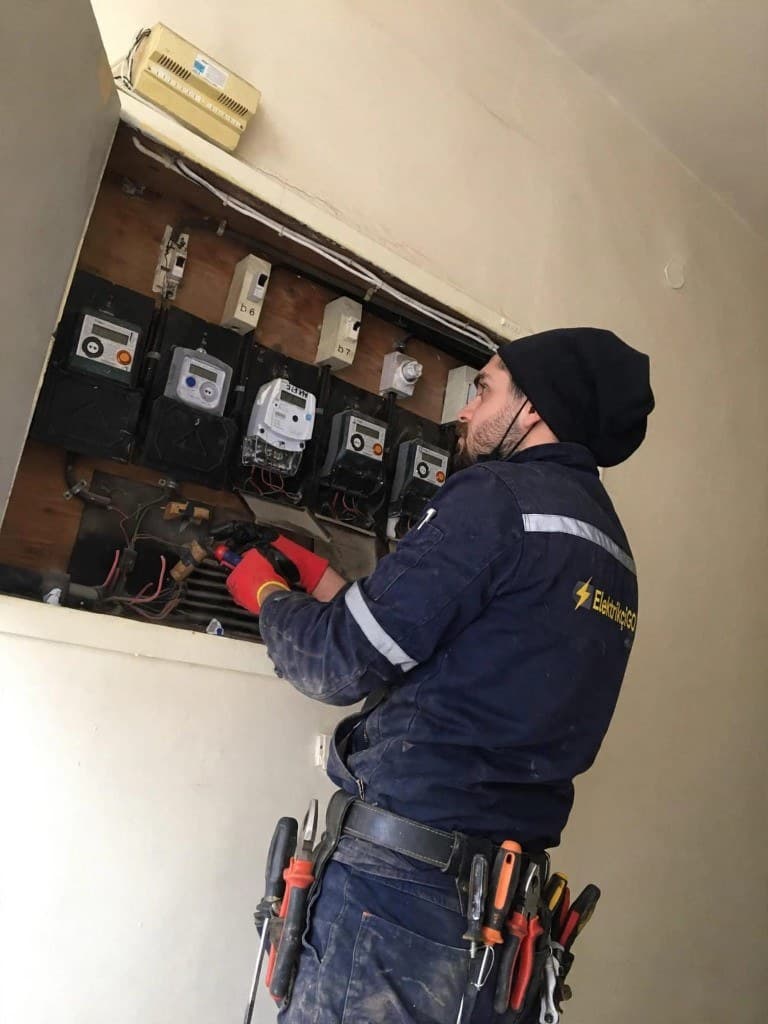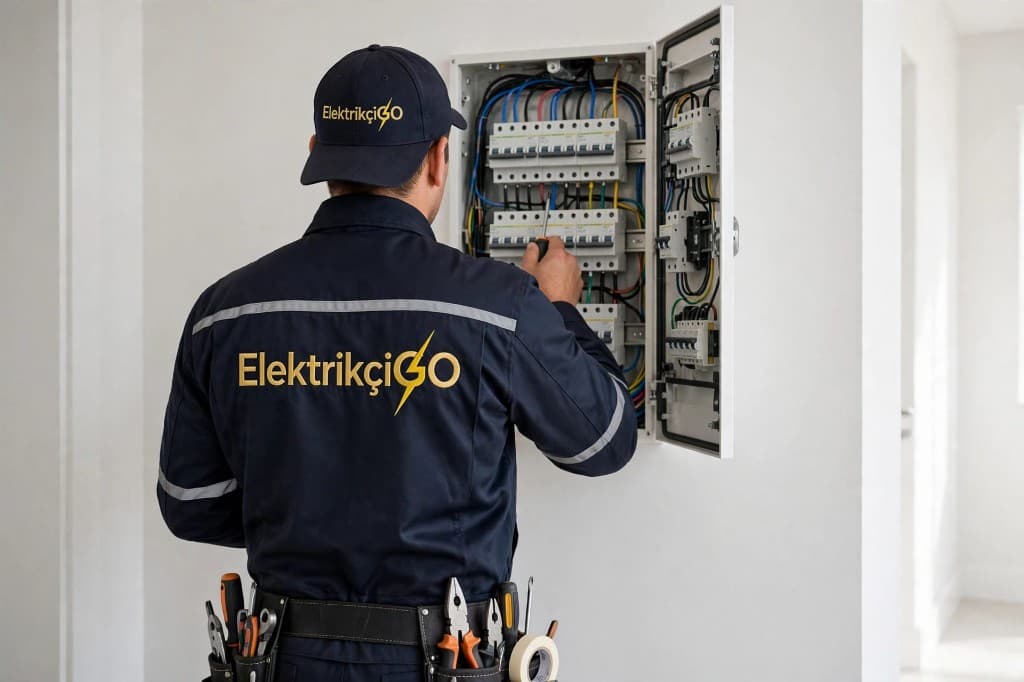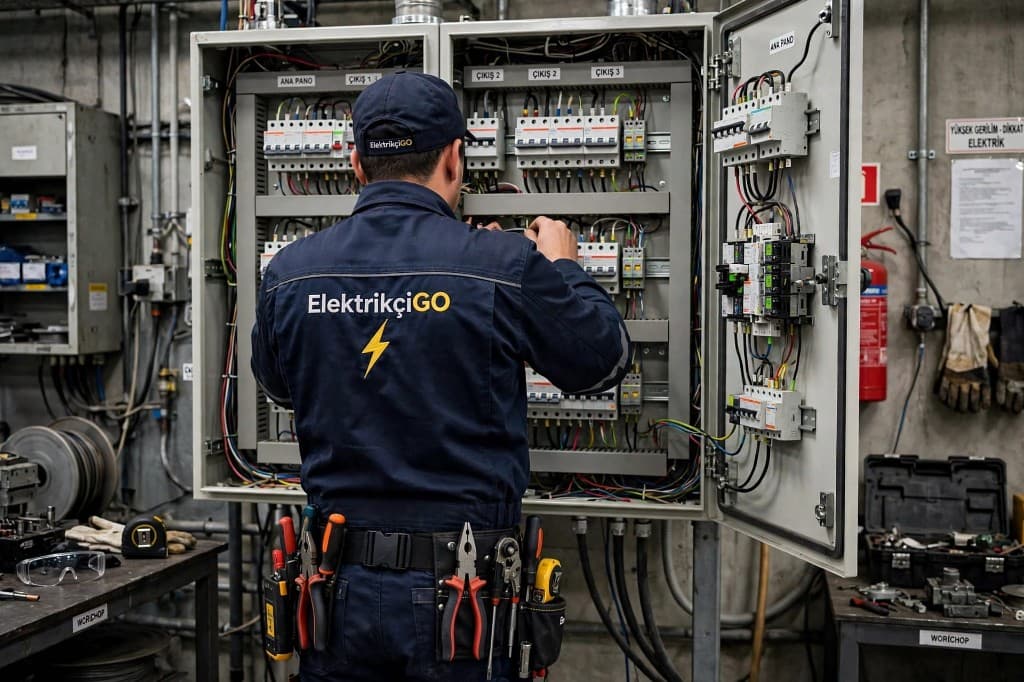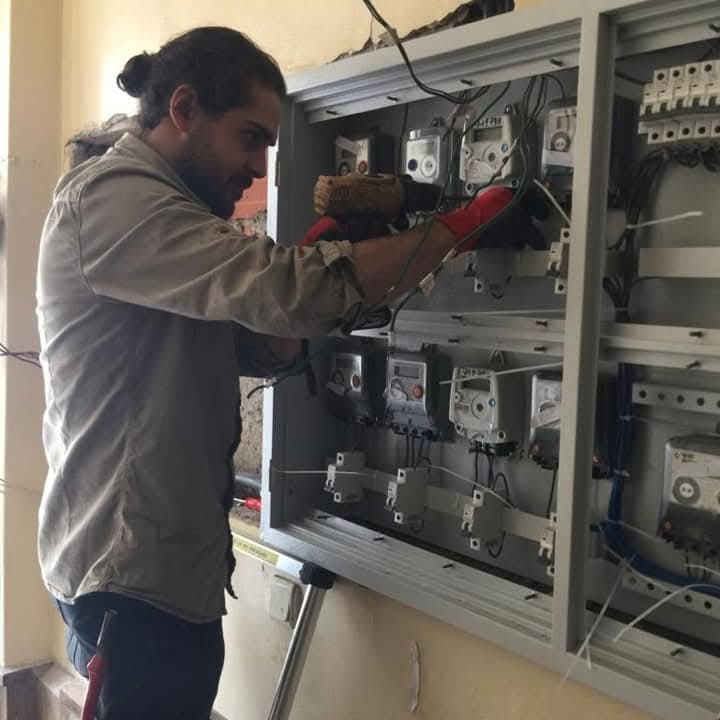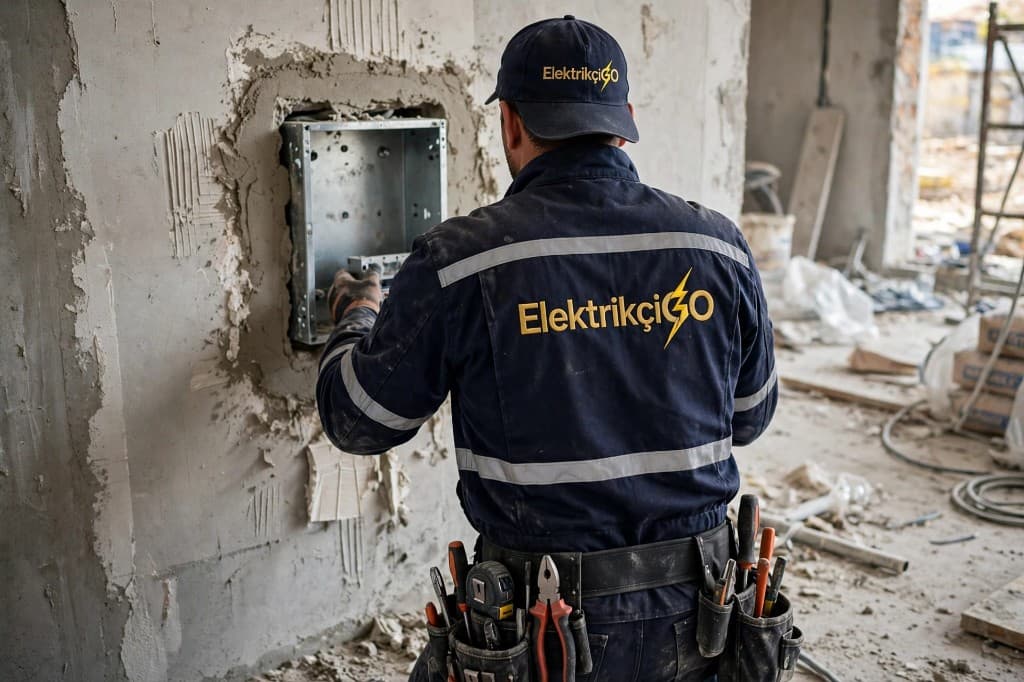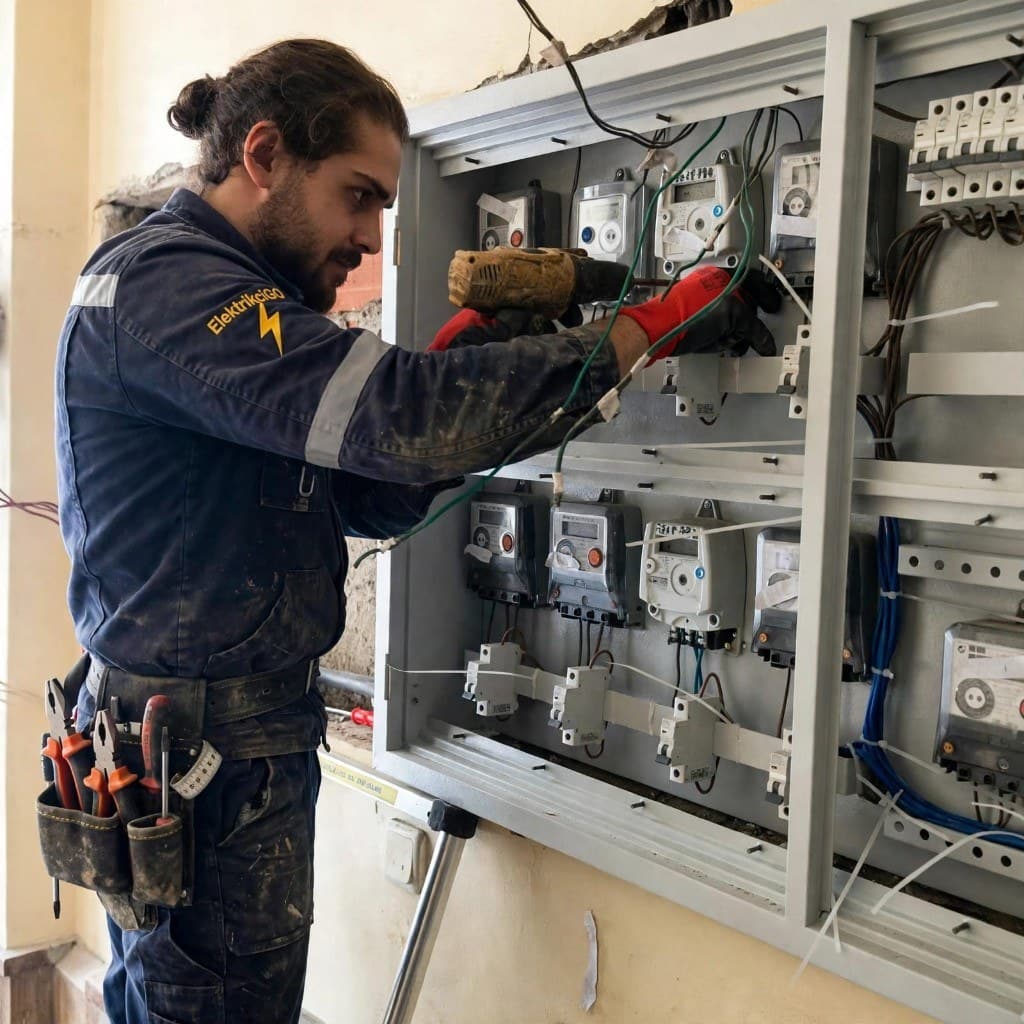
Founding master
Adnan Şemiye18 years of industrial experience
MYK-certified master
We are not a listing. A MYK-certified master works from our centre in Pendik, Sanayi Mahallesi. The person who attends does the measurement.
Open now · Asian side 24/7
The nearest emergency electrician. Burnt sockets, tripped breakers, wiring, PLC and boards. Asian side 24/7 emergency, European side by appointment. Arrival time is confirmed on the call. Work starts after the price is written.
From an emergency fault to a rewire, lighting to a PLC cabinet — a MYK-certified master, written price.
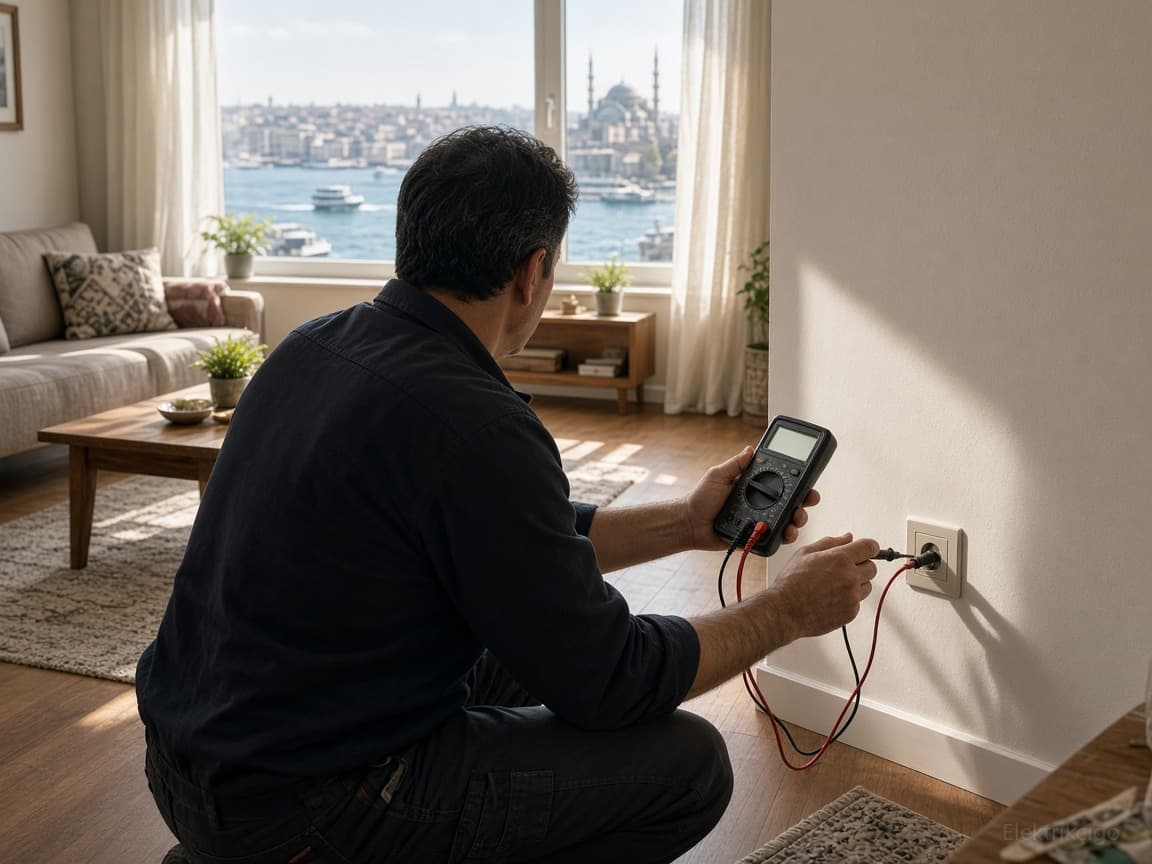
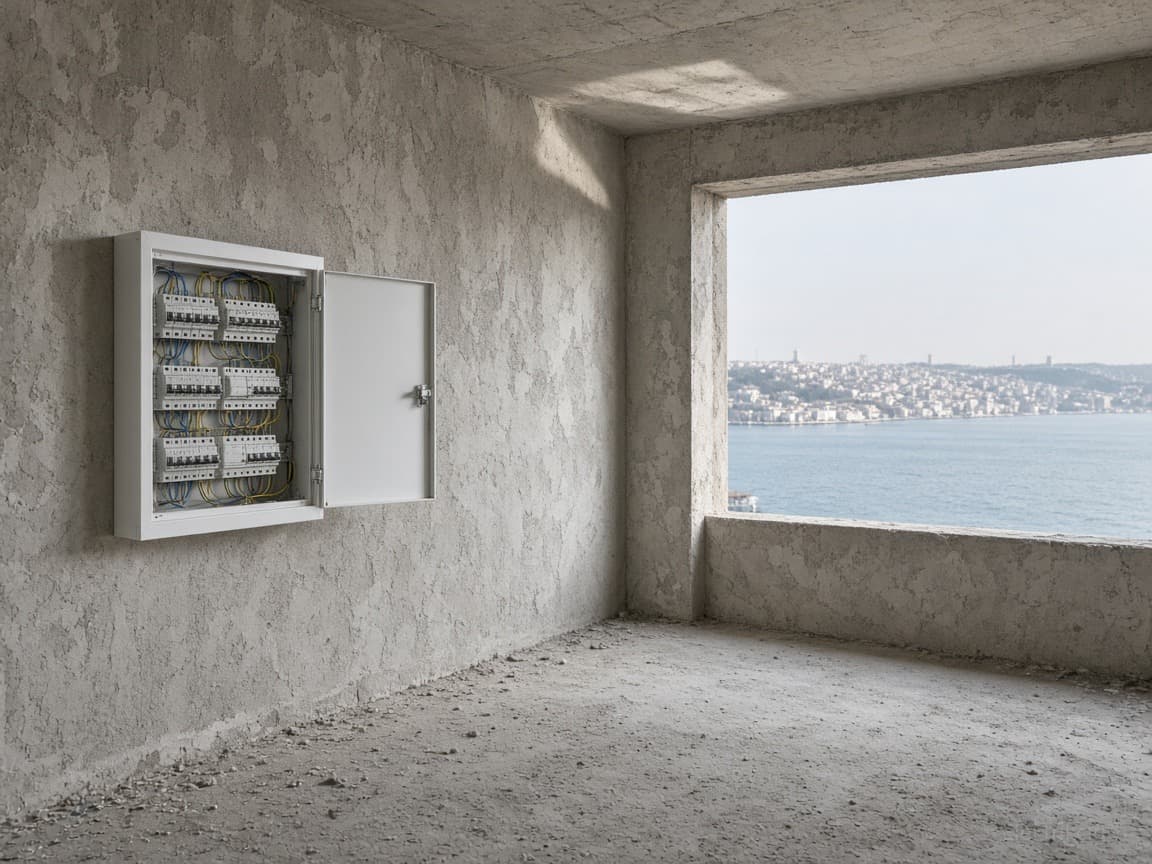

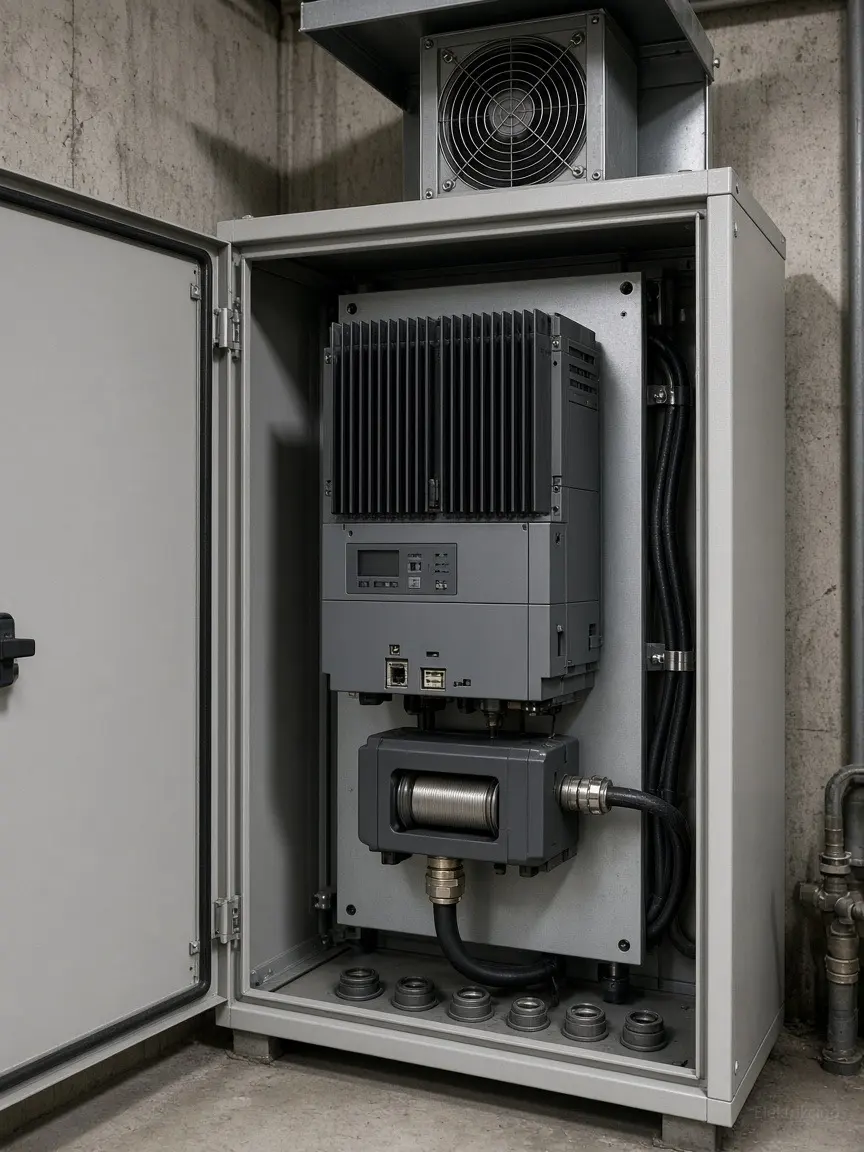
Asian side 24/7 emergency, European side by appointment. Arrival time is confirmed on the call.
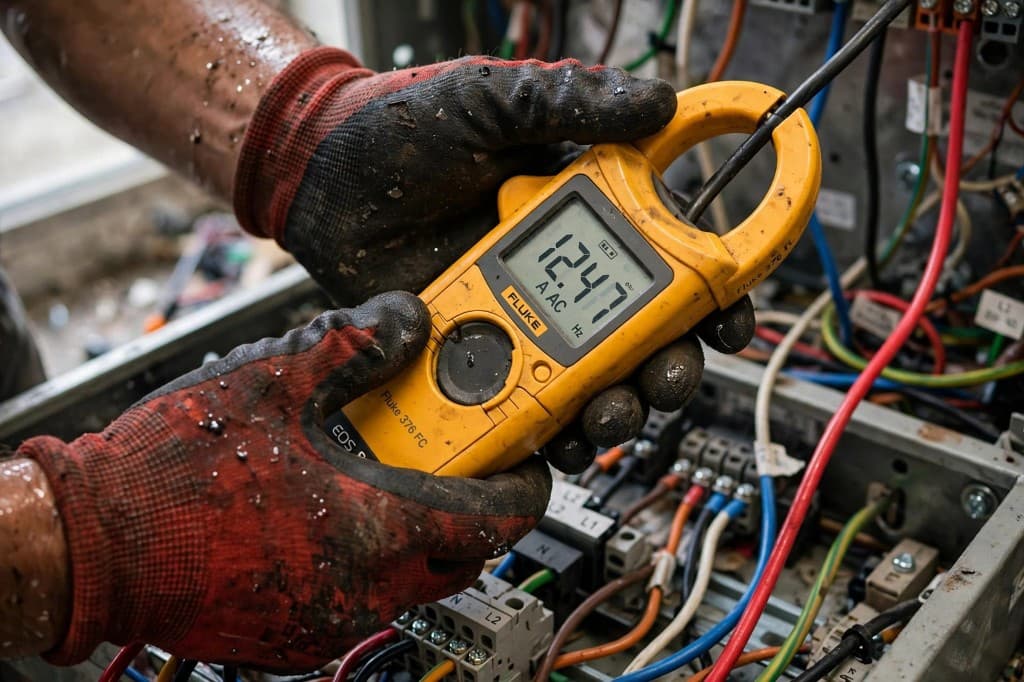
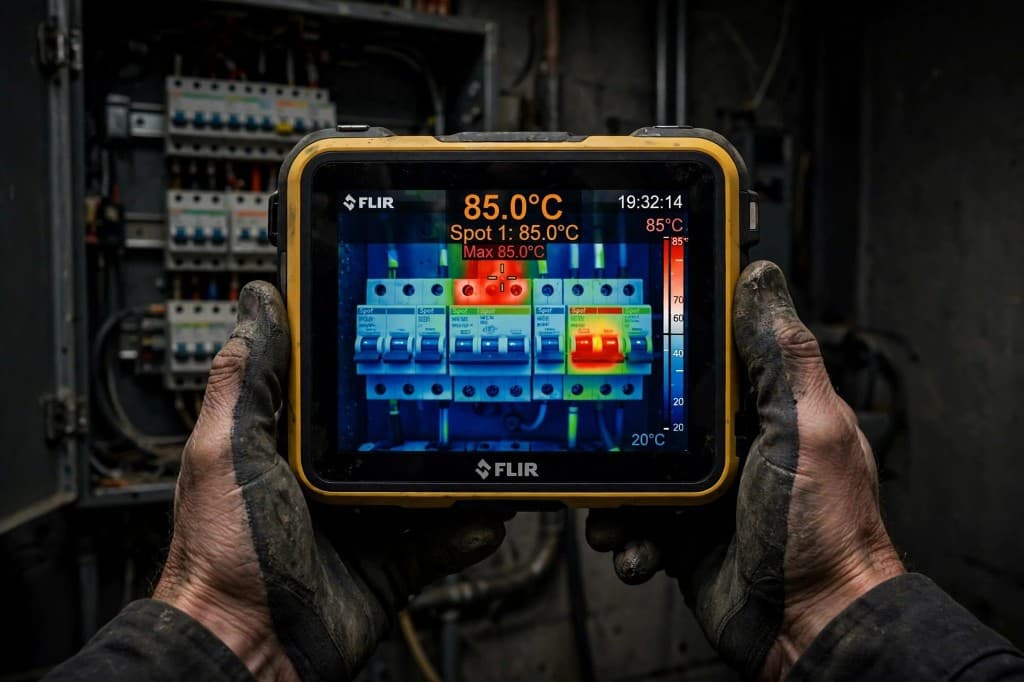
True-RMS clamp, megohmmeter, thermal camera. The cover stays shut while live.
The figure is written on site. Work does not start without approval. 1 year labour.
Materials excluded. The binding figure is written on site after measurement.
Open the calculator →| Fault diagnosis and measured survey | 750–1.500 ₺ |
|---|---|
| Breaker / RCD replacement | 1.250–3.200 ₺ |
| Dedicated air conditioning circuit | 2.400–5.500 ₺ |
| Flat board renewal (modular DIN) | 6.500–16.000 ₺ |
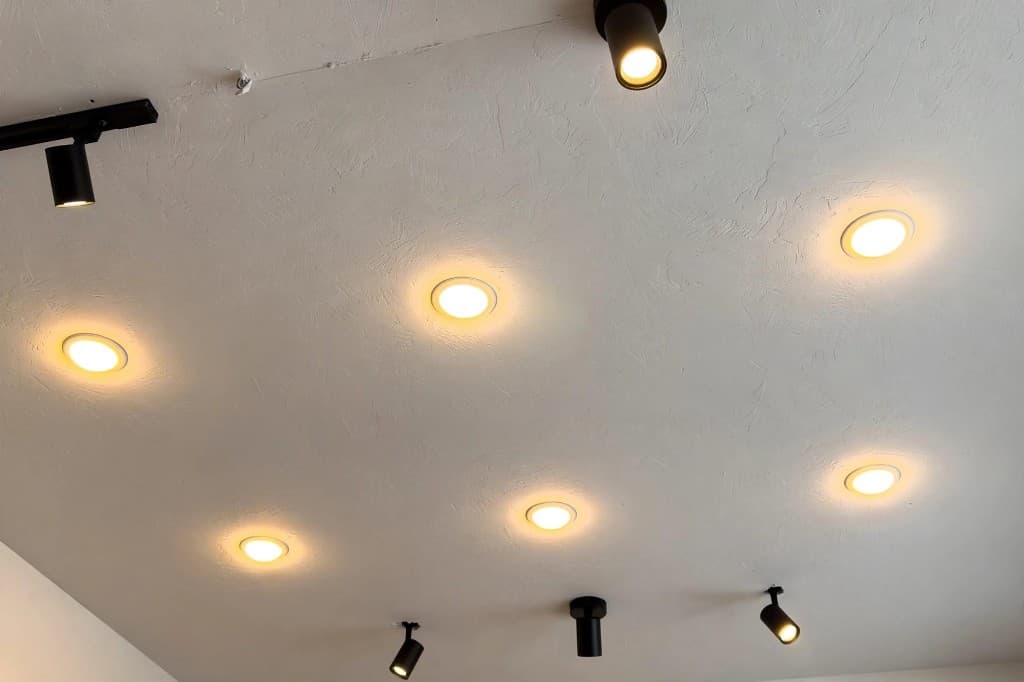
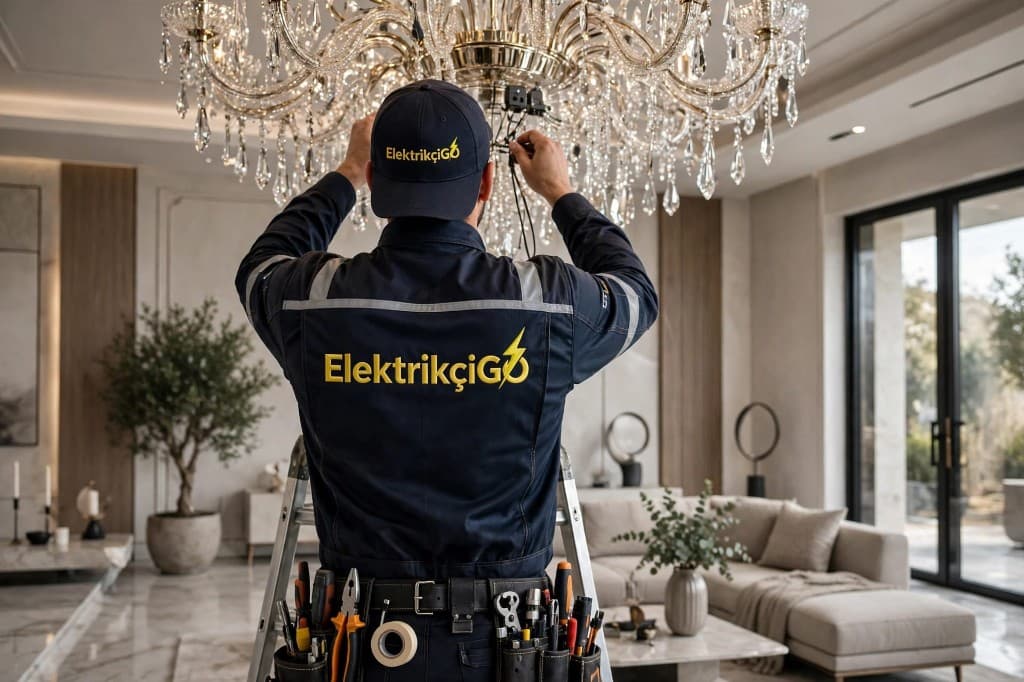
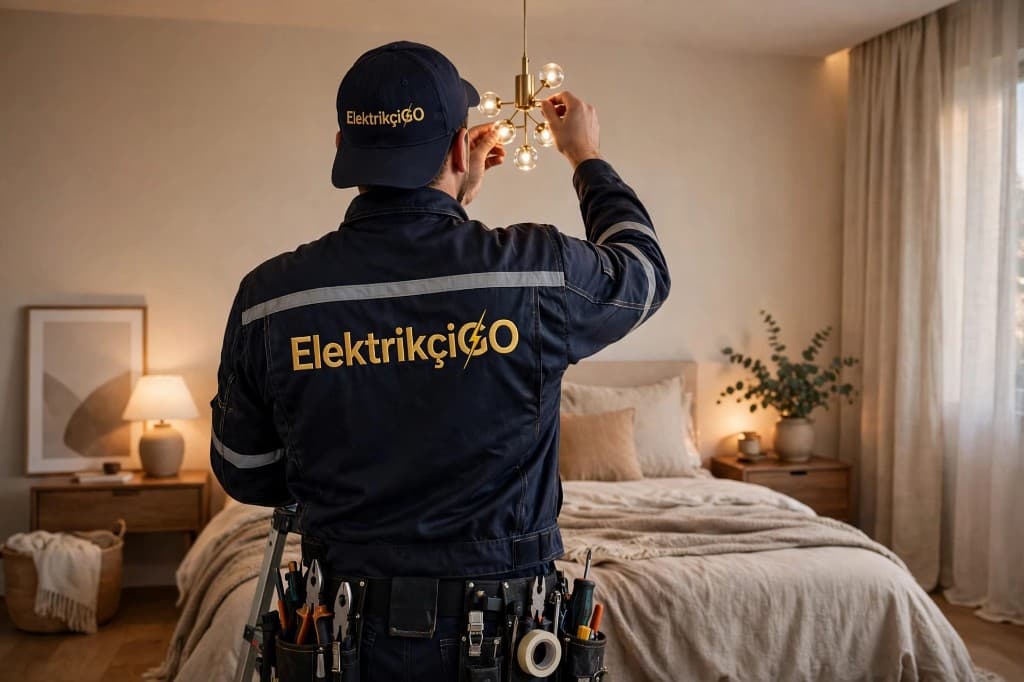
| Chandelier, spot and socket installation | 650–2.800 ₺ |
| Internet and Cat6 data cabling | 1.100–4.200 ₺ |
Asian side 24/7 emergency. European side by appointment. Islands by ferry appointment.
Asian side 24/7 emergency
European side by appointment
The European side is taken by appointment. The islands follow the ferry. Arrival time is confirmed on the call.
See all districts →This page is written for the person with an electrical fault at home, in the office or in a shop. If a breaker tripped at night, a socket blackened and melted, everything went dark while the oven was on, or only your flat has no power, the order to follow is here. Safety first, then diagnosis, then repair. No section asks you to open a cover or take a measurement. Prices are Istanbul labor estimates; the quote is written before work starts.
Not every electrical fault is an emergency, but some signs cannot wait. Behind most searches for an emergency electrician in Istanbul there are four situations:
A smell of burning plastic from a panel, socket or switch points to a loose terminal, an overheating contactor or melting cable insulation. There is only one correct move: drop the main breaker, keep the cover closed and do not try to re-energise the line. Even if the smell fades, the fault has not; the hot spot becomes a fire risk the next time the circuit is loaded.
A breaker tripping once is normal; it did its job. The same breaker tripping again and again says the circuit has a leak, an overload or a short. A residual current device (RCD) tripping means current is flowing to earth somewhere it should not. Holding the device up by force, taping it, or fitting a higher-rated breaker is not a fix; it disables the protection.
Power in half of the home but not the other half, or motors humming without starting in a three-phase business, strongly suggests phase loss. It is especially dangerous for compressors, pumps and lift motors: a motor forced to run on two phases can burn its winding within minutes. If the neighbours have power, the problem is after the meter and needs on-site measurement.
Look at the stair light first, then at the light on the neighbour's doorbell. If the building is dark and the street lamps are off too, the outage is on the grid; you call the distribution company's fault line, and an electrician does not touch the grid. If the building is lit and only your flat is dark, the fault is after the meter: the main switch, the residual-current device, or a connection in the flat panel. If no breaker in the panel is down and there is still no power, the cable leaving the meter or the main switch itself may have burnt. That is not said without a measurement. On the phone the two pictures are separated.
What to do while the technician is on the way is short and clear. This is not an intervention; it is a waiting protocol that lowers the risk.
The only purpose of this order is to protect people and the building. Touching cables, terminals or the inside of a socket, bridging a breaker with wire or tape, or disabling the residual-current device is not on this list and never will be.
Istanbul's housing stock ranges from old apartment blocks to new residences, and the fault types change accordingly.
Old buildings still have cartridge fuses and unearthed wiring. In these panels the fault is usually a loose neutral bar, an overheated fuse base or aged insulation. In modern distribution boards, the choice of RCD, the correct split of circuits and labelling are decisive. Panel renewal is not a repair; it is planned work quoted after a site survey.
Dead sockets, hot plugs, flickering lights and chandeliers that will not light are the most common calls. A hot socket must be taken seriously; there is almost always a loose terminal. Flickering light can point to a weak neutral connection and will not go away by changing the bulb.
Finding a leak requires an insulation resistance test; it cannot be seen on lines running inside walls. Earthing measurement should not be skipped in homes where a tingle is felt on appliance bodies. Both tests are done on site with calibrated instruments and the result is reported.
Lift supply lines, booster pump panels, caretaker flats and car park lighting are the management's responsibility. Faults at these points usually involve three-phase loads and show up as phase imbalance, a welded contactor or an overload trip.
Most emergency electrician calls fall into four pictures. In each one the first question is the same: is there a smell, smoke or heat? If there is, the main switch goes down first and then we talk.
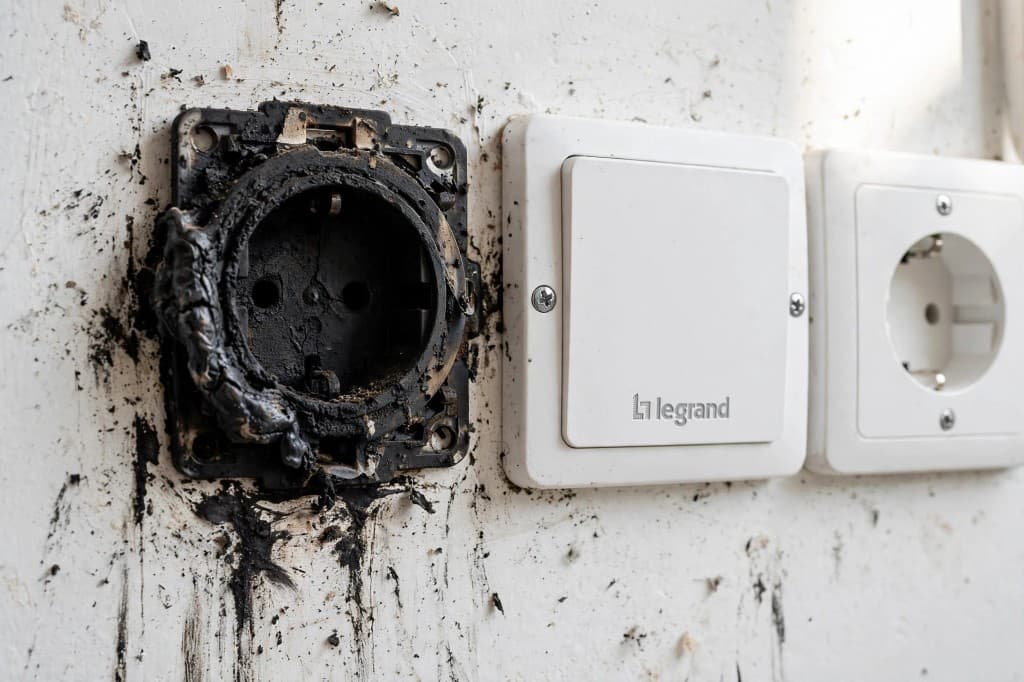
A burnt socket is almost always the same story: the terminal screw has loosened, the contact surface has shrunk, and the heat collects there. It shows most on sockets that carry an electric heater, a kettle, an iron or a washing machine. The cover of a blackened socket is not swapped and left. The circuit is switched off, the burnt cable end is cut back to clean copper, an earthed socket of the same duty is fitted, and the voltage is measured. Done without opening the wall, this job sits inside the chandelier, spot and socket band of 650–2,800 TRY. If the burn mark has walked into the junction box, or a second socket on the same circuit is warm too, that is said on site and written separately.
After midnight the top call is the main switch or the residual-current device. You raise it and it falls at once. That is a question for a measurement, not for luck. On the phone the request is to drop every group breaker, raise the main switch, then raise the groups one at a time. The group that makes it fall holds the fault; you can leave that group off and keep the rest of the home on until morning. If the main switch falls even with every group off, or its body is warm or blackened, do not wait. That picture is a night call.
A built-in oven, an induction hob and a dishwasher are the three biggest loads in a home. The short is usually not inside the appliance but in the connection behind it: a crushed cable, a heat-stained terminal box, or two appliances piled on one socket. If the breaker trips when the oven comes on, the oven is switched off and tested with another load. If it holds, the fault is in the appliance and belongs to the appliance service. If it trips, the fault is in the circuit and handled by the certified electrician team. A short that stays in a socket or junction box sits inside the chandelier, spot and socket band of 650–2,800 TRY. If the hob needs its own circuit and its own breaker, that is a new-circuit line and it is written before work starts.
In an office, when computers, the printer and the air conditioner pile onto one group, the breaker trips in the afternoon. In a shop, if the window lighting, the till and the fridge share one residual-current device, the device trips as the fridge compressor starts and the till goes dark. The first job here is to split the load into groups. Moving the till and the fridge to their own group is far cheaper and safer than bridging the device. If you do not want an outage in working hours, we move the measurement to after closing.
Half of all home faults come from a breaker fitted to the wrong cable size. The split below is the order used in homes every day. It is not a wiring instruction; the cable size is read on site.
The cable inside a flat's walls is NYM: multi-core, under plaster, a fixed installation. The single-core bridges inside the panel are NYA. A run to the garden, beyond the balcony or underground is NYY; burying NYM in a damp duct comes back a year later as a residual-current device that trips at night. In old Istanbul apartment blocks, aluminium risers and two-core circuits with no earth are still seen. An aluminium end that meets a copper terminal directly oxidises, heats and burns the socket. It is shown on site and the correction is written separately.
The cable size decides the breaker, not the other way round. A lighting circuit is usually 1.5 mm² on 10 amps. A socket circuit is 2.5 mm² on 16 amps. The oven and hob get their own run at a size that carries the load. Putting a 25 amp breaker on a 2.5 socket circuit stops the breaker tripping, but it does not stop the cable heating. A breaker is not upsized because it keeps tripping. The reason it trips is what gets found.
In a home the device that protects a person is the 30 mA residual-current device. If it trips at night it is not bridged and it is not swapped for 300 mA. The groups are separated one by one and the guilty appliance or the wet circuit is found. The usual suspects are a balcony socket, a bathroom extractor fan, an old fridge, and a water heater with a cracked element. A device that does not trip when its test button is pressed is faulty, even if it looks as if it works.
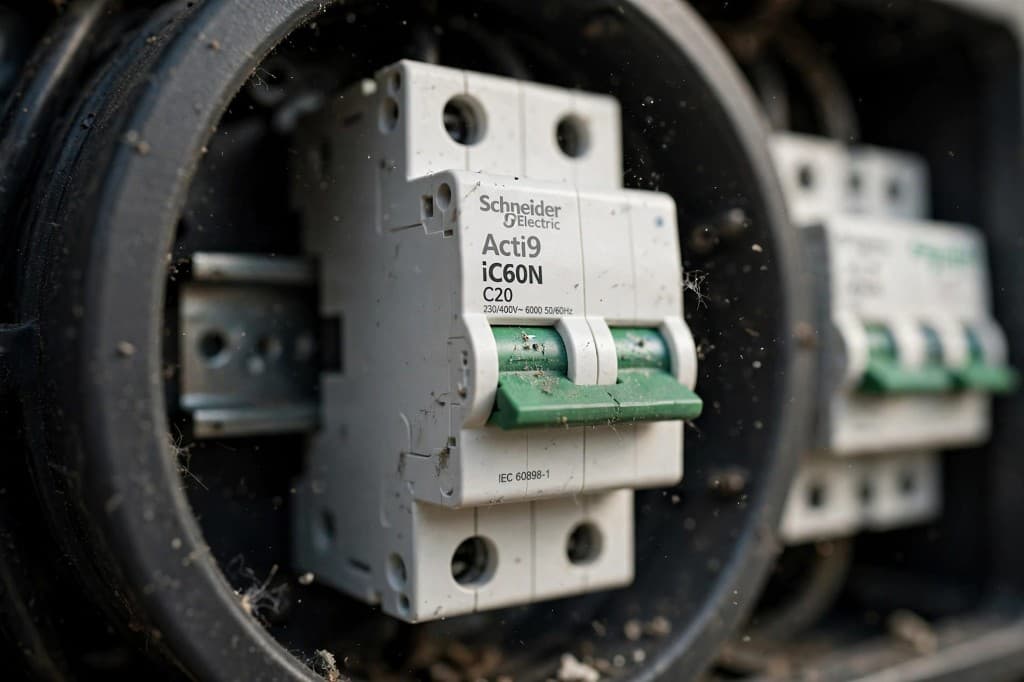
A flat panel shows Schneider Acti9 or Easy9 breakers and residual-current devices on one side, and Siemens 5SL breakers with 5SV residual-current devices on the other. A replacement comes from the same family, the same curve and the same amp rating. A cheap body is not mixed into an expensive panel; if the busbar and comb do not match, the clamp loosens and heat starts. Moving from a fuse board to breakers is not a fault repair; it is a separate job written after a survey.
An electrician who gives a firm price over the phone has either not seen the fault or will change the price on site. We state the difference between an estimate and a quote from the start.
The tools on this site and the virtual engineer show you an estimate range. It is guidance derived from similar jobs, not a binding quote. The binding price is given in writing after the fault is seen and measured on site, before work starts. Any extra work revealed during the survey is not done without your approval.
All prices are in Turkish lira, invoiced, and paid on completion.
A few verifiable principles instead of big promises.
Asian-side emergencies are taken 24/7. The European side is by appointment. The islands follow the ferry. Arrival time is confirmed on the call. No promised minute count. A MYK-certified master electrician. The job runs on the founder's expert line. There is no twenty-van fleet.
Only an estimate range is given by phone. The binding quote is presented in writing after the fault has been seen and measured on site, before work starts.
Parts and workmanship are covered by an official 1-year warranty.
Our primary 24/7 emergency area is the Anatolian side (Pendik, Kartal, Maltepe, Kadıköy, Ataşehir, Ümraniye, Tuzla, Sultanbeyli, Çekmeköy, Sancaktepe, Beykoz, Üsküdar, Şile). Adalar is taken by appointment against the ferry timetable; a midnight crossing is not promised. The European side is by appointment. Arrival time is confirmed on the call. No promised minute count. The operations centre is Pendik, Sanayi Mahallesi, Hidayet Sokak No: 26. A MYK-certified master electrician. The job runs on the founder's expert line. There is no twenty-van fleet. The founder's experience is at least 18 years.
Founding master
MYK-certified master
We are not a listing. A MYK-certified master works from our centre in Pendik, Sanayi Mahallesi. The person who attends does the measurement.
From the field
 Emergency van · +90 582 403 10 87
Field work