Founding master
Adnan Şemiye18 years in the field
MYK-certified master
Adnan Şemiye reads this job in the field. The price is written before work starts.
Estimate 650–2,800 TRY
Mounting a television is not driving a bracket into the wall and leaving. Whether the wall is brick, concrete or plasterboard, I see that on site. If the socket behind it is warm, the job is that socket first, not the bracket. If the signal cable stays tight, the connector rocks a month later. The estimate sits between 700 and 1,600 TRY. It is not a locked price for a wall I have not seen. Curtains, paint and decor do not enter this job.
Call a certified electrician
Asian side 24/7 emergency. European side by appointment. Arrival time is confirmed on the call.
Founding master
Adnan Şemiye18 years in the field
MYK-certified master
Adnan Şemiye reads this job in the field. The price is written before work starts.
From the field
 Emergency van · +90 582 403 10 87
01 / 08
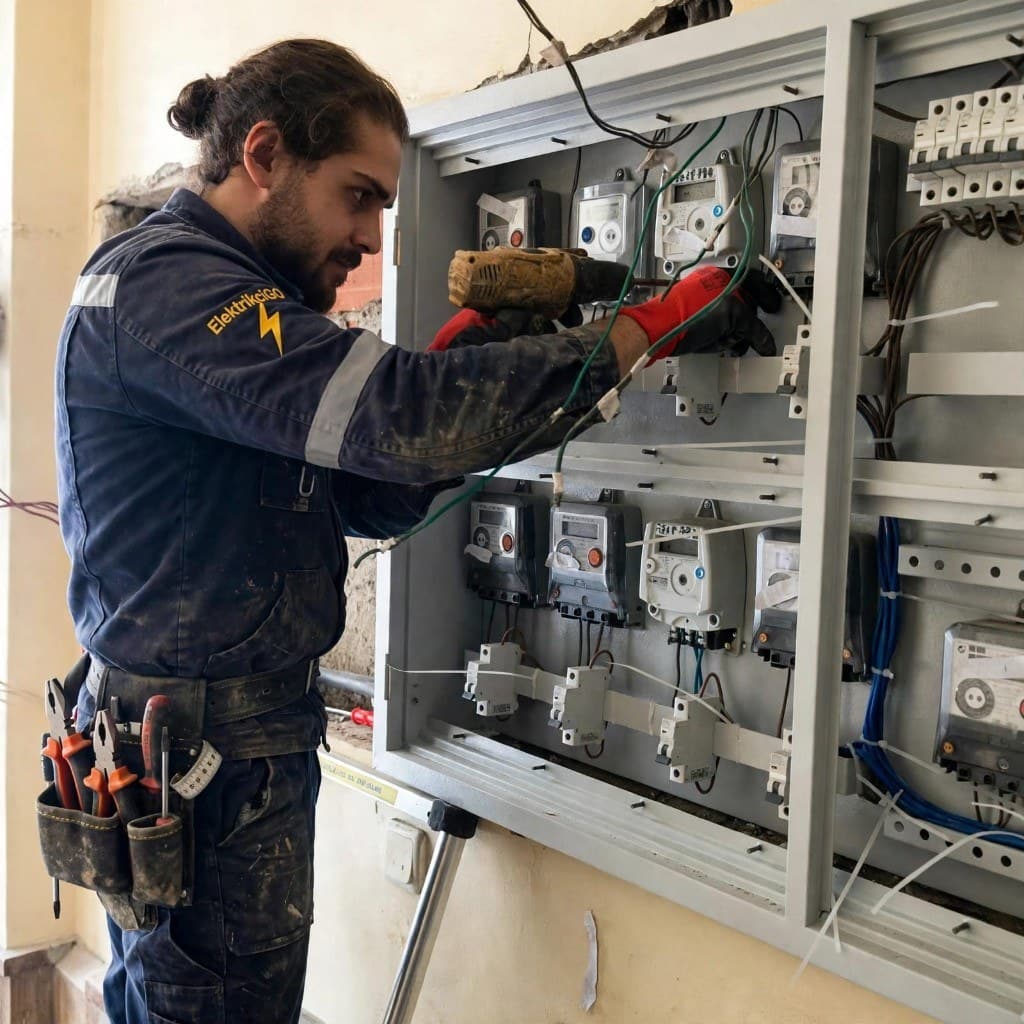
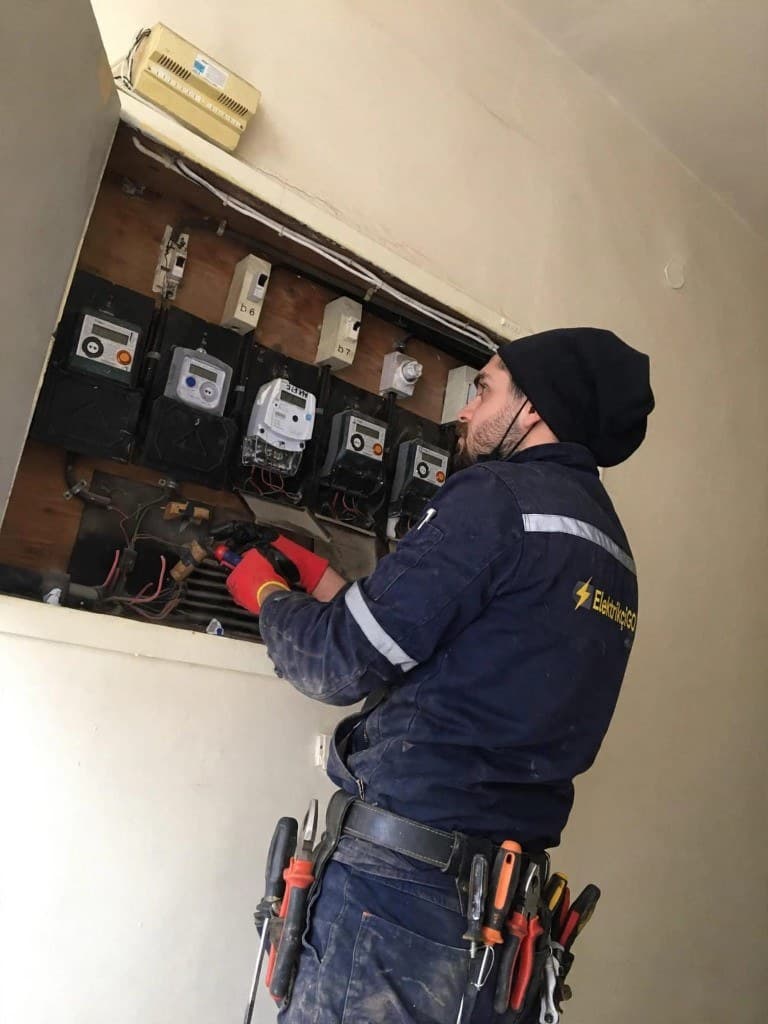
Adnan Şemiye, ElektrikçiGO electrician, fitting an Istanbul meter cabinet
In brick a fixing holds. In plasterboard a plain screw does not. Someone who leaves a heavy screen on a plasterboard screw finds the television on the floor a month later. I do not like that picture. If there is a stud behind the plasterboard I go there. If there is no stud I say so at the start. I do not say «it will do» and drive it in. When I drill concrete I do not pierce the circuit behind it. I keep the hole off the line of the socket and the switch. A circuit pierced without that dodge turns a television job into a short-circuit job. I do not want that turn.
You say the height. I look at whether the cable goes tight. If the screen goes to head height and the socket stays low, I do not hide an extension lead behind the television. An extension heats and takes dust. If there is no socket behind the television, a new tail may be needed. That tail is on the new-circuit page. It is not hidden in this 700–1,600 range. If it is not needed I do not invent it. If it is, I write it before I fix the trunking.
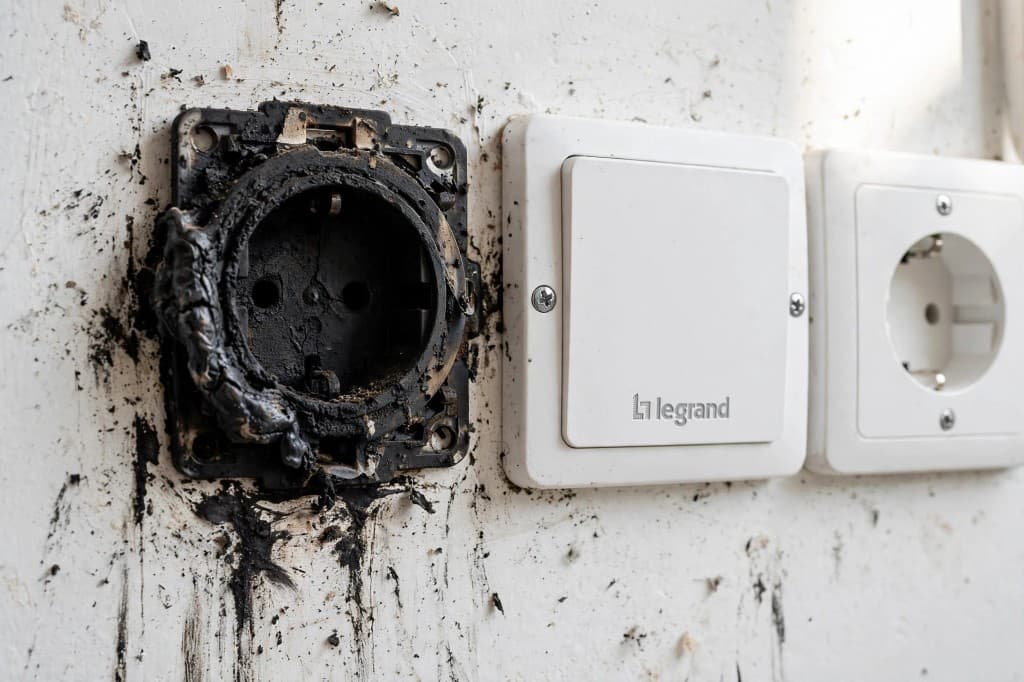
If I see a warm socket behind it I pull the plug first, I drop the circuit, and I do not drive the bracket. A warm socket is a loose end. I do not hang the screen on it before I cut the end. If I did, the socket would smell and the screen would stay inside that smell. The socket job is on the socket page. A single cover stays cheap. I do not bury it in the television invoice. I also do not tape the signal cable to the power cable. Tape makes one fault out of two jobs. If the signal rocks, the picture cuts and the socket is blamed. I separate them.
When I finish I try the screen by hand. If it rocks I do not call the screw held. I do not change the remote's battery, I do not drive a decor shelf, I do not hang curtains. I write one line: which fixing went into which wall. The night rate is separate. We work as an approved technician network and The arrival window is stated clearly on the call. I do not write a locked price for a wall I have not seen.
A screen hung above a fireplace takes heat from behind. The heat tires both the socket and the plastic of the screen. Before I drive a bracket there I look at whether the wall is warm. If it is warm I change the height. I do not change it so it «looks nicer». I change it so the heat does not swell the socket. A swollen socket does not enter the television invoice. It enters the socket page. I write that entry for you at the start, so the screen can stay hung and a second visit is not opened because the socket is a separate repair.
If the screen in the kitchen is above the counter, steam turns the screw of the socket behind it green. I do not tighten a green screw and hang the screen. I cut the end, then I move to the bracket. I do not let the cable hang toward the steam. If I did, the signal connector would oxidise a month later, the picture would cut, and you would be angry at the broadcaster. The broadcaster is not guilty. The connector got wet. I do not tape the connector to the power cable. Tape gives the steam to both cables at once.
If a child puts their head under the screen I do not leave the bracket low. A low bracket meets the corner if it falls. You choose the height. I say the margin for a fall. The margin does not change the 700–1,600 band. What changes it is the kind of wall and keeping off the circuit behind. If the plasterboard has no stud I do not hang a heavy screen that day. I say I will not hang it at the start, at the door, not after the hole. A refusal said after the hole leaves an empty hole in the wall. An empty hole is not my job. It is your paint.
If we are going to bury the cable inside the skirting, the skirting is yours. I do not strip the skirting and drive a new one. If you will strip it, I first measure whether a circuit already passes there. If it does, I do not use that path. A short trunking behind the screen is enough. I do not leave the trunking cover open. An open trunking is both dust and an end for a child. I do not leave the house before I close the end. When I leave I do not meddle with the remote's battery, the colour of the shelf, or the length of the curtain. If I did I would stop being an electrician and turn into a decorator. I do not turn.
If there is no socket behind the screen, hiding an extension makes the 700–1,600 band look cheap. A job that looks cheap heats a month later. I do not count a heated extension as a television fault. I write it on the socket page, without taking the bracket off. Taking the bracket off wants a second hole. The second hole is not for finding the circuit the first hole missed. If the circuit was missed at the first hole, the job is no longer a television. It is a short circuit. I do not bury the short circuit inside this band. So I do not bury it, I mark the line of the socket and the switch with a pencil before I drill. The mark also carries the height that will not put a child's head under the screen. You choose the height. I keep the mark. A kept mark does not leave an empty hole for your paint.
Before I tighten the bracket I keep the screen's weight and the wall's kind in the same sentence. Plasterboard, brick and concrete do not like the same fixing. I do not use the fixing it does not like just because I have it in my hand. If I did, the screen would tilt a month later, the screw would leave plaster dust, and you would blame the mount. The blame is in the hurry of the mount. So I do not hurry, I hold the bracket if the socket is warm, I do not drill if a circuit is behind, and I change the height if the fireplace is hot. You choose the height. I watch so the cable does not go tight and a child's head does not go under the screen. Before I watch that I do not pull the curtain, the shelf colour or the remote battery into the job. Those are decor. My job is the bracket, the fixing, and a socket that does not warm. A new circuit is not inside this 700–1,600 band.
The signal socket is the second hole beside the power socket, and they are not the same screw. On a terrestrial aerial the tail is IEC and it goes in straight. On satellite the tail is F and it turns with a nut. If I turn the F nut by the body of the cable, the braid breaks, the picture splits into blocks, and the broadcaster is blamed. The nut turns with the fingers while the cable stays still. If the braid touches the centre wire I cut the connector. I do not cover it with tape. An adapter buried between IEC and F oxidises behind the screen a month later. I do not bury the adapter. I write one line: which tail is IEC and which is F. The building multiswitch and the LNB inside the flat are not this page's job. They stay with the signal technician. I only write that the connector is seated and the cable is not tight. Nights and public holidays are a separate rate, and the difference is said before leaving.
The kilos on the bracket label have to stay above the kilos of the screen. A 25 kilo screen on a 15 kilo bracket is the same picture as a plasterboard screw. It tilts a month later. The VESA size is read before I drill. 200 by 200 and 400 by 400 are not the same hole. If the size does not fit I do not open a new hole in the back of the screen. The panel is not drilled. A detector passes before the wall is drilled. On foil-backed plasterboard and on a metal stud the detector beeps the whole wall. A beep on its own is not a circuit. The pencil mark on the line of the socket and the switch is the real line. I do not put a hole on that line just because the detector is quiet. The screw is not tightened before both marks are written.
The screen's power brick is not wrapped into a closed recessed box. If it is, the brick heats, the socket smells, and the screen is blamed. The brick stays outside the box, or the box breathes. Spare cable is not coiled inside the box. A coil holds the heat. Most television plugs have two pins and no earth pin. That plug is class two. I do not tie the bracket to the socket's earth screw or to a water pipe with green-yellow. If I did, an open earth would make the bracket a live path. I also do not scrape the HDMI shell and take an earth from there. If the shell is scored the picture picks up noise and the safety does not grow. Three lines sit on the sheet: the screen's kilos, the bracket's kilos, and whether the plug has an earth pin. The screw is not tightened before the three are full. The work does not leave Istanbul. Gebze is not written from this page.
Some terrestrial aerials want 5 volts up the cable. That voltage is in the television menu, separate from the wall socket. If the menu is on and the braid touches the centre wire, the 5 volts cuts, the picture goes, and the socket stays perfectly sound. I do not blame the screen and I do not change it. I cut the connector first. If the aerial label does not ask for 5 volts I close the menu. If the label asks and the connector is clean, the menu stays open. If there is no label I do not open the menu. An open menu burns the television's aerial supply on a shorted connector. A burnt supply is not a new screen inside this 700–1,600 band. It is a connector line. The soundbar's plug is not added to the screen's brick with a multi-plug. A second brick heats in the recessed box. If the soundbar has no socket of its own I write that before I drive the bracket. If there is a hum I separate the HDMI from the power brick's coil. I do not add an earth wire to the bracket to kill the hum. I leave a palm of slack behind the screen. The slack is not a coil inside the box. So a child cannot pull the connector loose, the slack stays on the wall and does not hang. The 5 volts in the menu is not mixed with the 230 volts of the wall socket. If they are mixed, mains goes onto the aerial cable and this page does not write that job. The soundbar HDMI cable is not taken into the same clip as the power cable. The clip carries the hum onto the screen case.
The band below is the published 2026 list. It is an estimate. The binding figure is written on site after measurement, and the work starts after that.
The bands below are the labour ranges actually seen on recent call-outs and exclude materials. The binding figure is given in writing after on-site measurement, and no work starts without approval.
| Job | Typical price range | What is included |
|---|---|---|
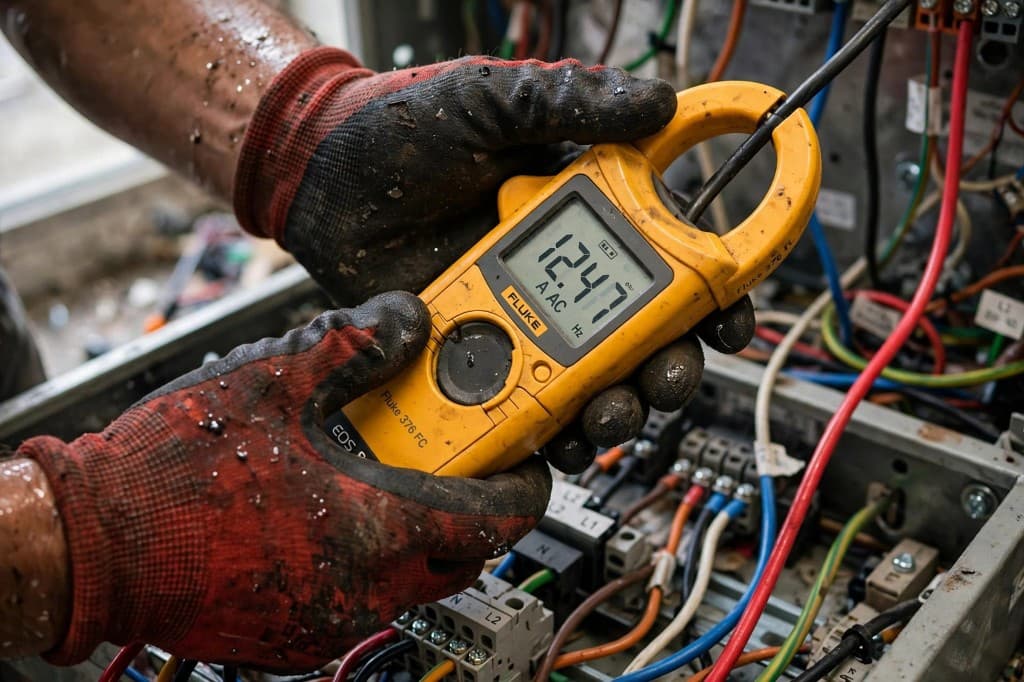
| Fault diagnosis and measured survey | 750 TRY – 1,500 TRY | Diagnosis with a True-RMS clamp, megohmmeter and thermal camera; the survey fee is deducted if the repair is accepted. |
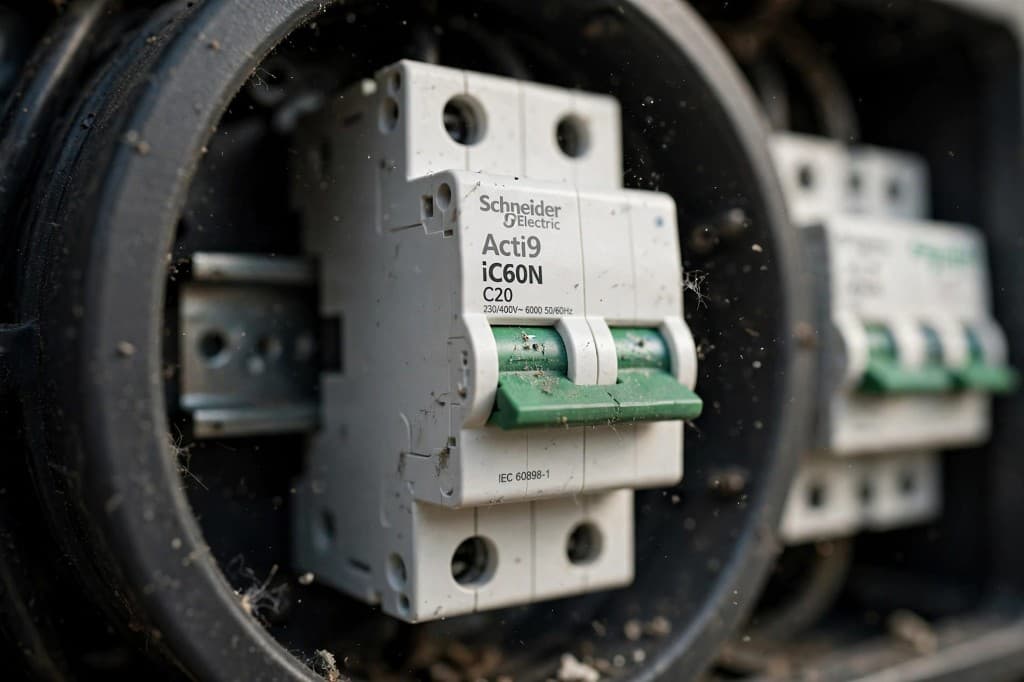
| Breaker / RCD replacement | 1,250 TRY – 3,200 TRY | A 30 mA Type A device; varies with the number of ways and whether Schneider or Siemens is specified. |
| Dedicated air conditioning circuit | 2,400 TRY – 5,500 TRY | 3x2.5 or 3x4 mm² solid copper with a C20-C25 breaker; varies with run length and trunking route. |
| Flat board renewal (modular DIN) | 6,500 TRY – 16,000 TRY | Varies with room count, circuit splitting and whether a surge arrester is included. |
| Chandelier, spot and socket installation | 650 TRY – 2,800 TRY | Priced per unit; heavy chandeliers include a steel anchor set into structural concrete. |
| Internet and Cat6 data cabling | 1,100 TRY – 4,200 TRY | Includes a Cat6 run per room, an RJ45 data outlet and verification with a cable tester. |
| Factory / power factor periodic maintenance | 4,500 TRY – 18,000 TRY | By panel and step count; includes a thermal sweep and a written measurement report. |
Prices are estimated labour ranges and exclude materials. A binding quote is issued in writing after the technician measures on site and before any work begins. Last updated: October 2026.
Service covers the neighborhoods of Istanbul's 39 districts. Not the whole of Turkey. A survey is not a binding quote.
A plain screw does not. If there is a stud I go there. If not I say so at the start.
No. I see the wall on site.
I do not. I keep off the line of the socket and the switch.
No. The end first. The bracket waits.
I do not hide one. It heats and takes dust.
No. It is on the circuit page.
No. It makes one fault out of two jobs.
You say it. I watch so the cable does not go tight.
Bracket, fixing, and a check of the socket and the signal. Not a new circuit.
Not from me.
I do not drive one.
I do not change it.
I do not call the screw held.
A separate rate.
Yes. No promised minute.
If there is no stud I do not leave a heavy screen.
A path that does not stay tight. If a new run is needed it is written apart.
Yes. A single cover is not buried inside the television.
No. It keeps off the circuit.
No. I do not lock a price on a wall I have not seen.
Heat comes from behind and tires the socket and the plastic. If the wall is warm I change the height. A swollen socket does not enter the television invoice.
I do not tighten it. I cut the end, then I move to the bracket. If the cable does not hang toward the steam, the signal lasts a month.
No. The connector got wet. I do not tape the signal to the power cable. Tape gives the steam to both.
I do not leave the bracket low. If it falls it meets the corner. The margin does not change the band. The wall type does.
A refusal after the hole leaves an empty hole in the wall. An empty hole is your paint, not my job.
No. It is your skirting. If a circuit passes inside it I do not use that path. A short trunking behind the screen is enough.
No. An open trunking is dust and an end for a child. I do not leave before I close the end.
No. The battery, the shelf colour and the curtain length are not from me.