Kurtköy · Pendik

Field projects

From the Kurtköy desk onto the Pendik industrial belt. These records show how a drive cabinet, a furnace-side glass panel, a PLC board, a capacitor bank and a machine cabinet are worked.

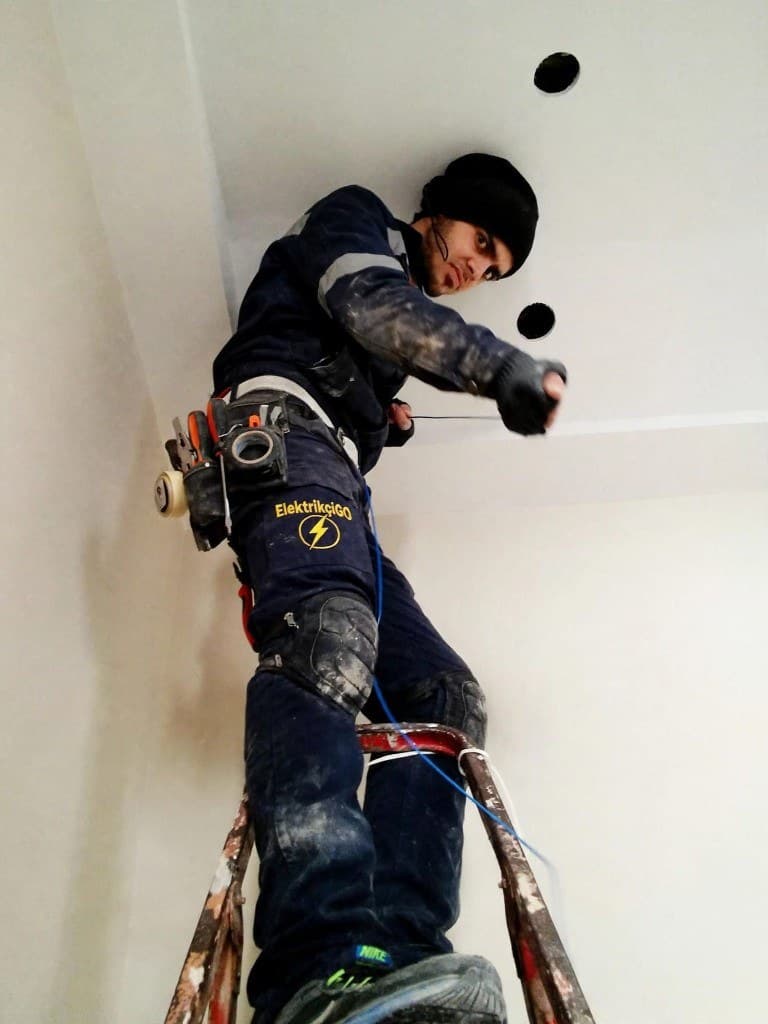
Adnan Şemiye, ElektrikçiGO electrician, fitting ceiling spots in Istanbul
Ceiling spots

The order before the door opens

The card hits the desk with a district. A Pendik plant, the Kurtköy belt and a Şişli flat are not the same sentence. The call asks for the brand, the cabinet name and what stopped. A photo is taken with the door shut. An open door, a wet floor or a smell waits until the supply is off.

The first reading on site is a clamp and a voltage tester, door still closed. The main switch is read from its label. If there is no label, cells come down one at a time. The motor plate is written before any drive parameter. A worn plate is measured on the shaft. It is not guessed from a catalog.

The spare comes from the family already on the rail. A 24 V coil is not replaced with a 230 V Sirius. A capacitor step does not get a plain power contactor. A burnt PLC input card is the same Siemens family, not a wire bridge. A new drive loads its parameter set from the backup, or from the motor plate when no backup exists.

Cable follows the job. Control wiring inside the board is NYM. The motor line off a drive is screened, with an EMC gland. Earth is NYA onto the PE bar. The run that faces a furnace is sleeved. On a wet machine floor the cabinet foot and the PE conductor are measured again once the floor is dry.

Close-out is not a forced output. Direction is checked unloaded. Loaded current is read with a clamp. The e-stop chain is measured, the door shuts, the label is written. On a compensation board the steps are picked one by one and cos φ is read on an analyser. The price is written on site for the work that was seen.

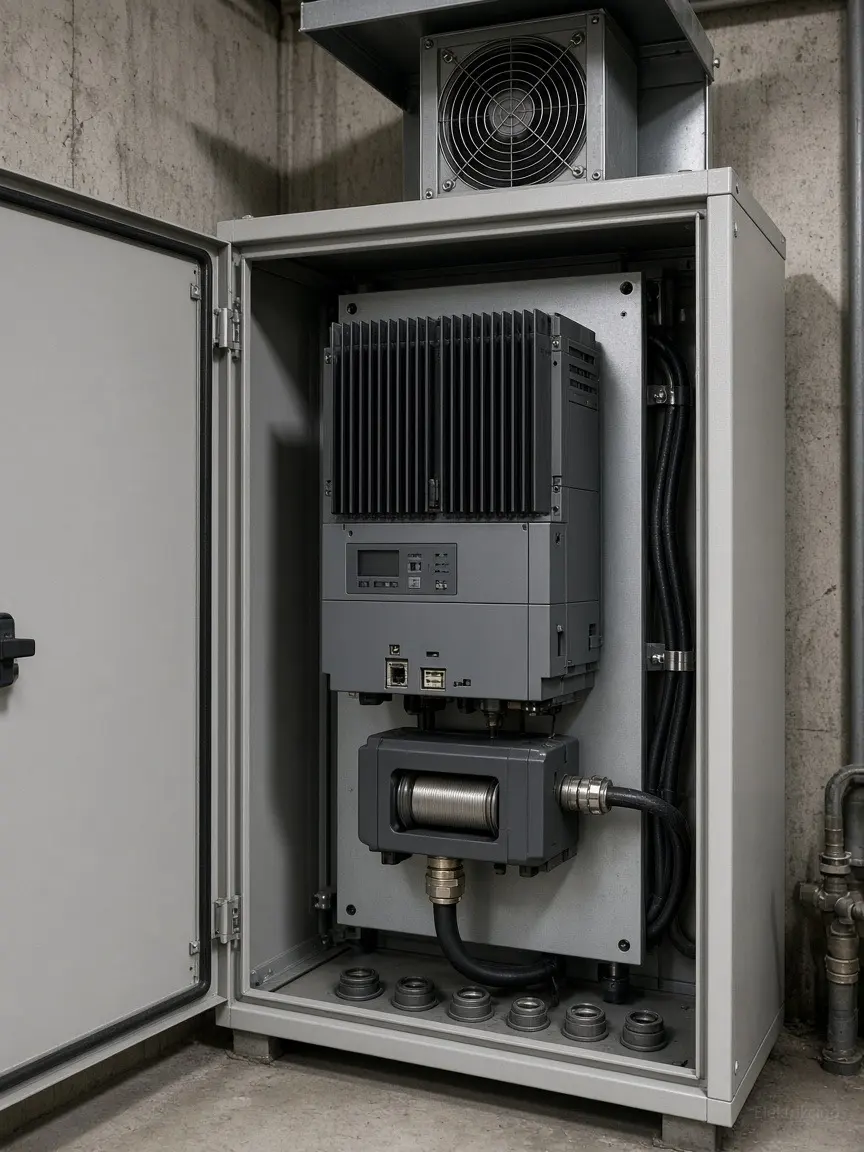
Open grey cabinet with a finned frequency inverter, brake resistor below and a cabinet fan above

Fan and pump line

Fan-line drive cabinet in Pendik

Window: Same shift after the supply is off

Challenge

The cabinet in the concrete room carries a fan on the roof, a finned inverter inside and a brake resistor below. A fan or pump started straight across a contactor pulls a current that trips the breaker, and the belt and bearing take the shock.

An unscreened motor cable and a loose gland waste the drive EMC filter. The PLC input next door then counts at random. A loose brake-resistor terminal lets the DC bus climb on stop and the drive drops into a fault code.

Solution

The drive is chosen from the current and voltage on the motor plate. Whichever of the Omron, Delta or Siemens G120 family is on the shelf and held as a spare goes in. Ramp, motor current and the brake-resistor terminal are written from that plate.

The motor line comes down in screened cable and an EMC gland. The roof fan dumps the heatsink air. Commissioning starts with an unloaded direction check and closes on a loaded clamp-meter reading. A reversed direction is swapped at the drive output, not with a random bridge on the motor.

Specification

DriveOmron, Delta or Siemens G120 family, from the motor plate
BrakeResistor in the lower block, on the DC bus
CableScreened motor cable, EMC gland
CoolingCabinet roof fan
PlacePendik industrial belt
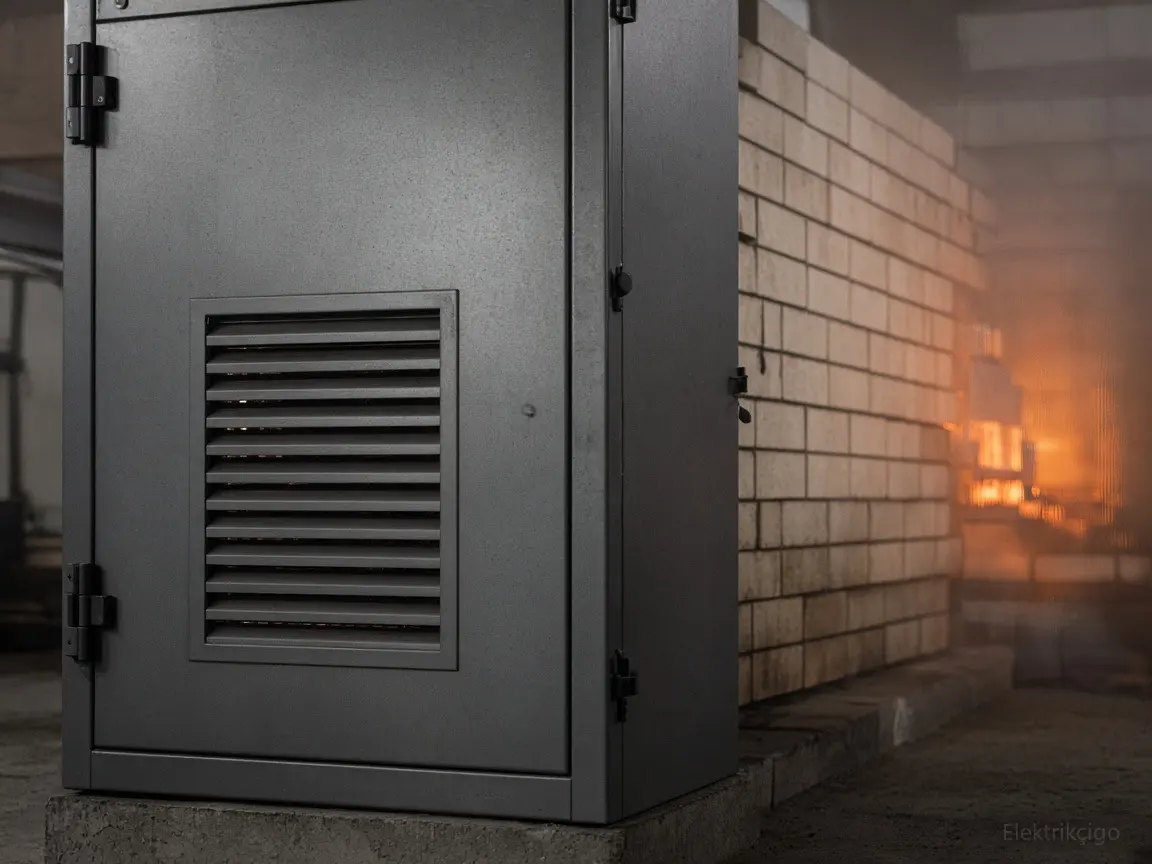
Dark field cabinet with a louvred door beside a glass furnace, brick wall and hot light

Glass processing shop

Furnace-side panel in a glass shop

Window: One shift tied to the furnace stop

Challenge

A cabinet near the furnace mouth runs hot. Hinge, gasket and louvre take the dust. If the gasket cooks, the board sweats, a contactor coil welds and the conveyor motor starts on its own.

When cutting, washing and the furnace conveyor stop together, the door stays shut until the line cools. Bare NYM sheath beside the hot face hardens and the terminal loosens.

Solution

The cabinet moves a step off the furnace radiation. The door stays gasketed and the louvre stays open to air. An ENDA process controller keeps the furnace zone on its own circuit. The motor-protection breaker and thermal relay follow the conveyor nameplate current.

Inside the board the line is NYM. The run toward the furnace goes in a heat sleeve and on tray. The door opens only after that zone has cooled and the main switch is down. A welded coil is a new contactor, not a bridge.

Specification

EnclosureLouvred field cabinet with a gasket
ControlENDA process controller, furnace zone separate
ProtectionMotor-protection breaker and thermal relay
CableNYM inside the board, sleeved run in the heat
PlaceGlass shop, furnace side
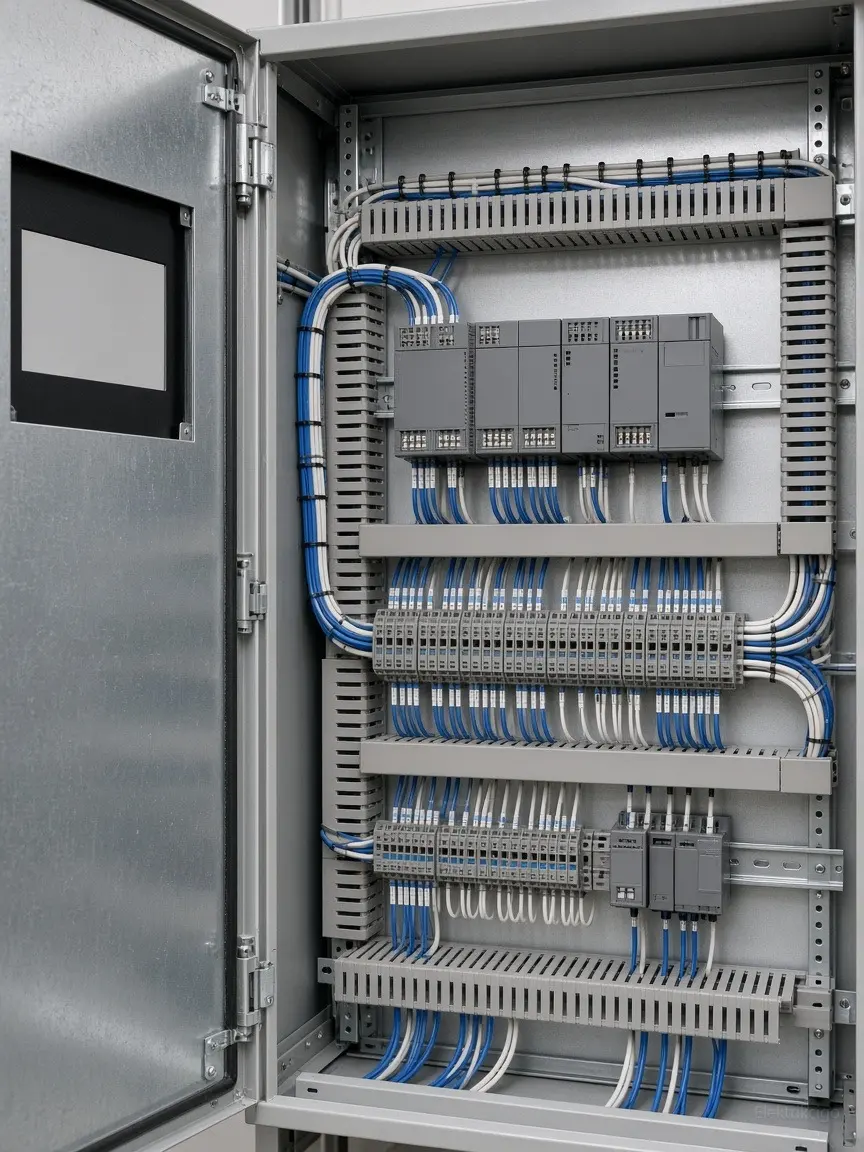
Open control cabinet with Siemens PLC modules, blue and white conductors and terminal rows

Machine control line

PLC cabinet with blue wire and terminals

Window: One working day including I/O checks

Challenge

Behind the HMI window sit the CPU, signal modules and two terminal rows. Blue and white conductors can look tidy in the duct and still be unlabelled, so one swapped input stops the machine on the wrong sensor.

A 24 V supply mixed in the same duct as a 230 V coil burns module inputs. A sensor common bridged at random takes the whole line down on one fault.

Solution

The Siemens-family CPU and signal modules stay on their rail. Every input and output terminal is labelled. Sensor commons go to their own bar. 24 V and coil voltage sit on separate ducts and separate fuses.

Commissioning proves each input against the field device before any output is forced. Outputs are energised only after the e-stop chain measures closed and the door is shut. A burnt input card is replaced with the same family, not bridged with a wire.

Specification

PLCSiemens-family CPU and signal module
DoorHMI window
ConductorsBlue and white, ducted, labelled terminals
Supply24 V and coil voltage on separate fuses
PlaceControl cabinet beside the machine
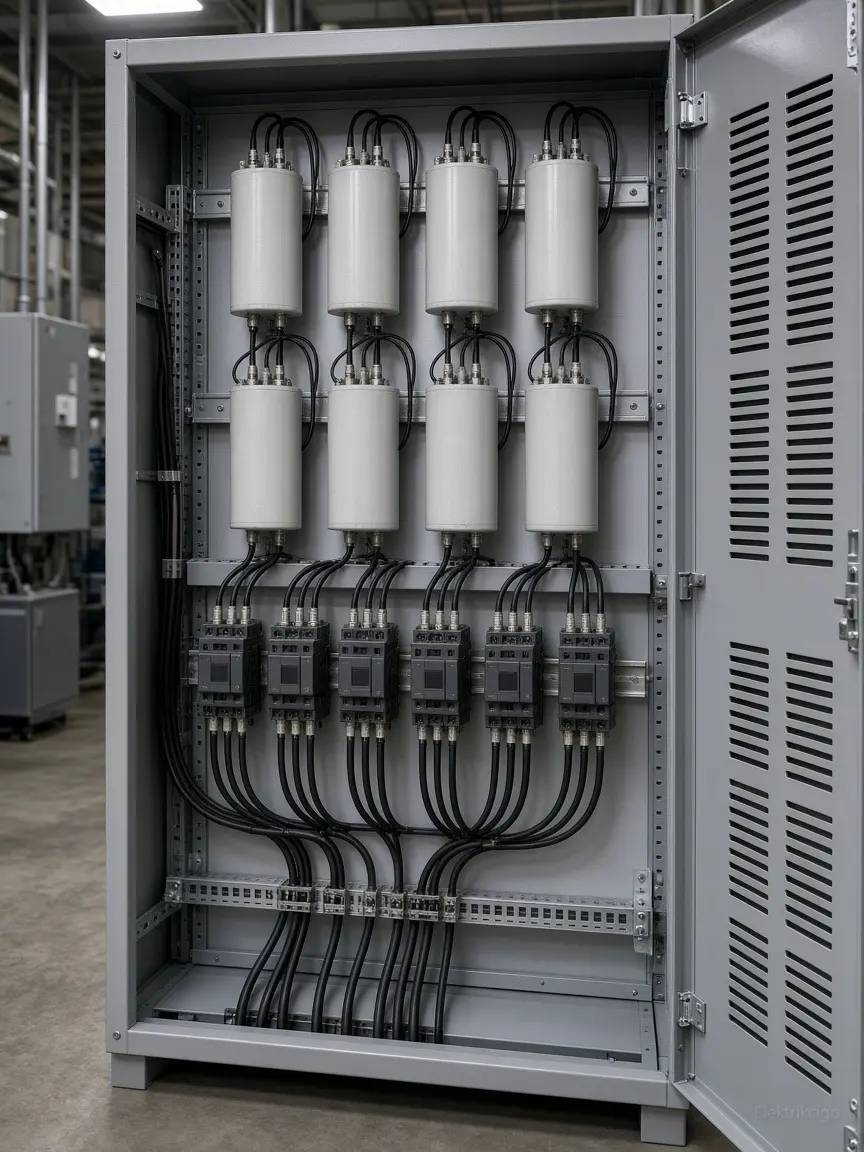
Open compensation cabinet with two rows of cylindrical capacitors and a contactor row below

Plant main distribution

Compensation board with cylindrical steps

Window: Same day, including step tests

Challenge

Eight cylindrical capacitors sit in two rows of four, with contactors below. A reactive penalty arrives when a step contactor welds or a capacitor swells. A screwdriver does not go on a live capacitor terminal.

A plain power contactor does not survive capacitor current. The tips char and the step drops out. A reversed current transformer makes the relay pick the wrong step day and night.

Solution

The step contactor is a Siemens Sirius capacitive type. Each step comes down with its own fuse and discharge. A swollen capacitor is replaced at the same kvar. The healthy neighbour stays.

The relay is set to the current-transformer direction. Steps are picked one at a time. Phase current is read with a clamp meter and cos φ with a power analyser. The point is the plant's real reactive load, not a cabinet filled for its own sake.

Specification

CapacitorCylindrical step, matched to the kvar plate
ContactorSiemens Sirius, capacitive type
ProtectionStep fuse and discharge
MeteringCurrent-transformer direction and cos φ
PlacePlant switchroom
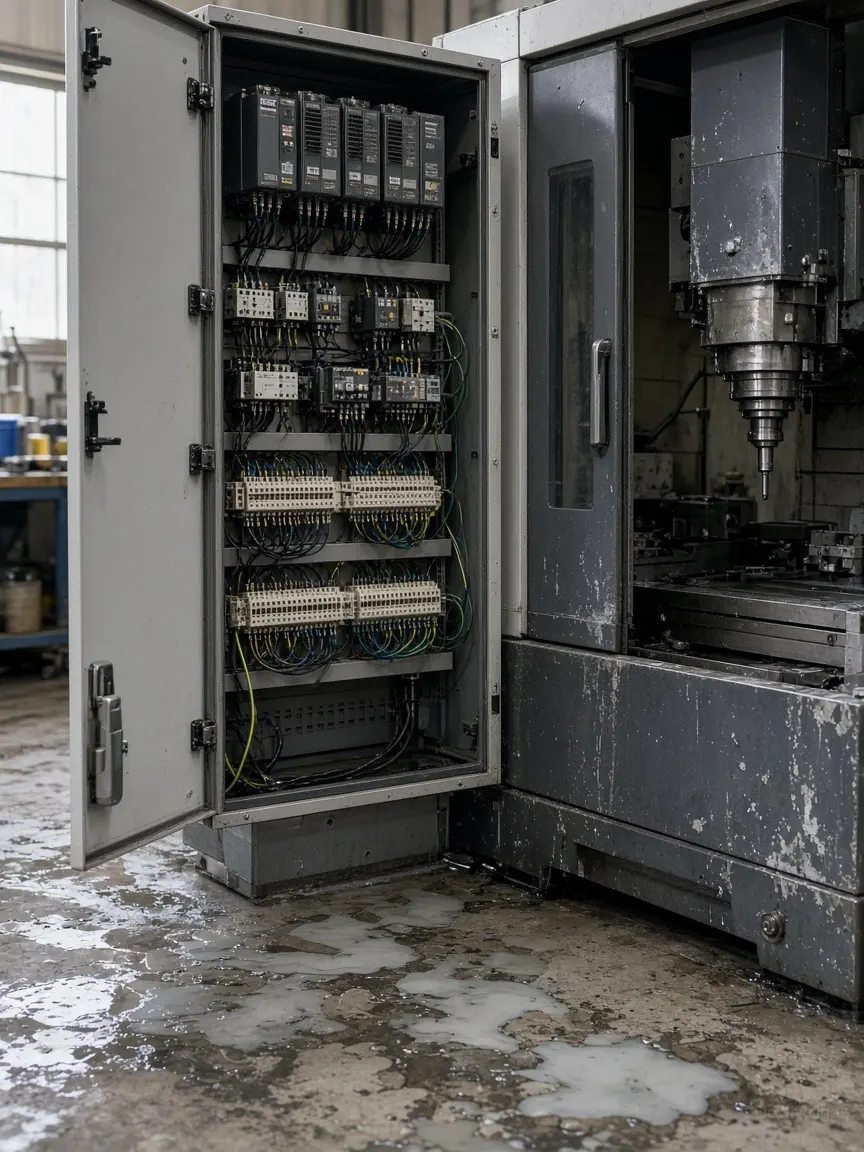
Open control cabinet beside a worn machine tool, drives on the top row, relays and terminals below, wet concrete floor

Machining centre

Machine cabinet, drives above and relays below

Window: Same shift while the machine is stopped

Challenge

The cabinet beside the machine has drives on the top row and relays and terminals below. The floor is wet and the paint is gone. The first move is to kill the supply and see that the footing is dry.

A random bridge on a failed axis drive loses the axis. A relay coil on the wrong voltage welds and the spindle moves on its own.

Solution

The top-row drives are read against the axis labels. A failed unit is swapped for the same family and the parameter set is loaded from the backup. The lower relays are split by coil voltage. The door closes after the e-stop chain measures sound.

On a wet floor the cabinet foot and the PE conductor are checked. A loose NYA earth lets the axis drive trip on leakage. The door does not stay open until the floor is dry.

Specification

Top rowAxis and auxiliary drives
Lower rowRelays and labelled terminals
SafetyE-stop chain, door shut
EarthPE conductor and a dry floor
PlaceBeside the machine

Same kind of board

Send the district and the name on the gear. The survey happens on site. A binding price is not cut from the desk.

Projects | ElektrikçiGO