Founding master
Adnan Şemiye18 years in the field
MYK-certified master
Adnan Şemiye reads this job in the field. The price is written before work starts.
Estimate 750–1,500 TRY
When the power fails in Istanbul there are two distribution companies. AYEDAŞ covers the Asian side and BEDAŞ the European side. Both use the fault line 186. This page separates a utility call from an electrician's call with three observations used on site: the street lighting, the neighbour's flat, and the position of the breakers. A sealed meter, a grid cable and a street cabinet are not opened.

Call a certified electrician
Asian side 24/7 emergency. European side by appointment. Arrival time is confirmed on the call.
Founding master
Adnan Şemiye18 years in the field
MYK-certified master
Adnan Şemiye reads this job in the field. The price is written before work starts.
From the field
Emergency van · +90 582 403 10 8701 / 03
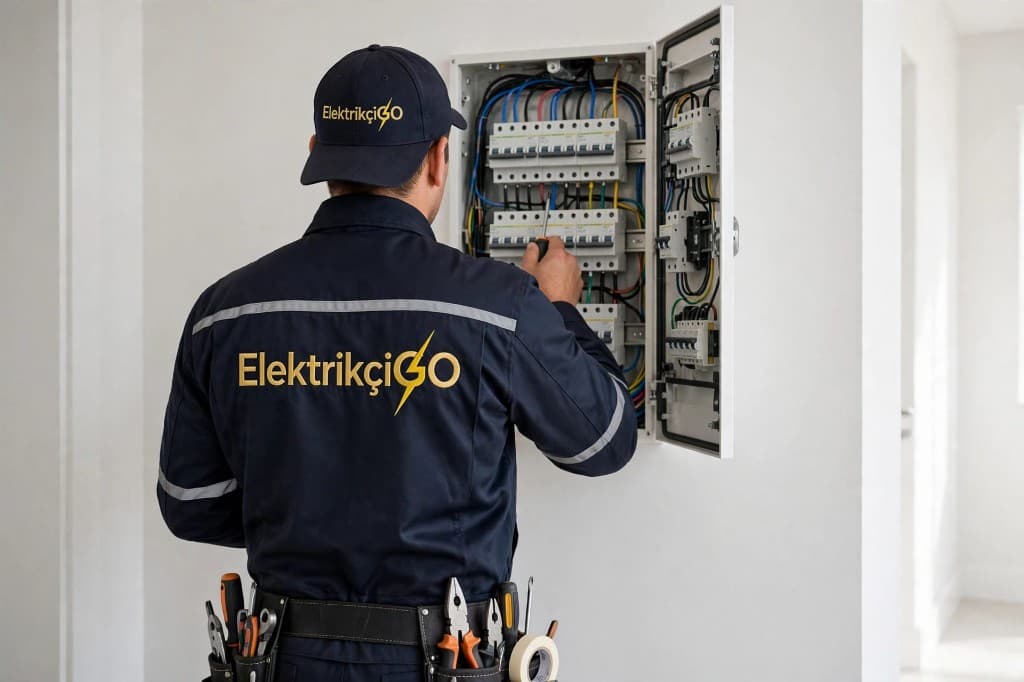
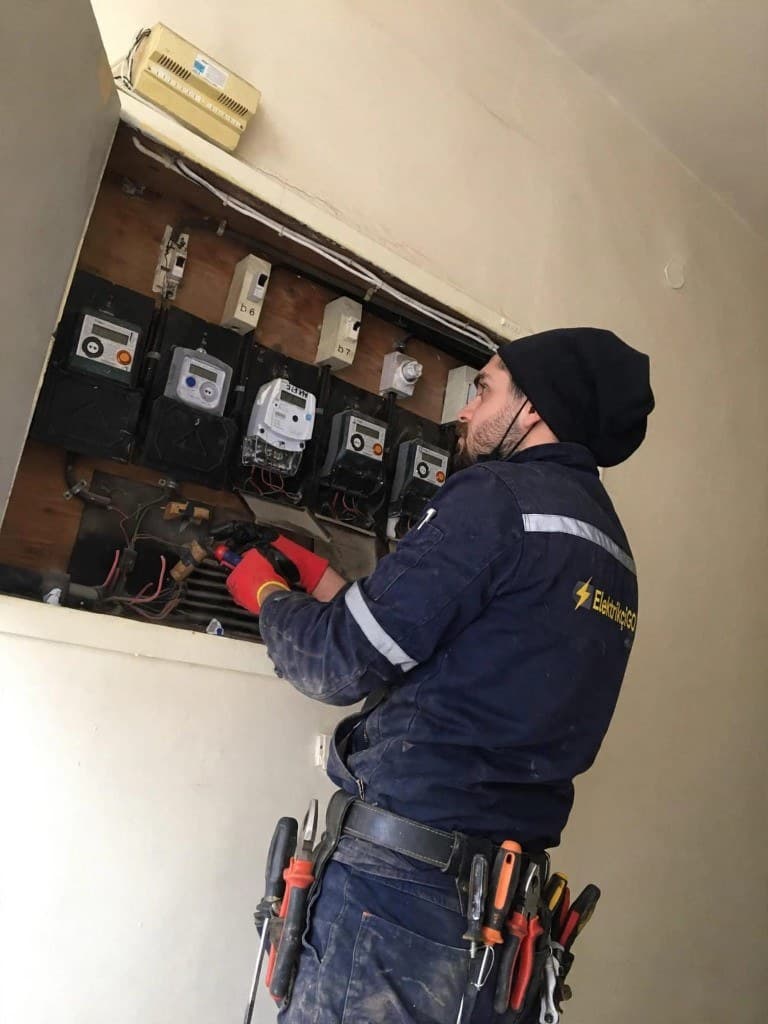
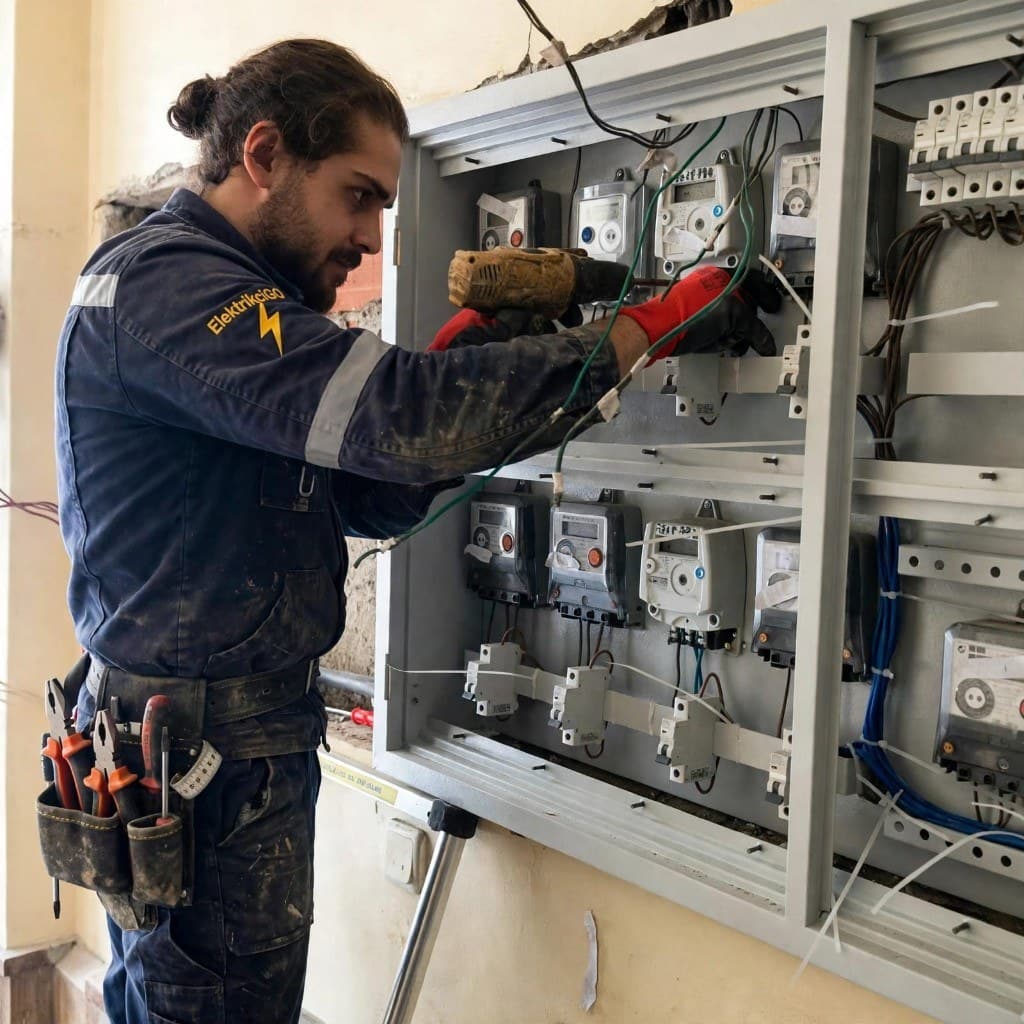
Adnan Şemiye, ElektrikçiGO electrician, fitting an Istanbul meter cabinet
AYEDAŞ is the Asian-side distribution company, part of Enerjisa. Its area is Adalar, Ataşehir, Beykoz, Çekmeköy, Kadıköy, Kartal, Maltepe, Pendik, Sancaktepe, Sultanbeyli, Şile, Tuzla, Ümraniye and Üsküdar. The grid side of calls in Pendik, Kartal, Maltepe, Tuzla and Kadıköy belongs on that list. A dark street on the European side is not an AYEDAŞ call.
BEDAŞ is Boğaziçi Elektrik Dağıtım. It covers the European districts: Arnavutköy, Avcılar, Bağcılar, Bahçelievler, Bakırköy, Başakşehir, Bayrampaşa, Beşiktaş, Beylikdüzü, Beyoğlu, Büyükçekmece, Çatalca, Esenler, Esenyurt, Eyüpsultan, Fatih, Gaziosmanpaşa, Güngören, Kağıthane, Küçükçekmece, Sarıyer, Silivri, Sultangazi, Şişli and Zeytinburnu. The two lists together are Istanbul's 39 districts. The district line also decides which company's subscriber the meter belongs to.
If the stairwell, the complex garden and the street lamp are dark together, the outage belongs to the distribution company. On the Asian side that is AYEDAŞ, on the European side BEDAŞ, and the number is 186. The address, the meter number and whether the outage darkened one flat or the whole street are given on that line. An electrician does not climb a grid pole, open an underground cable or enter a transformer kiosk. The crew, the vehicle and the authority for that work sit with the company.
If the neighbour has light and only one flat is dark, the fault is after the meter outlet. The main switch, the residual-current device, a breaker or a connection inside the flat is checked. If no breaker is down and the neighbour is lit, the measurement is taken between the meter outlet and the flat board. That measurement is the electrician's work, and the published survey band is 750–1,500 TRY. If the repair is accepted, the survey fee is deducted. A binding figure is not spoken before the measurement is written.
I do not lock a price on the phone. The range I give is an estimate drawn from similar jobs. The binding figure is written after I have seen and measured the fault, before I start. Extra work does not begin without your approval. Payment is on completion, invoiced, in Turkish lira. Nights and public holidays are a separate rate, and I say so before I leave. We work as an approved technician network. I give you the arrival window for your district on the call, and a live location link is shared once the technician sets off.
The meter seal belongs to the distribution company. The seal is not cut, the cover is not forced, and the meter is not removed and replaced. If the meter has burnt, the disc no longer turns, or there is a smell from the service-head cover, the record is opened on 186. The electrician measures the circuit after the meter, writes the result, and leaves the flat safe until the company crew arrives. Putting a screwdriver on the sealed side is treated as unauthorised use and it also spoils the measurement.
A power increase, a new subscription and moving the meter are the company's application work. The wiring, the board and the earthing inside the flat are the installation that has to be ready before the application. The company checks the internal installation against its own specification. A missing residual-current device, the wrong cable size or an unmeasured earth sends the application back. That preparation is done against a written quote after the survey. The quote is a separate job from the survey band above and is written before work starts.
If lamps across the whole complex burn dim and the neighbour has the same complaint, the voltage drop is on the grid. That is an AYEDAŞ or BEDAŞ record. The volts measured, how many flats are affected and the time are reported to 186. If one flat reads far below 220 volts while the neighbour is at normal voltage, the fault is a loose neutral, a burnt terminal or an undersized run. That measurement is taken with a True-RMS clamp and the phase-to-neutral voltage at the flat intake, and it belongs to the electrician.
When the neutral breaks, one phase can climb above 250 volts while another falls below 180. The fridge, the boiler board and the television fail together. In that picture appliances are not left plugged in and the main switch is turned off. If the street is affected too, the call is 186. If only the flat is affected, the call is an electrician. Mixing the two either leaves an unsealed meter or opens a board for nothing during a grid fault. The separation starts by looking at the neighbour once.
The information given to 186 is short: district and neighbourhood, street and door number, meter number, the time of the outage, whether one flat or the whole block went dark, and whether the stair light is on. The meter number is on the bill and on the meter cover. If it cannot be read, the address and the full name are enough; the operator finds the subscriber from those. Before a second record is opened for the same complaint, the number of the first record is asked. Two records make the crew be written to the same address twice.
When an electrician arrives, the report carries four lines: the state of the street and the neighbour, whether any breaker is down, the voltage measured between the meter outlet and the flat board, and whether the fault belongs to the grid or to the installation. If it belongs to the grid, the customer is told to open a 186 record, the seal is not opened, and the survey is charged because it wrote that separation. If it belongs to the installation, the repair band is written after the measurement and before work starts. A copy of the report is left in the flat, so neither the company crew nor the next technician has to produce the same measurement twice.
If the street is dark, the stairs are lit and one flat is dark, the fault is usually not the grid. The stairs are being fed by the generator or the ATS. That flat has stopped on its own breaker after the transfer panel. Opening a 186 record that says the whole building is out sends the company crew for nothing. The neighbour and the stairs are looked at first. If the stairs are on the generator and a lever in the flat board is down, the measurement is inside the flat. The generator is not started by hand, the ATS cover is not forced, and the mains contactor and the generator contactor are not closed together by hand. Two sources on the same bar is backfeed. That separation is written on the generator and ATS page. The repair steps stay on the generator page.
After the company crew renews a meter seal, the phase order may have changed. The lift and the hydrophore run backwards while the flat sockets look normal. That does not mean the 186 record is still open. Reverse rotation is two leads of a three-phase motor swapped, and it is read on the customer's panel without cutting a seal. The lift car is not entered. The hydrophore contactor output is read with a clamp on three phases. If one phase is missing, the fault is still on the supply and the company record stays open. If three phases are present and the motor is reversed, the leads are corrected on the customer panel. That job is on the lift and hydrophore panel page. No minute promise is given.
A sealed meter, the seal wire and the distribution company's own cable are a 186 record. The main switch after the meter, the flat board and the wiring inside the flat belong to the electrician. If the riser carries a seal, that section is written into the company record and the wire is not cut. If there is no seal and the fault is at the meter outlet, the voltage is read between the meter outlet and the main switch intake. That reading is taken from the outer terminal without opening the cover. If the cover screw is tied to the seal, the screw is not turned. The detailed order of riser and main switch is on the meter, main switch and riser page. The two pages do not repeat the same sentence. One separates who the call belongs to. The other measures the conductor after the meter.
The survey is charged because it wrote this boundary, and it does not replace the company's job because it did not open the seal. On the 2026 list a measured survey is 750–1,500 TRY. A breaker or 30 mA device after the meter is 1,250–3,200 TRY, and a flat board renewal is 6,500–16,000 TRY. The band is an estimate. Materials are outside it. The binding figure is written on site after the street, the neighbour and the board lever sit on the same sheet. During a grid outage the board is not opened and these bands are not written. Workmanship is one year for the work that was done. The Islands are reached by ferry appointment, with no night crossing. On the European side the survey is by appointment. On the Asian side the duty crew leaves from Pendik and arrival depends on the queue. No time promise is given.
Three photographs are enough before the call. The first is the street and the stair light. The second is the neighbour's window. The third is the position of the levers seen without opening the board cover. The meter cover and the seal wire are read from a distance too, and the screw is not turned. Those three frames stop the crew opening a board for nothing during a grid fault. If there is no photograph, the separation is done on site in the same order. Saying on the phone that the whole building is out opens the wrong record when only your flat is dark. If one flat is dark and the street is lit, 186 is the second call. The measurement starts at the meter outlet and stops at the seal line. Beyond that line is the company record. On this side of it are the main switch and the flat board. The two are not written on the same invoice.
One building does not have two distribution companies. The Asian side is an AYEDAŞ record and the European side is BEDAŞ. On a street where the district boundary is unclear, the company named on the bill is the one that counts. Giving the neighbouring district's number drops the record on the wrong desk. The Islands are in the AYEDAŞ area and depend on the ferry time. There is no night crossing to the islands. That sentence is not a reason to open a meter cover.
The band below is the published 2026 list. It is an estimate. The binding figure is written on site after measurement, and the work starts after that.
The bands below are the labour ranges actually seen on recent call-outs and exclude materials. The binding figure is given in writing after on-site measurement, and no work starts without approval.
| Job | Typical price range | What is included |
|---|---|---|
| Fault diagnosis and measured survey | 750 TRY – 1,500 TRY | Diagnosis with a True-RMS clamp, megohmmeter and thermal camera; the survey fee is deducted if the repair is accepted. |
| Breaker / RCD replacement | 1,250 TRY – 3,200 TRY | A 30 mA Type A device; varies with the number of ways and whether Schneider or Siemens is specified. |
| Dedicated air conditioning circuit | 2,400 TRY – 5,500 TRY | 3x2.5 or 3x4 mm² solid copper with a C20-C25 breaker; varies with run length and trunking route. |
| Flat board renewal (modular DIN) | 6,500 TRY – 16,000 TRY | Varies with room count, circuit splitting and whether a surge arrester is included. |
| Chandelier, spot and socket installation | 650 TRY – 2,800 TRY | Priced per unit; heavy chandeliers include a steel anchor set into structural concrete. |
| Internet and Cat6 data cabling | 1,100 TRY – 4,200 TRY | Includes a Cat6 run per room, an RJ45 data outlet and verification with a cable tester. |
| Factory / power factor periodic maintenance | 4,500 TRY – 18,000 TRY | By panel and step count; includes a thermal sweep and a written measurement report. |
Prices are estimated labour ranges and exclude materials. A binding quote is issued in writing after the technician measures on site and before any work begins. Last updated: October 2026.
Service covers the neighborhoods of Istanbul's 39 districts. Not the whole of Turkey. A survey is not a binding quote.
AYEDAŞ is called in Asian-side districts and BEDAŞ in European-side districts. Both use the fault number 186. If a district is not on the list on this page, the address is also checked against the company name printed on the meter.
If the street, the stairs and the neighbour are dark together, 186 is called. If only one flat is dark and the neighbour has light, the fault is after the meter and an electrician measures it. A grid pole and a transformer are not an electrician's work.
No. The seal belongs to the distribution company. A burnt meter, a broken seal and a smell from the service head are a 186 record. The electrician measures the circuit after the meter and leaves the flat safe until the company crew arrives.
That picture is a fault after the meter. The main switch, the residual-current device and the flat board are measured. The survey band is 750–1,500 TRY. If the repair is accepted, the survey fee is deducted.
No. If the whole street is dark, the outage is on the AYEDAŞ or BEDAŞ grid and 186 is called. An electrician does not enter a transformer or an underground cable.
If the neighbour has the same complaint it is grid voltage and the measured volts are reported to 186. If only one flat is low, a loose neutral or an undersized run is looked for, and that measurement belongs to the electrician.
The distribution company takes the application. The internal wiring, the board and the earthing are prepared before the application, and the company checks them against its own specification. That preparation is done against a written quote after the survey.
If the previous subscriber's balance was closed and a new contract was not opened, the meter is off. That is a subscription process, not 186. If the contract is open, the seal is in place and there is still no power, measurement separates the fault.
The main switch is turned off, the fridge door is opened rarely, and a reference number is taken from 186. That number is how the complaint is followed until a crew arrives. If there is a smell or sparking inside the flat, an electrician is called without waiting for the grid.