Founding master
Adnan Şemiye18 years in the field
MYK-certified master
Adnan Şemiye reads this job in the field. The price is written before work starts.
Estimate 2,400–5,500 TRY
An instant electric water heater is not a small load like a combi. A unit marked 7 to 10 kW draws thirty to forty amps at 230 V. That current is not the job of a 3x2.5 mm² NYM run pulled for sockets, nor of that run's C16 breaker. The cable heats, the insulation softens, the terminal blackens and the breaker opens. It is right to open: the breaker is protecting the cable. Raising the amp rating leaves the cable unprotected. The plug comes out, the shower is not used, and the board cover stays shut.
Call a certified electrician
Asian side 24/7 emergency. European side by appointment. Arrival time is confirmed on the call.
Founding master
Adnan Şemiye18 years in the field
MYK-certified master
Adnan Şemiye reads this job in the field. The price is written before work starts.
From the field
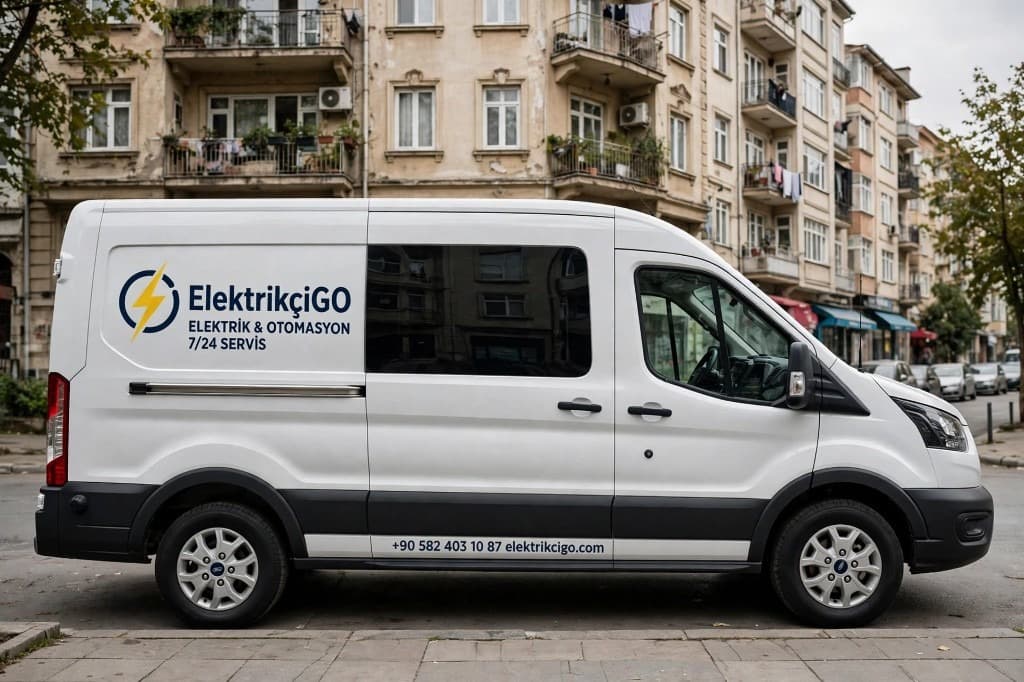 Emergency van · +90 582 403 10 87
01 / 03
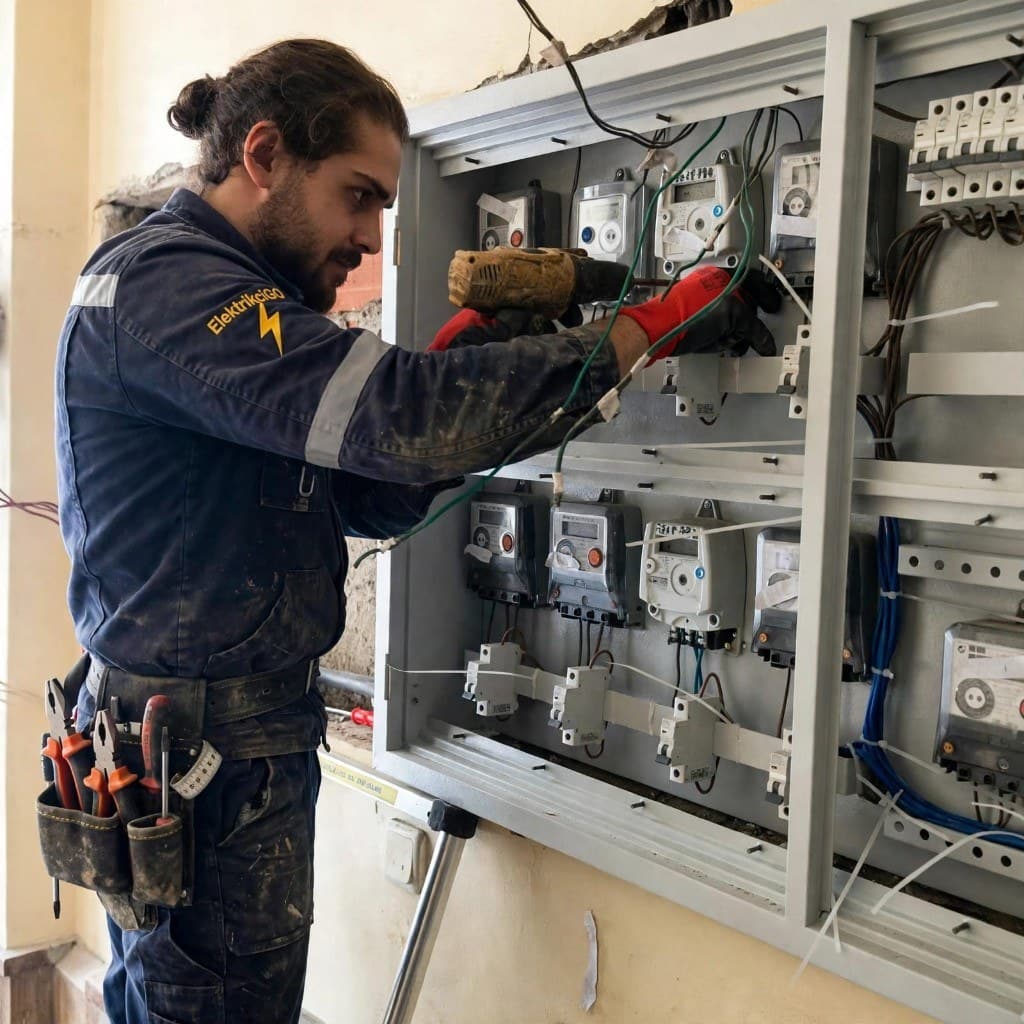
Adnan Şemiye, ElektrikçiGO electrician, fitting an Istanbul meter cabinet
Heat comes from two places. The first is a thin section: a 7 kW heater wants about 30 A. 2.5 mm² copper was not chosen to carry that current continuously inside a wall. The conductor heats, the PVC sheath softens and the colour changes. The second is a loose terminal. When screw torque falls, contact resistance rises, the same current concentrates at that point and the plug or the box blackens. When both happen together the sheath melts and phase approaches neutral or earth. The breaker opening at that moment is what stops the fire.
If the cable heats and the breaker has not opened, the breaker has not yet seen that heat as its threshold. That can mean the breaker was chosen too large. A C25 or a C32 on a 2.5 mm² circuit lets the cable melt while the breaker sits still. The right match is the other way round: the current the cable can carry is written first, and the breaker stays under it. The kW on the nameplate, the run length and the installation method are read on site. The section is not locked on the phone.
If the sheath is tacky, the colour has gone brown, or the socket edge is hot, the unit is switched off and the plug comes out. It is not plugged back in with wet hands. A joint wrapped in tape is not left inside the wall. The heater element sits in the same body as the water; if the insulation is pierced, the body can shock as well. That is a different path from the washer body on the earthing page, but the first move is the same: the supply comes off, and nobody leans on the body.
The breaker is not reset again and again. Each reset sends current through the melting point once more. The board cover stays shut and so does the heater cover. If the residual-current device has opened, it is not bridged. The water valve is not taken apart as a repair excuse while the supply is still on. The home page takes this call on the emergency line. Elektrikçi İstanbul is the city page.
The nameplate is read first: kW and volts. Then, with the plug out, the circuit section and the breaker's rated current are written down. If the sheath has not melted and the unit can be run briefly under watch, current is read with a True-RMS clamp. If the sheath has melted, the unit is not run at all and only a dead test is done. A terminal that shows a hot spot under load on a thermal camera has that tail cut back. A megohmmeter reads phase to earth with the appliance disconnected. A low number means the leakage is in the element, and the body can still shock even when the circuit is sound.
The decision is written, then the work starts. If the tail and the socket body are enough, the mechanism is replaced and the joint stays in a Wago or a proper terminal, not a twist and tape. If the section is not enough, a dedicated circuit is written: copper NYM, the section from the nameplate current and the route, the breaker under the cable. 3x2.5 mm² is not enough for a 7 kW heater. Whether 3x4 or 3x6 mm² is required is said on site, after the run is seen. The 2,400–5,500 TRY air-conditioner band is for that new circuit. Not every hot tail falls into it.
In older flats the heater sits on the same circuit as the bathroom light and a socket. The lamp drops or the breaker opens when the heater starts. The repair separates the lighting from that circuit and gives the heater its own. Lighting can stay on a 1.5 mm² circuit. The heater cannot. If the bathroom box is damp, the joint is not left there; it is taken to a dry box that can be reached.
When the job is finished, the breaker's rated value, the cable section and the heater's kW are written on the same sheet. If the three do not agree, the sheet is not finished. The binding figure is written after the measurement, not before that sheet. The price calculator shows the band. It is not a locked quote.
The heater nameplate sits under or beside the case. If it says 7000 W at 230 V, the current is about 30 A. At 9000 W it approaches 40 A. That number is not placed next to a socket circuit's C16 breaker. The cable section is read from the current it can carry for the way it is installed. A 2.5 mm² run buried in plaster does not carry this current continuously. The decision is written after the nameplate photo and the route are seen. The neighbour's heater is not the example. 3x2.5 mm² is not enough for a 7 kW unit. Whether 3x4 or 3x6 mm² is required is said after the run is seen.
Terminal heat and cable section are written separately. If the thermal camera shows only the screw hot and the run cold, the fault is torque. The screw is cleaned, a blackened tail is cut back, a melted body means a new mechanism, and the section can stay. If the run is hot as well, the section is not enough and a tail repair will not finish it. Reducing both to one plug replacement brings the same smell back the next day. The joint stays in a Wago 221 or a proper terminal. It is not twisted and taped. A joint in a damp bathroom box is taken to a dry box that can be reached.
A socket in the bathroom zone is chosen for a wet room. If the heater plug sits on an adaptor that reaches into the shower tray, that adaptor comes off. When a new circuit is pulled, the route is written as a door architrave and a flush channel, not a casual hole in the skirting. At the end the heater is run for one minute under watch, and the clamp current and the terminal heat are read again. If the heat does not fall, the circuit is switched off and the sheet is written again. The measurement is at the bathroom circuit's own terminal.
Three more checks are written before the sheet is closed. Has the adaptor and the extra socket come off, has the joint in the bathroom box been moved to a dry box, and is the breaker's rated current under the cable section. If the three are not yes, the heater is not started. On the 2026 list a measured survey is 750–1,500 TRY, and a hot tail with a melted socket body sits in the 650–2,800 TRY band. A new circuit is written only when the section is not enough, and that job falls in the 2,400–5,500 TRY air-conditioner band. Not every hot cable is placed in that band. The binding figure is written on site after the nameplate and the route are seen.
An instant heater is not a short load. While the water is open the element draws for minutes. The current is the nameplate watts divided by 230 volts. 7000 W is about 30 A and 9000 W is about 39 A. That current is not left on a C16 socket breaker or on a 2.5 mm² run in plaster. The cable is chosen from the current it can carry for the way it is installed. A buried, grouped, long run carries less than the same section in open air. That is why 3x4 mm² or 3x6 mm² is not named before the nameplate photo and the route are measured. NYM is for a dry interior. If the run leaves the flat or passes a wet room, NYY is written. The neighbour's heater is not the example.
The breaker is not chosen larger than the cable can carry. If the label says 39 A and the run is 4 mm², the breaker is not made 40 A. The section grows first, then the breaker is written to the section. Upsizing a thermal or a C-curve breaker by one step hides a hot end. A residual-current device is never upsized. If a heater leak darkens the whole flat, the cause is one device holding every branch. The repair is not bridging the device. It is separating that appliance onto its own 30 mA Type A protection. If the board is renewed, the job enters the 6,500–16,000 TRY band only when the rail, the terminals and a surge arrester are written together. A single device change sits in the 1,250–3,200 TRY band.
The heater body is metal and it stands beside the shower. If the earth tail is open, leakage reaches the body through the water. The green-yellow conductor lands on the bar with its own screw. It is not bridged to a water pipe. If the maker shows an earth stud on the body, that stud is not left empty. The joint does not stay in the wet plaster of the bathroom box. It is moved to a dry box that can be reached. The plug does not sit on an adaptor that reaches into the shower tray. The IP rating is chosen for a wet room. The light is separated from this circuit. A lamp can stay on 1.5 mm². The heater cannot.
At the end the heater is opened for one minute under watch. If the clamp current is close to the label and the terminal heat is falling, the circuit stays. If the heat does not fall, the circuit is switched off and the section is written again. On the 2026 list the survey is 750–1,500 TRY and a hot tail with a melted socket is 650–2,800 TRY. A new circuit enters the 2,400–5,500 TRY band only when the section is not enough. Not every hot cable is placed in that band. The band is an estimate. The binding figure is written on site after the nameplate, the route and the thermal reading sit on the same sheet. Materials are written separately. Workmanship is one year. No time promise is given.
The hot part is split in two. The heater's own flex is the movable lead that came with the appliance. If the flex sheath has melted and the wall cable is cold, the part that changes is the flex. Its section and plug are written to the current on the appliance label, and the wall circuit stays. If the wall cable is hot too, changing the flex does not stop the smell. Then the fixed run, the box and the board breaker are measured. The flex sits inside the 650–2,800 TRY band. Renewal of the fixed run is written in the 2,400–5,500 TRY band only when the section is not enough. The two are not put on the same line. Both are not sold to the customer together. The thermal camera separates which part is hot. A cold part is not invoiced.
If the heater and the bathroom lamp sit under the same breaker, the lamp goes out or burns weak every time the heater starts. The light is put back on a 1.5 mm² circuit. The heater does not stay on that breaker. Fitting a larger breaker before the split also leaves the thin lighting conductor unprotected. If the two neutrals are mixed in the box, the heater body can heat when the lamp is off. The neutrals are separated and each one lands on its own bar. This job is separate from a flex change. The heater is not started until the sheet says which conductor goes to the lamp and which goes to the heater.
The band below is the published 2026 list. It is an estimate. The binding figure is written on site after measurement, and the work starts after that.
The bands below are the labour ranges actually seen on recent call-outs and exclude materials. The binding figure is given in writing after on-site measurement, and no work starts without approval.
| Job | Typical price range | What is included |
|---|---|---|
| Fault diagnosis and measured survey | 750 TRY – 1,500 TRY | Diagnosis with a True-RMS clamp, megohmmeter and thermal camera; the survey fee is deducted if the repair is accepted. |
| Breaker / RCD replacement | 1,250 TRY – 3,200 TRY | A 30 mA Type A device; varies with the number of ways and whether Schneider or Siemens is specified. |
| Dedicated air conditioning circuit | 2,400 TRY – 5,500 TRY | 3x2.5 or 3x4 mm² solid copper with a C20-C25 breaker; varies with run length and trunking route. |
| Flat board renewal (modular DIN) | 6,500 TRY – 16,000 TRY | Varies with room count, circuit splitting and whether a surge arrester is included. |
| Chandelier, spot and socket installation | 650 TRY – 2,800 TRY | Priced per unit; heavy chandeliers include a steel anchor set into structural concrete. |
| Internet and Cat6 data cabling | 1,100 TRY – 4,200 TRY | Includes a Cat6 run per room, an RJ45 data outlet and verification with a cable tester. |
| Factory / power factor periodic maintenance | 4,500 TRY – 18,000 TRY | By panel and step count; includes a thermal sweep and a written measurement report. |
Prices are estimated labour ranges and exclude materials. A binding quote is issued in writing after the technician measures on site and before any work begins. Last updated: October 2026.
Service covers the neighborhoods of Istanbul's 39 districts. Not the whole of Turkey. A survey is not a binding quote.
No. The plug comes out, the breaker stays down, and it is not plugged in again with wet hands. A melting sheath shares the body with the water.
No. It leaves the cable unprotected. A C25 or C32 does not go on a 2.5 mm² circuit. The section is written first and the breaker stays under it.
No. 7 kW wants about 30 A. The section and the route are read on site. Four or six is not locked on the phone.
No. The melted tail is cut back to clean copper. The joint is a terminal inside a box. A taped joint is not left in the wall.
A hot cable and leakage to the body are read separately. If the element leaks to earth, a 30 mA device opens, and it should. It is not bridged.
No. A loose terminal and a melted socket are a tail job, in the 650–2,800 TRY band. A new circuit enters the 2,400–5,500 TRY band only when measurement shows the section is not enough.
On the 2026 list a measured survey is 750–1,500 TRY. If the repair is accepted, the survey fee is deducted from the job. The band is an estimate.
A joint is not left in a damp box. It is taken to a dry box that can be reached. A joint is not hidden inside the heater cover.