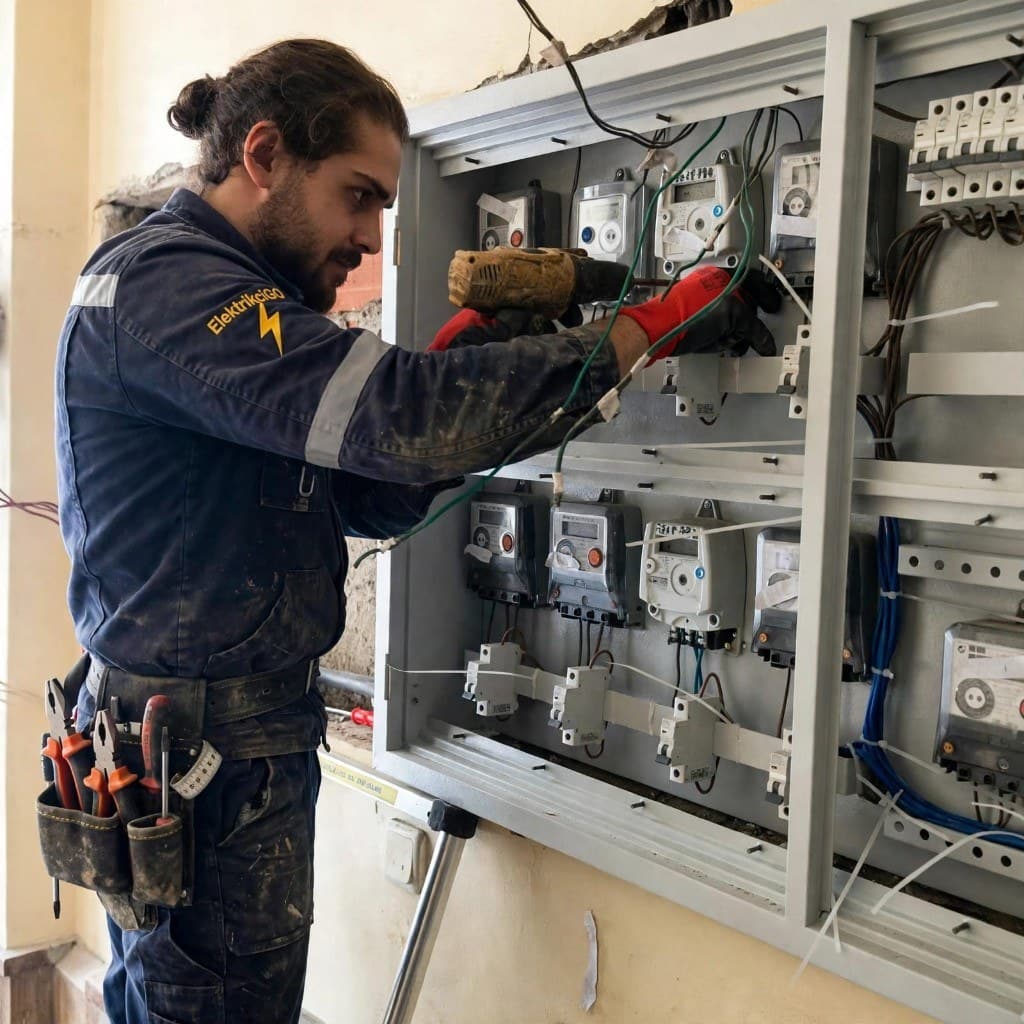
Founding master
Adnan Şemiye18 years in the field
MYK-certified master
Adnan Şemiye reads this job in the field. The price is written before work starts.
Maltepe district
Girne 24/7 emergency electrician. In this Maltepe neighbourhood we respond without a minute promise to midnight breaker tripping, residual current device faults, burnt sockets and consumer unit failures. In apartment and complex stock, saturated kitchen circuits, bathroom water heater runs and riser overheating are measured on site. Certified technicians, faults proven with a True-RMS clamp meter and a megohmmeter, written price approval and an official 1 year workmanship guarantee.
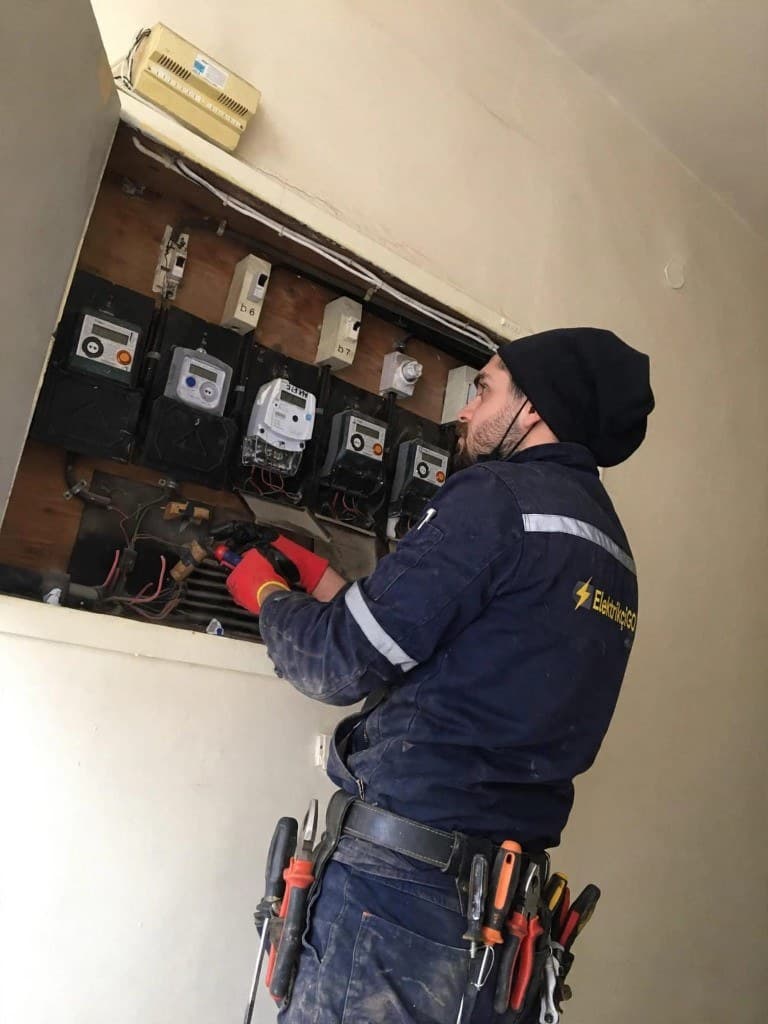
Founding master
Adnan Şemiye18 years in the field
MYK-certified master
Adnan Şemiye reads this job in the field. The price is written before work starts.
From the field
 Emergency van · +90 582 403 10 87
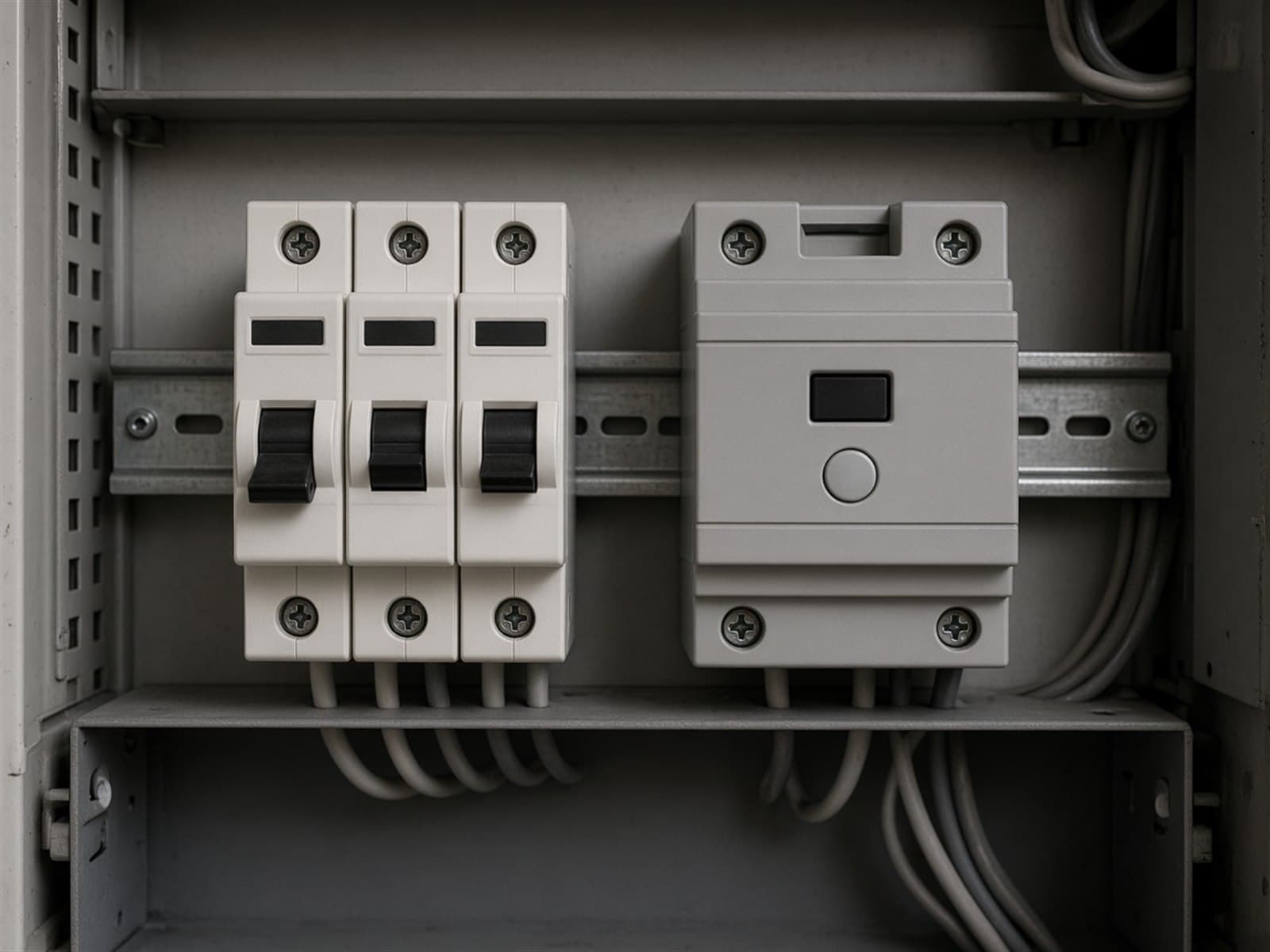
The call from Girne goes like this: 'We work from home; there are three computers in the room. The RCD trips now and then: sometimes in the morning as we switch the computers on, sometimes in the evening in a storm, once at night while we were all asleep. Reset, it holds. An electrician came, looked at the sockets, found nothing, replaced the RCD; two weeks later it tripped again.' This description has two important parts. First, the device that trips is the 30 mA RCD, not the main switch or a breaker. A breaker watches for overload and short circuit; the RCD watches for the difference between phase and neutral current, that is, current escaping through the protective conductor or earth. However large the load in the room, the RCD does not see it; the only thing it sees is leakage. Second, the trip comes with a particular moment, a device switching on or a surge. That is the picture not of a constant insulation fault but of short pulses sitting on top of a constant base leakage. Fitting a new RCD of the same model therefore does not fix it; the new RCD sees the same total leakage and the same pulses.
The desktop's power supply, the monitor's adapter, and the supply circuits of the printer, modem and network storage box are switched-mode supplies. They carry a filter at their input so that they do not push high-frequency interference back into the network; part of that filter is a pair of small Y-capacitors connected from phase and neutral to the protective conductor. Under 50 Hz mains voltage a Y-capacitor lets a small current flow constantly into the protective conductor. This is not a fault, it is a consequence of the design; equipment standards put an upper limit on this leakage for earthed equipment. A single device's leakage is usually below one milliamp. The problem is in the sum. If three computers, five monitors, a printer, a network box, a modem and chargers on a multi-socket strip sit behind the same 30 mA RCD, the standing leakage rises to several milliamps, sometimes above ten. A 30 mA RCD may trip, within its manufacturing tolerance, anywhere between half and all of its rating, that is between 15 and 30 mA. If the base leakage has settled at 10–12 mA, the capacitors' charging pulse when a device switches on, a short voltage surge produced on the network by lightning, or a neighbouring motor dropping out easily closes the few milliamps in between. The RCD trips; it has worked correctly but has been placed wrongly.
The RCD type's effect on this picture is the second layer. In many flats in Turkey the cheap RCD in the panel is AC type; it is designed to detect only sinusoidal alternating leakage. Power-factor-corrected computer supplies and electronic loads such as inverter air conditioners and washing machines can, during a fault, produce leakage that carries a pulsating DC component; an AC-type RCD may not detect that component correctly, and a DC component may even saturate the RCD's core and make it late on a real leak. A Type A RCD detects both sinusoidal and pulsating DC leakage. Surge-resistant Type A models, sold under names such as SI depending on the maker, are more immune to short high-frequency currents and switching pulses. A Type F RCD adds detection of mixed-frequency leakage to Type A's abilities and has increased resistance to short pulses. None of this means 'upsize the RCD': the 30 mA additional-protection threshold stays; what changes is what the RCD measures and how.
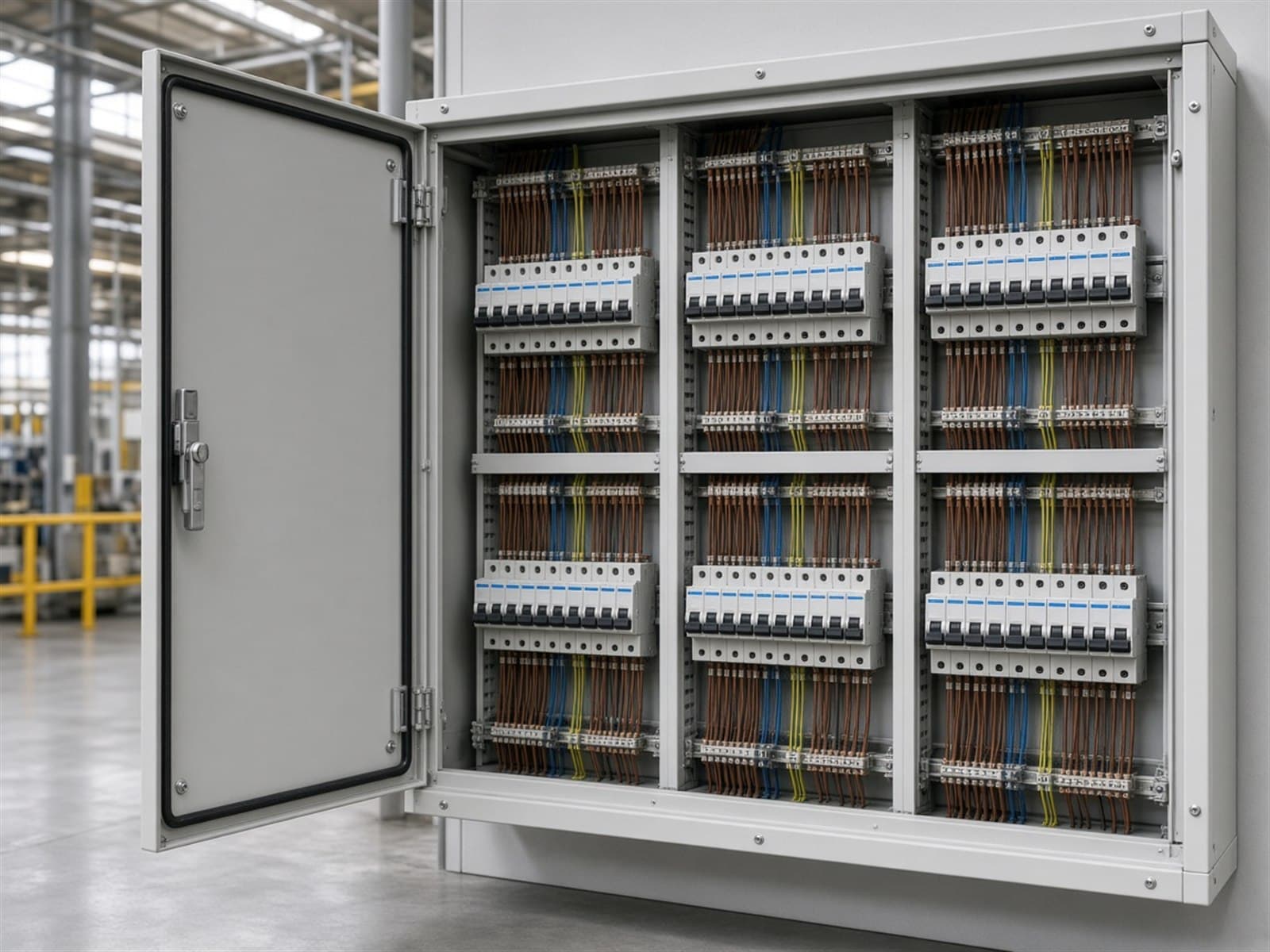
The survey starts without jumping to 'it is the computers', because the same symptom can come from a real fault. The first step is to test the RCD itself: an RCD tester measures at what leakage and in how many milliseconds it trips. If it trips even below 15 mA, the RCD itself has become oversensitive or faulty. The second step is to rule out a real insulation fault and neutral faults. Two faults are common in older buildings: the neutrals of two lines behind different RCDs tied together in a junction box, a borrowed neutral; and a neutral touching the protective conductor in a box or socket. Both drop the RCD at moments that look fault-free and have nothing to do with computers. For this the line is switched off at the panel, every device is unplugged, and a megger measures phase–PE and neutral–PE insulation resistance; a megger is not used with devices plugged in, because the device can be damaged and the filter capacitors mislead the reading. If a low resistance shows between neutral and PE, the fault is there and is found first.
If the installation measures clean, the third step is to measure the leakage. Devices are plugged back in and brought to their normal working pattern. A leakage clamp is placed on the line at the RCD's output so that it grips phase and neutral together; the clamp shows the difference between the two conductors' currents, the total standing leakage on that line, in milliamps. Then devices are switched off one by one to see each one's share; sometimes most of the leakage comes from one old printer or a faulty multi-socket strip, and the fix is that device. If total leakage exceeds about a third of the RCD's rating, 9–10 mA for a 30 mA RCD, that RCD should not carry this load. The same measurement is made on the flat's other lines; the washing machine, dishwasher, inverter air conditioner and fridge may be adding their own leakage to the same RCD. Results are written onto the panel schedule; the owner is shown how many milliamps each line carries.
The first and most effective step of the repair is splitting the leakage. The office room's sockets are fed, where possible, by a separate line from the panel, and that line is put on its own 30 mA RCD; so the computers' base leakage is not piled onto the same RCD as the kitchen, bathroom and washing machine. The standing leakage behind one RCD is kept below a third of its rating. If a separate line cannot be pulled, redistributing the existing lines between RCDs serves the same aim. The second step is the RCD type. On the office line a Type A RCD is used instead of AC type; where trips on short pulses are the complaint, a surge-resistant Type A, an SI-class model, and where mixed-frequency load is heavy, Type F. Schneider, Hager, Siemens or Legrand: whichever family is in the panel, the RCD is chosen from it and to suit the busbar layout. The choice is made by load, not by a catalogue sentence. The third step is the neutral: the neutral of each line behind an RCD comes only from that RCD's neutral output; no borrowed neutral remains. After the RCD is replaced, the tester measures trip current and trip time again, and the result is written onto the panel schedule.
What is not done is part of this fault too. The RCD is not bridged; the office room is not fed ahead of the RCD. The 30 mA RCD is not replaced with a 300 mA one; 300 mA is fire protection, it does not protect a person. The protective conductor of a computer or socket is not removed; a computer running without earth carries part of the mains voltage on its case because of the filter capacitors, and it shocks whoever touches it. An 'unearthed extension lead' is not a fix but a hidden hazard. All devices are not piled onto one multi-socket strip, and that strip onto one wall socket. Repairing the power supply inside the computer, network and software work belong to the computer service; the electrician's limit is the customer installation after the meter, the panel, the line and the RCD. How many lines, which RCD type and which layout are needed is written on site at the survey from measurement, not guessed on the phone.
The filter capacitors in computer, monitor and printer power supplies let a small standing leakage flow to the protective conductor. Summed behind the same RCD it approaches the threshold, and the pulse when a device switches on drops the RCD. Even so, the absence of a real fault is proven by measurement first.
No. 300 mA is fire protection; it does not protect a person against electric shock. The 30 mA threshold stays; the leakage is split across lines and the RCD type is chosen by load.
AC type detects only sinusoidal leakage. Type A also detects leakage with a pulsating DC component that electronic loads can produce. Surge-resistant Type A (SI) and Type F are more immune to short pulses.
It may stop, but it is dangerous. An unearthed computer's case carries voltage because of the filter capacitors and shocks whoever touches it. The protective conductor is not removed; an unearthed extension is not used.
There is no fixed minute. Istanbul 24/7. Arrival depends on the queue at that moment and D-100 traffic. A 30-minute claim is not invented.
We have no fixed shop; ElektrikçiGO is a mobile, service-area team working on site across Maltepe. The call lands on the phone, an appointment is set and the technician comes to your address. When they depart, their name, vehicle plate and a live tracking link are shared so you know in advance who is at your door. The survey is done on site and the binding figure written after measurement.
Yes. Parts fitted carry the manufacturer's warranty and the workmanship an official 1 year ElektrikçiGO guarantee. On completion the brand and model of switchgear used, the measured insulation and earth resistance values and the trip time of the 30 mA device are written onto a signed service report and handed to the customer. A copy is kept on file so values can be compared at the next inspection.
Service covers the neighborhoods of Istanbul's 39 districts. Not the whole of Turkey. A survey is not a binding quote.
Girne, Maltepe. The map is centered on the neighborhood. Arrival changes with the hour and the traffic.