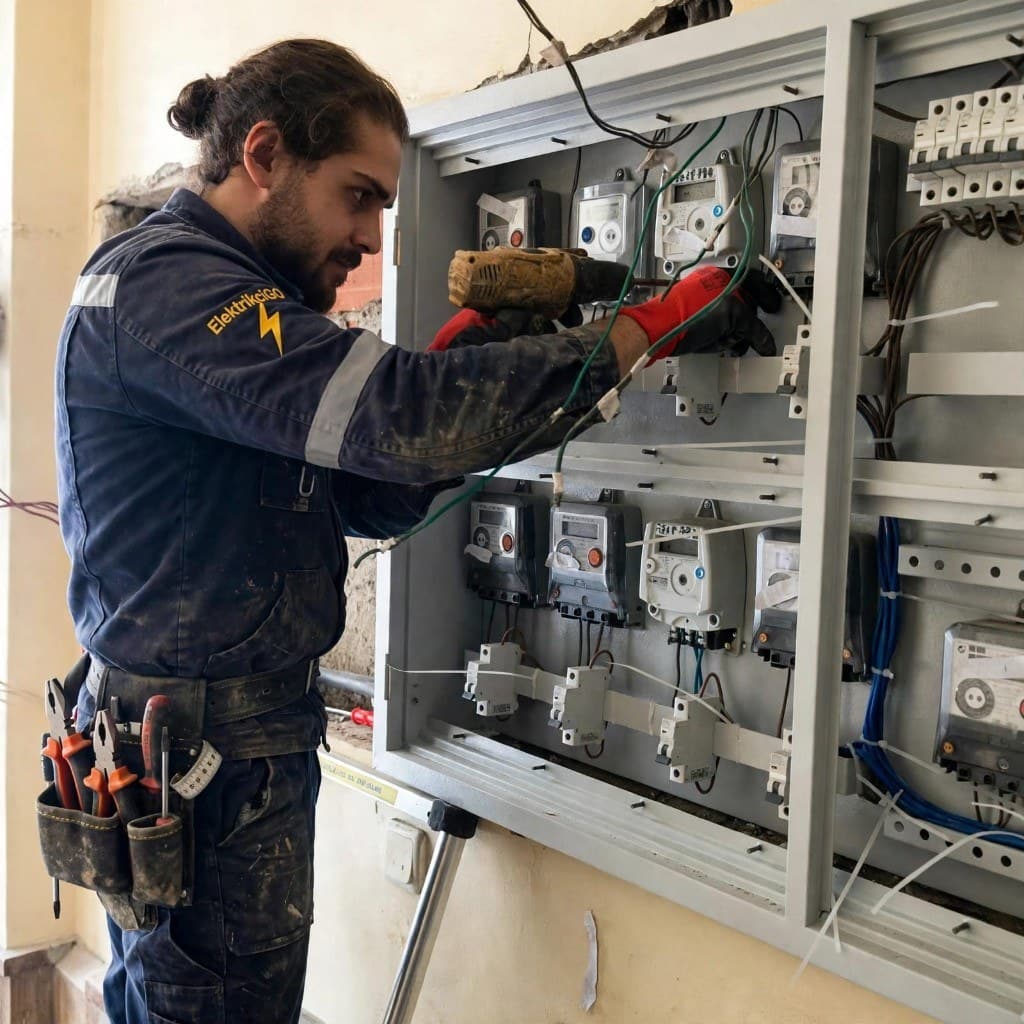
Founding master
Adnan Şemiye18 years in the field
MYK-certified master
Adnan Şemiye reads this job in the field. The price is written before work starts.
Maltepe district
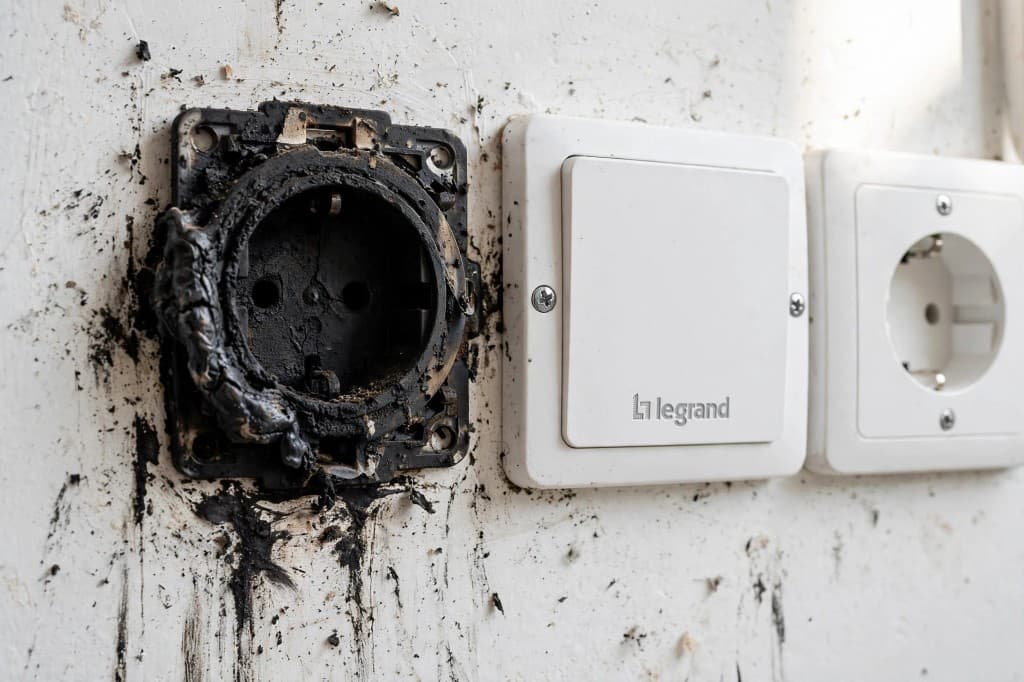
Büyükbakkalköy 24/7 emergency electrician. In this Maltepe neighbourhood we respond without a minute promise to midnight breaker tripping, residual current device faults, burnt sockets and consumer unit failures. In apartment and complex stock, saturated kitchen circuits, bathroom water heater runs and riser overheating are measured on site. Certified technicians, faults proven with a True-RMS clamp meter and a megohmmeter, written price approval and an official 1 year workmanship guarantee.
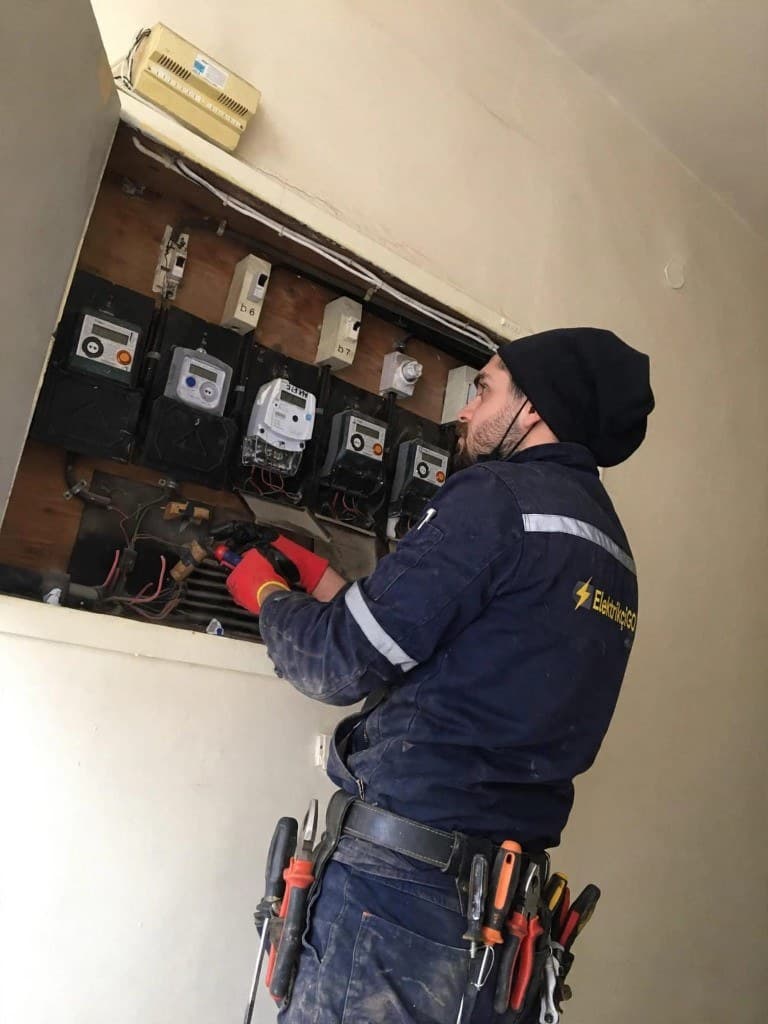
Founding master
Adnan Şemiye18 years in the field
MYK-certified master
Adnan Şemiye reads this job in the field. The price is written before work starts.
From the field
 Emergency van · +90 582 403 10 87
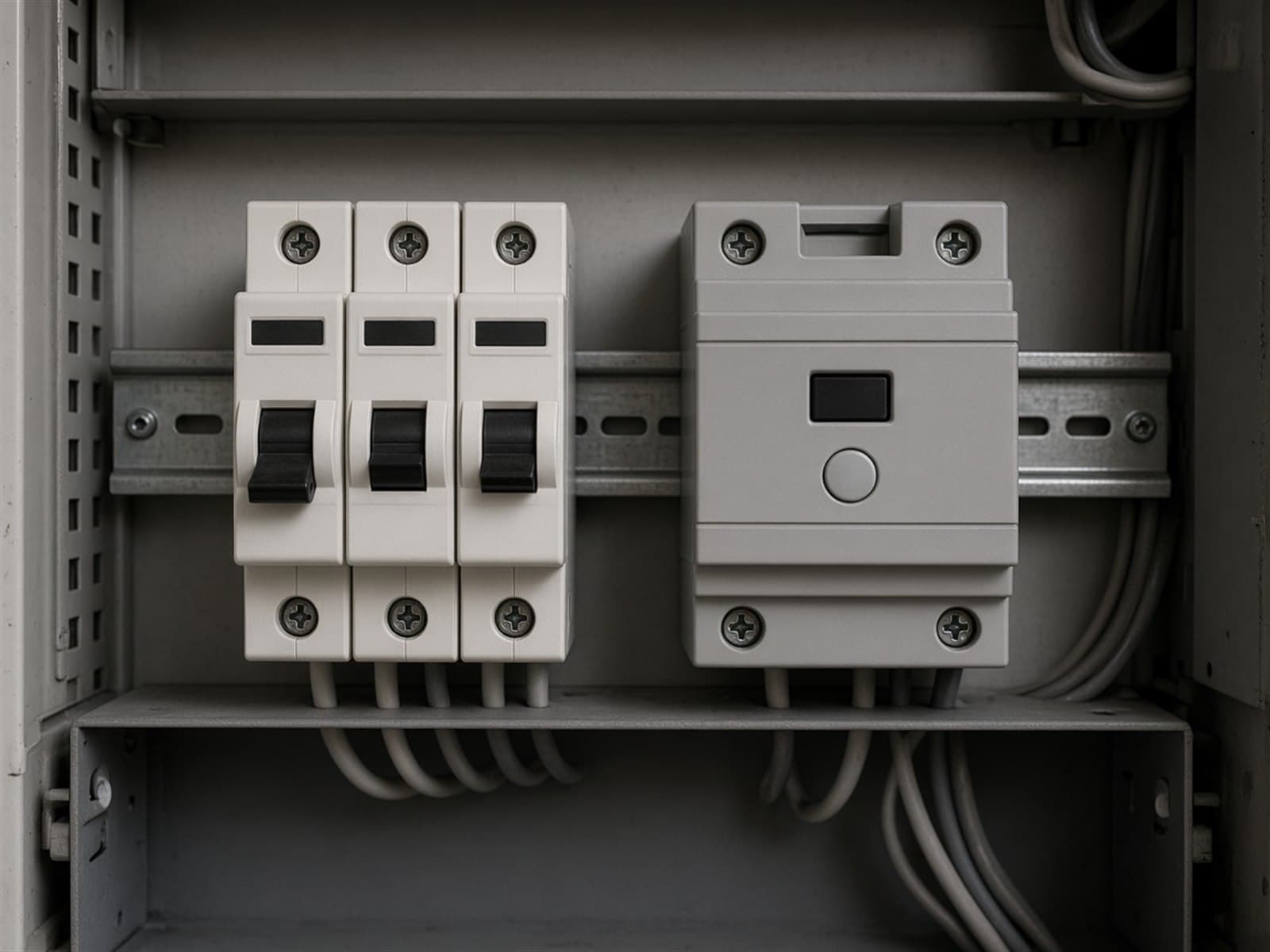
The description from Büyükbakkalköy is usually the same: 'We switched the living-room spots to LED last year to cut the electricity bill. Since then the lights flicker at low settings and sometimes blink. The rotary knob on the wall is much hotter than before and buzzes when you get close. Yesterday the frame around the knob yellowed and there was a faint burning smell. The breaker never tripped. And at night we turn the knob off but the spots glow faintly in the dark.' Every part of this description says something. Flicker and blinking show the dimmer's triac cannot trigger properly into the load. The heat and buzz say the interference choke and triac inside the dimmer are being strained by sharp current spikes. The yellowed frame and smell show the heat has now reached the box plastic and the conductor insulation; from here the fault is not a comfort problem but the start of a fire. The glow when off means the small current an old two-wire dimmer draws through the lamp to power its own circuit, which never lit a halogen, half-runs the LED driver. The breaker not tripping is this fault's signature. The first step is to turn the dimmer fully off rather than to its lowest setting, switch off the lighting breaker until the survey, and not touch the yellowed frame.
Most old rotary dimmers are phase-cut leading-edge types. Mains voltage changes direction fifty times a second; every half cycle starts at zero, rises to the peak and falls back to zero. A leading-edge dimmer cuts off the start of every half cycle: the triac waits off for a while, then switches on abruptly at the moment set by the knob and gives the rest of the half cycle to the lamp. Halogen is a resistance; even when the voltage arrives abruptly the current follows it smoothly and this method dims halogen without trouble. These dimmers were made for halogen and wound transformers; their labels often show the letters R and L, resistive and inductive load, and a power range such as 60–400 W. The driver inside an LED spot is very different from a resistance. At its input sits a bridge rectifier and a filter capacitor. When the triac switches on abruptly mid-voltage, say above a hundred volts, the empty capacitor tries to charge to that voltage at once and a very short but high current spike is drawn. This repeats every half cycle, a hundred times a second. The spikes turn into heat in the triac and in the dimmer's interference-suppression choke; the choke vibrates mechanically and the buzz is that vibration. The LED driver's capacitor is strained by the same spikes and the driver dies early.
The second mismatch is the amount of load. Six 50 W halogen spots made 300 W and sat in the middle of the dimmer's 60–400 W range. The 5 W LED spots fitted into the same six holders make 30 W in total; that is half the dimmer's minimum load. A triac needs a certain minimum current through it to stay conducting. When the current stays below this limit the triac cannot stay properly on every half cycle, sometimes switches off early, sometimes does not trigger at all; that is the flicker in the light and the blinking at low settings. Most old dimmers are two-wire: there is no neutral in the box, and the dimmer powers its own circuit with a small current passing through the lamp. Halogen never glows on this small current; the LED driver's capacitor, however, slowly charges on it, the driver runs for a moment when it reaches a certain voltage, and the switched-off spot glows faintly in the dark or blinks now and then. Throughout, the lighting line's 10 A breaker sees nothing; 30 W is about 0.13 A and the spikes are far shorter than the breaker's response. The RCD sees nothing either, because the current returns from phase to neutral and does not go to earth. The heat, though, builds up airless inside a small switch box inside a plaster or brick wall and over time cooks the box plastic, the dimmer body and the conductor insulation.
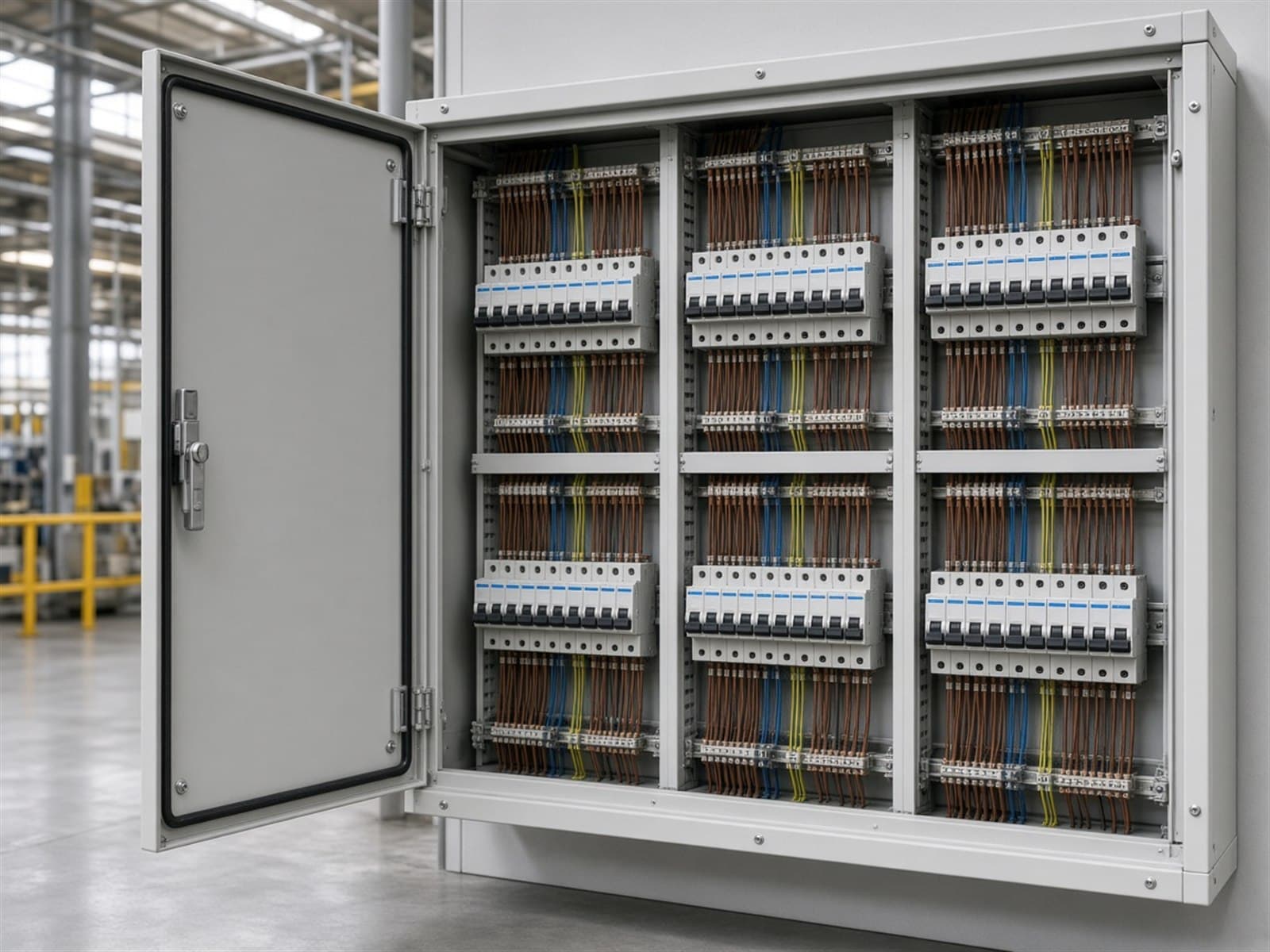
The survey starts at the panel: which breaker feeds the living-room lighting and which other lights are on that line are read. After the line is switched off and dead is proven by measurement, the dimmer's cover and knob are removed and the dimmer taken out of the box. The signs looked for are clear: darkening or blistering on the dimmer body, heat colour on the terminals, browning or melting of the box plastic, hardening and discoloration of the conductor insulation. The dimmer label is read: leading-edge or trailing-edge, which of the letters R, L, C appear, what the power range and minimum load are, whether a separate value is given for LED. Then the box is checked for a neutral conductor; if there is one, a three-wire dimmer can be chosen. Next one of the ceiling spots is removed and its label read: its power, whether it is 230 V GU10 or 12 V MR16, whether it is marked dimmable. Whether all the spots are the same make and model is checked; different drivers react differently on one dimmer, and one flickers while another stays steady. If the spots are 12 V with a transformer in the ceiling, that is the subject of the Pendik Bahçelievler note, not this one. Finally, to separate the source of the flicker, a plain switch is temporarily connected in place of the dimmer and the line energised: if the flicker disappears on the plain switch the cause is the dimmer; if it continues, a loose neutral or a dying driver is looked for.
The first step of the repair is removing the burned part and the damaged connection. A heat-darkened dimmer is not refitted; its triac and choke are damaged and it soon either fails completely or runs hotter. Conductor ends hardened or discoloured by heat are cut back to sound copper; if the box plastic has melted the box is renewed too. The second step is the right dimmer. For LED a trailing-edge type is chosen, a phase-cut dimmer that cuts not the start of every half cycle but the end. In a trailing-edge dimmer the voltage starts softly from zero and is cut at the end of the half cycle; the LED driver's capacitor never meets a sudden voltage step and no current spike forms. These dimmers' labels show R and C, resistive and capacitive load, and a separate watt range for LED. Universal LED dimmers recognise the load and switch to leading or trailing edge themselves, and most have a trim screw for setting minimum brightness; that trim removes flicker at low settings and glow when off. The dimmer's LED watt range must both meet the minimum with the total LED load and stay comfortably below the maximum; the maximum given for LED is often about a quarter of the halogen value. If the box has a neutral, a three-wire dimmer solves the glow-when-off problem at the root.
The old leading-edge dimmer's triac switches on abruptly mid-way through every half cycle. The capacitor at the LED driver's input draws a current spike at that moment; repeated a hundred times a second, these spikes heat the triac and interference choke, and the choke buzzes.
An old two-wire dimmer powers its own circuit with a small current through the lamp. Halogen does not glow on it, but the LED driver half-runs. If the box has a neutral, a three-wire dimmer or a universal LED dimmer with a minimum-load trim removes it.
It is dangerous. A 30 W LED load draws about 0.13 A and the spikes are very short; the breaker cannot see them. The heat builds up airless inside the switch box. If the frame has yellowed or there is a smell, the line is switched off and the dimmer removed.
For LED, a trailing-edge type whose label shows R and C and an LED watt range, or a universal LED dimmer that recognises the load itself. The total LED load must meet the minimum and stay comfortably under the LED maximum. If dimming is not used, a plain switch is the soundest fix.
No. An LED not marked dimmable flickers even on the best-suited dimmer and its driver soon fails. All spots on one dimmer must be dimmable and the same model.
There is no fixed minute. Istanbul 24/7. Arrival depends on the queue at that moment and E-5 and TEM traffic. A 30-minute claim is not invented.
With dispatch coordinated from our Pendik hub and GPS-tracked vans patrolling the main Maltepe corridors, average arrival in Büyükbakkalköy is no fixed minutes. When the technician departs, their name, vehicle plate and a live tracking link are sent by SMS or WhatsApp. We do not promise an undeliverable time; if we are busy the next shift is stated plainly.
The survey fee is stated clearly on the call, with no surprises. The binding price is written only after on-site measurement: no figure is given before the clamp current, terminal temperature and insulation resistance have been seen. No work starts without approval. The brand and model of switchgear fitted, the measured values and the labour charge go onto a signed service report, and parts and labour carry an official 1 year guarantee.
Service covers the neighborhoods of Istanbul's 39 districts. Not the whole of Turkey. A survey is not a binding quote.
Büyükbakkalköy, Maltepe. The map is centered on the neighborhood. Arrival changes with the hour and the traffic.