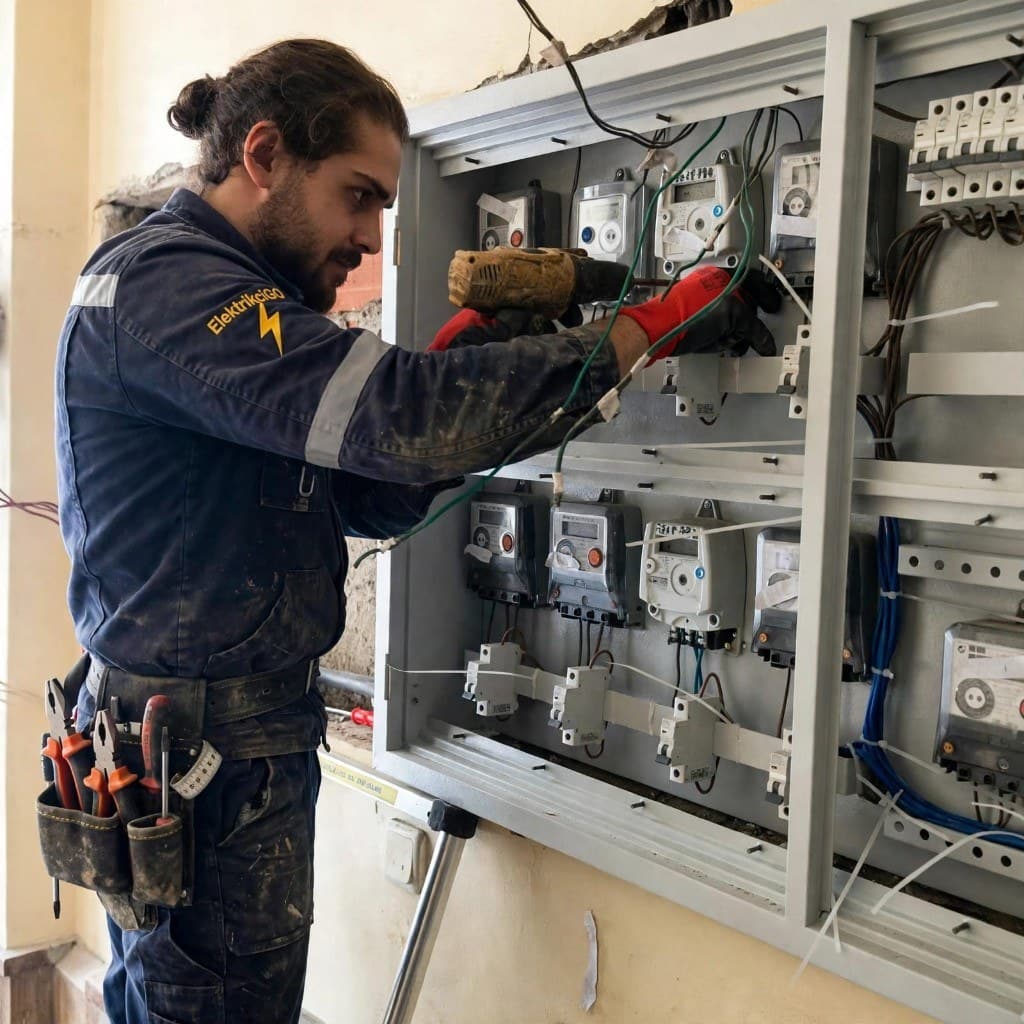
Founding master
Adnan Şemiye18 years in the field
MYK-certified master
Adnan Şemiye reads this job in the field. The price is written before work starts.
Maltepe district
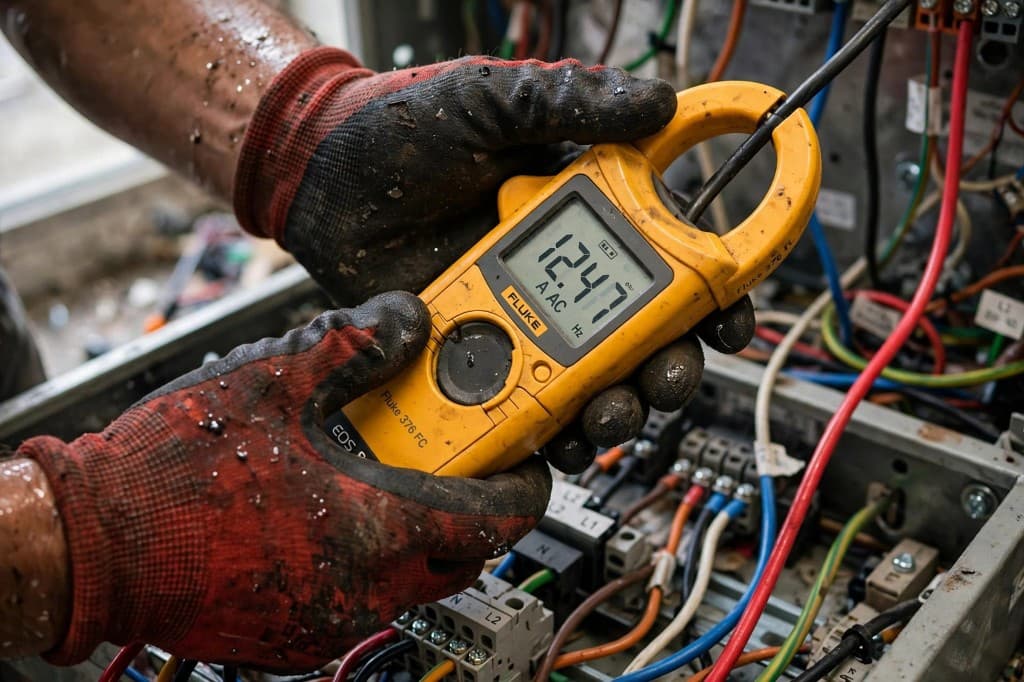
Gülensu 24/7 emergency electrician. In this Maltepe neighbourhood we respond without a minute promise to midnight breaker tripping, residual current device faults, burnt sockets and consumer unit failures. In apartment and complex stock, saturated kitchen circuits, bathroom water heater runs and riser overheating are measured on site. Certified technicians, faults proven with a True-RMS clamp meter and a megohmmeter, written price approval and an official 1 year workmanship guarantee.
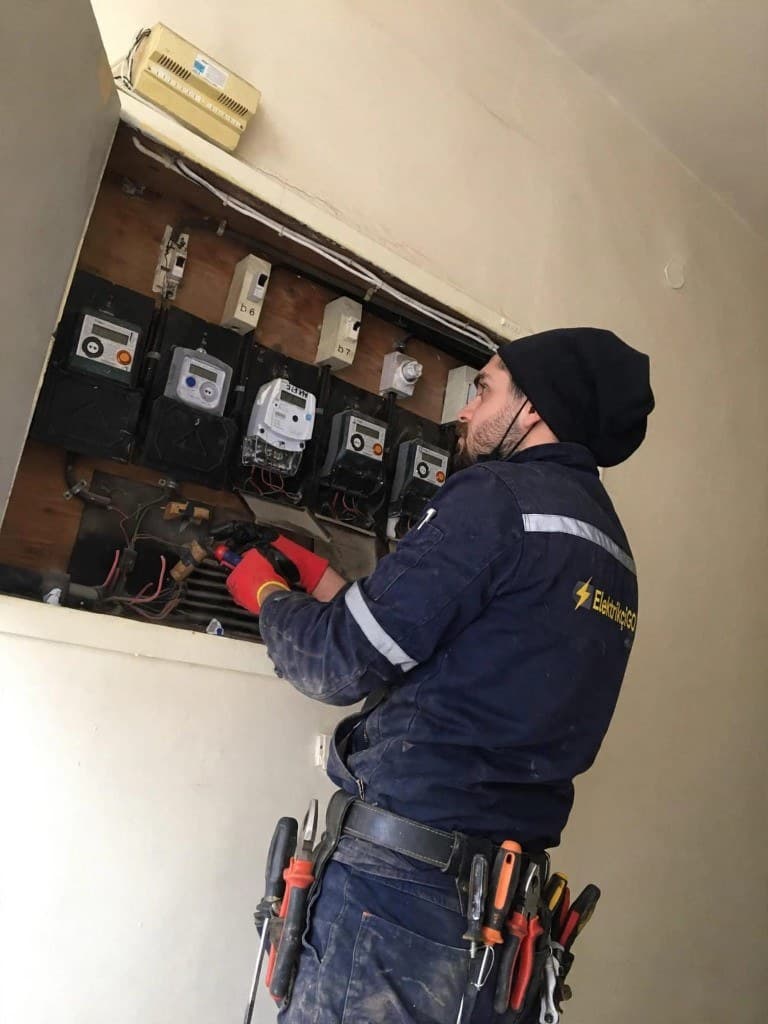
Founding master
Adnan Şemiye18 years in the field
MYK-certified master
Adnan Şemiye reads this job in the field. The price is written before work starts.
From the field
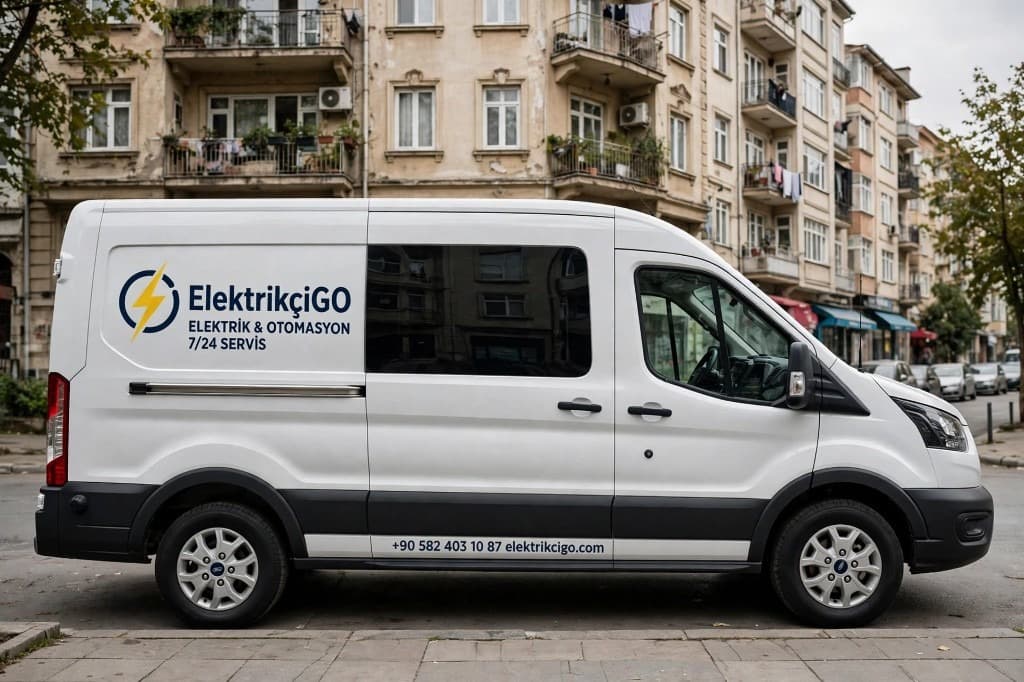 Emergency van · +90 582 403 10 87
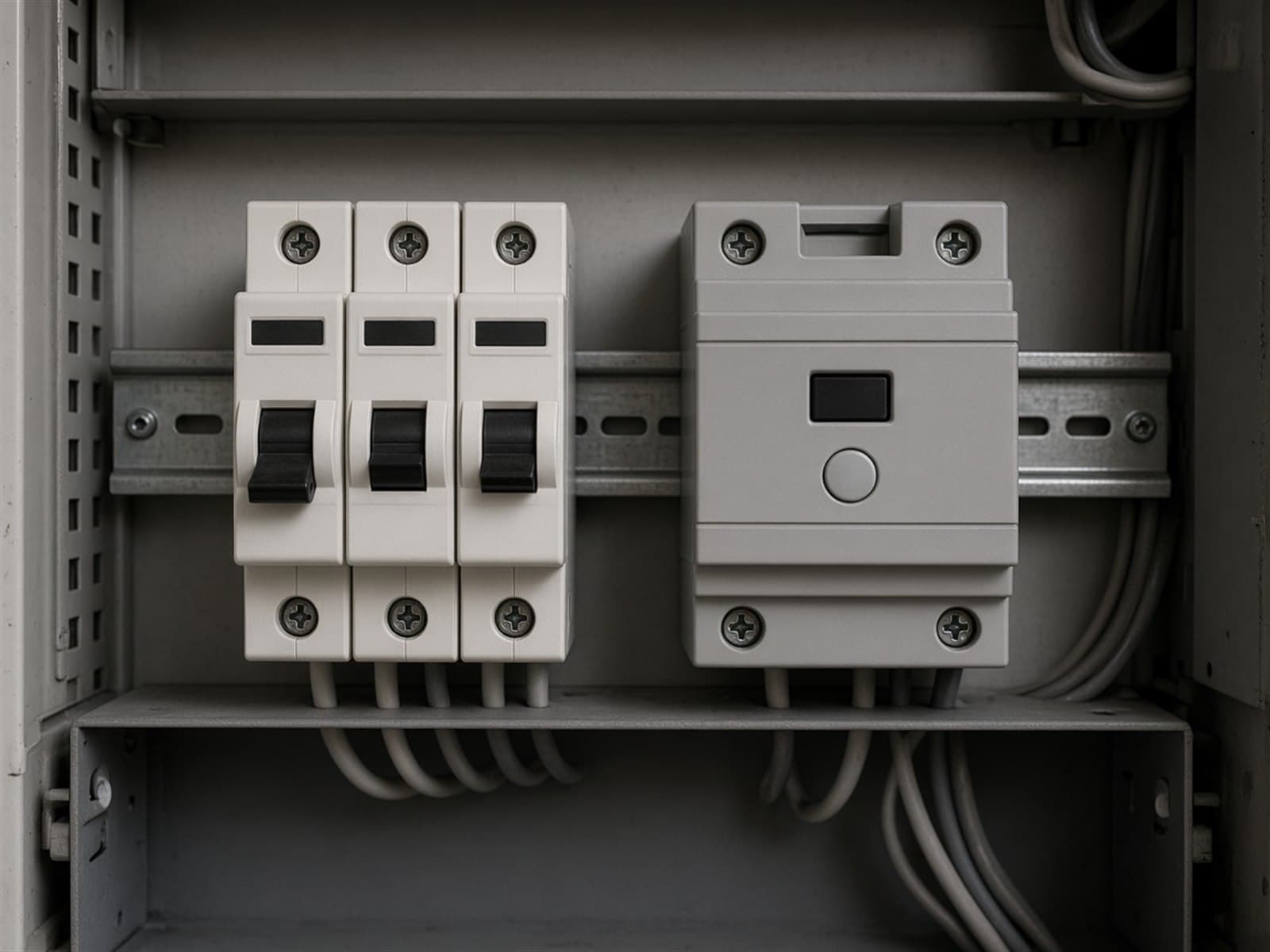
The call from Gülensu usually starts during a wash: 'While the washing machine was running there was a burning smell from the balcony. The socket cover has turned brown and one corner has blistered. We pulled the plug; one of its pins has blackened and the inside of the socket has melted. The breaker never tripped and the machine kept running.' Sometimes there were signs before: 'For a while, when the machine switched to heating, there was a faint smell by the socket and the plug got too hot to hold.' Every part of this description says something. The smell starting mid-wash, while the machine heats water, shows the heat rises with the load current; so the fault is not an insulation fault but resistance at a contact point the current passes through. The inside of the socket melting rather than its cover says the heat comes from the terminal behind the socket. The plug pin blackening shows the heat passed from the socket contact into the plug too. The breaker not tripping is this fault's signature: a breaker watches for overcurrent and short circuit; here the current through the line is the machine's normal current, and the heat is produced at one point, on a contact area of a few square millimetres. The first step is to stop the machine, switch off the socket circuit's breaker, pull the plug only after the line is off, not touch the melted socket, and not carry on running the machine from another socket on an extension lead.
The conductor of the NYA and NYM cables used in fixed installations is usually single-strand, solid copper. A socket's screw terminals are designed for this solid conductor: when the screw is tightened the solid wire flattens slightly, a wide and stable contact area forms and the wire does not move under the screw. The flexible cord known as TTR is made of dozens of fine strands; it is built that way to withstand bending and movement, and its correct use is as an appliance's own cable or an extension cord. When these fine strands are clamped without a ferrule into a screw terminal, three things happen. First, the screw's tip and edge cut some strands; strands are lost at the very first tightening. Second, the strands slide sideways under the screw and splay; some stay outside the terminal and some never get under the screw. Third, the clamped bundle settles into itself over time; the gaps between strands close and the screw's clamping force falls. The vibration of the machine's spin cycle travels along the cord to the socket and causes fatigue breaks at the strands' cut edges. In every wash the terminal heats and cools; copper and brass expand differently and the screw loosens a little more. With each cycle the effective cross-section falls a little and the contact resistance rises a little.
At this point a small resistance means a lot of heat. For most of the wash a washing machine draws only a few hundred watts through its motor; but while heating water its roughly 2 kW element switches in and 9–10 A pass through the line. When the contact resistance at the terminal rises to a few tens of milliohms, a few watts of heat are produced at the contact point at this current. A few watts sounds small, but this heat is produced inside a brass terminal and a handful of fine strands, in a closed socket box, for tens of minutes. Oxide forms on the heated copper surface, oxide raises the resistance, the higher resistance produces more heat; it is a self-feeding loop. In the end the conductor insulation and the socket's plastic body char; charred plastic can itself become conductive and at some point an arc starts between phase and neutral. The breaker only trips at that last moment, if the arc turns into a short; through the whole process before that it sees nothing. Using the same cord as fixed wiring carries a second danger: the TTR to hand is often 3×1 or 3×0.75 mm². Such a cord is not made to carry a 16 A load on a line protected by a 16 A breaker; even if the cord itself overheats, the breaker does not open in time. A cord nailed to the wall with clips is crushed under the clips and pinched behind doors and cupboards.
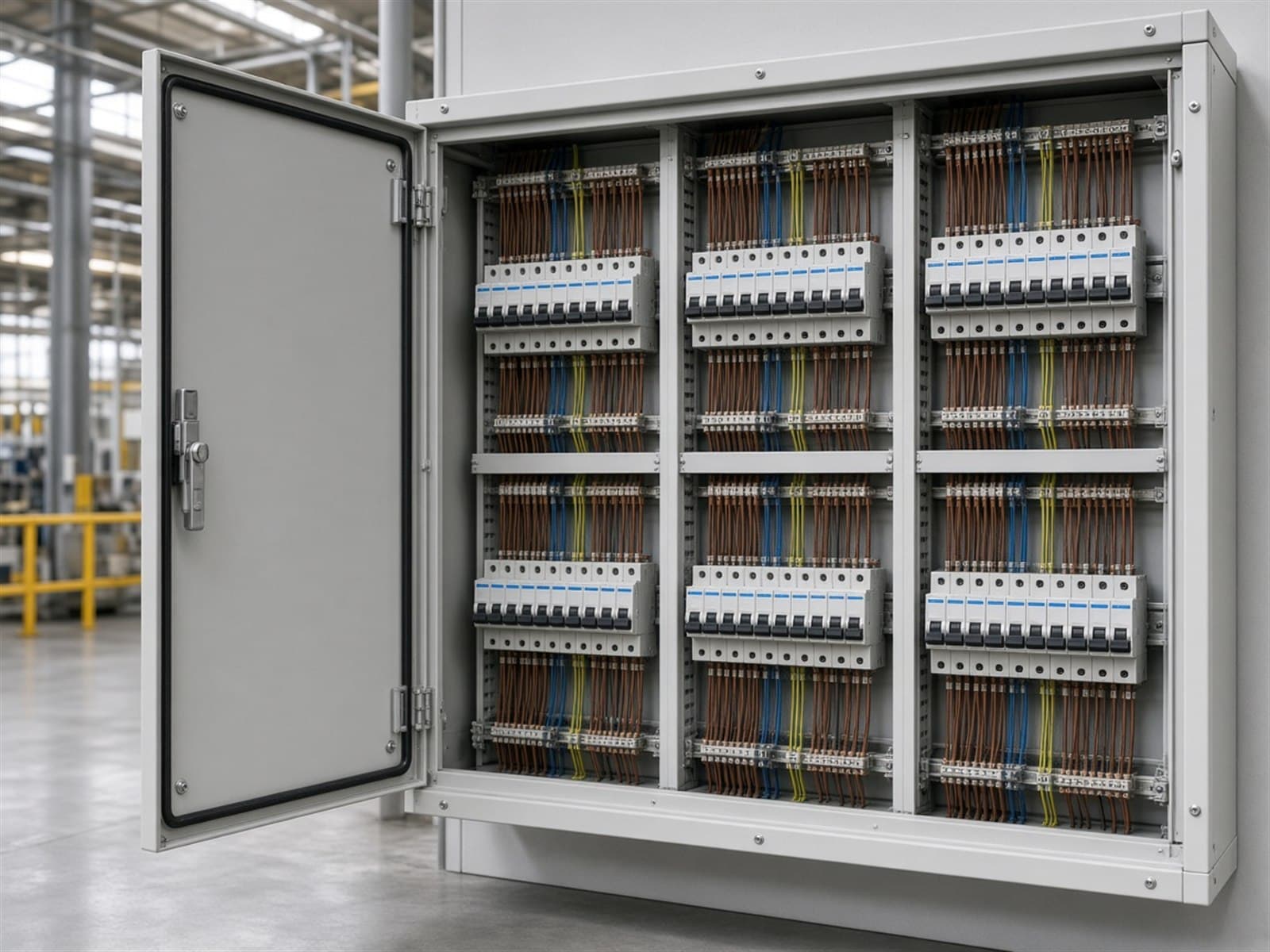
The survey starts at the panel: which breaker feeds the washing-machine socket, the breaker's rating, which other sockets and loads are on that line, and whether the line is under a 30 mA RCD are read. After the line is switched off and dead is proven by measurement, the melted socket is removed. The signs looked for are clear: darkening and melting around the terminal, heat colour on the brass terminal, splayed, cut and blackened strands at the end of the stranded conductor, whether there is a ferrule, whether the strands have been tinned, the insulation hardened and discoloured where it leaves the terminal. Then the cord itself is checked: its printed marking is read and its cross-section and type determined; whether it is 3×0.75, 3×1 or 3×1.5 mm², whether it is fixed-installation cable or flexible cord. Where the cord is fed from is traced: which socket it leaves, whether that socket's terminal has the same ferrule-less connection, whether anywhere along the route it is crushed under a clip, pinched behind a door or has a joint. The back of the source socket is opened too, because the same current passes there. Finally, with the removed section disconnected, the line is megger-tested at 500 V DC for phase–PE and neutral–PE and the continuity of the socket's protective conductor back to the panel is proven; a washing machine is a metal-bodied appliance and is not left without a protective conductor.
The first step of the repair is removing the burned part. A melted socket is not reused; its contact springs have lost tension from the heat and its body has charred. Darkened and hardened conductor ends are cut back to sound, bright copper; if the insulation is still hard behind the cut, cutting continues. If the source socket's terminal shows the same trace, it is repaired the same way. If a stranded conductor must enter a screw terminal, an insulated ferrule sized for the conductor cross-section and long enough for the terminal depth is fitted to its end, and the ferrule is crimped with a tool made for the job, with a square or hexagonal die. A ferrule squashed with pliers is not much different from a bare end. The strand ends are not tinned with solder: solder creeps under the screw's pressure over time, the clamping force falls and the terminal loosens again; so a tinned end in a screw terminal is not a fix but another fault. Lever spring connectors hold a stranded conductor correctly even without a ferrule; but the socket's own screw terminal needs a ferrule. These steps only correct the connection, though. The second and real step is the line itself. A flexible TTR cord is not clipped to the wall as fixed-installation cable. For the washing machine, its own line is run from the panel with a 16 A breaker, under a 30 mA RCD, in NYM 3×2.5 mm².
The current through the line is the machine's normal 9–10 A, a normal load for the breaker. The heat is produced at one loose, high-resistance terminal. The breaker only trips at the end, if an arc turns into a short.
A screw terminal is made for solid wire. When a stranded end is clamped without a ferrule, the screw cuts some strands, splays others, and the bundle loosens over time. A ferrule crimped with the right tool turns the strands into one solid end.
No. Solder creeps under the screw's pressure over time, the clamping force falls and the terminal loosens again. A tinned end in a screw terminal is just another fault.
It should not. A flexible cord is not fixed-installation cable, and if it is 3×1 or 3×0.75 mm² the 16 A breaker does not protect it. For the washing machine, its own NYM 3×2.5 mm² line is run in trunking.
It should not be. An extension or power strip adds two more contact points; under a long 9–10 A load each can heat up. The machine plugs straight into an earthed socket on its own line.
There is no fixed minute. Istanbul 24/7. Arrival depends on the queue at that moment and E-5 and TEM traffic. A 30-minute claim is not invented.
With dispatch coordinated from our Pendik hub and GPS-tracked vans patrolling the main Maltepe corridors, average arrival in Gülensu is no fixed minutes. When the technician departs, their name, vehicle plate and a live tracking link are sent by SMS or WhatsApp. We do not promise an undeliverable time; if we are busy the next shift is stated plainly.
The survey fee is stated clearly on the call, with no surprises. The binding price is written only after on-site measurement: no figure is given before the clamp current, terminal temperature and insulation resistance have been seen. No work starts without approval. The brand and model of switchgear fitted, the measured values and the labour charge go onto a signed service report, and parts and labour carry an official 1 year guarantee.
Service covers the neighborhoods of Istanbul's 39 districts. Not the whole of Turkey. A survey is not a binding quote.
Gülensu, Maltepe. The map is centered on the neighborhood. Arrival changes with the hour and the traffic.