Founding master
Adnan Şemiye18 years in the field
MYK-certified master
Adnan Şemiye reads this job in the field. The price is written before work starts.
Maltepe district
İdealtepe 24/7 emergency electrician. In this Maltepe neighbourhood we respond without a minute promise to midnight breaker tripping, residual current device faults, burnt sockets and consumer unit failures. In apartment and complex stock, saturated kitchen circuits, bathroom water heater runs and riser overheating are measured on site. Certified technicians, faults proven with a True-RMS clamp meter and a megohmmeter, written price approval and an official 1 year workmanship guarantee.
Founding master
Adnan Şemiye18 years in the field
MYK-certified master
Adnan Şemiye reads this job in the field. The price is written before work starts.
From the field
 Emergency van · +90 582 403 10 87
The call from İdealtepe usually comes in January or February: 'The winter-garden and bathroom floors were warm, for a few days they have not been. The wall thermostat's display is dead and there is a smell of burnt plastic near it. The breaker has not tripped.' Every part of that sentence is information. The floor not heating says the mat is getting no power, not that the mat is broken. The dead display says the thermostat's own electronics are damaged. The burning smell says a contact point in the flush box has overheated. The breaker not tripping is the most important clue: the current has not exceeded the breaker's rating and there is no short; the problem is not overcurrent but the heat that a current carried at the limit for a long time produces in a terminal. In that case the first job is to switch off the line's breaker and not try to restart the thermostat. The survey starts at the thermostat box, but it ends at the panel.
When the flush box is opened the usual field picture is this: the load terminal on the back of the thermostat is blackened, the plastic around it melted and blistered; charred bits at the bottom of the box; the insulation of the load conductor to the mat turned brown at the terminal exit; and a joint squeezed into a small, already full box. No ferrules on stranded ends, the strands splayed under the screw. In some flats not one but two mats hang on the thermostat: first the mat laid in the bathroom, then, when the winter garden was built, its mat added in parallel to the same thermostat because 'the thermostat was already there'. The thermostat label says 16 A; the two mats together reach or exceed the label. The floor sensor cable sits in the same box; beside a hot terminal its insulation may be damaged too. A baked box is the fire risk itself: a loose contact, darkened plastic and an airless wall cavity.
This distinction explains why the fault comes back. The thermostat's 16 A label says the relay contacts can switch that resistive current; but contact, terminal and internal conductor path always carry a small resistance, and every resistance heats with the square of the current. Heat that is negligible at 8 A is four times higher at 16 A. Underfloor heating is not a short-duty load like lighting; on a cold winter day the mat runs for hours without a break. The flush box is airless; heat cannot get out. A heated screw terminal loosens a little with every heat–cool cycle; the loosened contact's resistance rises, and higher resistance heats more. It is a vicious circle, and in the end the terminal bakes. Fitting a new thermostat of the same model and connecting both mats to it again is therefore no fix; next winter the same box darkens again. Upsizing the breaker is no fix either; the breaker is not tripping anyway, and the problem is not overcurrent.
First the labels are read: the mat's power and area, the warranty card and laying plan if there is one; the thermostat model and relay rating; the panel breaker's rating and the line's section. How many mats hang on one thermostat and how many thermostats on one breaker is worked out. Then a clamp ammeter measures the load current; with the mats running, the line's real current is seen and compared with the thermostat label. Then the line is switched off at the panel and the box is opened; the burnt terminal, darkened conductor, unferruled end and squeezed joint are noted. The mat itself is measured separately: the element resistance is read at the cold-tail ends and compared with the value calculated from the label power; a megger applies 500 V DC and the insulation resistance between the element and the protective braid is read. The floor sensor's resistance is measured too; if the sensor was damaged in the hot box the thermostat reads wrong. If the mat measures sound the problem is only on the control side and the floor is not broken. If the element is open or leaking, fault location and mat repair belong to the mat manufacturer or the installer.
Bridging the thermostat is not a fix. This is the shortcut seen in the field: the burnt thermostat is removed, the mat's ends are wired straight to the phase, and 'the floor is warm' is the verdict. A mat wired that way heats without stopping; the floor sensor's protection is gone, parquet or laminate overheats, the adhesive fails, and the mat itself can be damaged. This is not done, and where it has been done it is removed. Bridging the RCD or feeding the mat line ahead of the RCD is a breach of the trade; the heating element under the floor sits in a wet room, under a bare foot. Squeezing another joint into the thermostat box is no fix either; joints are made in a separate, accessible junction box. Breaking screed or lifting tiles or parquet is not the electrician's first step; if the mat measures sound, the floor is not touched.
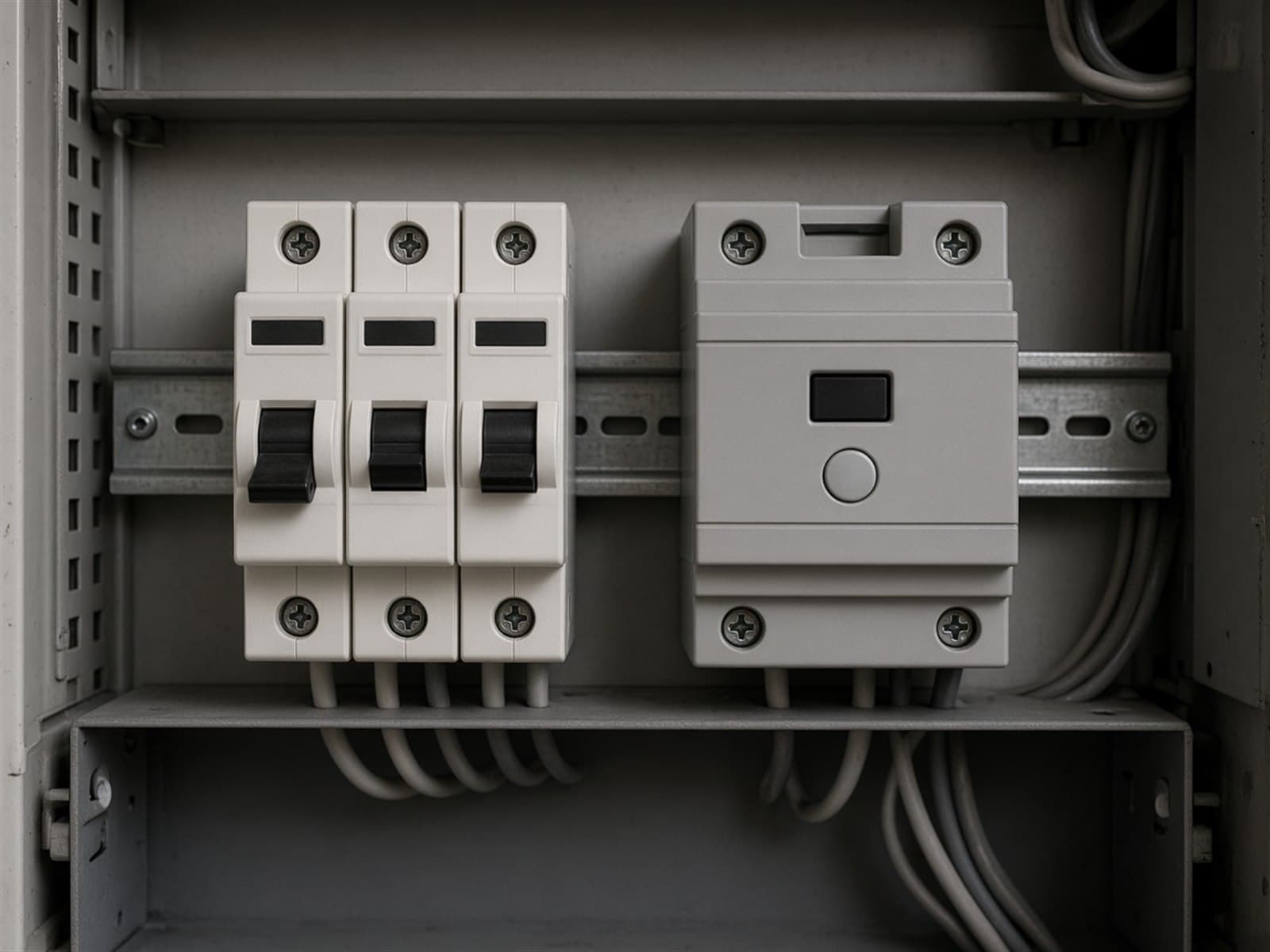
The repair has three parts, and all three answer the same heat. The first is separating control from power. A DIN-rail modular contactor is added to the panel; a domestic installation contactor, rated for resistive load, that is AC-1, chosen comfortably above the mats' total current, and of the silent type that does not hum, because in most flats the panel is in the hallway. The mat's power current runs from the panel through the contactor's main contacts to the mat. The thermostat relay now switches only the contactor coil; coil current is in the milliamp range. So in the flush box not 16 A but almost no current flows; the box does not heat. The thermostat's floor sensor and temperature limit stay in place and keep protecting the floor. The second is the joint. The mat's cold tail, the supply cable joined to the heating element at the factory, is brought into an accessible wall junction box and connected there to the supply line with a spring connector of suitable current rating; lever spring connectors such as Wago do not loosen with heat cycles the way a screw does. The joint is not squeezed into the thermostat box or buried under plaster. Ferrules are crimped onto stranded ends. The third is the line and protection. Underfloor heating gets its own breaker; the section is chosen by current and distance, and for a continuous load approaching 16 A the next section up is considered. If the winter garden and bathroom are gathered on one thermostat, they are split onto two thermostats and, if needed, two contactors. The line stays under the 30 mA RCD.
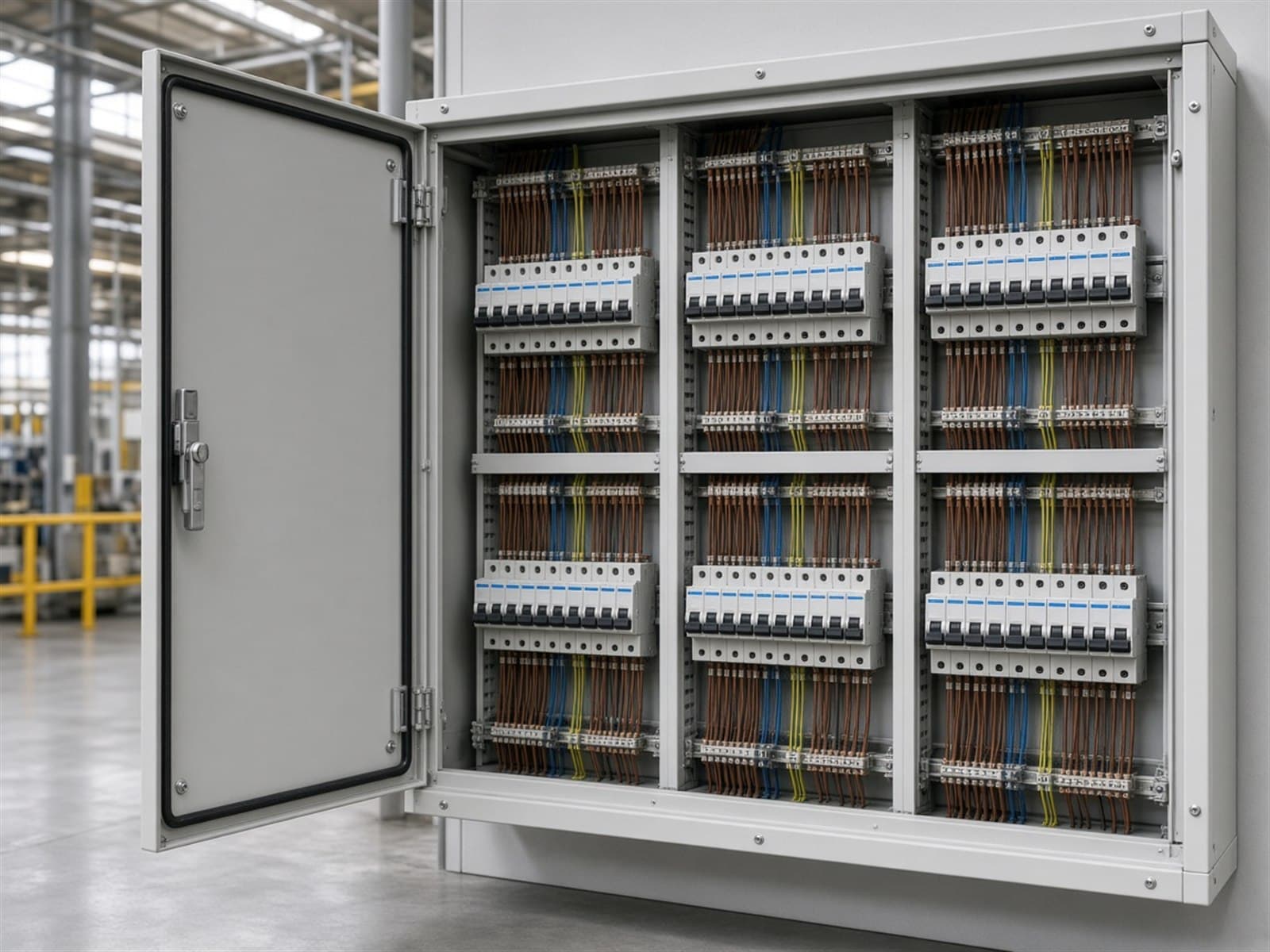
The panel side means something simple on site. In İdealtepe's renovated flats the panel is often an older one from before urban transformation with its module space full; if there is no room for the contactor the panel is reorganised or a small extra module enclosure is added. The contactor, breaker and RCD are labelled; next winter the owner sees which module the floor heating sits on. Schneider, Siemens or Legrand: whichever family is in the panel, the contactor and breaker are chosen from it and the bar torque follows the label. Whether the thermostat is suitable for driving a contactor coil is read from the model's wiring diagram; some thermostats may need a suitable interposing control. Earthing is measured; the mat's protective braid must be bonded to the protective conductor. How many mats, how many thermostats, which contactor and which section are needed is written on site at the survey, not guessed on the phone.
Because the problem is heating at the terminal, not overcurrent. When mats draw close to 15–16 A for hours, the screw terminal in the flush box heats, loosens and bakes. The current does not exceed the breaker's rating, so it does not trip.
If the load stays the same the same box darkens again next winter. The real load moves to a modular contactor in the panel; the thermostat switches only the coil.
A silent-type modular contactor is chosen for domestic installations; it does not hum even with the panel in the hallway. It is rated AC-1 for resistive load, above the mat current.
No. Without a thermostat the mat heats non-stop; the floor sensor's protection is gone and parquet or laminate is damaged. The thermostat stays on control and the contactor carries the load.
Usually not. The element's resistance and insulation are measured; if sound, the problem is on the control side and the floor is not touched. If the element is open or leaking, repair belongs to the mat manufacturer or installer.
There is no fixed minute. Istanbul 24/7. Arrival depends on the queue at that moment and E-5 traffic. A 30-minute claim is not invented.
We have no fixed shop; ElektrikçiGO is a mobile, service-area team working on site across Maltepe. The call lands on the phone, an appointment is set and the technician comes to your address. When they depart, their name, vehicle plate and a live tracking link are shared so you know in advance who is at your door. The survey is done on site and the binding figure written after measurement.
Yes. Parts fitted carry the manufacturer's warranty and the workmanship an official 1 year ElektrikçiGO guarantee. On completion the brand and model of switchgear used, the measured insulation and earth resistance values and the trip time of the 30 mA device are written onto a signed service report and handed to the customer. A copy is kept on file so values can be compared at the next inspection.
Service covers the neighborhoods of Istanbul's 39 districts. Not the whole of Turkey. A survey is not a binding quote.
İdealtepe, Maltepe. The map is centered on the neighborhood. Arrival changes with the hour and the traffic.