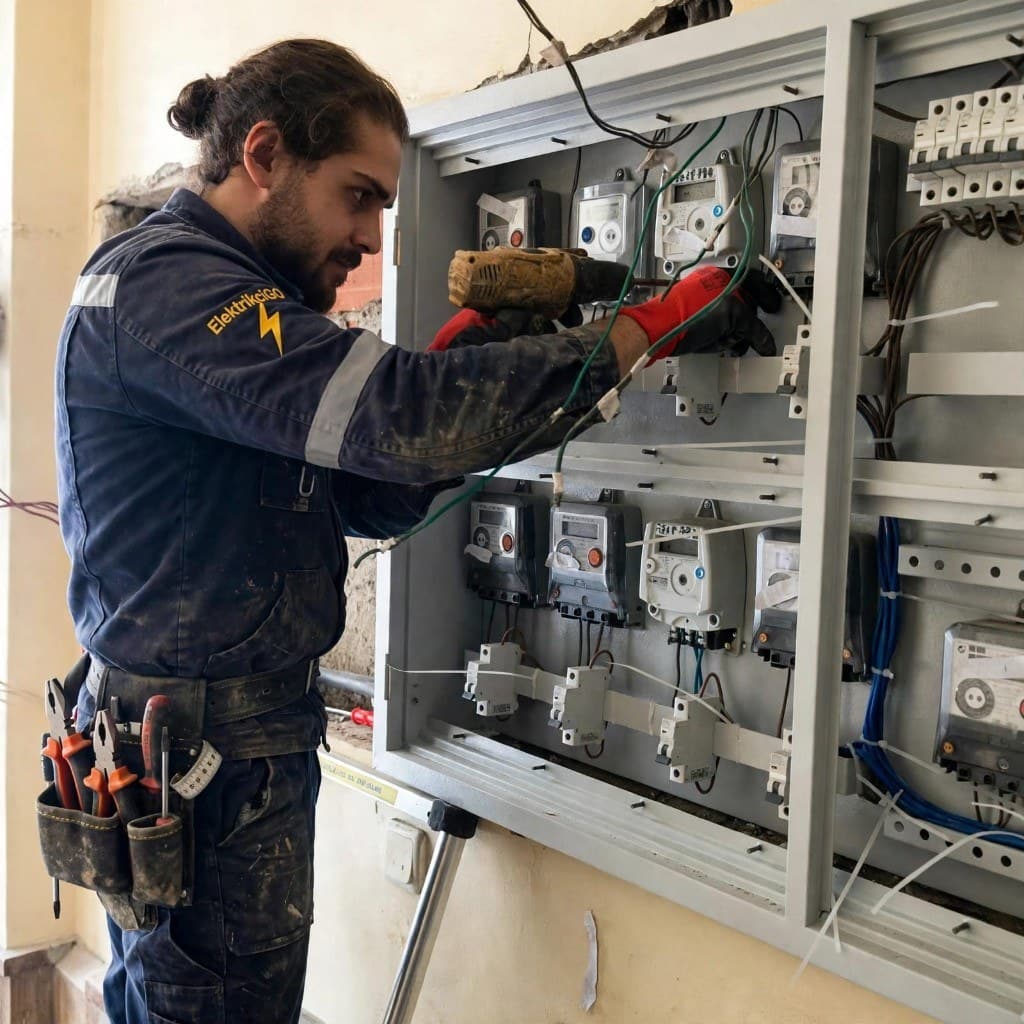
Founding master
Adnan Şemiye18 years in the field
MYK-certified master
Adnan Şemiye reads this job in the field. The price is written before work starts.
Maltepe district
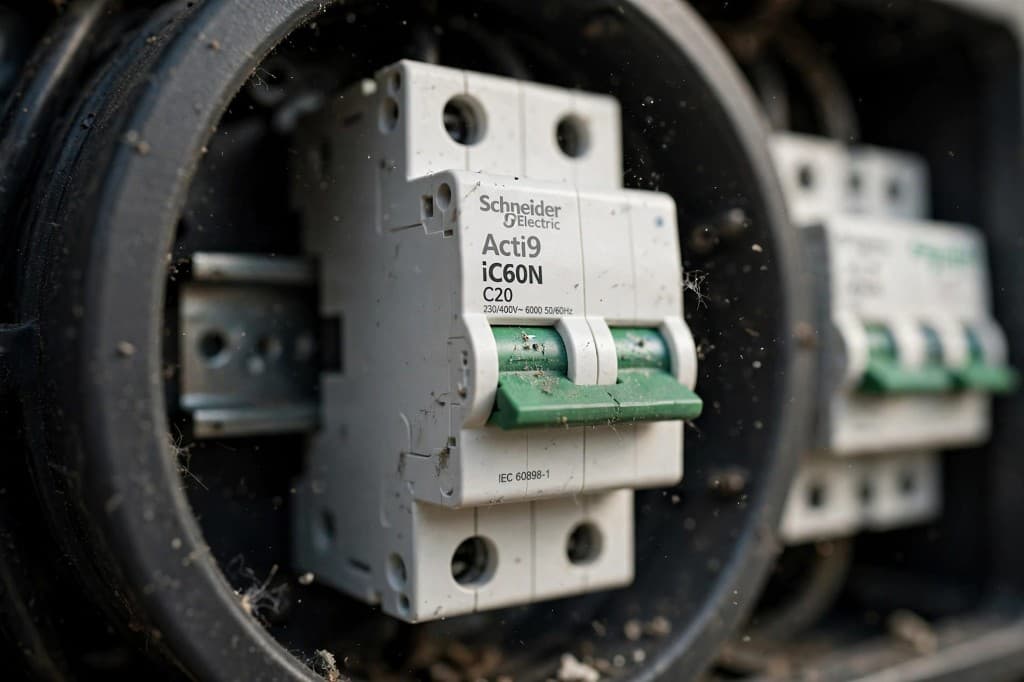
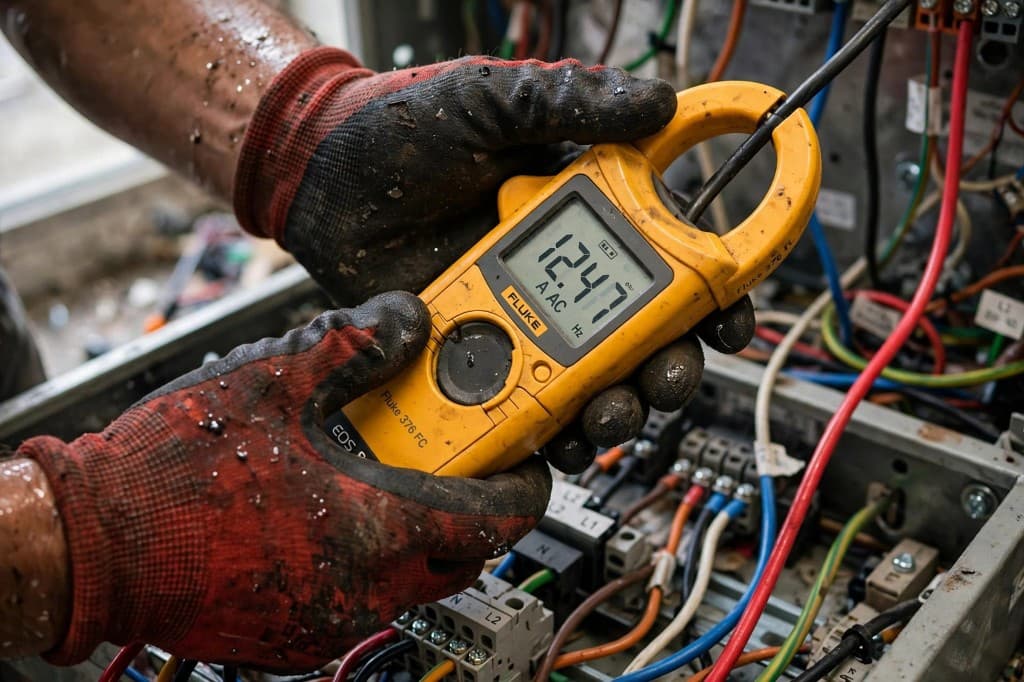
Altıntepe 24/7 emergency electrician. In this Maltepe neighbourhood we respond without a minute promise to midnight breaker tripping, residual current device faults, burnt sockets and consumer unit failures. In apartment and complex stock, saturated kitchen circuits, bathroom water heater runs and riser overheating are measured on site. Certified technicians, faults proven with a True-RMS clamp meter and a megohmmeter, written price approval and an official 1 year workmanship guarantee.
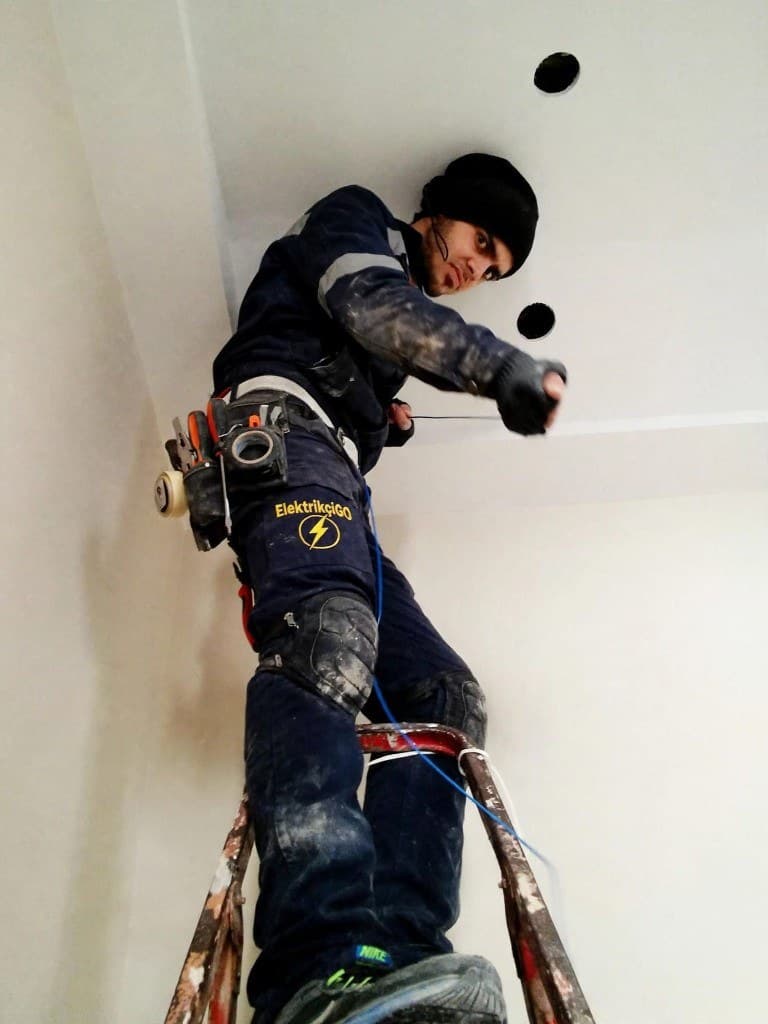
Founding master
Adnan Şemiye18 years in the field
MYK-certified master
Adnan Şemiye reads this job in the field. The price is written before work starts.
From the field
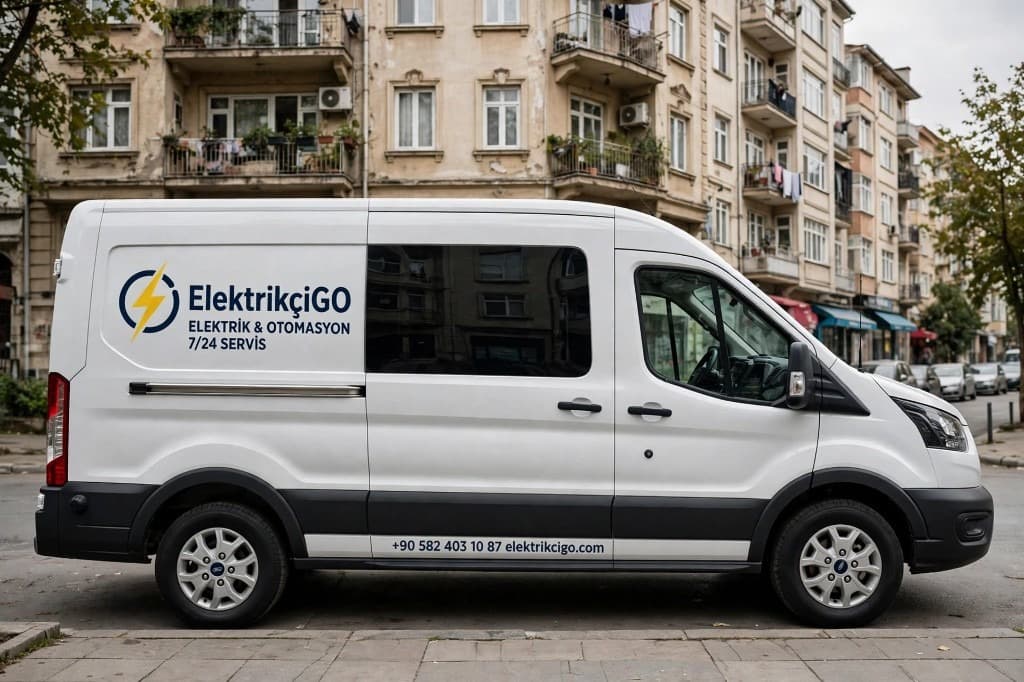 Emergency van · +90 582 403 10 87
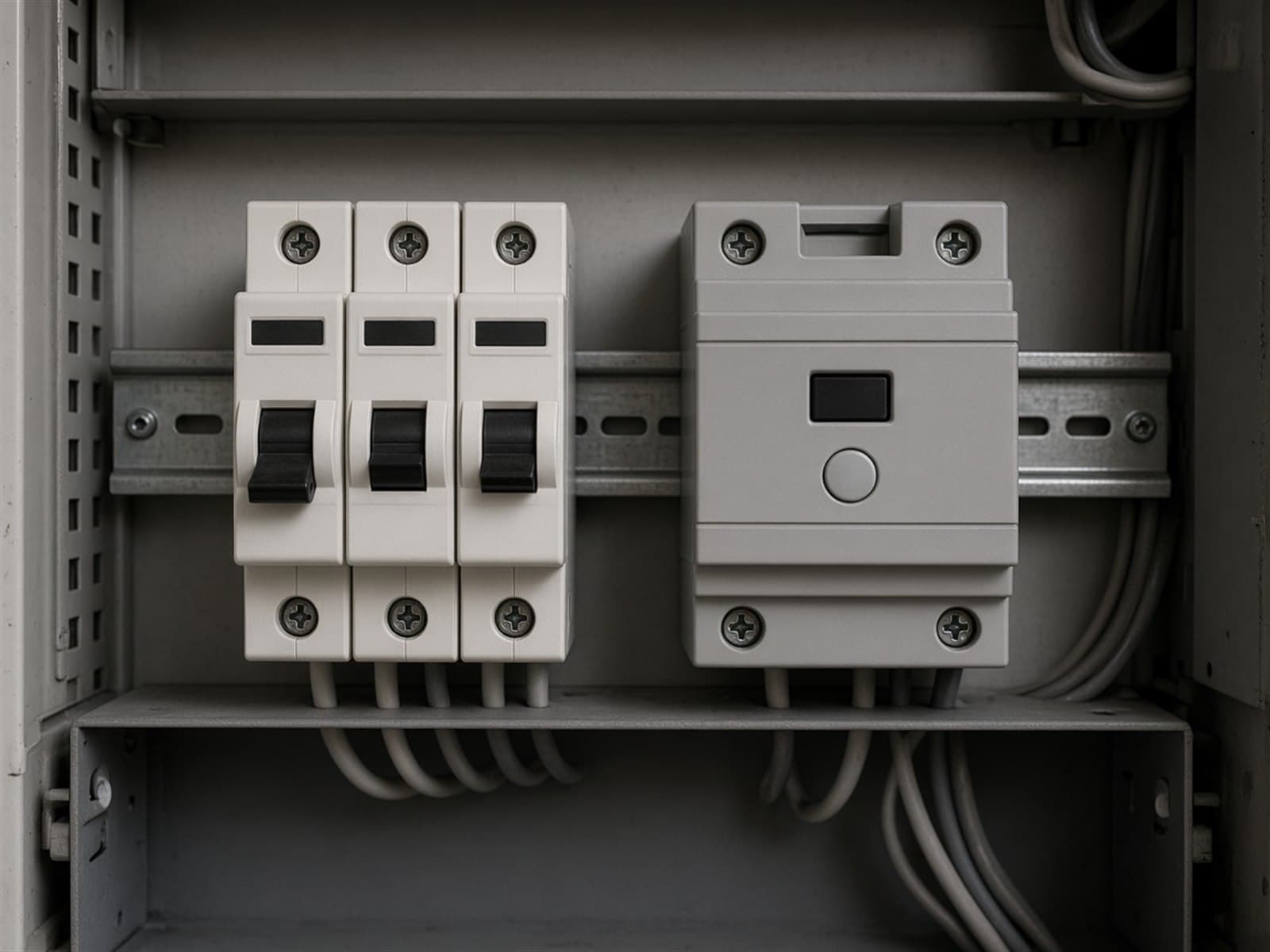
The call from Altıntepe usually comes at mealtime: 'While cooking on the hob there was a bang in the kitchen, the under-cabinet lights went out and the kitchen breaker tripped. There is a burning smell from on top of the cabinet. We reset the breaker; the ceiling lamp works but the worktop light does not.' Every part of this description says something. The bang and the immediate trip point to a short circuit; on overload a breaker waits, on a short it opens at once. The smell coming from on top of the cabinet says the fault is not in the strip itself but in the hidden driver. The ceiling lamp working while the strip does not shows that the driver on the same line has dropped out, but the line itself may be sound. That it happened while the hob was on is no coincidence either: steam and hot air reach the driver most heavily at that moment. The first job is not to touch the driver on top of the cabinet by hand, to keep the kitchen lighting breaker off until the survey, and not to try running the strip again; a carbonised board can produce a new arc at every attempt.
Most cheap LED drivers have a perforated sheet-metal case. The design is meant for a dry, clean panel or suspended ceiling; the holes let the board cool. In a kitchen, though, the same holes take in everything the air rising from the hob carries. During cooking, grease mixes into the air as very fine droplets; the hood pulls some of it, but the top of the cabinets and the side of the hood are exactly where this air circulates. The droplets settle on the board and form a thin, sticky film. The film on its own may be a decent insulator, but it holds dust, absorbs steam, and over time the grease oxidises and thickens. This damp, dusty layer opens a small current path between tracks, solder joints and component legs a few millimetres apart on the board's 230 V side. That small current heats the surface and carbonises the film; carbon conducts, and the path gradually thickens. This is called surface tracking. At some point the carbon path between two tracks becomes conductive enough and an arc jumps between phase and neutral; that is the source of the bang and the soot. If the case is metal and earthed the arc can also jump to the case; then the RCD drops too.
Heat speeds this picture up. In the cabinet above the hob or oven the temperature is noticeably higher than the rest of the kitchen; the electrolytic capacitors inside the driver age faster in heat, bulge and leak. The grease film also becomes more fluid in heat and spreads over a wider area of the board. On top of that, cheap drivers are often chosen at a power almost equal to the strip's, with no margin; a driver running constantly at full load runs hotter. The strip itself takes its share from this environment too: if an uncoated IP20 strip is stuck straight under the cabinet, grease and steam settle on the LEDs and copper tracks as well, the strip darkens section by section and lights intermittently. So the fault is not a single part but a placement error: an open-cased circuit board has been put on the path of steam and heat. Fitting a new driver of the same type in the same place postpones the same fault by a few years.
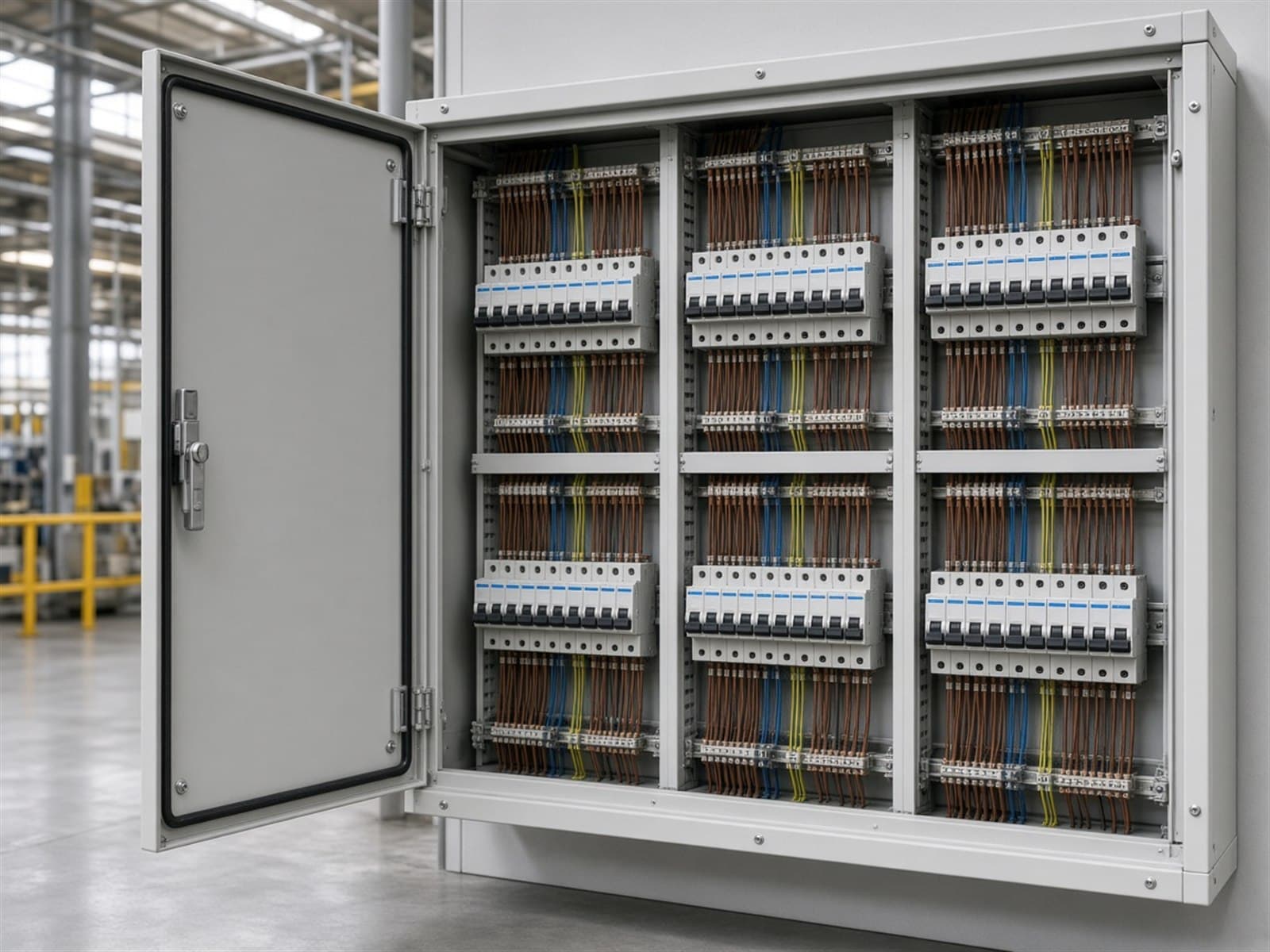
The survey starts after the kitchen lighting line is switched off at the panel and dead is proven by measurement. First the driver's location is found: on top of the cabinets, beside the hood, inside the cabinet over the hob, sometimes behind a drawer. Its position is noted: directly over the hob or oven, on the hood's intake path, in a closed, airless space. Then the case is opened and the board inspected: sticky film, dust build-up, carbonised paths, soot marks, bulged capacitors. The driver's label is read: input voltage, output voltage and power, IP class. Then the strip's total power is calculated from its label or watts per metre and compared with the driver's power. With the driver removed, the supply line is megger-tested at 500 V DC for phase–PE and neutral–PE insulation resistance; the arc may have damaged the line itself. How the connection was made is checked: a twisted joint and tape at the driver input, an exposed terminal block, or a closed box. Finally the strip is checked: coated or uncoated, grease and steam settled on it, sections darkened.
The first step of the repair is location. The driver is taken off the path over the hob, oven and hood, where steam and hot air pass directly, and moved somewhere accessible, dry and of reasonable temperature: inside an upper cabinet away from the vapour zone, a side cabinet, or a void away from the worktop. As the distance grows, the DC-side cable gets longer; so on long runs voltage drop is calculated, a 24 V strip and driver are preferred over 12 V where needed, and the section is chosen accordingly. The second step is the driver type. Instead of a perforated sheet-metal case, a constant-voltage LED driver with its board fully filled with epoxy resin, an aluminium body and IP67 class is used; steam and grease cannot reach the board, and heat leaves through the body. The driver's power is chosen above the strip's total power with a reasonable margin, so it is not constantly strained at full load. A potted driver also gives off its heat through its body; so it is not buried in insulation material or trapped in an airless box.
The third step is the connection and the strip. The driver's 230 V input is connected from the kitchen lighting line inside a covered junction box, with lever spring connectors of suitable current rating; no twisted joint, tape or exposed terminal block remains. The line is fed from the lighting circuit, not the oven or hob line, and stays under the 30 mA RCD; the strip's switch breaks the lighting line's phase. The strip, where possible a silicone-coated model, is put inside a covered aluminium profile; the profile spreads the LEDs' heat and stops grease settling straight on the strip, and its cover is cleaned with a wipe. The old driver and darkened strip sections are removed and not reused. After the repair the line is re-energised; the driver output voltage and the voltage at the strip's end are measured, and the temperature at the driver's location is checked with the hob and hood running. Removing and refitting kitchen cabinets and cutting holes and channels is the cabinet maker's job; maintaining the hood filter is the owner's job, but a hood with a clogged filter sends grease vapour over the cabinets. How many metres of strip, what driver power and where to move it are written on site at the survey, not guessed on the phone.
A grease and steam film built up on the hidden driver's board, surface tracking opened a carbonised path, and an arc occurred between phase and neutral. That is a short circuit, which is why the breaker trips at once.
If the same perforated driver goes in the same place, the same film forms again in a few years. The driver is moved out of the vapour zone and replaced with an IP67 epoxy-potted aluminium model.
It can go inside a cabinet away from the vapour zone, but it is not buried in insulation or trapped in an airless box. A potted driver sheds its heat through its body.
When the driver moves further away the DC cable gets longer. On long runs, 24 V means less current and less voltage drop for the same power. The choice is made on site by length and a voltage-drop calculation.
There is no fixed minute. Istanbul 24/7. Arrival depends on the queue at that moment and coast-road traffic. A 30-minute claim is not invented.
In Altıntepe we handle everything on the customer side of the meter: breaker tripping and residual current device faults, burnt sockets and terminals, board renewal and breaker replacement, earthing installation with resistance testing, lighting and chandelier mounting, dedicated circuits for boilers and air conditioning, and surge arresters. Measurement uses a True-RMS clamp meter, a megohmmeter and a FLIR thermal imager.
In most cases no. The fault is first narrowed down branch by branch at the board, then pinpointed with a FLIR thermal imager and an inductive cable tracer, so no needless breaking is done. Where leakage is in an underground or under-screed run, a cable fault locator usually narrows it to within a metre and only that area is opened. If breaking is unavoidable it is reported in writing and approved first.
Service covers the neighborhoods of Istanbul's 39 districts. Not the whole of Turkey. A survey is not a binding quote.
Altıntepe, Maltepe. The map is centered on the neighborhood. Arrival changes with the hour and the traffic.