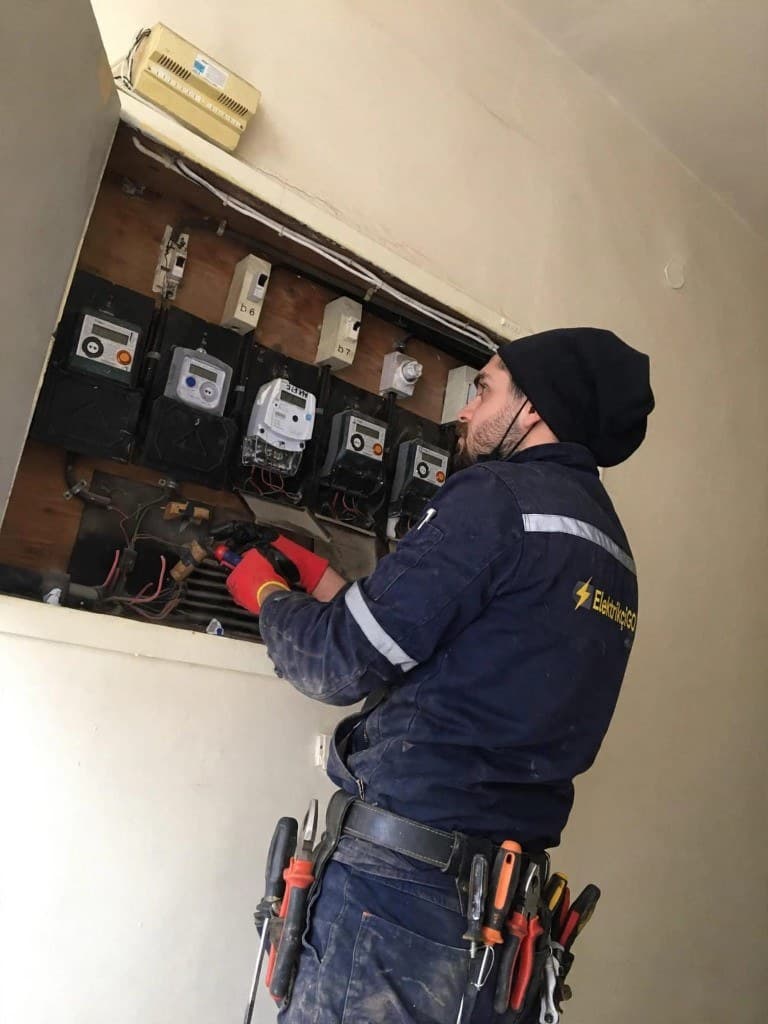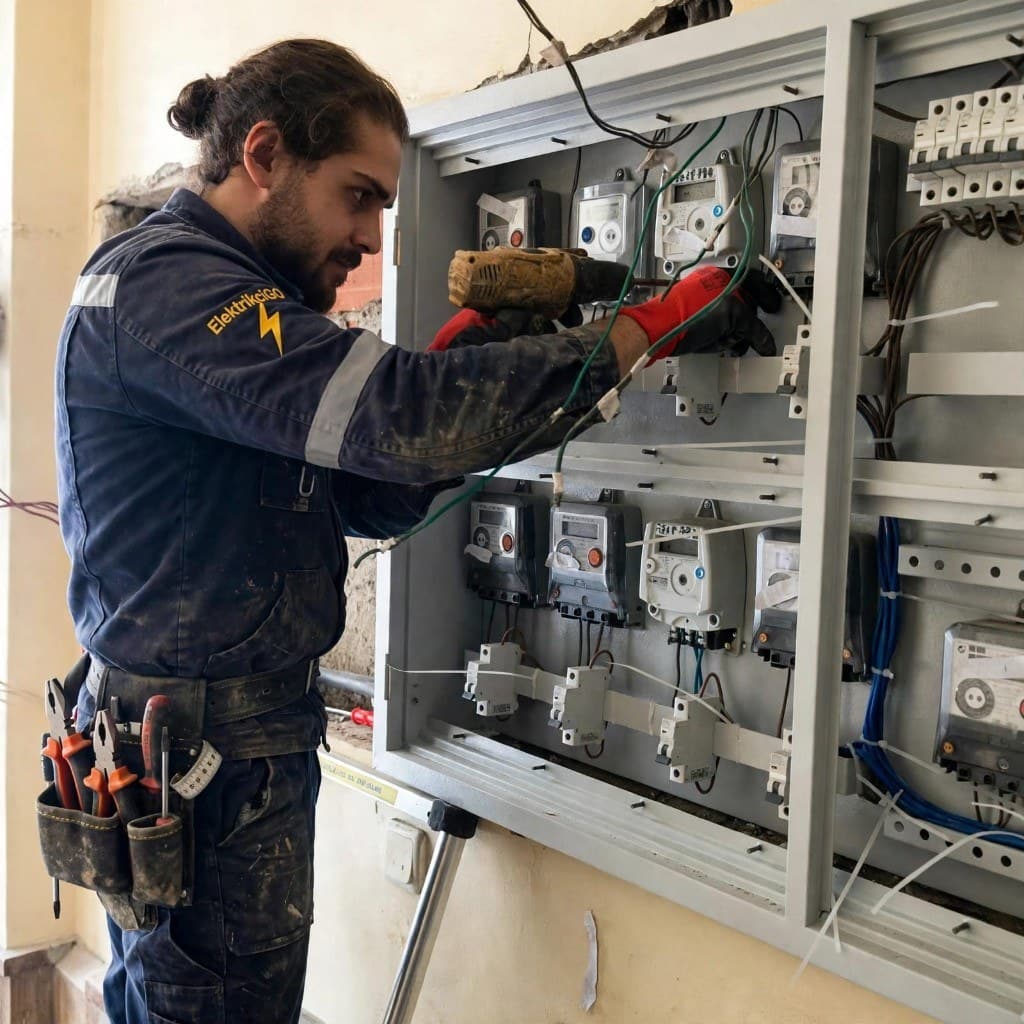
Founding master
Adnan Şemiye18 years in the field
MYK-certified master
Adnan Şemiye reads this job in the field. The price is written before work starts.
Maltepe district
Altayçeşme 24/7 emergency electrician. In this Maltepe neighbourhood we respond without a minute promise to midnight breaker tripping, residual current device faults, burnt sockets and consumer unit failures. In apartment and complex stock, saturated kitchen circuits, bathroom water heater runs and riser overheating are measured on site. Certified technicians, faults proven with a True-RMS clamp meter and a megohmmeter, written price approval and an official 1 year workmanship guarantee.
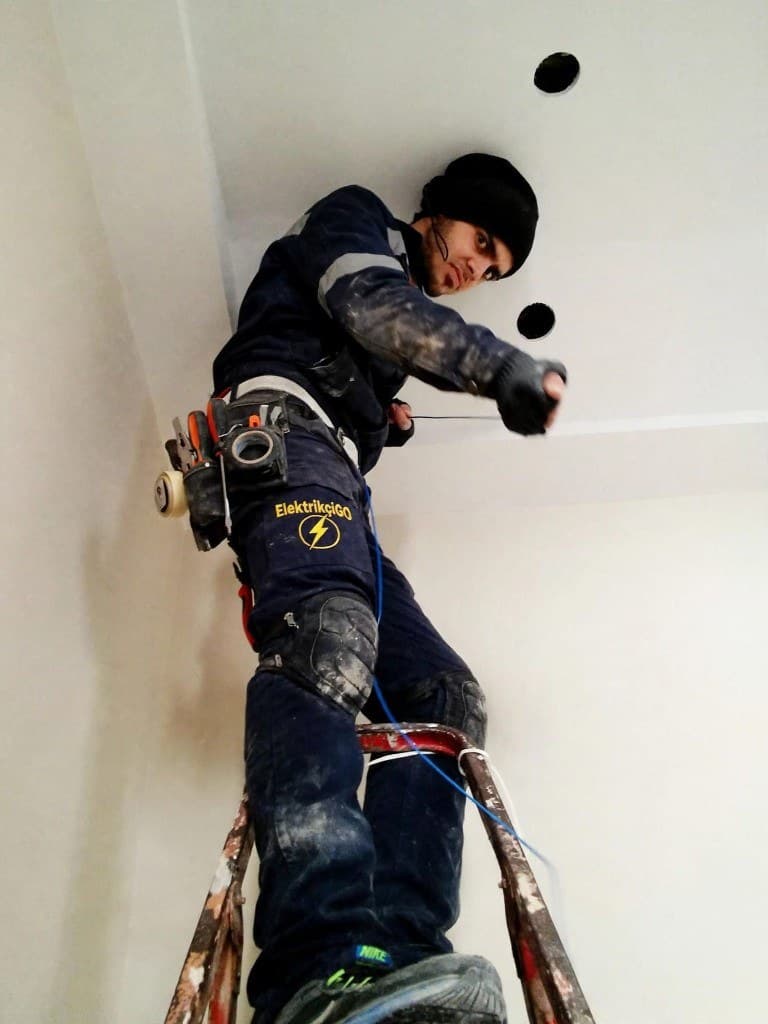
Founding master
Adnan Şemiye18 years in the field
MYK-certified master
Adnan Şemiye reads this job in the field. The price is written before work starts.
From the field
 Emergency van · +90 582 403 10 87
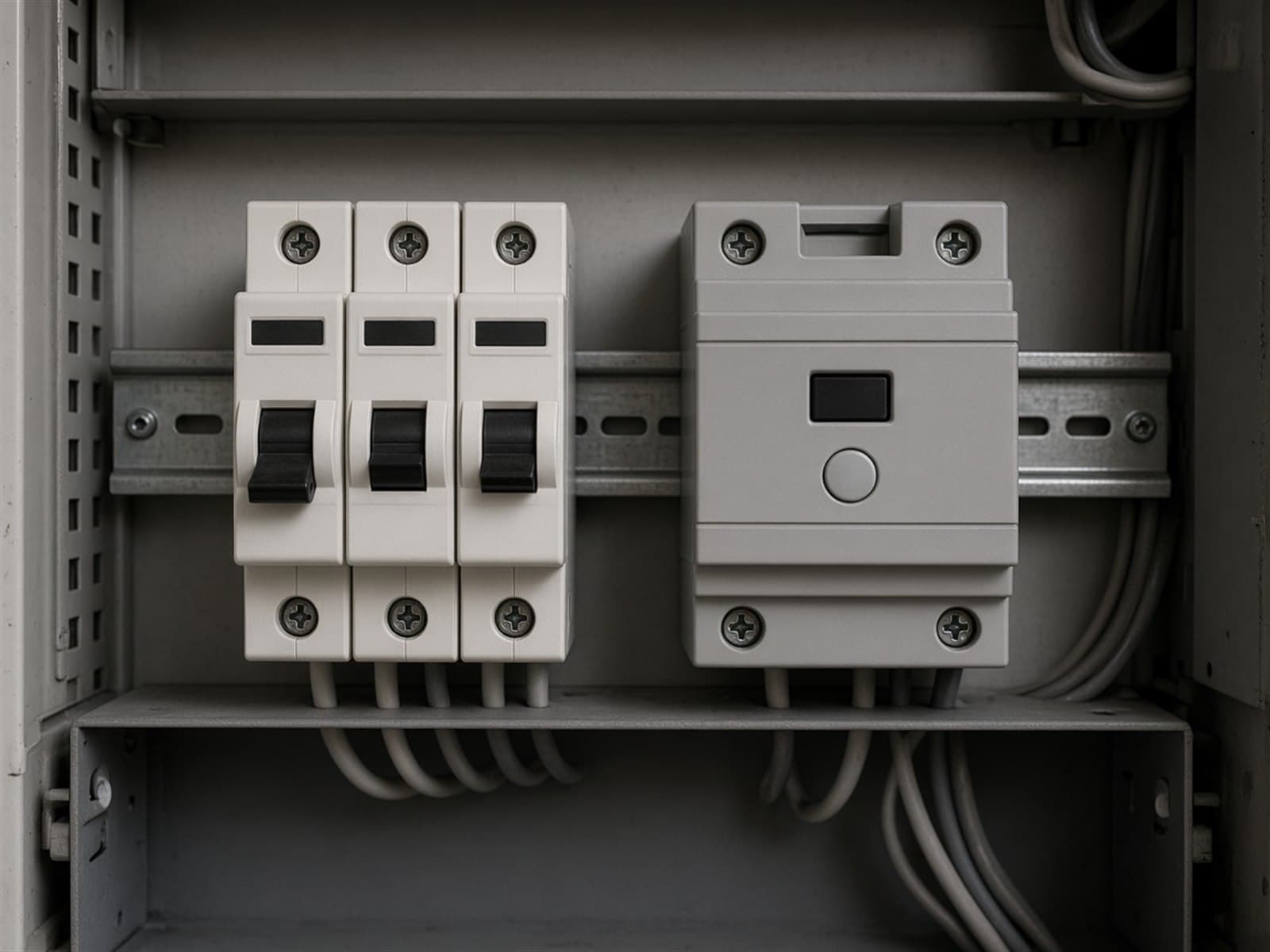
The description of the call from Altayçeşme is almost always the same: 'There is a burning smell in the living room now and then; we checked the sockets and none shows a mark. When we run the iron or the vacuum the smell gets stronger and the hallway lamp flickers. Once we heard a crackle inside the wall. The breaker never tripped.' That description points to one place: a load-carrying joint is heating somewhere unseen. No mark at the socket says the problem is not at the socket's terminal but on the path to it. A smell that rises with the iron says the problem grows with load. The hallway lamp flickering at the same moment is the critical clue: the lamp and the socket the iron is plugged into pass through the same box, and the shared joint in that box drops voltage and sparks when load comes on. The owner does not know where that box is, because during renovation it was left under plaster or wallpaper. The first job is to keep irons, heaters and vacuums off that line in the room the smell comes from, and to keep the line's breaker off until the survey.
Inside a blind box the usual field picture is this: conductors of two, three, sometimes four lines twisted around each other and wrapped in insulating tape; over the years the tape has dried out, and at the heating joint it has softened, run and blackened. The copper of the twisted joint has turned green and black; some strands show arc marks and melt beads. The box plastic has browned where the joint touched it. Some boxes hold old Bakelite or porcelain terminals; the screw has loosened and the underside is charred. The box is often crammed with conductors and the cover sits under 2–3 mm of plaster, primer, paint or wallpaper. A blind box is not just an aesthetic choice: joints must remain accessible for inspection and maintenance; a joint whose location is unknown can neither be checked nor found quickly during a fault. The wallpaper over a heating joint sometimes yellows or bubbles slightly; that is the first sign the survey looks for by eye.
This is the question owners ask most: 'If there is this much smell, why does the breaker not trip?' The answer is in the kind of fault. A breaker watches for two things: overload and short circuit. The bad joint in a blind box does neither. The joint is a small resistance in series on the line; the current is still the current the iron draws, about 9 A for 2000 W. A 16 A breaker does not trip at that current, and it is right not to. But 9 A through a contact resistance of a few tenths of an ohm produces a few tens of watts of heat, and that heat builds up in a small, closed, plastered-over box. As the contact worsens, the joint starts throwing small sparks each time the current passes zero and rises again; this is called a series arc. A series arc's current is also the load current; the breaker still does not see it. The RCD watches the imbalance between phase and neutral; unless the joint leaks to earth, it does not trip either. So 'the breaker does not trip, so there is no problem' is wrong for this fault. An arc fault detection device, an AFDD, is designed to detect series arcs; adding one to the panel can be discussed as an option, but it does not replace repairing the bad joint.
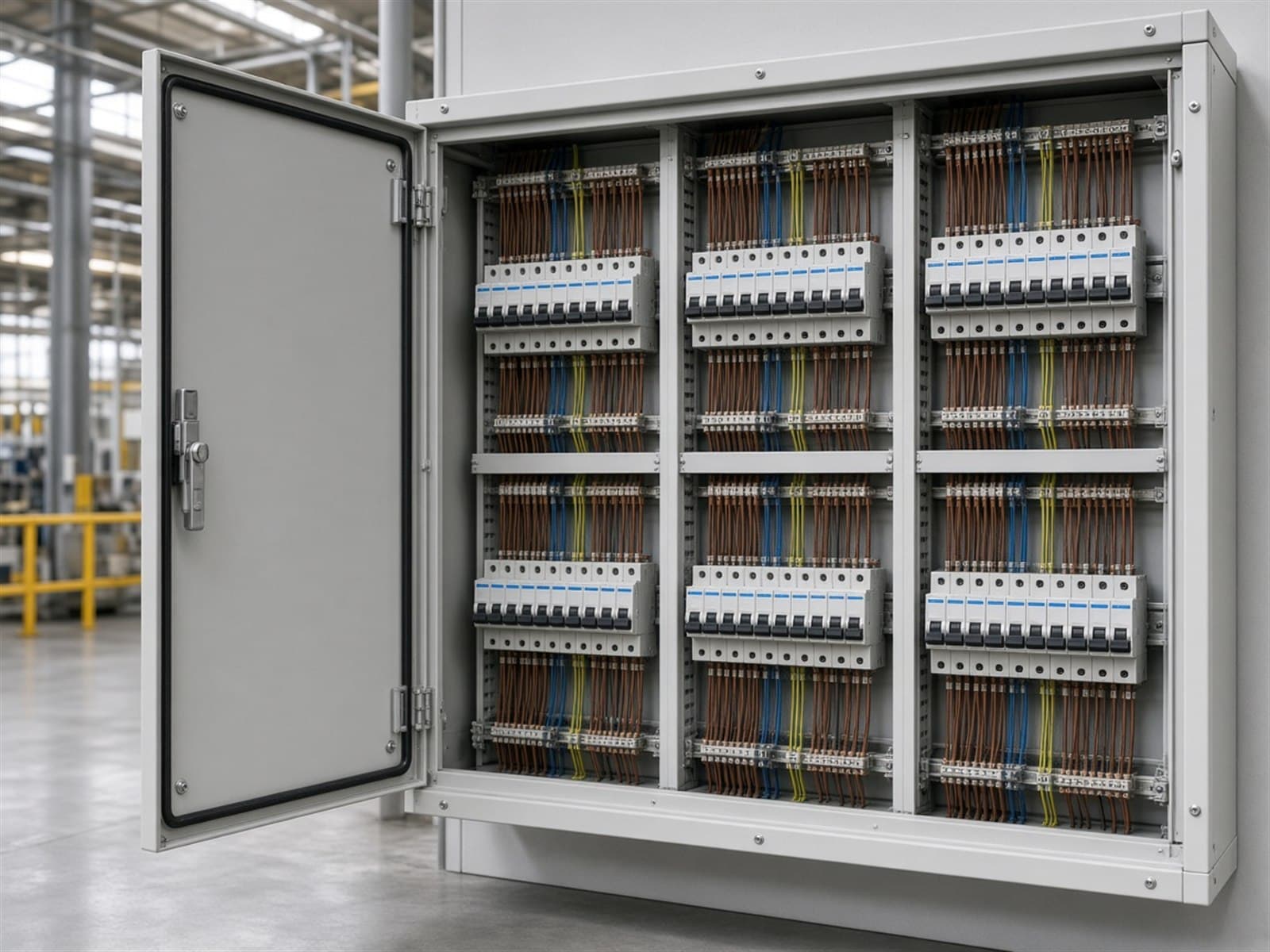
The survey starts at the panel. Which room's sockets and lamps each breaker feeds is worked out one by one; in older buildings a breaker spanning two rooms, or a lighting line mixed into a socket, is common, and half of finding a blind box is this map. If the room the smell comes from, the flickering lamp and the socket with the iron meet on the same breaker, the box is on that line's route. The second step is measurement. The no-load voltage is read at the suspect socket, then a known resistive load, for example a 2000 W heater, is plugged in and the voltage read again. On a sound line the drop is a few volts; with a bad joint the drop grows noticeably and wanders under load. Current is read with a clamp ammeter. The third step is the camera. The load is left on for no fixed minutes, then walls, ceiling corners, door heads and the hallway are scanned with a thermal camera. A heating joint shows as a small, distinct warm spot on the surface, even under plaster and wallpaper; buried conduit routes can be read as faint lines. The spot is marked. If needed, the conduit route is confirmed with a cable tracer, a tone generator and receiver.
The aim of this order is one thing: not to break the wall by guesswork. The shortcut seen in the field is to gouge the wall the smell comes from, ceiling to floor, or to follow the conduit route with a hammer; the result is that a large part of the new decoration has to be redone. Working with a thermal camera and a load test, the opening is usually palm-sized and lands right on the blind box cover. A camera image is an interpretation, not a verdict; reflected heat, a hot-water pipe behind, or a sunlit wall can mislead. So the camera is read only together with the panel map and the voltage-drop measurement. If the spot and the measurement point to the same place, the opening is made there. If not, the load is moved to other sockets and the measurement repeated. The line must be live to search for the blind box, but before the box is opened the line is switched off at the panel and dead is proven by measurement.
The repair starts with the joint itself and has three steps. The first is the conductor. Tape and charred terminals are removed completely. Blackened, oxidised and arc-marked conductor ends are cut back to bright, clean copper. The heat may also have dried the insulation further out from the box; if the insulation cracks, crumbles or has gone hard, shortening is not enough. If the buried conduit allows, the old conductor is pulled out with a draw spring and new NYA of the same section is pulled in: 2.5 mm² for sockets, 1.5 mm² for lighting. Section and breaker are read together: 16 A on a 2.5 mm² socket line, 10 A on a 1.5 mm² lighting line. If a socket was later mixed onto a lighting line, it is separated here too. The second is the joint. A twisted joint and tape are not made again. Every joint is made with a lever spring connector rated for the conductor section and the line current; with connectors such as Wago 221 the strip length follows the mark on the connector, and once the lever closes the spring holds the conductor with constant force and does not loosen with heat cycles the way a screw does. Joints are not crammed into the box; if the box is full, a deeper box is used.
The third is access, and it is the real condition for this fault not coming back. A new cover is fitted to the opened box and is never again left under plaster. A paintable cover sitting flush with the wall can be chosen; where wallpaper is used, the paper is cut at the cover's edge so the cover can still be opened. The box location is shown to the owner and noted on the panel label. After the repair the line is re-energised from the panel and the same load test repeated: the voltage drop should return to normal and the camera should show no heating at the same spot. The line is also megger-tested at 500 V DC for insulation resistance; if heat damaged insulation somewhere else, this test shows it. Terminals of sockets and switches on the same line are checked for tightness; if one joint burned, the other joints from the same hand are work of the same period. Whether the flat has other blind boxes is also discussed; a box covered in one room may have been covered in the renovation's other rooms too. Plaster repair, paint and wallpaper work belong to the relevant tradesman; the electrician leaves the opening neat.
Because a bad joint is a small resistance in series on the line; the current is still what the appliance draws. The joint heats and arcs but does not exceed the breaker's rating. Without leakage to earth the RCD does not trip either.
Not end to end. The panel map, voltage drop under load and a thermal camera find the hot spot; the opening is made only there, usually palm-sized.
No. Charred ends are cut back to clean copper, new NYA is pulled if needed, and the joint is made with a lever spring connector. A twisted joint and tape heat again under the next load.
Not under plaster. A paintable flush cover can be used, or the wallpaper cut at the cover's edge. Joints must remain accessible for inspection.
No. Reflected heat, a hot-water pipe or a sunlit wall can mislead. The camera is read together with the panel map and voltage-drop measurement.
There is no fixed minute. Istanbul 24/7. Arrival depends on the queue at that moment and E-5 traffic. A 30-minute claim is not invented.
Yes, we work 24/7 across Maltepe including Altayçeşme, with no difference for nights, weekends or public holidays. Average arrival is no fixed minutes. In terraced buildings no drill or breaker is used after 22:00; the fault is located silently with a FLIR thermal imager and a cable tracer, and noisy permanent work is booked for the next working day.
No. Our first priority is getting the critical loads running safely. After isolating the faulty leg at the board, the technician restores the boiler, refrigerator and lighting circuits within the first ten minutes. If the concealed run is permanently broken, a temporary safe line is installed in fire-retardant trunking. The boiler is afterwards always moved to a dedicated circuit, because a faulty socket sharing that leg will stop it at midnight.
Service covers the neighborhoods of Istanbul's 39 districts. Not the whole of Turkey. A survey is not a binding quote.
Altayçeşme, Maltepe. The map is centered on the neighborhood. Arrival changes with the hour and the traffic.