Founding master
Adnan Şemiye18 years in the field
MYK-certified master
Adnan Şemiye reads this job in the field. The price is written before work starts.
Maltepe district
Başıbüyük 24/7 emergency electrician. In this Maltepe neighbourhood we respond without a minute promise to midnight breaker tripping, residual current device faults, burnt sockets and consumer unit failures. In apartment and complex stock, saturated kitchen circuits, bathroom water heater runs and riser overheating are measured on site. Certified technicians, faults proven with a True-RMS clamp meter and a megohmmeter, written price approval and an official 1 year workmanship guarantee.
Founding master
Adnan Şemiye18 years in the field
MYK-certified master
Adnan Şemiye reads this job in the field. The price is written before work starts.
From the field
 Emergency van · +90 582 403 10 87
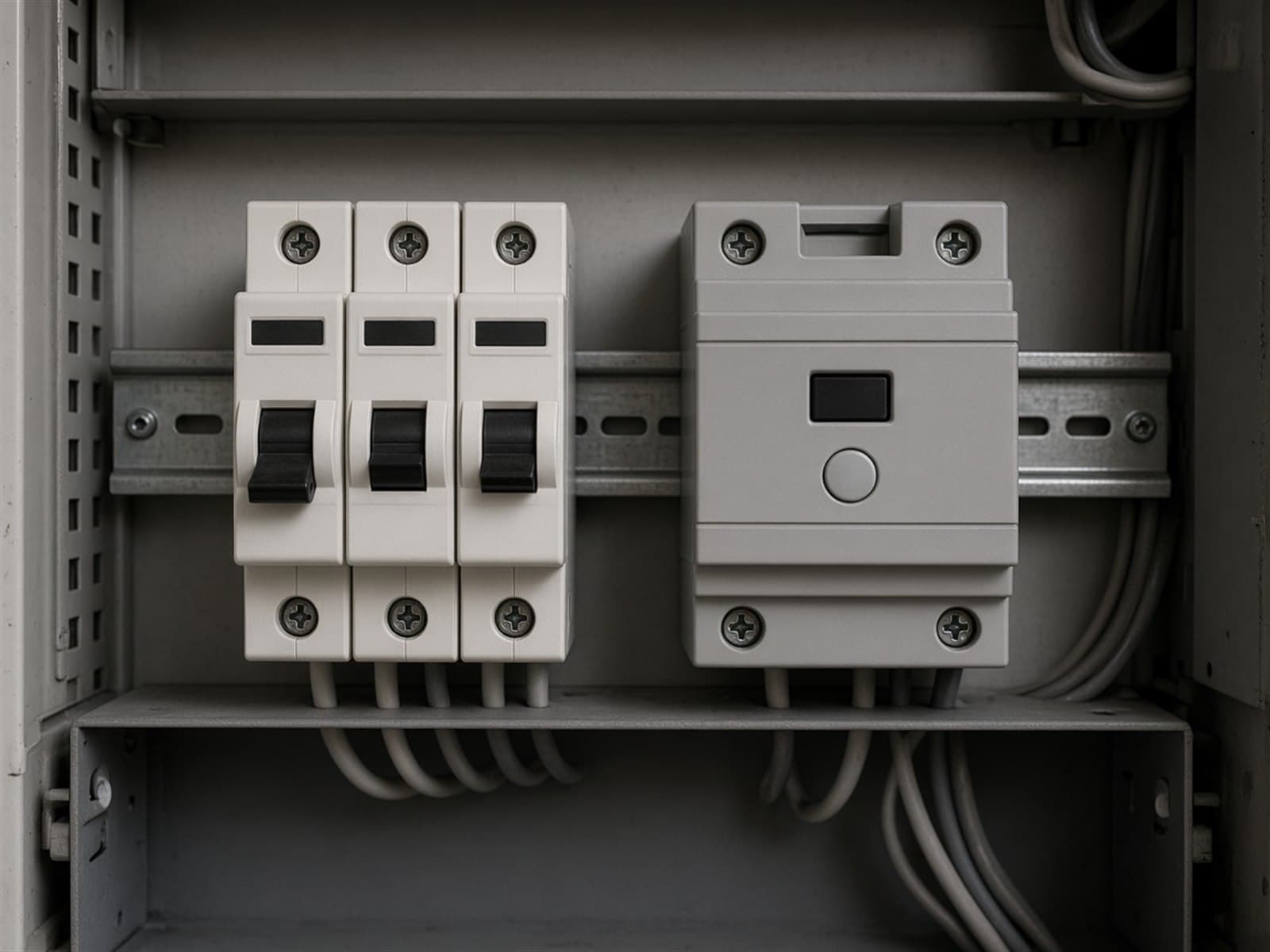
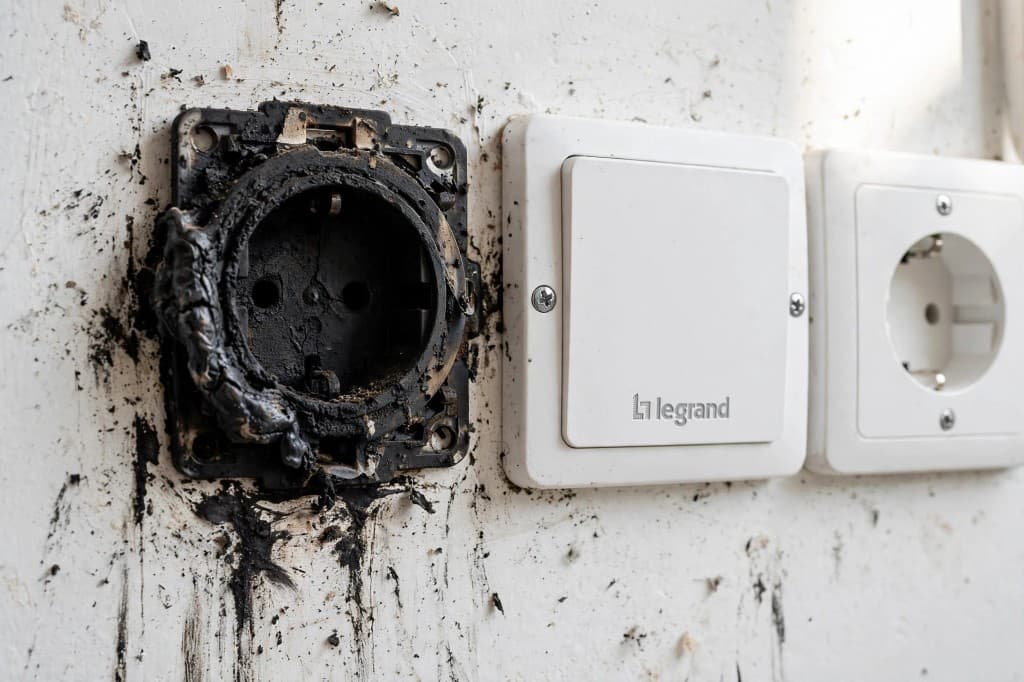
The call from Başıbüyük often comes after a water change: 'We were changing the aquarium water, there was a crackle from behind, then a bang, and the living-room lights and sockets went off. The area around the socket behind the cabinet is blackened. The filter and heater stopped; we are worried about the fish.' Every part of this description says something. A bang following a crackle shows that small leakage currents first crept across the surface, then an arc jumped. That it happened during or just after a water change is no coincidence: at that moment the cables, cabinet floor and socket front are at their wettest. The breaker tripping at once points to a short circuit; if the RCD dropped too, the arc or the water also opened a path between phase and earth. The blackening around the socket says the arc was inside the socket and the box was damaged by heat. The first job is not to plug anything into that socket, not to reach behind the cabinet on a wet floor or with wet hands, to keep the relevant breaker off until the survey, and to feed the aquarium devices temporarily from another dry, sound socket, with the extension lead kept off wet floor.
In an aquarium water never stays entirely inside the tank. In an open or half-lidded tank water evaporates continuously and condenses on the lid, the lighting and the tank's back glass. During filter cleaning water splashes from the hose, the sponge and the bucket. During a water change water spills onto the top and back of the cabinet. Some of this water touches the cables hanging down behind the tank. The cable's outer sheath is smooth, and water walks down over it by gravity as a thin film; it collects not at every bend but at the lowest point. If the cable drops straight from the tank to a socket below, the lowest point is the plug itself. Water reaches the plug body, then the base of the pins, then the socket mouth and the contact springs inside. Aquarium water is not pure water; it carries dissolved salts, compounds from fish waste, and in some tanks deliberately added salt. It conducts far better than tap water and corrodes metal far faster. The contact springs rust, contact resistance rises, the plug heats; on the socket's plastic body the surface between phase and neutral contacts is coated with damp dirt.
On this surface very small currents flow first; they are the source of the crackle. The current heats the surface, evaporates the water, leaves the salt behind and carbonises the plastic; carbon conducts and the path gradually thickens. Finally an arc jumps between phase and neutral and the socket bangs. A floor-level flush socket is therefore the worst place: it is at the end of the water's route and nearest to water spilled on the floor. A power strip on the cabinet floor is worse still: water spilled into the cabinet collects right on it, and its body is usually lidless and not firmly fixed. This fault can also have a second source. An aquarium heater is usually an element inside a glass tube; if the tube cracks, tank water reaches the element directly and part of the phase current passes into the water and from the water into anything touching the tank. Then the RCD drops, and there is danger for whoever puts a hand in the water. The survey separates these two sources: a socket fault and leakage from the heater itself can be confused by the same symptom, but their repairs differ.
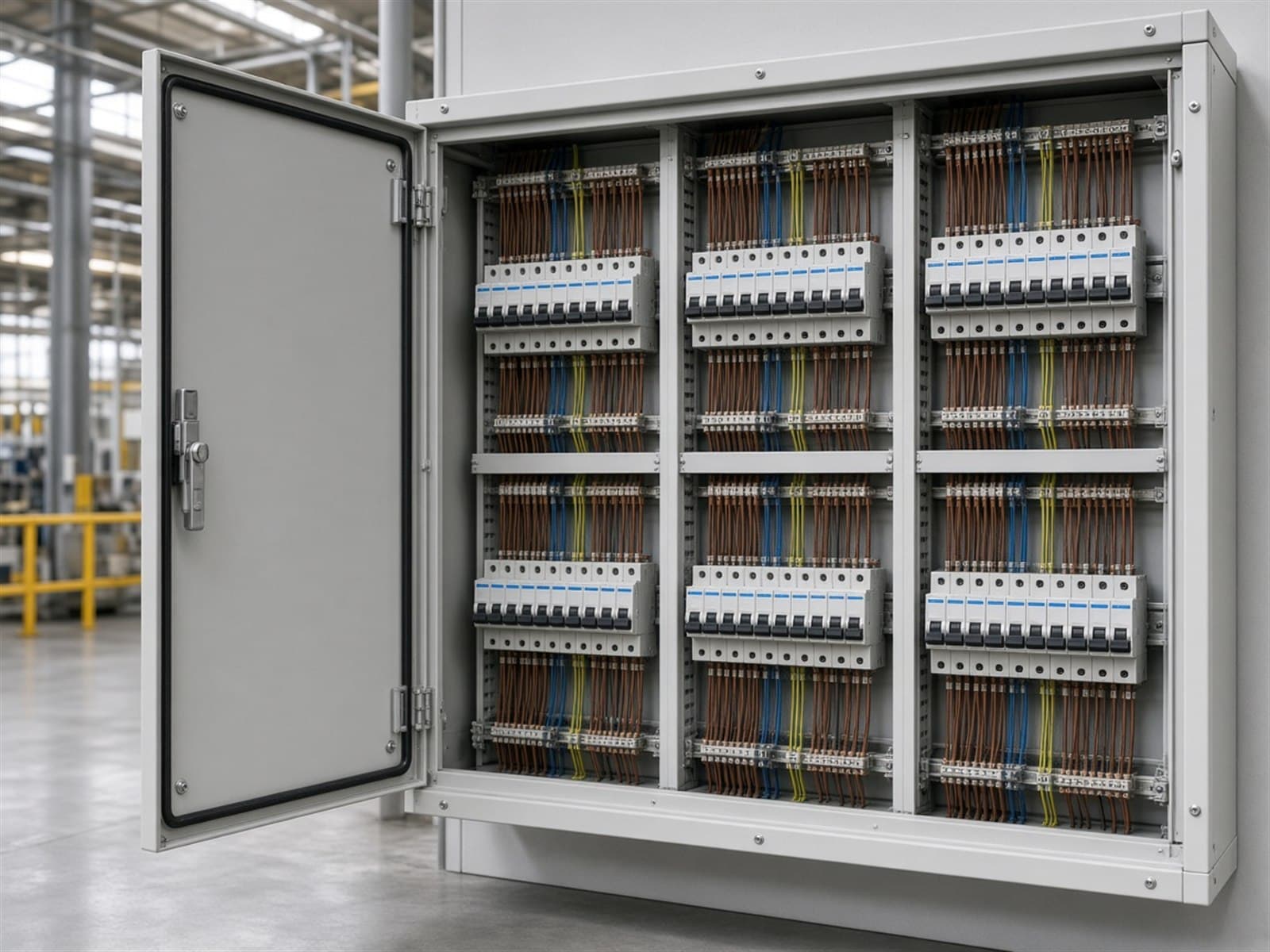
The survey starts at the panel. Which breaker tripped, whether the RCD dropped too, and which rooms the living-room socket line feeds are read; the RCD is confirmed to really open with its test button. After the line is switched off at the panel and dead is proven by measurement, the burned socket is removed. The signs looked for in the box and on the conductor ends are clear: a blackened or melted socket body, rusted or green contact springs, white salt residue, insulation hardened or carbonised by heat, water traces inside the box. The living-room socket line usually continues by looping from one socket to the next; so neighbouring sockets on the same line and the junction box are opened and checked too, because heat and water may not have stayed at one point. Then the line is megger-tested at 500 V DC for phase–PE, neutral–PE and phase–neutral insulation resistance; the arc and the water may have damaged the line's concealed part too. Finally the aquarium devices are checked: a crack in the heater's glass tube, a cut or crush in the filter motor or pump cable, rust and heat marks on the plugs. If the RCD dropped, the devices are tried one by one from a dry socket to separate which one leaks.
The first step of the repair is clearing the damage. The burned socket and box are removed; heat-hardened and blackened conductor ends are cut back to sound copper, and if needed extended with lever spring connectors in an accessible junction box. If neighbouring sockets and the box show heat marks, they are renewed too. The old floor-level socket position is abandoned and blanked off or left for a use unrelated to the aquarium. The second step is location. The new connection point for the aquarium goes above the cabinet's top level, beside the tank, at a height outside the path of spills and splashes. The socket is not put directly above the tank, over the open water surface and the lid's condensation zone; it sits on a side wall, away from the tank. If the new line can be concealed it is NYA in conduit, otherwise NYM in covered trunking, taken from the existing socket line. The third step is the socket type: a lidded IP44 model whose lid can close over the plug while plugged in. If the aquarium has several devices, a separate socket point for each is preferred, and the power strip on the cabinet floor is removed.
The fourth step is the drip loop, and it is the most important detail. Every cable coming down from the tank is allowed to hang below the socket's level before entering it and then rises from there up to the socket; the cable makes a curve like the letter U. Water walking along the cable thus reaches the loop's lowest point and drips to the floor from there; it cannot climb up to the socket. The loop must stay below the socket; if the cable drops straight from a point above the socket, the loop does nothing. An easy-to-wipe surface is left below the loop so dripping water is noticed. The fifth step is protection. The aquarium line stays under a 30 mA RCD; the RCD is not bridged or swapped for a 300 mA one. If the heater's glass tube is cracked, the heater is not used and is replaced with a new one; repairing aquarium devices is the aquarium shop's job. After the repair the line is re-energised, the RCD tested, the devices plugged in, and the standing leakage on the line measured with a leakage clamp. How many socket points, how much new line and which route are needed are written on site at the survey, not guessed on the phone.
Water spilled, splashed or condensed from the tank walked down the cable's outer sheath to the plug and into the socket, rusted the contacts and opened an arc between phase and neutral. Aquarium water is salty and conductive, which speeds this up.
It is the cable hanging below the socket's level before entering it and rising from there. Water walking along the cable drips to the floor from the loop's lowest point and cannot reach the socket. If the loop is not below the socket it does nothing.
Not directly above the tank; vapour rising from the open water and condensation under the lid reach there. The socket sits above the cabinet's top level but beside the tank, on a side wall; a lidded IP44 model is used.
The arc or water may also have opened a path between phase and earth, or the heater's glass tube has cracked and phase current is passing into the water. The devices are tried one by one from a dry socket; a cracked heater is not used and is replaced.
A power strip on the cabinet floor sits exactly where spilled water collects. It is removed; fixed, lidded socket points are made above the cabinet beside the tank, and every cable gets a drip loop.
There is no fixed minute. Istanbul 24/7. Arrival depends on the queue at that moment and E-5 and TEM traffic. A 30-minute claim is not invented.
We have no fixed shop; ElektrikçiGO is a mobile, service-area team working on site across Maltepe. The call lands on the phone, an appointment is set and the technician comes to your address. When they depart, their name, vehicle plate and a live tracking link are shared so you know in advance who is at your door. The survey is done on site and the binding figure written after measurement.
Yes. Parts fitted carry the manufacturer's warranty and the workmanship an official 1 year ElektrikçiGO guarantee. On completion the brand and model of switchgear used, the measured insulation and earth resistance values and the trip time of the 30 mA device are written onto a signed service report and handed to the customer. A copy is kept on file so values can be compared at the next inspection.
Service covers the neighborhoods of Istanbul's 39 districts. Not the whole of Turkey. A survey is not a binding quote.
Başıbüyük, Maltepe. The map is centered on the neighborhood. Arrival changes with the hour and the traffic.