Founding master
Adnan Şemiye18 years in the field
MYK-certified master
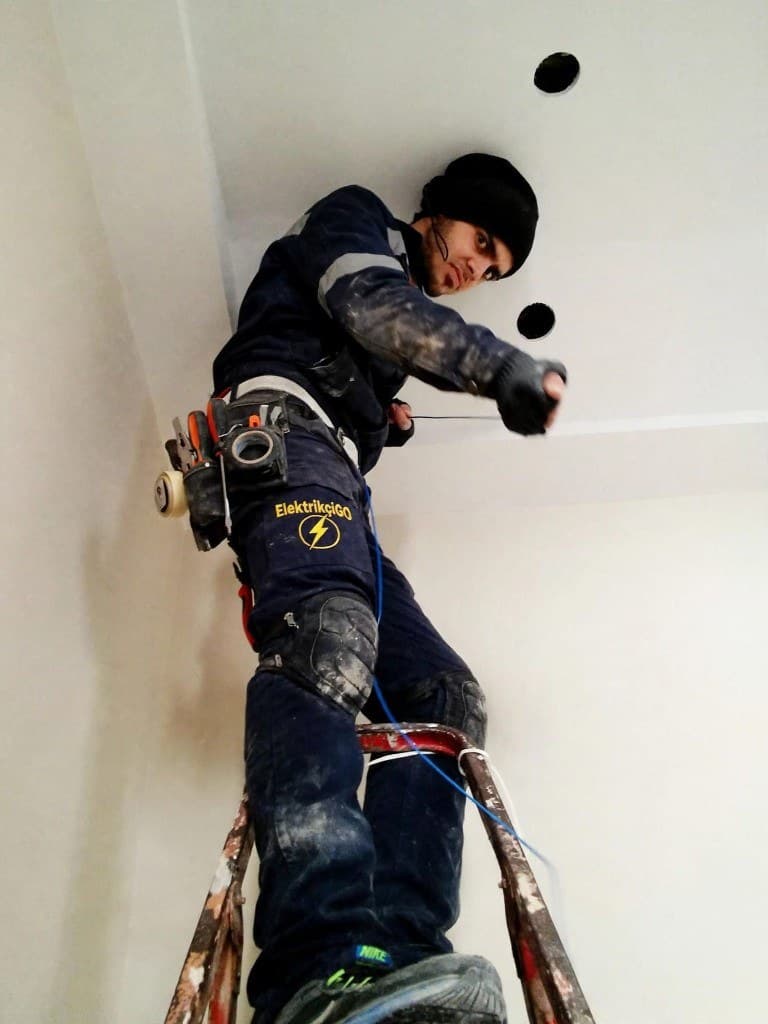
Adnan Şemiye reads this job in the field. The price is written before work starts.
Maltepe district
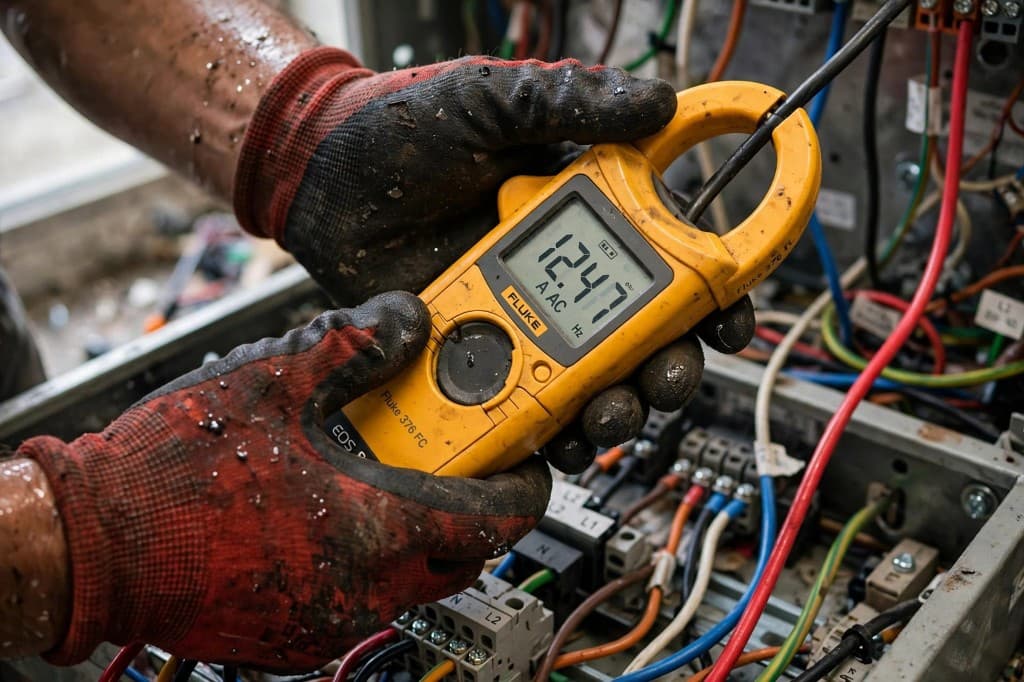
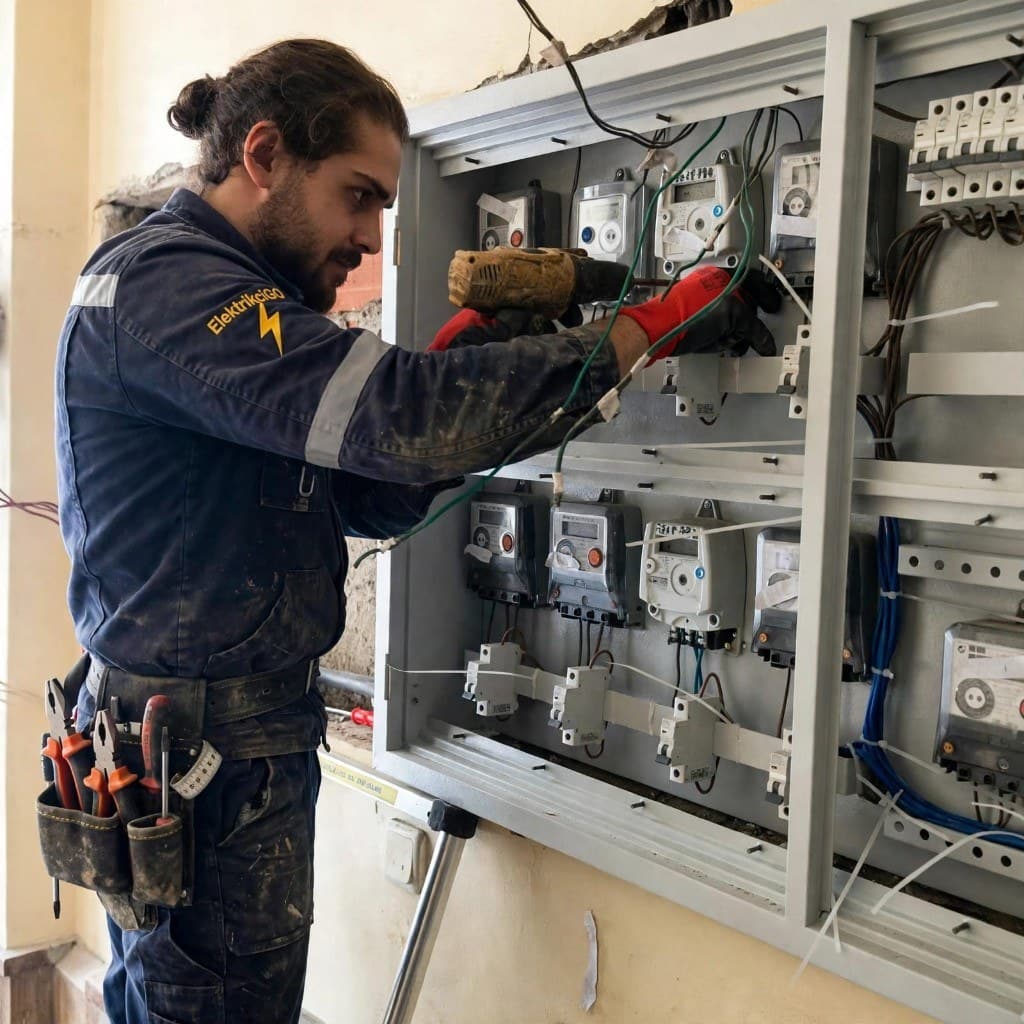
Fındıklı 24/7 emergency electrician. In this Maltepe neighbourhood we respond without a minute promise to midnight breaker tripping, residual current device faults, burnt sockets and consumer unit failures. In apartment and complex stock, saturated kitchen circuits, bathroom water heater runs and riser overheating are measured on site. Certified technicians, faults proven with a True-RMS clamp meter and a megohmmeter, written price approval and an official 1 year workmanship guarantee.
Founding master
Adnan Şemiye18 years in the field
MYK-certified master
Adnan Şemiye reads this job in the field. The price is written before work starts.
From the field
 Emergency van · +90 582 403 10 87
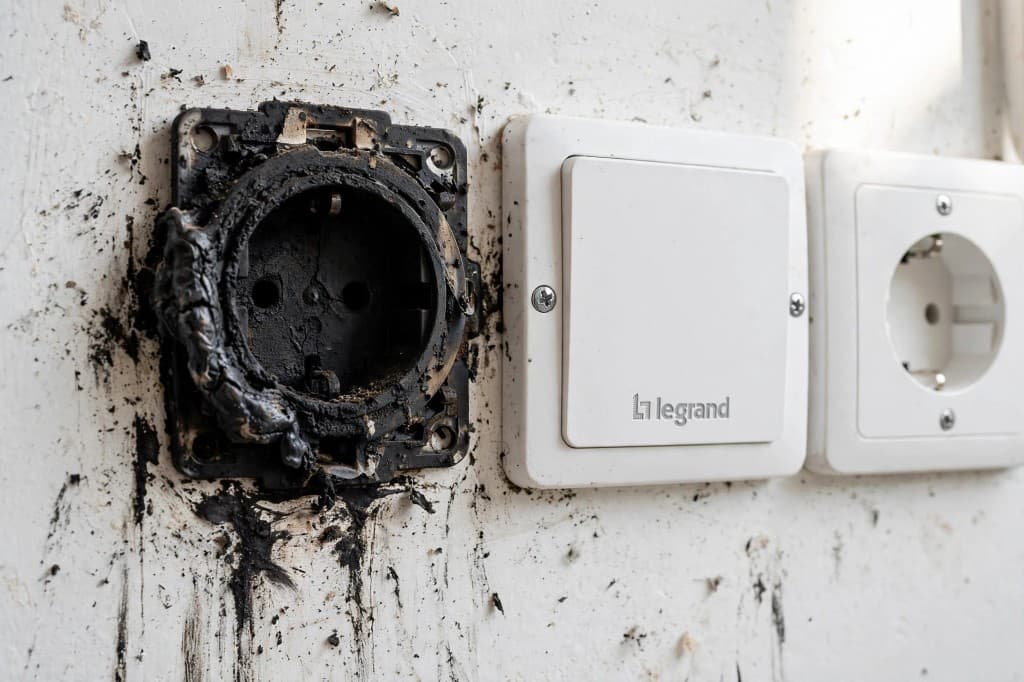
The call from Fındıklı often starts with surprise: 'We had the kitchen redone last year. Lately the living-room socket gets too hot to touch, the hallway light flickers when the washing machine runs, and sometimes there is a smell. But the breaker has not tripped once.' Every part of this description says something. The breaker not tripping shows the problem is neither overload nor a short; a breaker watches current and the current is normal. A lamp flickering at another point when a load comes on says both points pass through a shared connection and voltage drops at that connection; the warm socket or switch is usually near that shared point. That the renovation was partial is no coincidence: the new line has to meet the old line somewhere, and that meeting point is usually an old box in the wall. The first job is to stop plugging loads into the warm socket, keep the relevant breaker off until the survey, and not try to open the box cover by hand to look inside; a melted joint may have exposed a conductor.
Aluminium forms a thin, hard, insulating oxide layer on its surface the moment it meets air. Copper's oxide raises contact resistance very little, while aluminium oxide genuinely narrows the contact area under the screw. An ordinary brass screw terminal is not designed to break that layer and keep air out; it is made for copper. The second factor is creep: aluminium is softer than copper and slowly flows under constant pressure. The screw is tight on day one; over months the aluminium escapes from under it and the connection loosens unnoticed. The third factor is expansion: aluminium expands noticeably more than copper and brass when warm. Every time a load switches on and off the joint heats and cools, and each cycle loosens it a little more. The fourth factor is moisture. If condensation forms in a box on a kitchen or bathroom wall or a cold outside wall, a galvanic cell forms between aluminium and brass or copper; aluminium, the less noble metal, is eaten, a white powdery corrosion product builds up at the end, and the conductor's section effectively thins.
The result of these four factors is the same: the joint's contact resistance rises. Even a small resistance means heat at the joint; heat is the current squared times the resistance. At the ten-amp current of a washing machine or heater, a half-ohm joint produces tens of watts of heat inside a palm-sized box; that is enough to soften PVC insulation, melt the terminal body and blacken the box. The heated joint oxidises more, loosens more, and resistance rises further; the fault feeds itself. Throughout, the current on the line is the appliance's normal current, so the breaker does not open. There is no leakage between phase and earth either, so the RCD does not drop. Protection only acts once the insulation has fully melted and the phase touches something; by then the box has already burned. Another weakness of aluminium is brittleness: old solid aluminium breaks when bent again and again in a box, and if it was nicked with a knife while stripping it cracks from that nick. An end close to breaking is also an end that heats. So the fault is not a single part but a connection error: aluminium was put into a terminal made for copper.
The survey starts at the flat panel. Which breaker feeds which rooms is mapped and the conductors leaving the panel are checked: a grey-silver solid conductor is aluminium, distinguished from copper's reddish colour. Which rooms were renovated and where the new line meets the old is asked. Then the suspect line is loaded with a known load, for example a two-kilowatt heater, and the voltage at the panel and at the socket are measured at the same time. If the difference is clearly above the few volts expected for the cable length, one of the joints in between has resistance. Under load, box covers, sockets and switches are scanned with a thermal camera; a bad joint shows up as a spot clearly hotter than its surroundings. Only after that is the line switched off at the panel, dead proven by measurement, and the hot-looking box opened. The signs looked for in the box are clear: browned or carbonised insulation, a melted or cracked terminal body, white powder on the aluminium end, discoloured copper, a loose screw, a wire close to breaking. Before the repair the line is megger-tested at 500 V DC for phase–PE and neutral–PE insulation resistance; the heat may have weakened insulation beyond the joint too.
The permanent fix is to replace the aluminium line with copper back to the panel. If the old conduit is sound and the conductor can be pulled, the aluminium comes out and solid copper NYA goes into the conduit: 2.5 mm² on the socket circuit, 1.5 mm² on the lighting circuit, the breaker chosen to the section. If the conduit is blocked or broken, the line is re-run on the surface with NYM in a covered cable trunking; that is a clean route without breaking the wall. Once this is done the aluminium–copper joint in the box disappears, and so does the problem. Sometimes this is not possible right away: the line passes through a neighbour's flat, the conduit is broken inside concrete, or the owner has put the renovation off. Then the transitional fix applies. The aluminium end is cut back to a fresh, sound point, discarding the oxidised and nicked part. The joint is made with a connector marked as suitable for aluminium and copper and factory-filled with contact paste; the paste breaks the oxide layer and keeps air and moisture away from the contact point. The ordinary lever spring connectors we use on copper lines, such as the standard Wago 221 series, are rated for copper; they are not used on aluminium. A random grease from a car-parts shop does not replace the rated paste either.
The rules for the transitional joint are clear too. Every joint stays in an accessible box whose cover can be opened; it is not closed under plaster, behind plasterboard or inside a cabinet, because this joint will be checked later. Aluminium wire is not connected directly to a socket's or switch's screw terminal; if the device is not rated for aluminium, a short copper tail goes in between and the copper tail is joined to the aluminium with a rated connector. Aluminium and copper are not twisted and soldered, nor twisted and taped. The breaker is not upsized: aluminium's conductivity is about sixty per cent of copper's, it carries less current at the same section; the breaker is chosen to the existing aluminium section, and a new high-power appliance, such as an oven or an air conditioner, is not connected to an aluminium line but gets its own copper line. After the repair the line is re-energised, the voltage at the panel and socket is measured again with the same known load, and the joint is run under load for a while and scanned again with the thermal camera; it must not look hotter than its surroundings. How many aluminium lines the flat has, which goes to copper right away and which waits on a transitional joint are written on site at the survey, not guessed on the phone. The building riser and kofra before the meter are the management's and the distribution company's area.
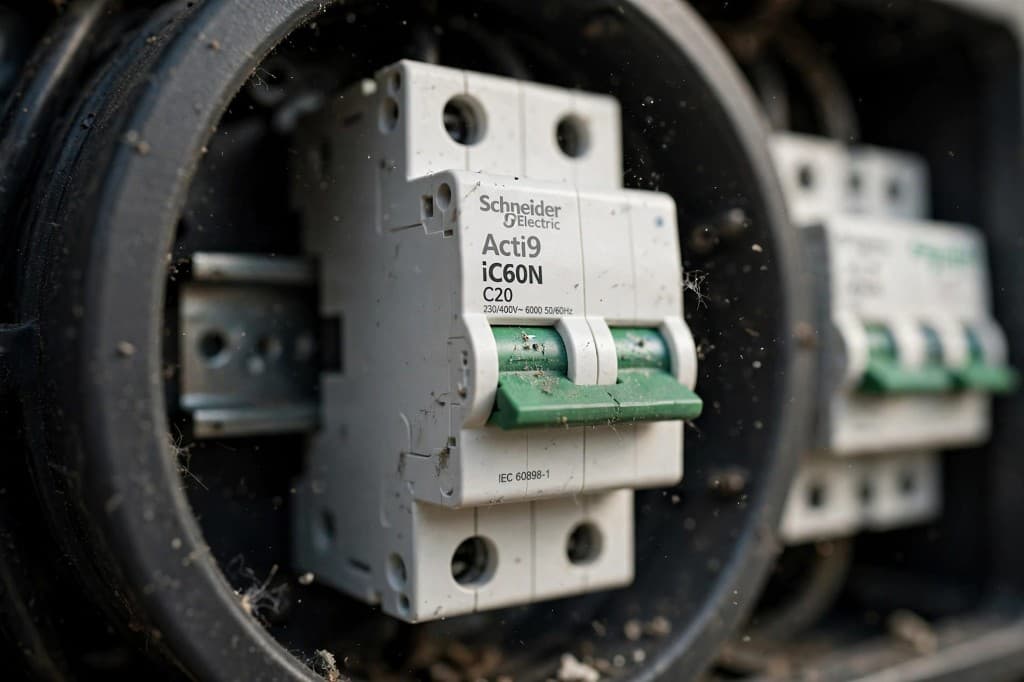
A breaker watches current, and the current on the line is the appliance's normal current. The heat forms in the raised contact resistance at the joint. With no leakage either, the RCD does not drop; protection only acts once the insulation has fully melted.
An aluminium conductor is grey-silver, copper is reddish. Seeing it means opening the panel or a box, which is the electrician's job after proving dead. Do not remove covers yourself.
No. An ordinary brass terminal and a standard Wago 221 are rated for copper. An aluminium–copper joint is made with a connector carrying that suitability marking and factory-filled with contact paste.
The permanent fix is to convert aluminium lines to copper back to the panel. Which line changes now and which waits on a rated transitional joint is decided on site at the survey, with a circuit map and measurement.
No, it becomes more dangerous. The problem is not overload but resistance at the joint. Aluminium carries less current than copper at the same section; the breaker is chosen to the existing section and not upsized.
There is no fixed minute. Istanbul 24/7. Arrival depends on the queue at that moment and E-5 traffic. A 30-minute claim is not invented.
Yes, we work 24/7 across Maltepe including Fındıklı, with no difference for nights, weekends or public holidays. Average arrival is no fixed minutes. In terraced buildings no drill or breaker is used after 22:00; the fault is located silently with a FLIR thermal imager and a cable tracer, and noisy permanent work is booked for the next working day.
No. Our first priority is getting the critical loads running safely. After isolating the faulty leg at the board, the technician restores the boiler, refrigerator and lighting circuits within the first ten minutes. If the concealed run is permanently broken, a temporary safe line is installed in fire-retardant trunking. The boiler is afterwards always moved to a dedicated circuit, because a faulty socket sharing that leg will stop it at midnight.
Service covers the neighborhoods of Istanbul's 39 districts. Not the whole of Turkey. A survey is not a binding quote.
Fındıklı, Maltepe. The map is centered on the neighborhood. Arrival changes with the hour and the traffic.