Founding master
Adnan Şemiye18 years in the field
MYK-certified master
Adnan Şemiye reads this job in the field. The price is written before work starts.
Maltepe district
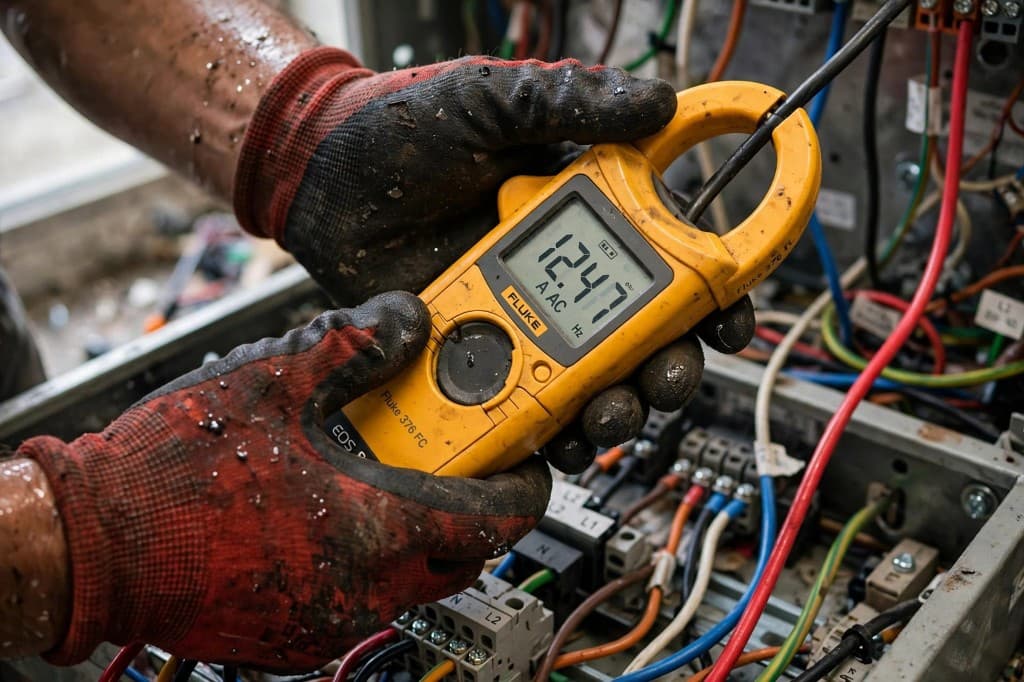
Esenkent 24/7 emergency electrician. In this Maltepe neighbourhood we respond without a minute promise to midnight breaker tripping, residual current device faults, burnt sockets and consumer unit failures. In apartment and complex stock, saturated kitchen circuits, bathroom water heater runs and riser overheating are measured on site. Certified technicians, faults proven with a True-RMS clamp meter and a megohmmeter, written price approval and an official 1 year workmanship guarantee.
Founding master
Adnan Şemiye18 years in the field
MYK-certified master
Adnan Şemiye reads this job in the field. The price is written before work starts.
From the field
 Emergency van · +90 582 403 10 87
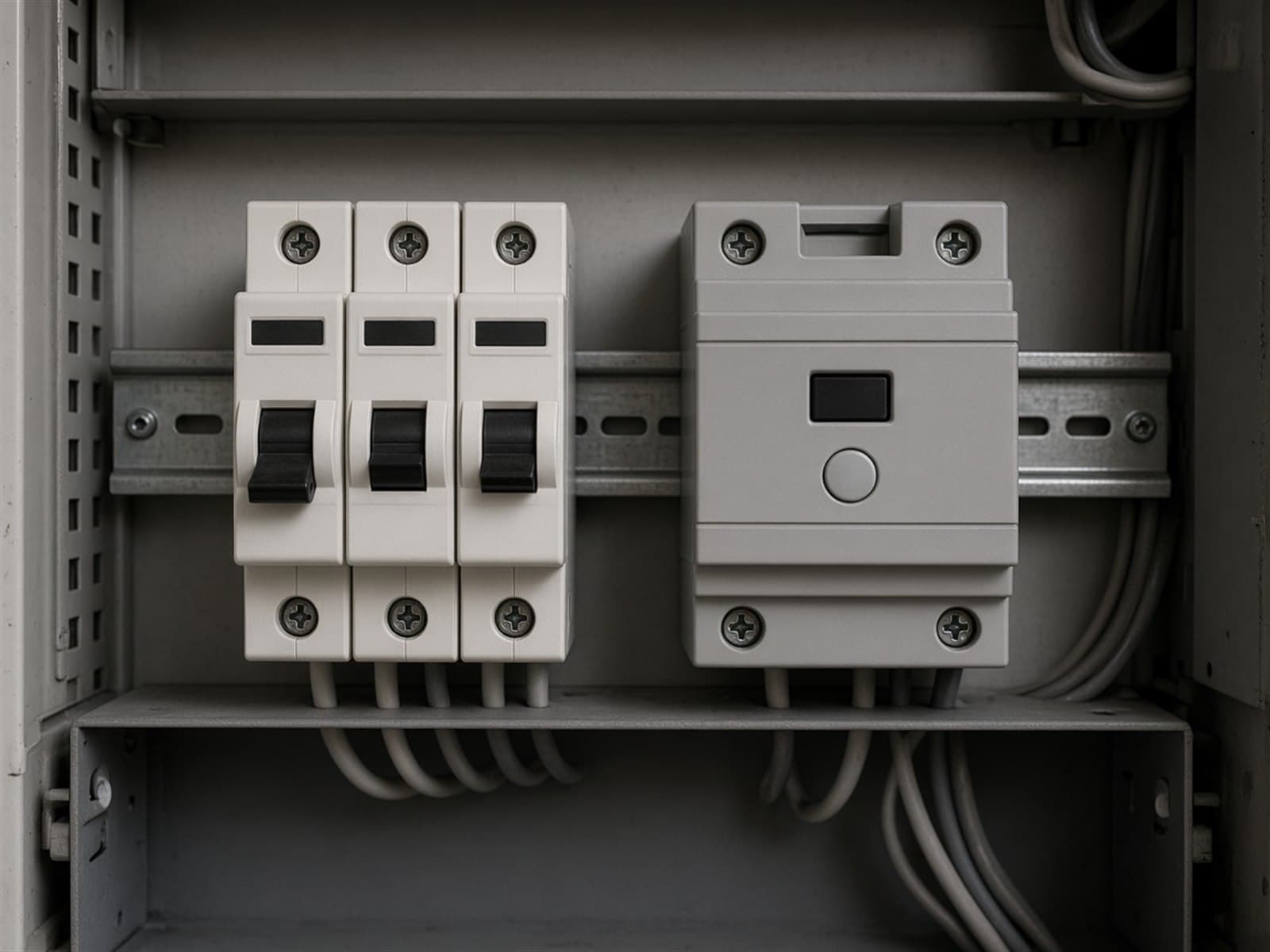
The call from Esenkent usually starts with a smell: 'There is a burning-plastic smell in the bathroom. The area around the ceiling fan looks darkened and its grille is a bit warped. The fan had been silent for a few days; we thought it was running quietly. The breaker never tripped, the light still works. The upstairs neighbour also says a smell comes from the shaft.' Every part of this description says something. The fan going silent shows the impeller is not turning; a silent fan is usually a stopped fan. The smell and the darkening around the fan say the heat comes from the motor itself. The breaker not tripping is this fault's signature: a stopped fan motor does not draw enough current to move the lighting breaker, but it turns a few tens of watts into heat inside a small plastic housing for hours. The smell reaching the upper floor through the shaft matters too: if the fan blows into a shared ventilation shaft that several floors connect to, the smoke and sparks of burning plastic do not stay in that one bathroom. The first job is to switch the fan off at once, keep the lighting breaker off until the survey if the fan is wired permanently, not touch the melted housing by hand, and air the bathroom with the door open.
Most bathroom fans run on a small single-phase shaded-pole or capacitor induction motor. Motor power is usually between fifteen and forty watts; while turning normally most of the winding current goes into spinning the impeller, heat is low and the airflow also cools the motor. In a windowless bathroom this fan runs at every shower and often for most of the day. The air it pulls is damp and carries dust, towel and clothing lint, hair, and soap and shampoo vapour. This mix sticks to the impeller blades, the front of the motor body and the point where the shaft enters the bearing; it softens with damp and hardens as it dries. In most cheap fans the shaft turns in an oil-impregnated sleeve. The sleeve's oil dries out over the years and with the heat of continuous running; the dusty paste gets into the bearing and friction rises. The fan first slows and its hum changes, then one morning it does not turn at all. On some fans the mass stuck to a blade unbalances it and vibration wears the bearing faster. If the backdraft flap behind the fan is stuck with dust, airflow stops too and the motor loses its own cooling.
When the rotor stops, the motor stops being a rotating machine and becomes a heater. The winding current rises somewhat above normal running, but no mechanical work is done any more and the impeller's air no longer cools the motor; all the energy turns into heat inside a small winding. Quality fans have a thermal fuse or thermal protector in the winding: it opens the circuit when the winding reaches a dangerous temperature. Some motors are designed impedance-protected, meaning the winding stays at a safe temperature even when locked. Most cheap fans have neither. In such a fan the winding heats for hours, for days if permanently wired; the varnish darkens, the plastic bobbin softens, and the plastic housing and grille holding the motor warp and melt. Melted plastic can drip, and its smoke is drawn into the shaft. Throughout, the lighting line's 10 or 16 A breaker sees nothing; a few tens of watts is a normal load for a breaker. The RCD only drops if the melting winding insulation opens a path between phase and earth. That is why in this fault the protection usually lives inside a sound device, the fan's own thermal protection.
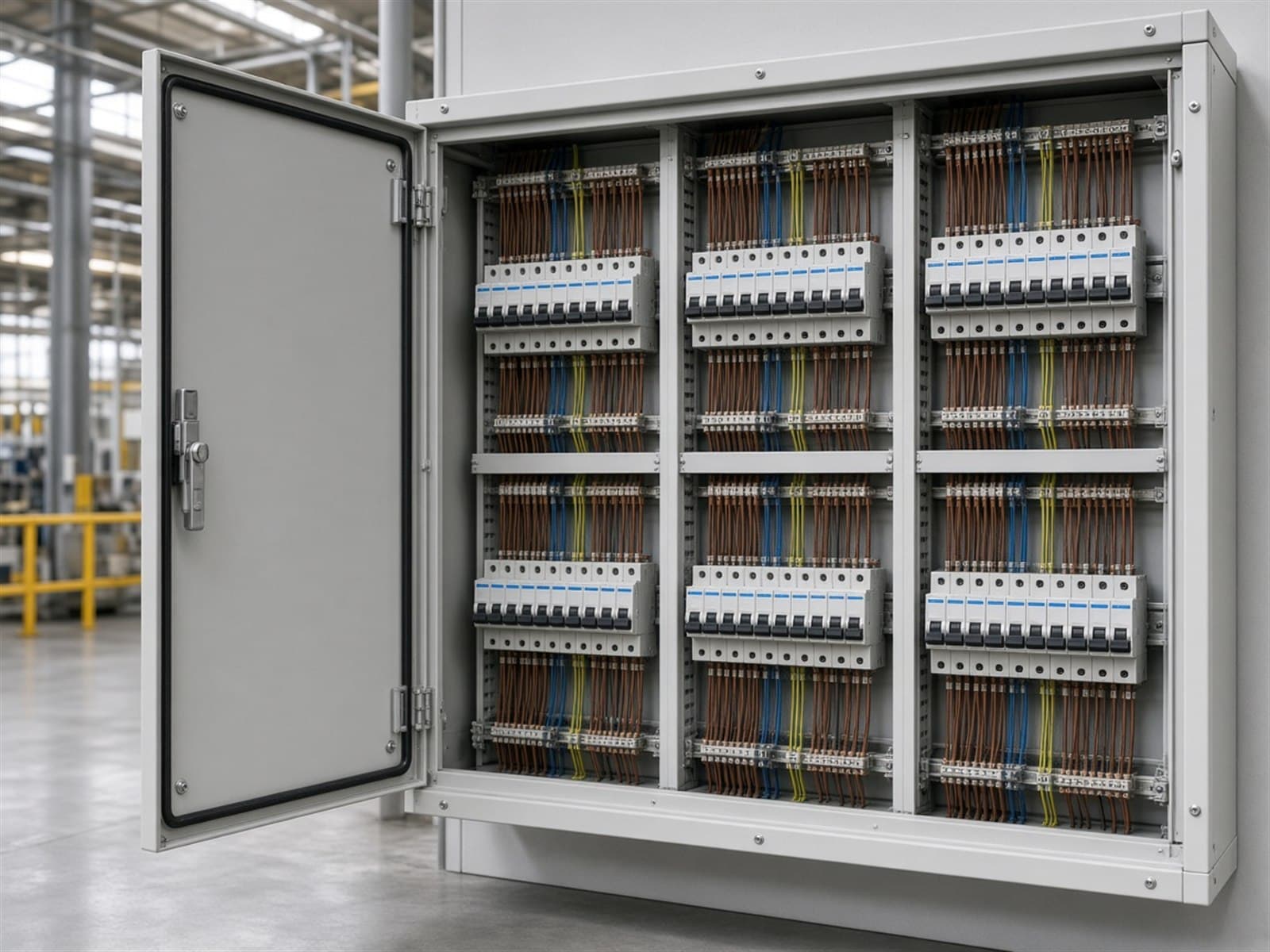
The survey starts at the panel. Which breaker feeds the fan, whether it is on the lighting or socket circuit, and whether it is under the RCD are read. Then how the fan is controlled is checked: does it run with the light switch, does it have its own switch, or is it wired permanently live; is there a timer relay or humidity sensor. After the line is switched off at the panel and dead is proven by measurement, the fan's grille and body are removed. The signs looked for are clear: an impeller that does not turn by hand or turns stiffly, dark dust paste on the blades and motor front, a darkened or smelly winding, softened or melted plastic housing, a warped grille, a stuck backdraft flap behind the fan. The fan's supply connection is checked: a twisted joint and tape inside the ceiling or wall, an exposed terminal, conductor ends darkened by heat. The fan's label is read: power, IP class, a thermal-protection marking, bearing type. Then the shaft mouth is checked with a torch: has melted plastic or soot fallen into the shaft, is the duct mouth blocked with dust. Finally the supply line is megger-tested at 500 V DC for phase–PE and neutral–PE insulation resistance.
The first step of the repair is removing the burned part. A fan whose winding has cooked is not cleaned, oiled and refitted; once the varnish and insulation have been heat-damaged, the winding shorts sooner at the next lock-up. The fan is removed, heat-darkened conductor ends are cut back to sound copper, and the connection is remade in a covered, accessible junction box or the fan's own terminal compartment with lever spring connectors of suitable current rating; no twisted joint and tape is left. Melt and soot fallen into the shaft mouth are cleared and the duct mouth opened. Cleaning the inside of the shared shaft and the central ventilation system is the building management's job; but if the mouth the fan connects to and its own duct are blocked, the new fan will choke the same way. The second step is the fan itself. The replacement is a model with a thermal fuse or thermal protector in its winding, a ball bearing instead of a sleeve, and at least IPX4 for a bathroom. If the fan sits in the zone directly above the shower or tub, a protection class suited to that zone is chosen; where needed, a fan running on 12 V safety voltage with its transformer outside the bathroom zones is preferred. The backdraft flap must open and close freely.
The third step is how it runs. Damp really must be removed from a windowless bathroom, but the way to do that is not to run the fan twenty-four hours a day. The fan comes on with the light switch and runs on with a timer relay for a set time after the light goes off, or with a humidity sensor, a humidistat, that switches it on when the bathroom's humidity rises. If continuous running is wanted, a fan designed for it with a low-speed continuous mode is chosen. That way motor and bearing run far fewer hours over the years and dust builds more slowly. The fan is fed from the lighting circuit and the line stays under a 30 mA RCD. After the repair the line is re-energised, the fan's rotation, the timer's delay and the flap's opening are checked, and the fan is run for a while and its body temperature checked. The owner should wipe the fan's grille and impeller a few times a year with the power off; that pushes the next lock-up years away. How many fans, which model and which control are needed are written on site at the survey, not guessed on the phone.
A stopped fan motor draws only a few tens of watts, a normal load for the lighting breaker. The heat builds inside the small winding. In this fault the protection is the fan's own thermal fuse or thermal protector.
A fan that has only slowed and whose winding has not cooked may turn for a while longer after cleaning. A fan with a darkened winding or melted housing is not refitted; its insulation is damaged and it shorts sooner at the next lock-up.
Not necessarily. A timer fan that comes on with the light and runs on after it goes off, or a humidity-sensor fan that runs when damp rises, removes the moisture. If continuous running is wanted, a low-speed model designed for it is chosen.
A thermal fuse or thermal protector in the winding, a ball bearing instead of a sleeve, at least IPX4 for a bathroom, and a freely working backdraft flap. If it sits in the zone above the shower, a class suited to that zone or a 12 V safety-voltage model is chosen.
A shared ventilation shaft links several floors; the smoke and sparks of melting plastic do not stay in that bathroom. The fan is switched off at once, the burned fan removed and the shaft mouth checked. Cleaning inside the shaft is the building management's job.
There is no fixed minute. Istanbul 24/7. Arrival depends on the queue at that moment and E-5 and TEM traffic. A 30-minute claim is not invented.
With dispatch coordinated from our Pendik hub and GPS-tracked vans patrolling the main Maltepe corridors, average arrival in Esenkent is no fixed minutes. When the technician departs, their name, vehicle plate and a live tracking link are sent by SMS or WhatsApp. We do not promise an undeliverable time; if we are busy the next shift is stated plainly.
The survey fee is stated clearly on the call, with no surprises. The binding price is written only after on-site measurement: no figure is given before the clamp current, terminal temperature and insulation resistance have been seen. No work starts without approval. The brand and model of switchgear fitted, the measured values and the labour charge go onto a signed service report, and parts and labour carry an official 1 year guarantee.
Service covers the neighborhoods of Istanbul's 39 districts. Not the whole of Turkey. A survey is not a binding quote.
Esenkent, Maltepe. The map is centered on the neighborhood. Arrival changes with the hour and the traffic.