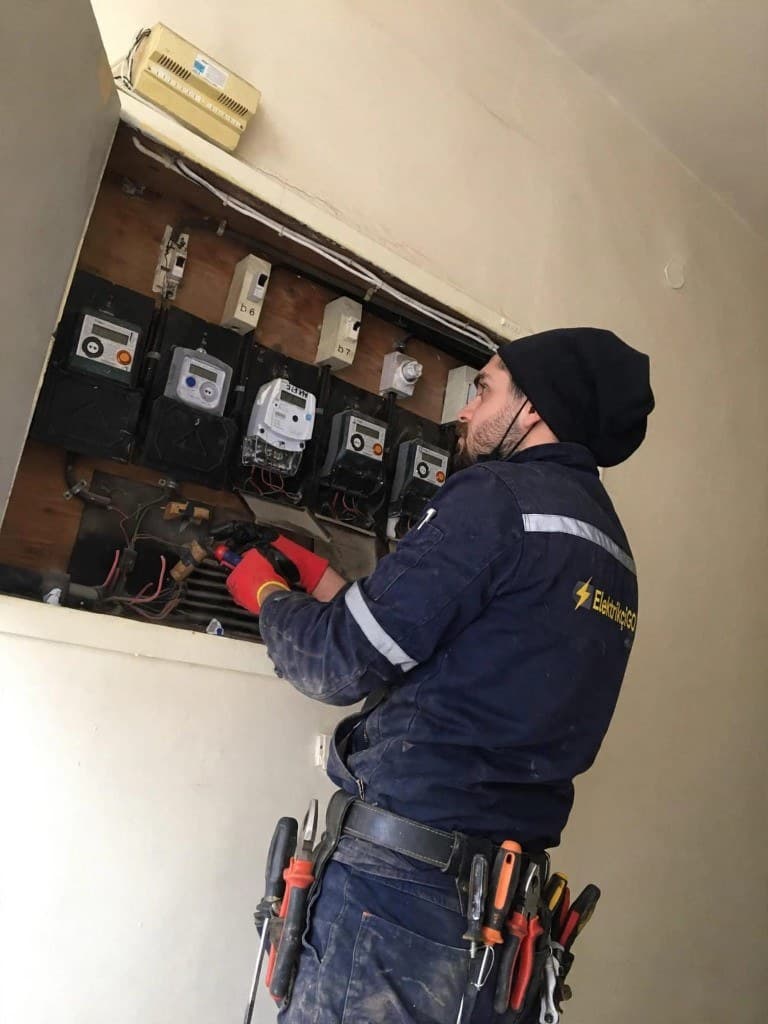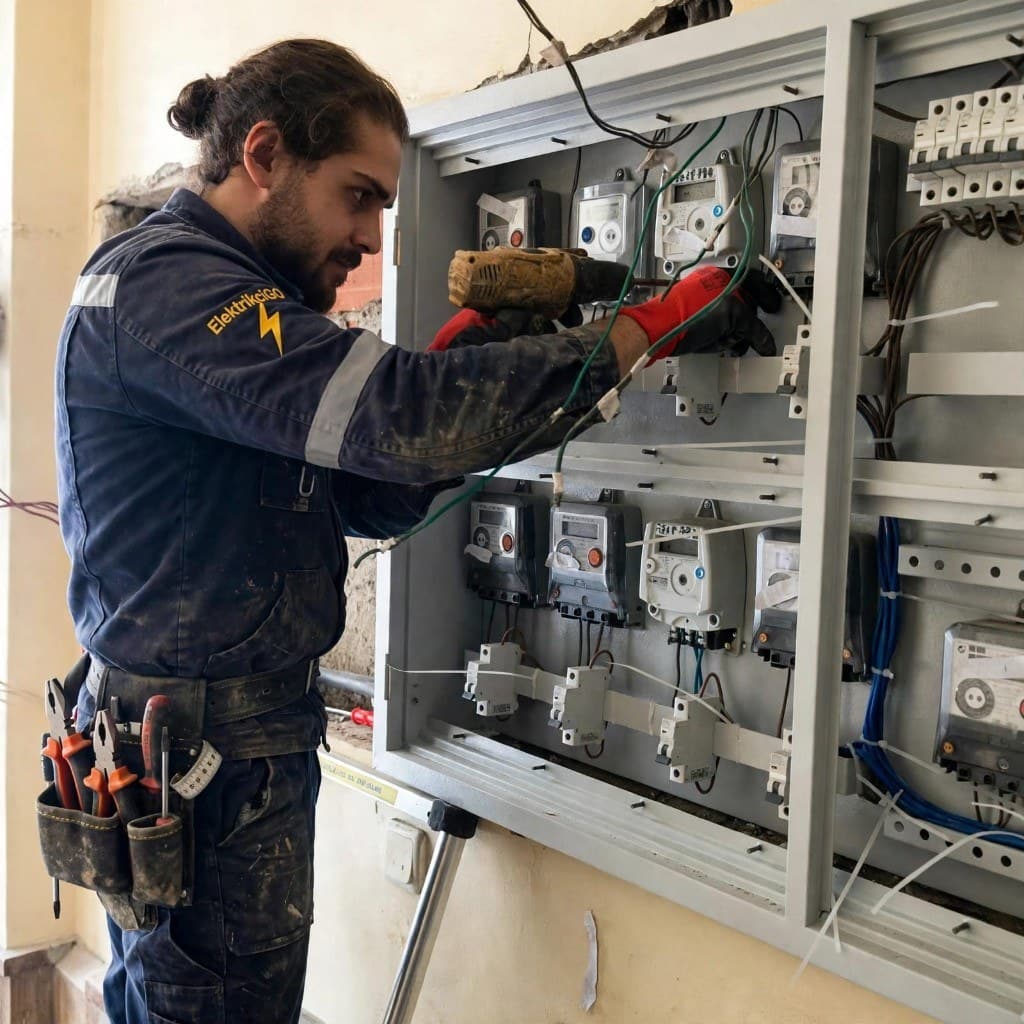
Founding master
Adnan Şemiye18 years in the field
MYK-certified master
Adnan Şemiye reads this job in the field. The price is written before work starts.
Maltepe district
Feyzullah 24/7 emergency electrician. In this Maltepe neighbourhood we respond without a minute promise to midnight breaker tripping, residual current device faults, burnt sockets and consumer unit failures. In apartment and complex stock, saturated kitchen circuits, bathroom water heater runs and riser overheating are measured on site. Certified technicians, faults proven with a True-RMS clamp meter and a megohmmeter, written price approval and an official 1 year workmanship guarantee.
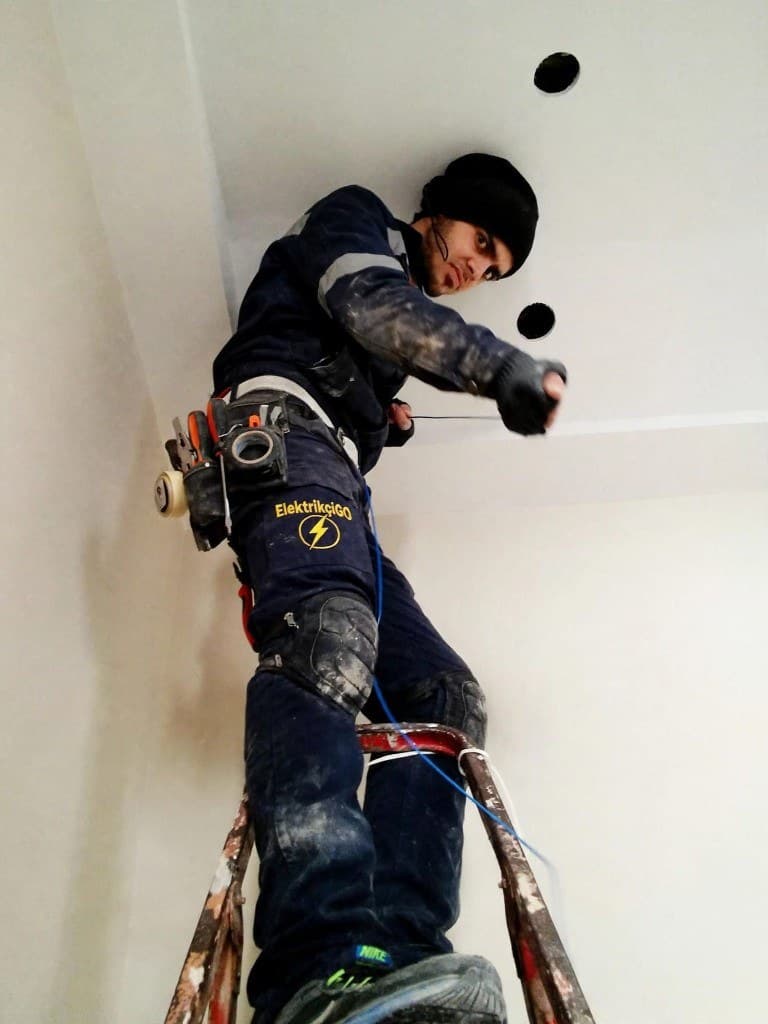
Founding master
Adnan Şemiye18 years in the field
MYK-certified master
Adnan Şemiye reads this job in the field. The price is written before work starts.
From the field
 Emergency van · +90 582 403 10 87
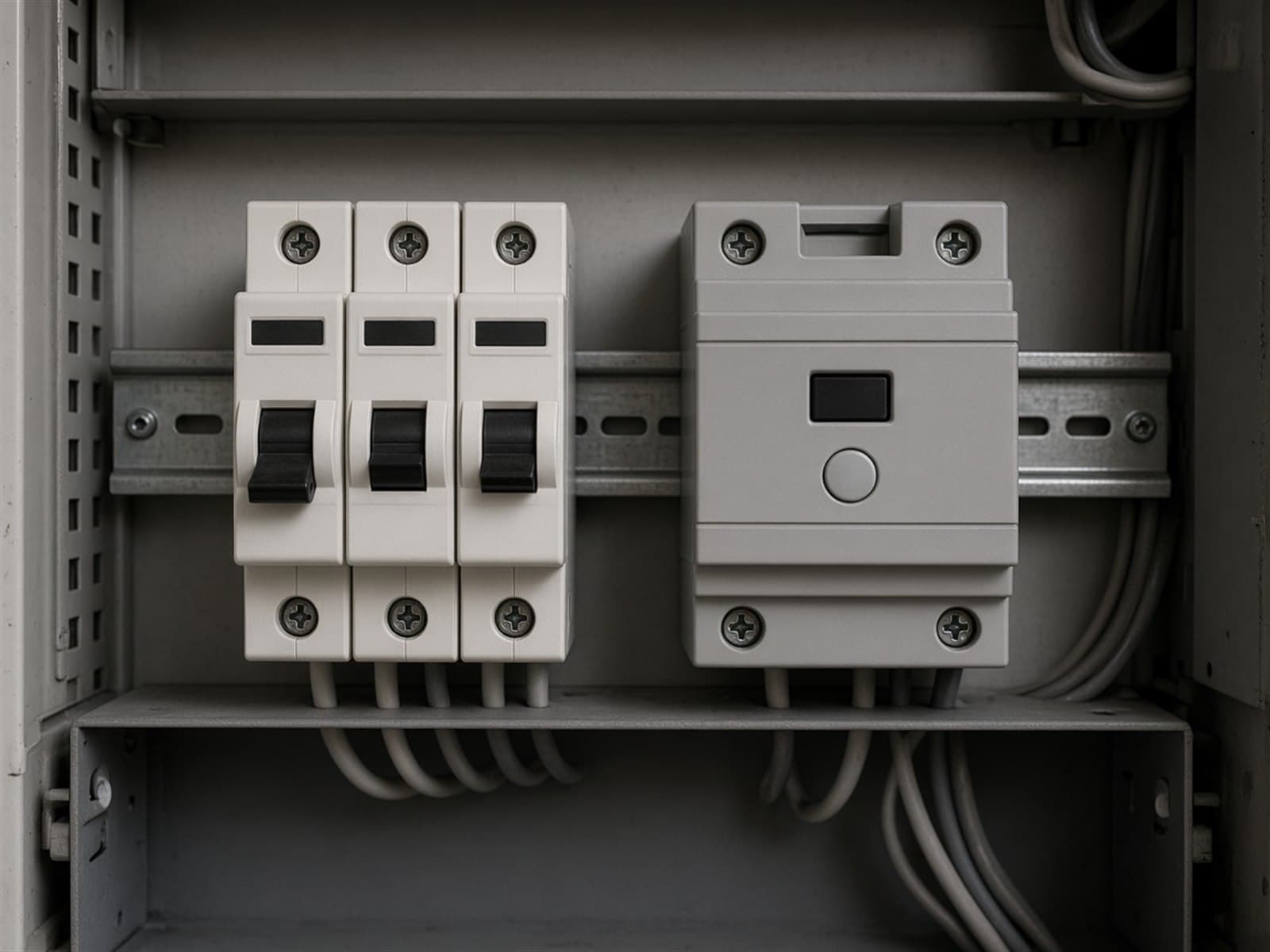
The summer call from Feyzullah goes like this: 'When the living-room AC turns on, the breaker trips. Not every time; sometimes at once, sometimes five or ten minutes later, especially in the afternoon. There is a crackle from inside the socket, the plug is hot when we pull it, the socket cover has yellowed. The AC technician came and said the gas is fine.' There are three facts in this description. First, the device that trips is the breaker, not the RCD. So the problem is not leakage but current or the shape of current. Second, the trip comes with the AC's start, the moment the compressor cuts in; the thermostat cools the room and stops the compressor, starts it again when the room warms, and every start is a new pulse. In the afternoon heat the outdoor unit works harder and the start is heavier. Third, the socket and plug are heating; that is a second fault independent of the breaker and it stays even if the breaker is changed. The first job is to stop running the AC from that socket and to leave the blackened plug, without plugging it in again, for the survey.
An 18,000 BTU class split AC draws about 1.6–2 kW from the grid while running, 7–9 A; that is no problem for a 16 A breaker. The problem is the start. A non-inverter, fixed-speed compressor is connected straight to the grid from standstill and in the first instant draws what is called locked-rotor current, several times its running current; the pulse is very short but high. Inverter units start the compressor softly and largely reduce that pulse; still, in an old fixed-speed unit with a weakened start capacitor, or on a long, thin line with low voltage, the start gets both longer and heavier. A B-curve breaker trips instantaneously between three and five times its rating; for 16 A that is about 48–80 A. When the start pulse enters this band the breaker 'thinks' there is a short and trips correctly. A C-curve breaker moves the instantaneous band to five to ten times, 80–160 A for 16 A, and is more tolerant of short start pulses. But that difference also means the breaker may be slower on a short circuit; so the curve is not changed without measurement.
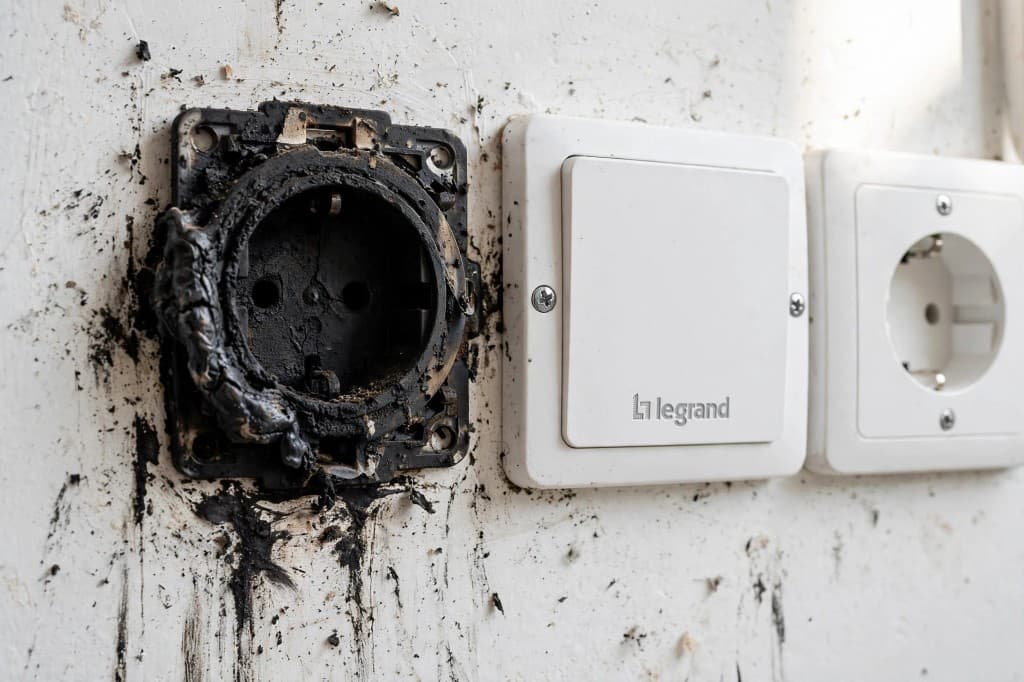
The socket side is a separate story. The springs of a domestic wall socket carry short loads like a hair dryer easily. An AC, though, draws 7–9 A for hours in summer and takes a pulse at every start. In a cheap socket whose springs have loosened over the years, the contact area between the plug pin and the spring shrinks; the smaller area heats, and the heat loosens the spring further. The start pulse sparks across this loose contact; that is the crackle. The socket body yellows, the plug's plastic body softens, the pin blackens, and in the end the conductor in the socket terminal heats too. If a multi-socket strip or an extension lead sits in between, the same heating gains one more contact point. So changing the plug or renewing the socket with the same type is not enough on its own; a fixed appliance that draws load for hours, like an AC, is fed by a fixed connection, not a plug.
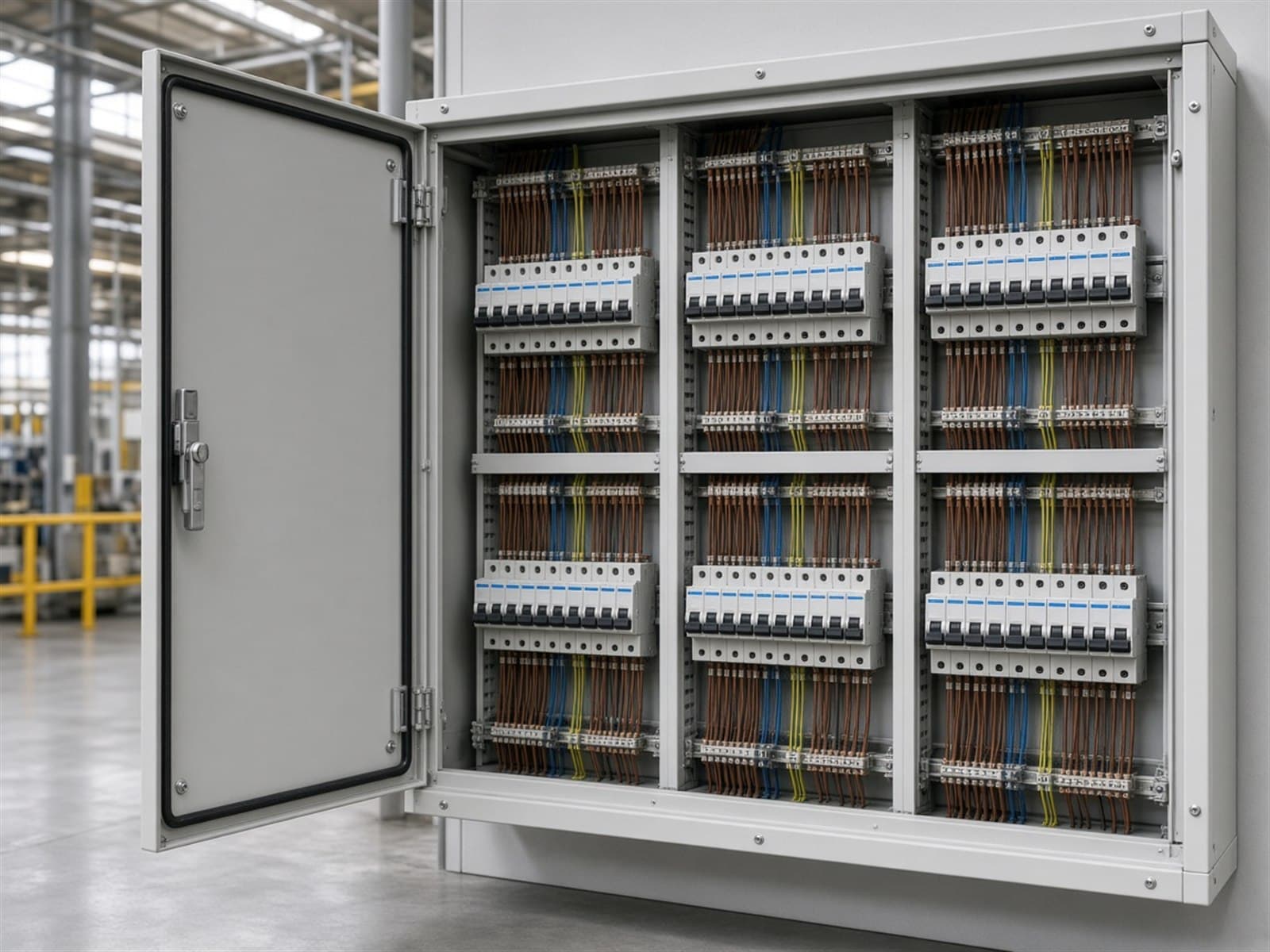
The survey starts from the AC's label: BTU class, whether it is inverter, running current and the maker's recommended breaker rating. Then the living-room line's breaker, its curve and the line's section are read at the panel; which other sockets and appliances the same breaker feeds is worked out. A clamp ammeter with peak-hold catches the highest current the line draws at the AC's start; the running current is read too. The socket voltage is measured at the moment of start as well; if the voltage sags markedly at start, the line is long, thin or has a loose joint, and that makes the start heavier too. Then the line is switched off at the panel and the socket opened; the looseness of the springs, the colour of the conductor at the terminal and burn marks inside the cover are noted. If the start current is disproportionately high compared with the label, or the breaker trips while running independent of the start, the problem may be the unit itself rather than the line: a weakened start capacitor, a labouring compressor or an outdoor fan fault. That is the AC service's job, and the survey states that distinction clearly.
The repair has three parts. The first is the line. For the AC a fixed line with its own breaker and no joint in between is pulled from the panel to beside the unit: NYA in conduit or NYM 3×2.5 mm² in surface trunking. This line is not an extension lead, a flexible plug-in cable or a spur from a socket; it is fixed wiring. Where possible the line stays under the RCD. The second is the connection point. A double-pole isolator suited to the load, an AC switch, is placed beside the unit; during maintenance and service the AC is safely isolated here. The connection from the isolator to the unit is made at the unit's terminal per the maker's diagram; any joints in between are made with lever spring connectors of suitable current rating in a covered box. No plug or socket sits on this line. The old socket stays for the room's light loads, with its springs and terminal checked or renewed. The third is the breaker. With the AC alone on its own line, the start pulse no longer adds to other loads, and in most cases a B-curve breaker is enough. If the start still drops the breaker and the unit is sound, a C-curve breaker is used; but first the loop impedance is measured at the end of the line.
The reason for the measurement is simple. A breaker's job is not only to trip on overload but also to trip quickly when there is a short between phase and protective conductor at the end of the line. For that, the short-circuit current at the end of the line must stay above the breaker's instantaneous band. For C16 that is about 160 A; so the loop impedance must be below roughly 230 V / 160 A, about 1.4 ohms. On a long, thin line or in a building with weak earthing that value can be exceeded; then a C-curve breaker does not trip instantaneously on a short, which is both a fire and a shock risk. A loop impedance tester reads this value at the end of the line; if it is suitable a C-curve breaker is fitted, if not the line is shortened, the section increased or the earthing fixed first. The breaker rating is read together with the section: 16 A for 2.5 mm²; 20 A or 25 A is not fitted 'so it does not trip'. How many metres of line, which route, which isolator and which curve are needed is written on site at the survey from measurement, not guessed on the phone.
As the compressor starts it draws several times its running current for a short moment. If the AC shares a B-curve breaker with other sockets, the pulse enters the breaker's instantaneous band. First the AC gets its own line; in most cases that is enough.
No. A 2.5 mm² line is protected at 16 A; fitting 20 A or 25 A leaves the cable unprotected. If needed, a C-curve breaker of the same rating is used, and only after loop impedance is measured.
A C-curve breaker needs a higher short-circuit current to trip instantly; about 160 A for C16. On a long, thin line that current may not occur and the breaker is late on a short. So loop impedance is measured at the end of the line first.
A wall socket's springs are not made for a load carrying 7–9 A for hours and taking a pulse at every start. A loosening spring heats, arcs, and the plug and socket melt. The AC is fed by a fixed line and a double-pole isolator.
There is no fixed minute. Istanbul 24/7. Arrival depends on the queue at that moment and D-100 traffic. A 30-minute claim is not invented.
In Feyzullah we handle everything on the customer side of the meter: breaker tripping and residual current device faults, burnt sockets and terminals, board renewal and breaker replacement, earthing installation with resistance testing, lighting and chandelier mounting, dedicated circuits for boilers and air conditioning, and surge arresters. Measurement uses a True-RMS clamp meter, a megohmmeter and a FLIR thermal imager.
In most cases no. The fault is first narrowed down branch by branch at the board, then pinpointed with a FLIR thermal imager and an inductive cable tracer, so no needless breaking is done. Where leakage is in an underground or under-screed run, a cable fault locator usually narrows it to within a metre and only that area is opened. If breaking is unavoidable it is reported in writing and approved first.
Service covers the neighborhoods of Istanbul's 39 districts. Not the whole of Turkey. A survey is not a binding quote.
Feyzullah, Maltepe. The map is centered on the neighborhood. Arrival changes with the hour and the traffic.