Founding master
Adnan Şemiye18 years in the field
MYK-certified master
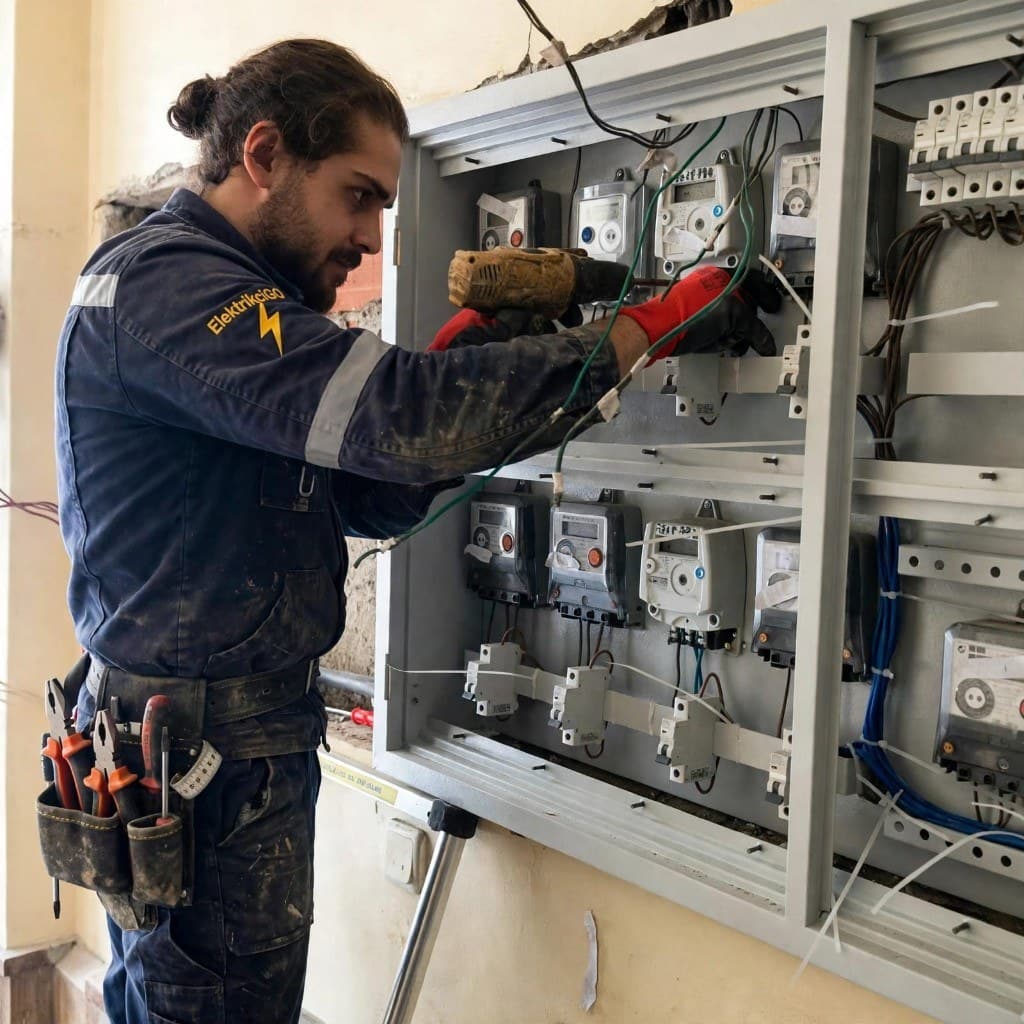
Adnan Şemiye reads this job in the field. The price is written before work starts.
Pendik district
Sanayi 24/7 emergency electrician. In this Pendik neighbourhood we respond without a minute promise to midnight breaker tripping, residual current device faults, burnt sockets and consumer unit failures. In workshop and plant stock, motor protection, power factor and contactor faults are measured on site. Certified technicians, faults proven with a True-RMS clamp meter and a megohmmeter, written price approval and an official 1 year workmanship guarantee.
Founding master
Adnan Şemiye18 years in the field
MYK-certified master
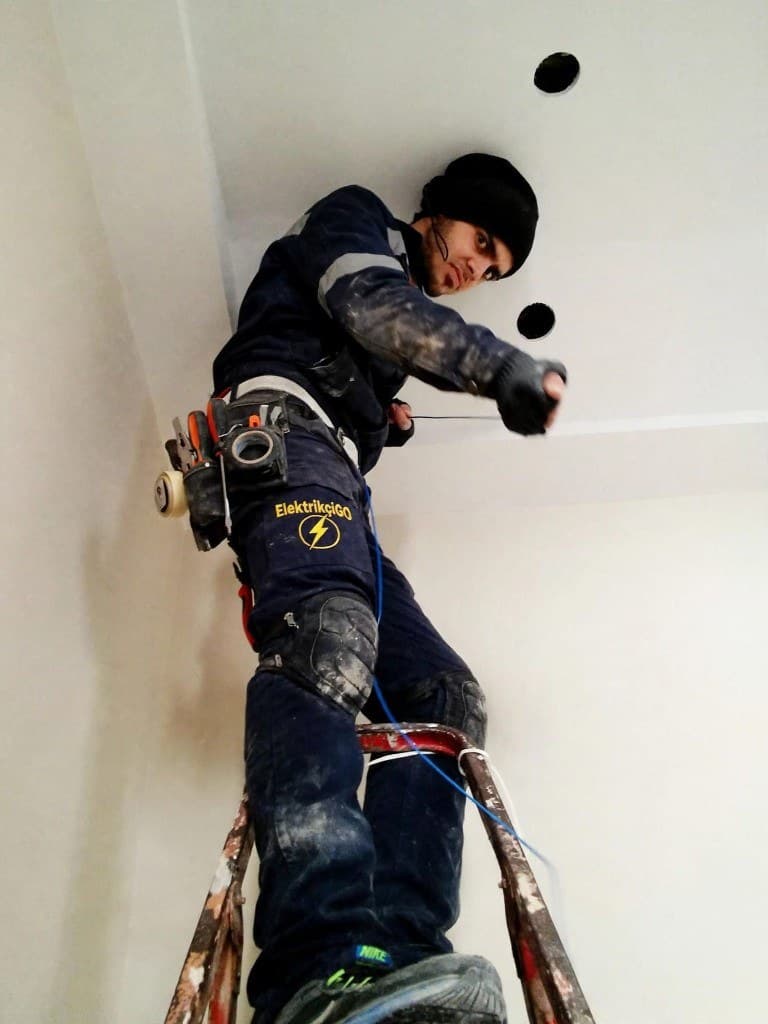
Adnan Şemiye reads this job in the field. The price is written before work starts.
From the field
 Emergency van · +90 582 403 10 87
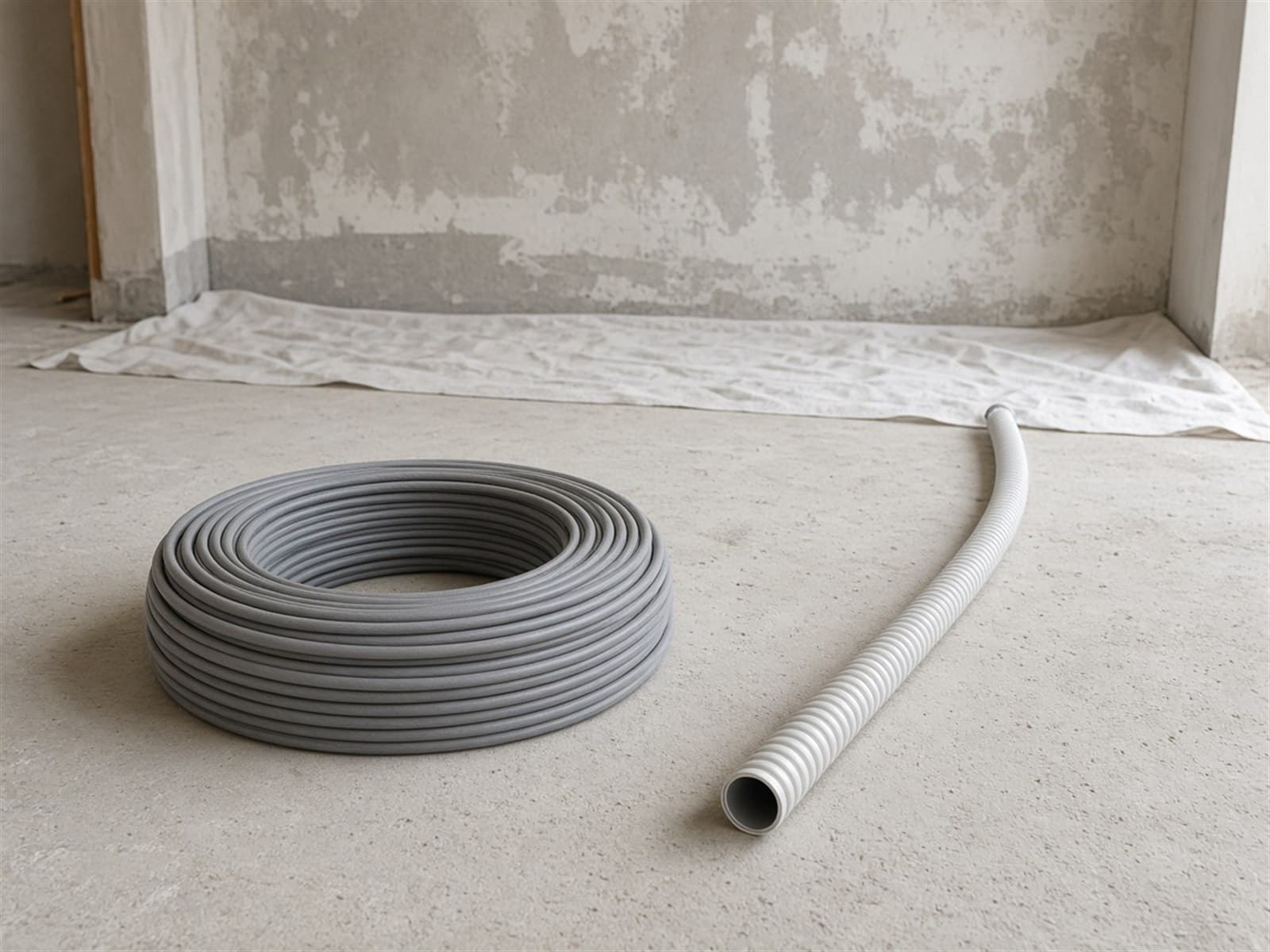
The panel incoming is NYY. A wet run and an outdoor run stay NYY. NYM is a dry indoor ceiling cable; it does not drop into a garden or an oil channel. NYA is a single core for the busbar and the ferrule inside the panel; it is not buried in the floor. The cross-section is not upsized before the label and the clamp-meter ampere are seen. A 16 mm² NYY is not sold as 25 mm². Without a torque wrench the tighten is a guess; a hot lug later leaves a weld and a fire mark. An extension under a carpet is not a workshop fix.
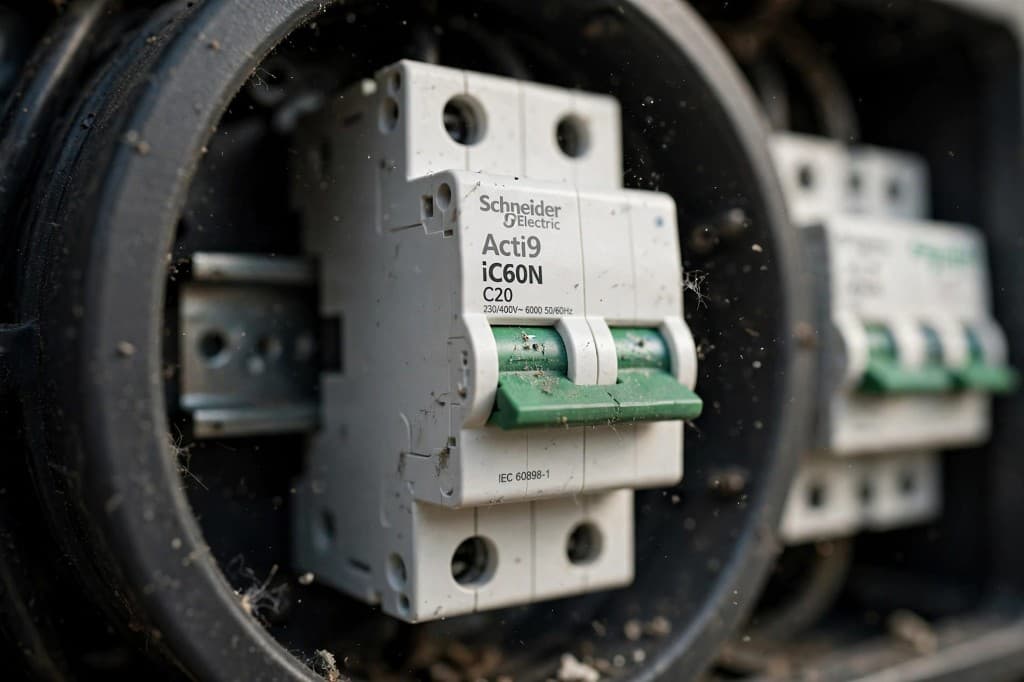
When the residual-current device (RCD) trips, the first reflex is to upsize the thermal or the C-curve MCB by one step. That is the wrong habit in Pendik Sanayi Mahallesi and in a house panel. The RCD sees phase-neutral imbalance and a body leak. The thermal sees a long current. I do not solve the two on the same screw. A wet motor cable, a punctured heater, a lathe with a leaking frame and a wrong NYY sheath trip the RCD. The measurement is insulation, loop impedance and leakage on the clamp. The relay type and the mA value are confirmed on the label; 30 mA residential and 300 mA fire-line are not mixed.
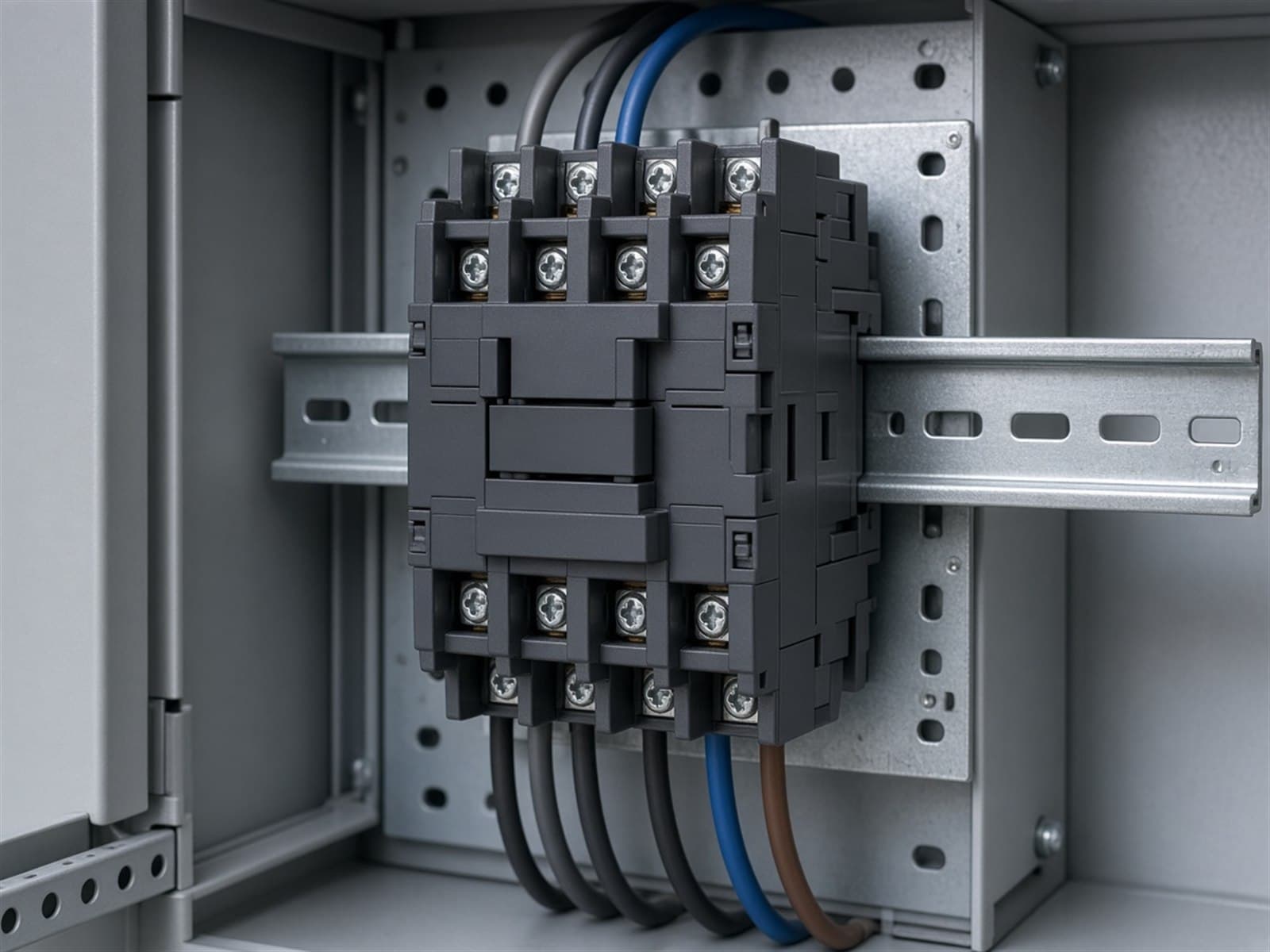
On a stopped line the drive is often an Altivar, a Sinamics or a generic Chinese frame. OCF is overcurrent. OV is DC-bus overvoltage. I do not clear the two with the same parameter. If the motor cable is unshielded, the earth lug has no ferrule, or the panel cooling is blocked, the fault comes back. On the PLC side a burnt I/O card is not a reason to swap the CPU; the 24 V rail, the common and the channel are read separately. A Schneider M221, a Siemens S7-1200 and an Omron CP1 program are not 'updated' without the handbook of the machine on site. This page is not program writing; it is an on-site read and a fault split.
In a workshop and a small plant the compensation gear is often a separate sheet-steel box: contactor, reactor, step capacitor, control relay. Adding a step because cos φ is low is not leaving a swollen can in place. The contactor body is not swapped before the coil is measured on A1-A2. Reactor heat, step current and the relay program are read on site. A Schneider Varplus or an equivalent step is not fitted as 'the same' when the label is gone. A compensation fire comes from a loose ferrule and a wrong step current; upsizing the fuse is not the fix.
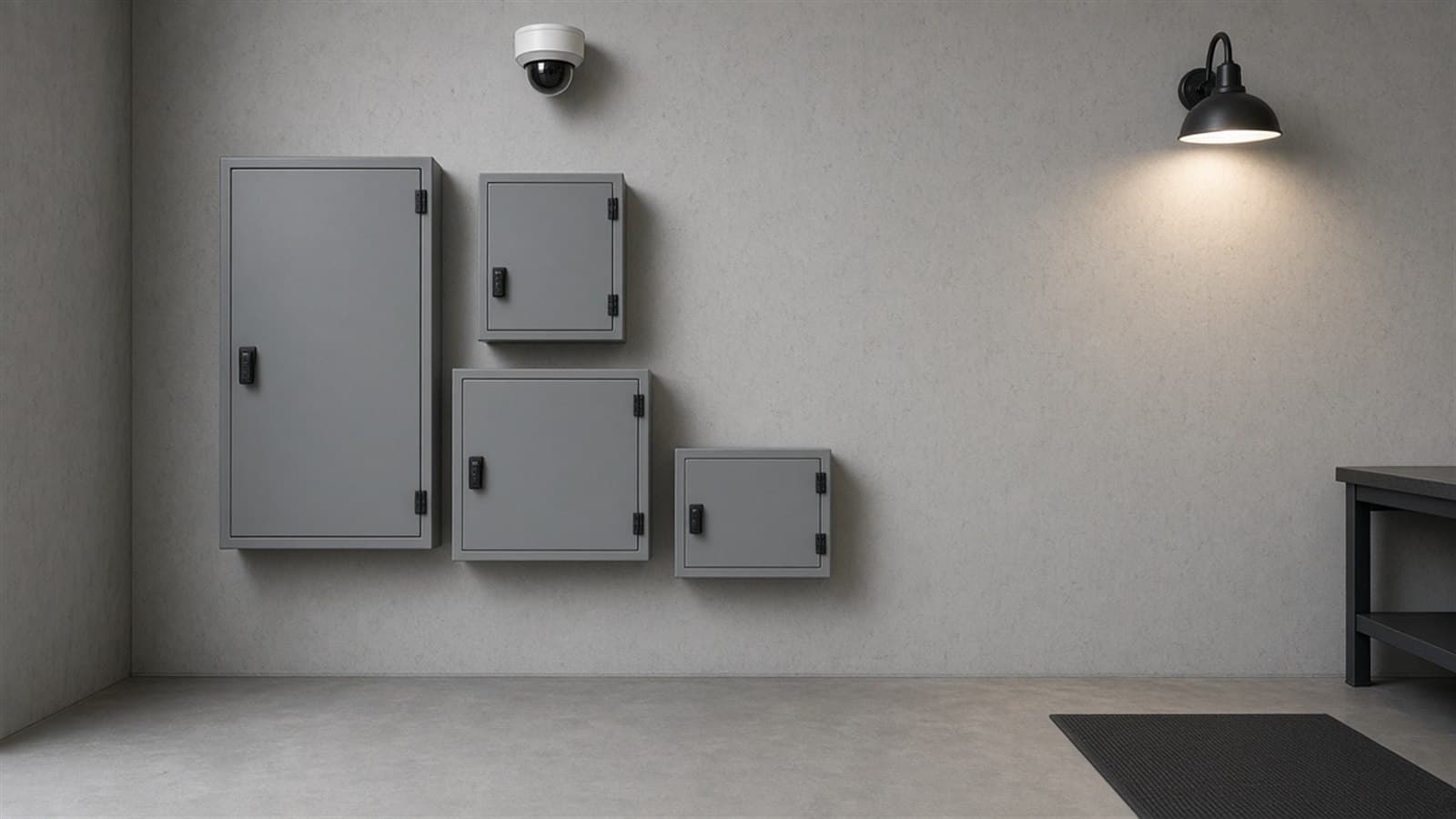
On a workshop wall the panel is a sheet-steel box; without a gland the NYY sheath drinks oil and metal dust and the lug carbons. A PG gland, the metal case and the NYY outer diameter are chosen on the label; 'a rubber will do' is a fire mark. If the motor terminal (U-V-W) has no ferrule the 3RT pole runs hot, the thermal trips, the tradesman upsizes the ampere. The second fault I see often in this neighborhood: the emergency stop (mushroom) is bridged and the line continues with a drive reset. The stop line is 24 V; it is not tightened onto the same terminal row as 220 V. A screened motor cable sits on the chassis in the gland; the screen is not bonded to the panel lid with a random screw.
The workshop call arrives at night: the line is stopped, the shift is waiting, the drive throws OCF. Istanbul 24/7. Approved certified technician network. Arrival depends on the queue and traffic; there is no general promise of 45 minutes. A survey is not a binding quote. There is no shop; I do not write a shopfront address in Sanayi Mahallesi. A missing street name is not invented. A PLC program is not 'updated' without the handbook on site. This page is an on-site read and a fault split.
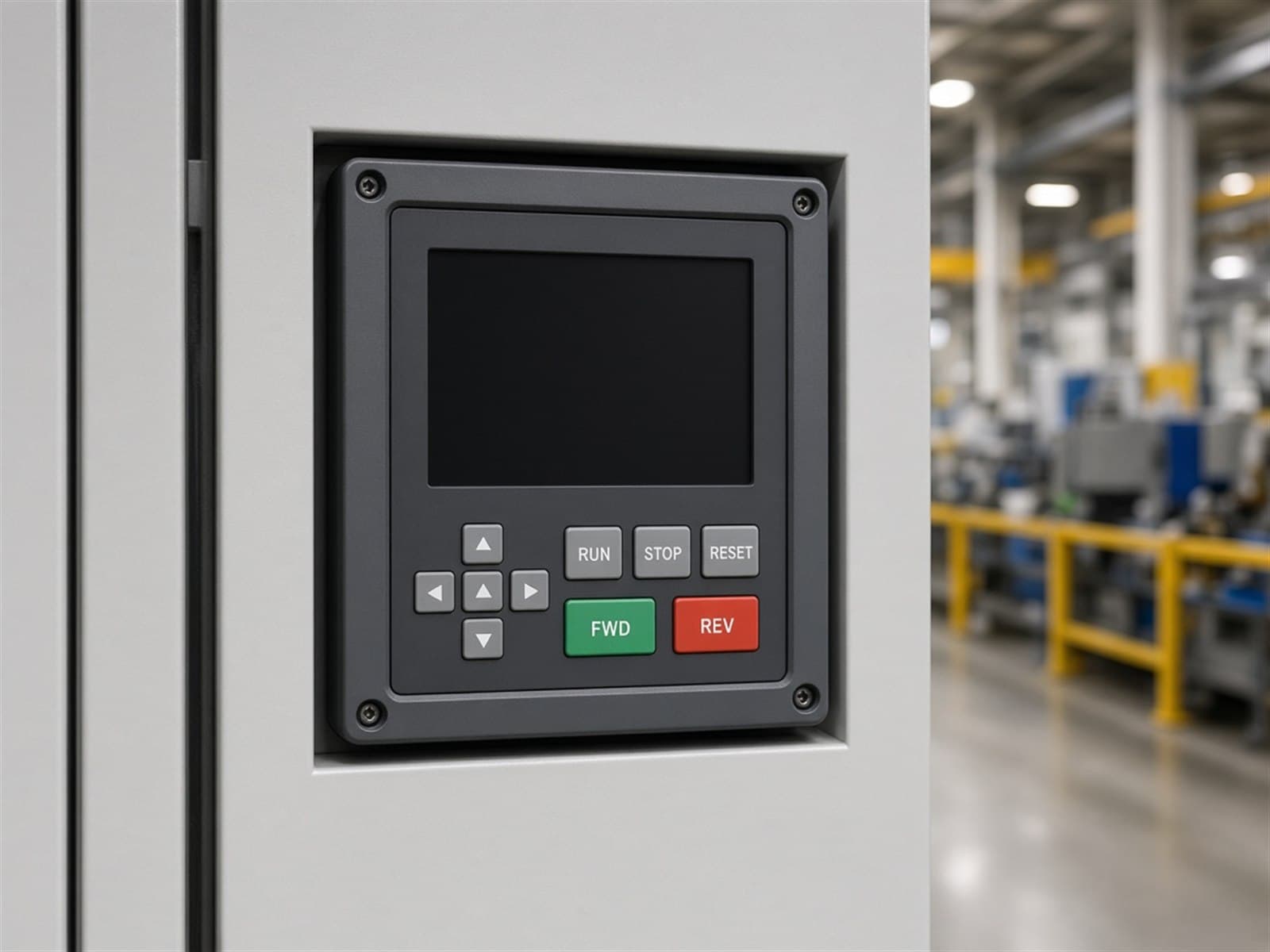
When the 24 V PSU of the PLC and the drive (SITOP, ABL, Mean Well) dies, the I/O looks 'dead'; the CPU is not swapped. PSU label voltage, the common (0 V) and the channel are measured separately. An interposing relay is a 24 V coil and a 230 V contact; in a wet workshop the relay base oils up, the contact sticks, the line starts by itself. If tray and conduit are mixed, a screened motor cable and a 24 V signal heat in the same trough; the EMC fault returns as OCF and random I/O. The tray lid, the split and the gland are this neighborhood's job. NHXMH is a dry indoor ceiling cable; it does not drop onto an oily workshop wall; there NYY or a proper industrial sheath stays.
No. First the motor label, the cable size, the contactor pole and residual current are split. Upsizing the ampere hides a hot lug.
No. If a VFD is there, star-delta and the soft starter come off. Leaving the two in parallel produces OCF, a hot pole and the wrong protection. The motor cable stays screened, the gland on the chassis, the earth in a ferrule.
First the phase-protection relay, busbar torque and the NYY lug are read. The stator may already be burnt on a single phase; the reason is written before the body is swapped. Upsizing the ampere hides the same fault.
No. The site, the window and 30 mA sit on the Kaynarca Ankara Caddesi page. This page is the workshop, the VFD, the PLC, compensation and motor protection. Two URLs, two texts.
We service all streets across Pendik Sanayi Mahallesi with our certified mobile network. Diagnostics and inspection are carried out on site with precision instruments. In industrial panels, drive and thermal faults are analyzed in detail and protected according to safety codes.
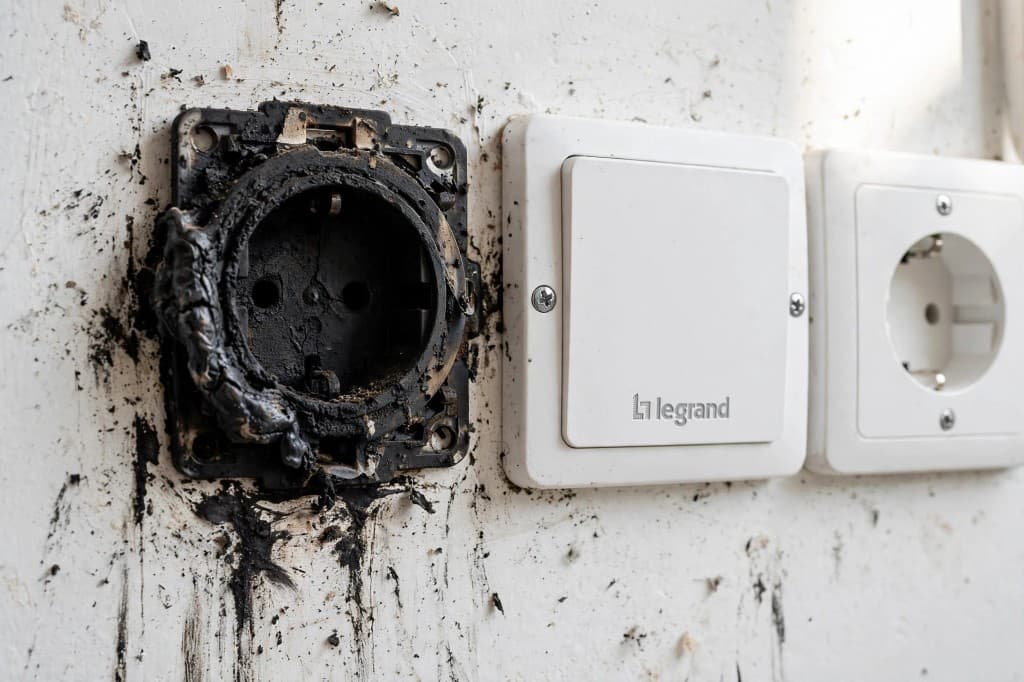
In Sanayi we handle everything on the customer side of the meter: breaker tripping and residual current device faults, burnt sockets and terminals, board renewal and breaker replacement, earthing installation with resistance testing, lighting and chandelier mounting, dedicated circuits for boilers and air conditioning, and surge arresters. Measurement uses a True-RMS clamp meter, a megohmmeter and a FLIR thermal imager.
In most cases no. The fault is first narrowed down branch by branch at the board, then pinpointed with a FLIR thermal imager and an inductive cable tracer, so no needless breaking is done. Where leakage is in an underground or under-screed run, a cable fault locator usually narrows it to within a metre and only that area is opened. If breaking is unavoidable it is reported in writing and approved first.
Service covers the neighborhoods of Istanbul's 39 districts. Not the whole of Turkey. A survey is not a binding quote.
Sanayi, Pendik. The map is centered on the neighborhood. Arrival changes with the hour and the traffic.