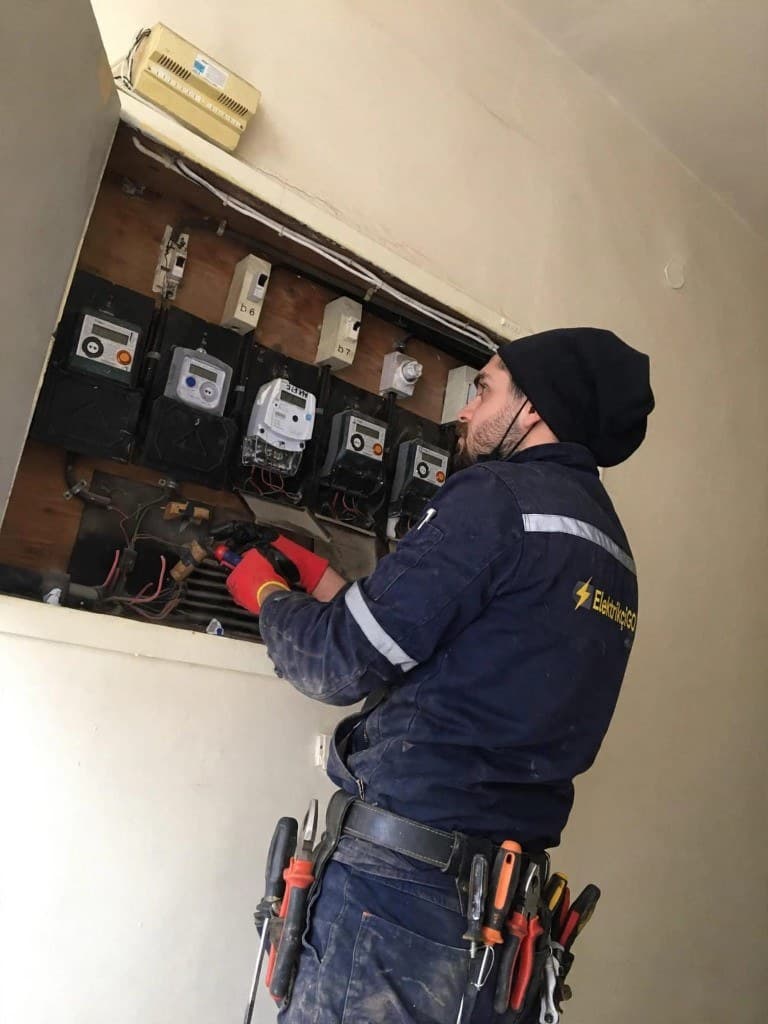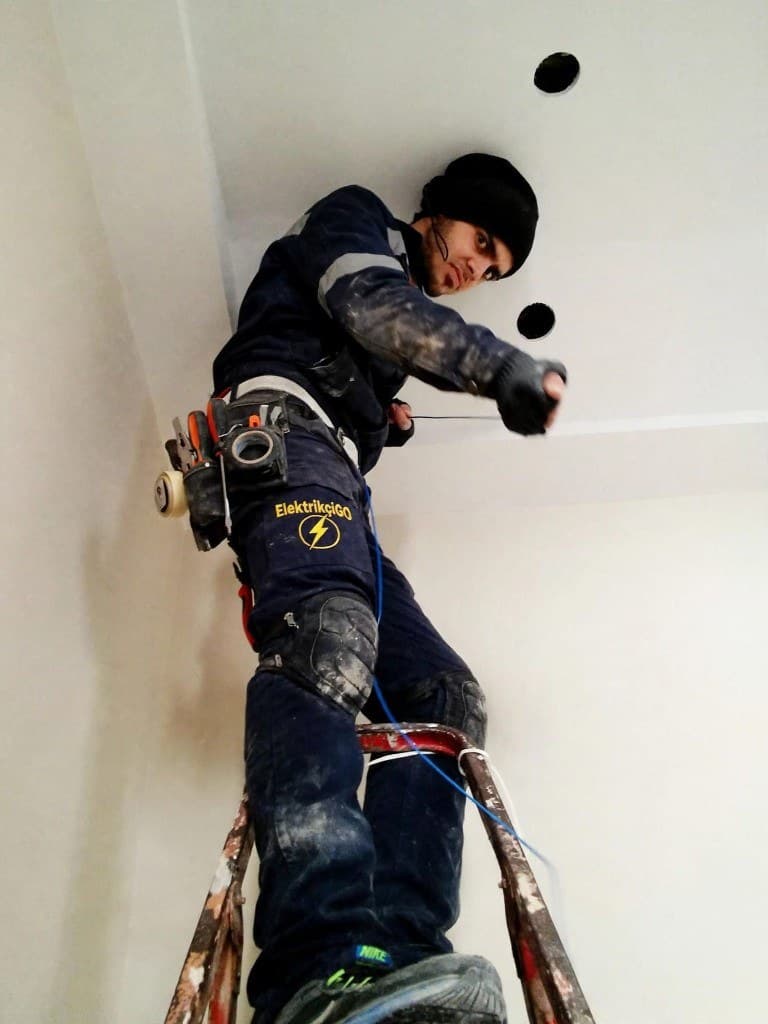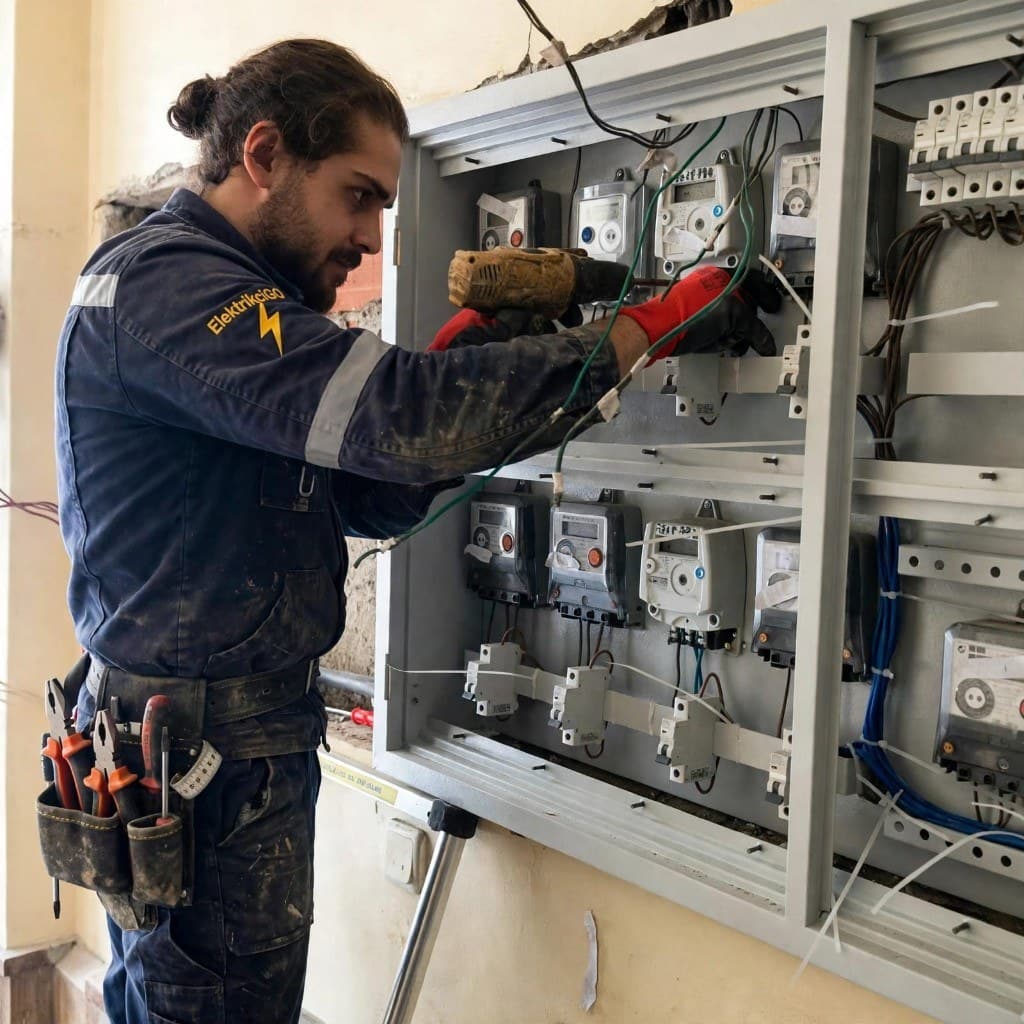
Founding master
Adnan Şemiye18 years in the field
MYK-certified master
Adnan Şemiye reads this job in the field. The price is written before work starts.
Pendik district
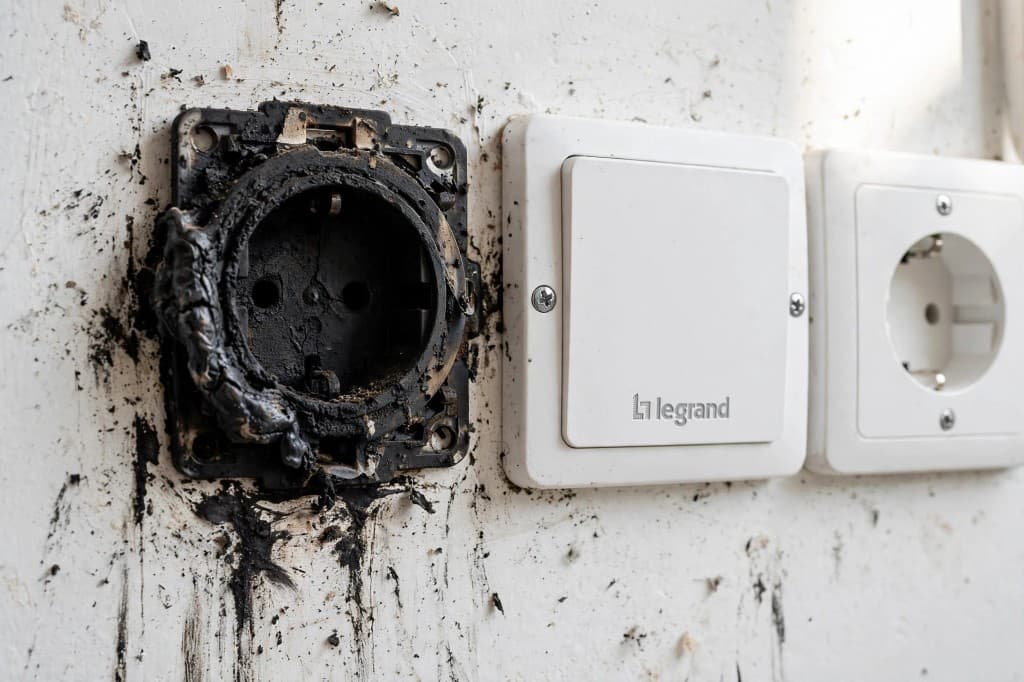
Kurna 24/7 emergency electrician. In this Pendik neighbourhood we respond without a minute promise to midnight breaker tripping, residual current device faults, burnt sockets and consumer unit failures. In apartment and complex stock, saturated kitchen circuits, bathroom water heater runs and riser overheating are measured on site. Certified technicians, faults proven with a True-RMS clamp meter and a megohmmeter, written price approval and an official 1 year workmanship guarantee.

Founding master
Adnan Şemiye18 years in the field
MYK-certified master
Adnan Şemiye reads this job in the field. The price is written before work starts.
From the field
Emergency van · +90 582 403 10 87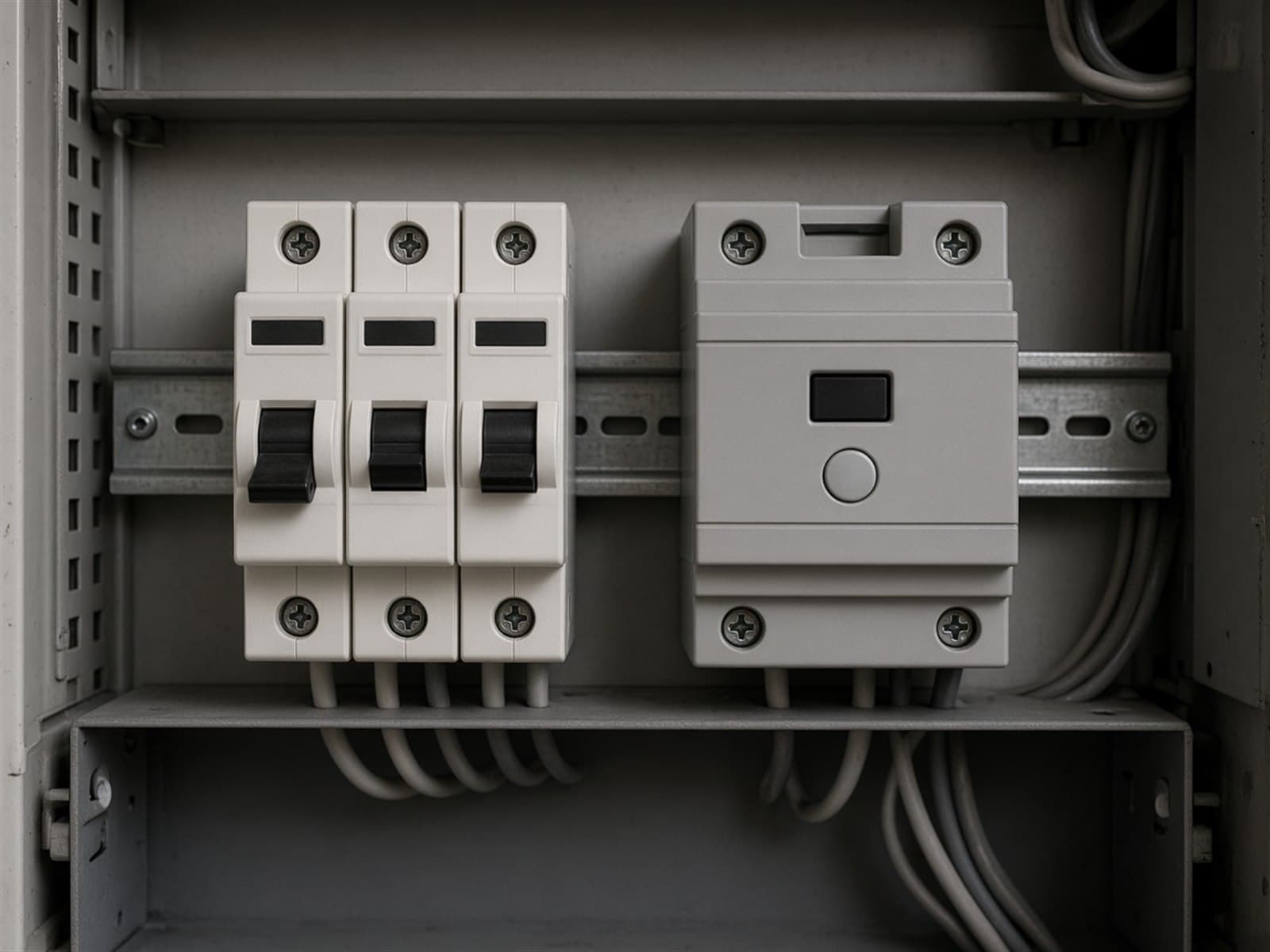
The call from Kurna is usually a two-part sentence: 'When rain starts the gate will not close, I press the remote, it reopens halfway; a bit later the garden lights go out, then the whole house goes.' That order is information. The gate reversing halfway says the control card cannot see the photocell; either the photocell really sees an obstacle or its 24 V supply is shorted. The garden lights going out says the fault is on the garden line. The whole house going says leakage passed 30 mA and the main RCD tripped. If all three happen one after another in the same rain, their common point is the box on the gate post. The survey starts from that box, but the panel is read before the box is opened.
In the field the control-card box is usually found like this: inside the motor body or screwed to the post, a plastic box with a lid warped by the sun and a gasket cracked or missing. Cables enter from below through a wide hole drilled in the base; there is no gland. The hole is an open door for moisture. On a winter night the inside warms, the outside cools, condensation forms on the card. An ant colony nests on the warm card; a spider webs over the photocell cable entry; even a snail reaches the klemens row. Insect bodies and nest material mixed with moisture form a conductive bridge between two terminals. The klemens copper turns green with oxide, the screw loosens, the contact heats. The fuse on the card blows or the 24 V regulator burns. Card repair, its electronics and the gate's mechanical adjustment are the gate-automation service's job; the electrician's job is the card's supply, its box, the klemens, the protection and the line.
This distinction takes the survey to the right place. The card's 24 V side is fed from the transformer secondary; it is isolated from the mains. A short on this side blows the card fuse, silences the photocell, locks the gate; but the house RCD does not see that current, because it returns to the transformer's own winding, not to earth. What trips the RCD is the 230 V side in the same box: the card's mains input klemens, the motor's 230 V leads, on some models a 230 V flashing lamp. Moisture and an insect bridge on those terminals carry phase to the post, earth and the protective conductor; the moment leakage passes 30 mA the main RCD trips. So the gate not closing in rain and the house going dark come from the same box but from two different circuits. In the survey they are measured separately: on the 24 V side the card fuse and the photocell supply, on the 230 V side insulation resistance with a megger.
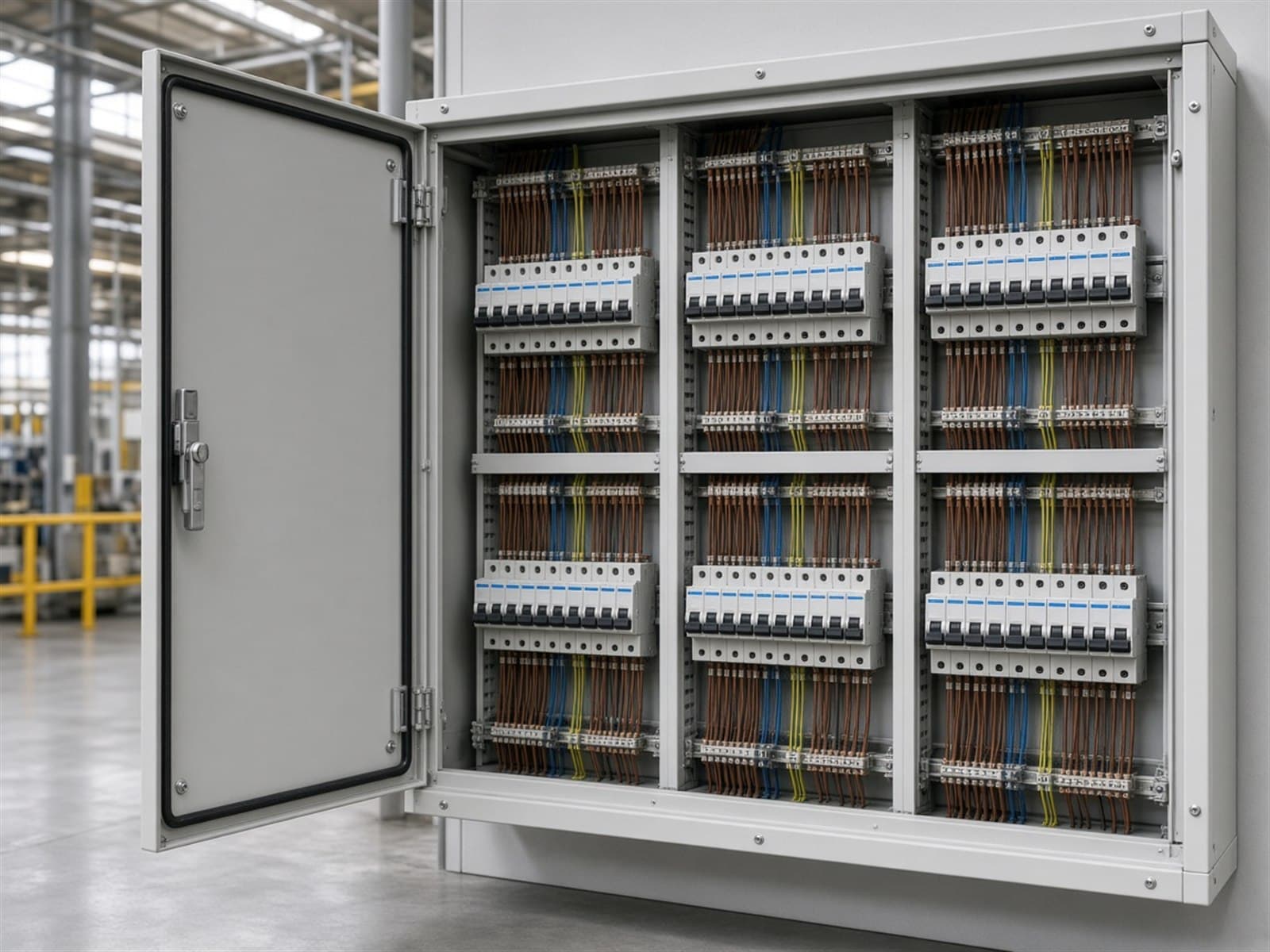
First the panel is read: what mA the main RCD is, whether garden lighting has its own breaker, whether the gate motor hangs on that breaker or has its own. In most Kurna houses the gate motor has no breaker of its own; the motor was added years after the house was built and its feed was tapped in parallel from the nearest garden-lamp box. Then the line is isolated: the gate feed is disconnected at the panel and the RCD is reset. If it is raining and the house no longer goes dark, the place is confirmed; the owner gets power back that night and the gate is opened by hand. In dry weather the line is opened at both ends, a megger applies 500 V DC, phase–earth and neutral–earth resistance are read. The klemens row in the box is opened one by one; any terminal that is green with oxide, loose, heated or bridged by insects is noted. The photocell and flashing-lamp cables are measured separately; a cable running through the post may have rubbed its sheath off against the moving gate.
Bridging the photocell is not a fix. It is the most common wrong move in the field: the photocell is said to be faulty, a wire jumper is put across the card's photocell input, the gate closes and the problem is called solved. The photocell is the gate's crush safety; with it bridged the gate does not see a child, an animal or a car in front of it. This is not done, and where it has been done it is removed. Bridging the RCD, swapping it to 300 mA or feeding the gate line ahead of the RCD is a breach of the trade too. Upsizing the breaker is no fix either; this fault is leakage, not overcurrent. The gate motor's own thermal protection and the card fuse do their own job; the breaker in the panel protects the line.
The repair has three parts, and all three answer the same rain. The first is the box. The control card moves into a double-gasketed IP66 box with a screwed lid and gland entries. IP66 is the dust-tight, powerful-water-jet class; it is the class a gate post needs at a point that takes rain from the side. Cables enter the box from below through glands, each cable through its own gland; an unused hole is closed with a blanking plug. Once the gland is tightened insects cannot get in either. The box is mounted on the face of the post that sees the least sun; before entering the box the cable makes a downward drip loop so water does not walk inside along it. The second is the klemens. A terminal green with oxide is cleaned; one with pitted copper or plastic darkened by heat is replaced. Ferrules are crimped onto stranded ends, the screw is torqued. The third is the line and protection. The gate motor is separated from the garden-lighting line. The feed from the house to the gate post is renewed: NYY in corrugated conduit at a proper depth underground; under the vehicle entrance an armoured cable or a conduit under concrete gives mechanical protection. The section is chosen by motor power and distance; for most domestic gate motors 3x1.5 or 3x2.5 mm² is enough. An independent 10 A B-curve breaker is added for the gate motor. The line stays under the 30 mA RCD.
A separate breaker means something simple on site. Once the gate motor has its own breaker, when the gate box faults the owner sees which breaker dropped; the garden lights and indoor lines are not hit by the gate's fault. If leakage sits under a single main RCD it can still drop the whole house; that is why the box and klemens repair comes before the breaker. In some houses a separate RCD group for the gate, garden and outdoor sockets is recommended; it separates indoor lines from outdoor leakage and keeps 30 mA protection on both sides. Which is done is written on site by the panel's free modules and the existing installation. Schneider iC60, Siemens 5SL or Legrand RX3: whichever body is in the panel, a breaker of the same family is added and the bar torque follows its label. Earthing is measured; if the gate post and metal gate body are bonded to the protective conductor that bond is checked too.
Usually the gate motor's control-card box has taken in moisture and insects. A short on the 24 V side silences the photocell and locks the gate; leakage on the 230 V side trips the garden line and the main 30 mA RCD. Isolating the gate feed at the panel and resetting the RCD confirms the place.
No. The photocell is the gate's crush safety; bridged, the gate does not see a child, an animal or a car in front of it. A jumper is not fitted, and an existing one is removed.
Card electronics and the gate's mechanical adjustment belong to the gate-automation service. The electrician's job is the card's supply, box, klemens, breaker, leakage protection and line.
IP66 is dust-tight and resistant to powerful water jets. A gate post takes rain from the side; a double-gasketed IP66 box with gland entries keeps moisture and insects out.
No. Bridging the RCD or swapping it to 300 mA is a breach of the trade. The faulty box and line are repaired; 30 mA protection stays.
There is no fixed minute. Istanbul 24/7. Arrival depends on the queue at that moment and the road to north Pendik. A 30-minute claim is not invented.
This page is not a gate-automation product page. The Kurna note is about the existing gate motor's supply, box and protection.
Yes, we work 24/7 across Pendik including Kurna, with no difference for nights, weekends or public holidays. Average arrival is no fixed minutes. In terraced buildings no drill or breaker is used after 22:00; the fault is located silently with a FLIR thermal imager and a cable tracer, and noisy permanent work is booked for the next working day.
No. Our first priority is getting the critical loads running safely. After isolating the faulty leg at the board, the technician restores the boiler, refrigerator and lighting circuits within the first ten minutes. If the concealed run is permanently broken, a temporary safe line is installed in fire-retardant trunking. The boiler is afterwards always moved to a dedicated circuit, because a faulty socket sharing that leg will stop it at midnight.
Service covers the neighborhoods of Istanbul's 39 districts. Not the whole of Turkey. A survey is not a binding quote.
Kurna, Pendik. The map is centered on the neighborhood. Arrival changes with the hour and the traffic.