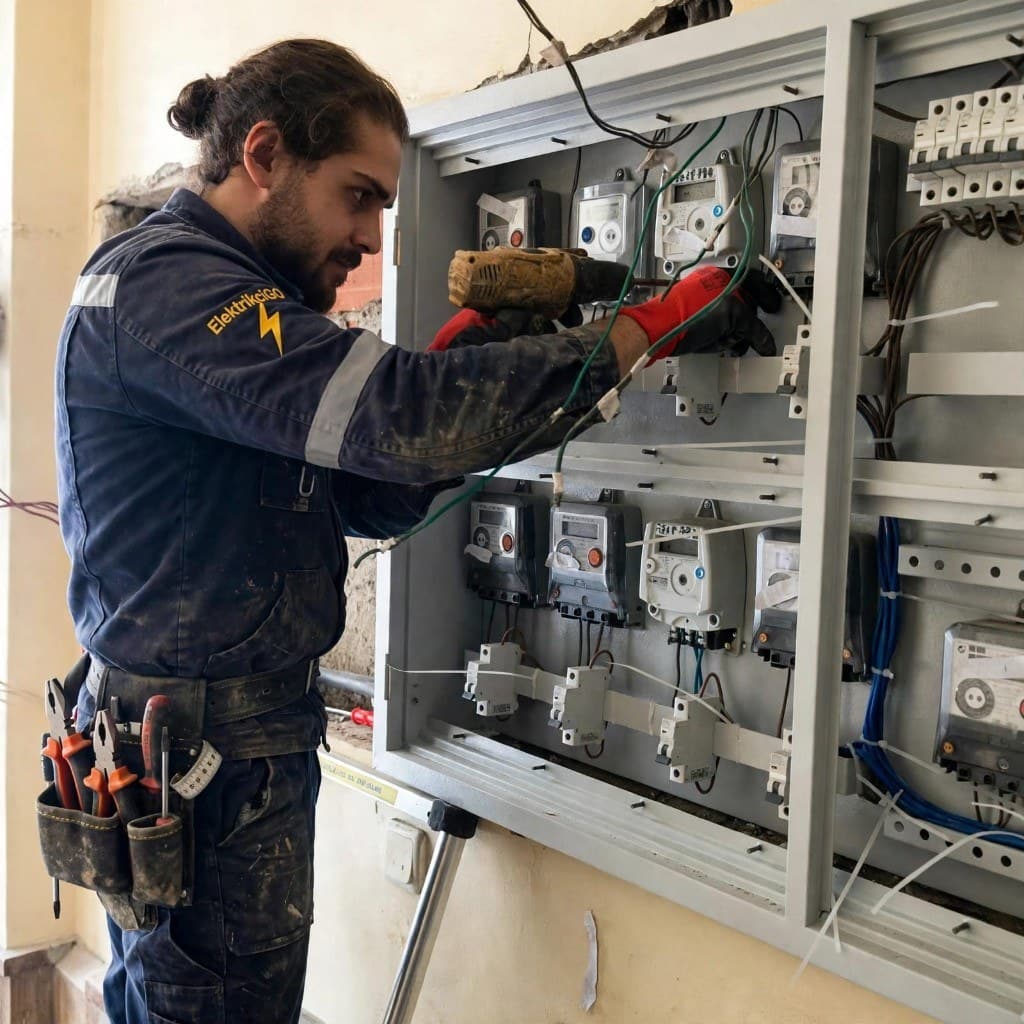
Founding master
Adnan Şemiye18 years in the field
MYK-certified master
Adnan Şemiye reads this job in the field. The price is written before work starts.
Pendik district
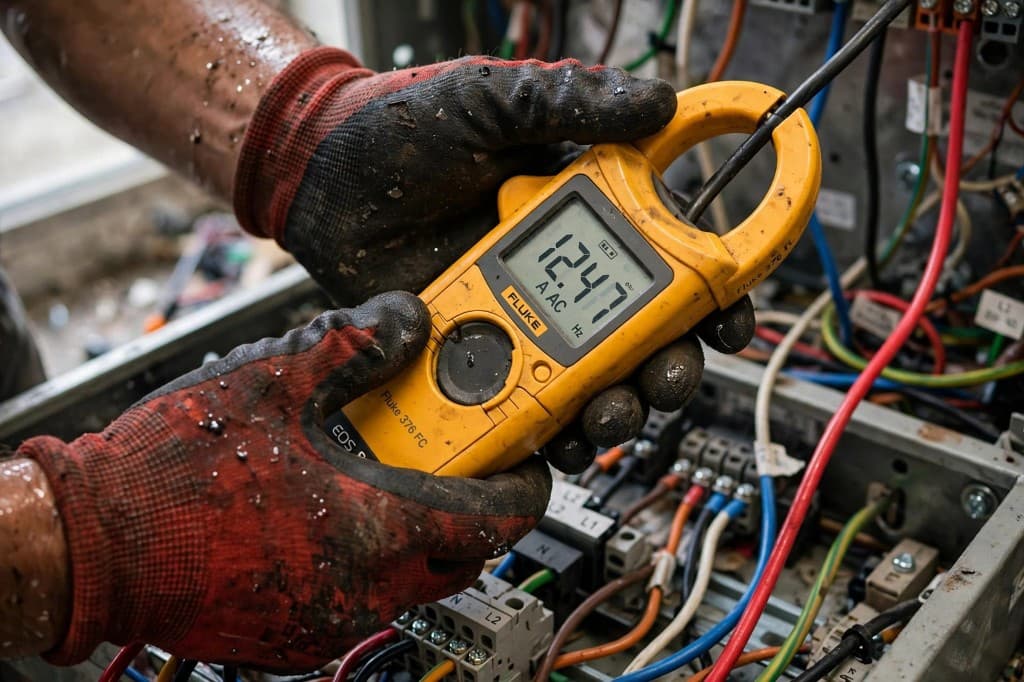
Kurtdoğmuş 24/7 emergency electrician. In this Pendik neighbourhood we respond without a minute promise to midnight breaker tripping, residual current device faults, burnt sockets and consumer unit failures. In apartment and complex stock, saturated kitchen circuits, bathroom water heater runs and riser overheating are measured on site. Certified technicians, faults proven with a True-RMS clamp meter and a megohmmeter, written price approval and an official 1 year workmanship guarantee.
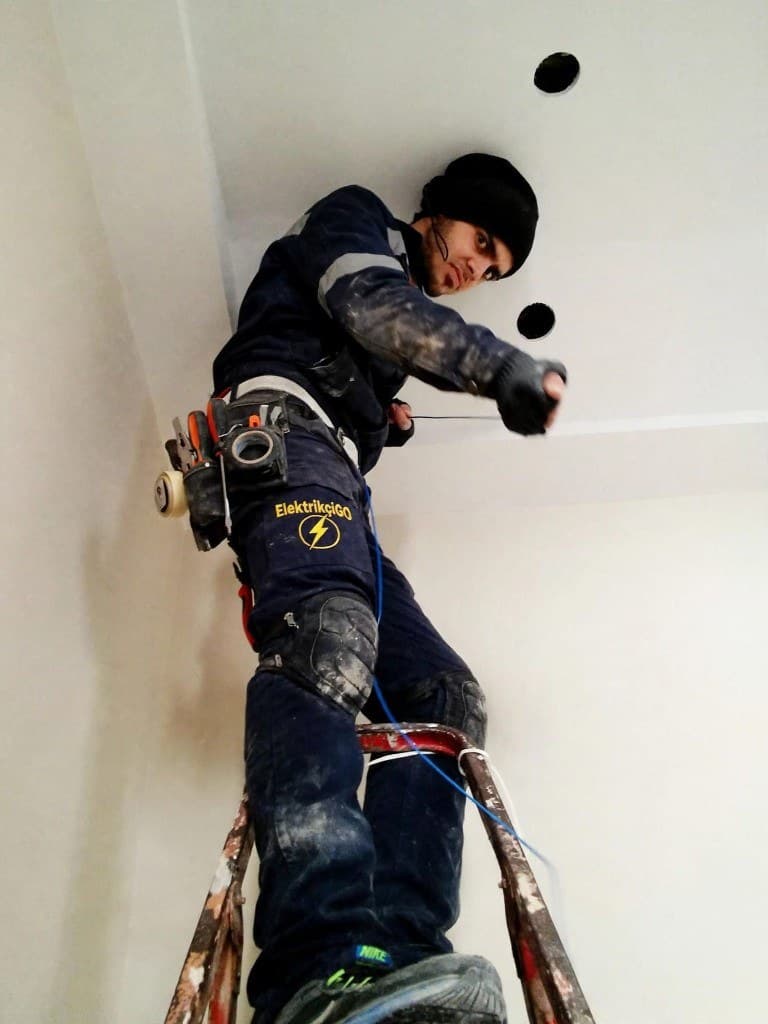
Founding master
Adnan Şemiye18 years in the field
MYK-certified master
Adnan Şemiye reads this job in the field. The price is written before work starts.
From the field
 Emergency van · +90 582 403 10 87
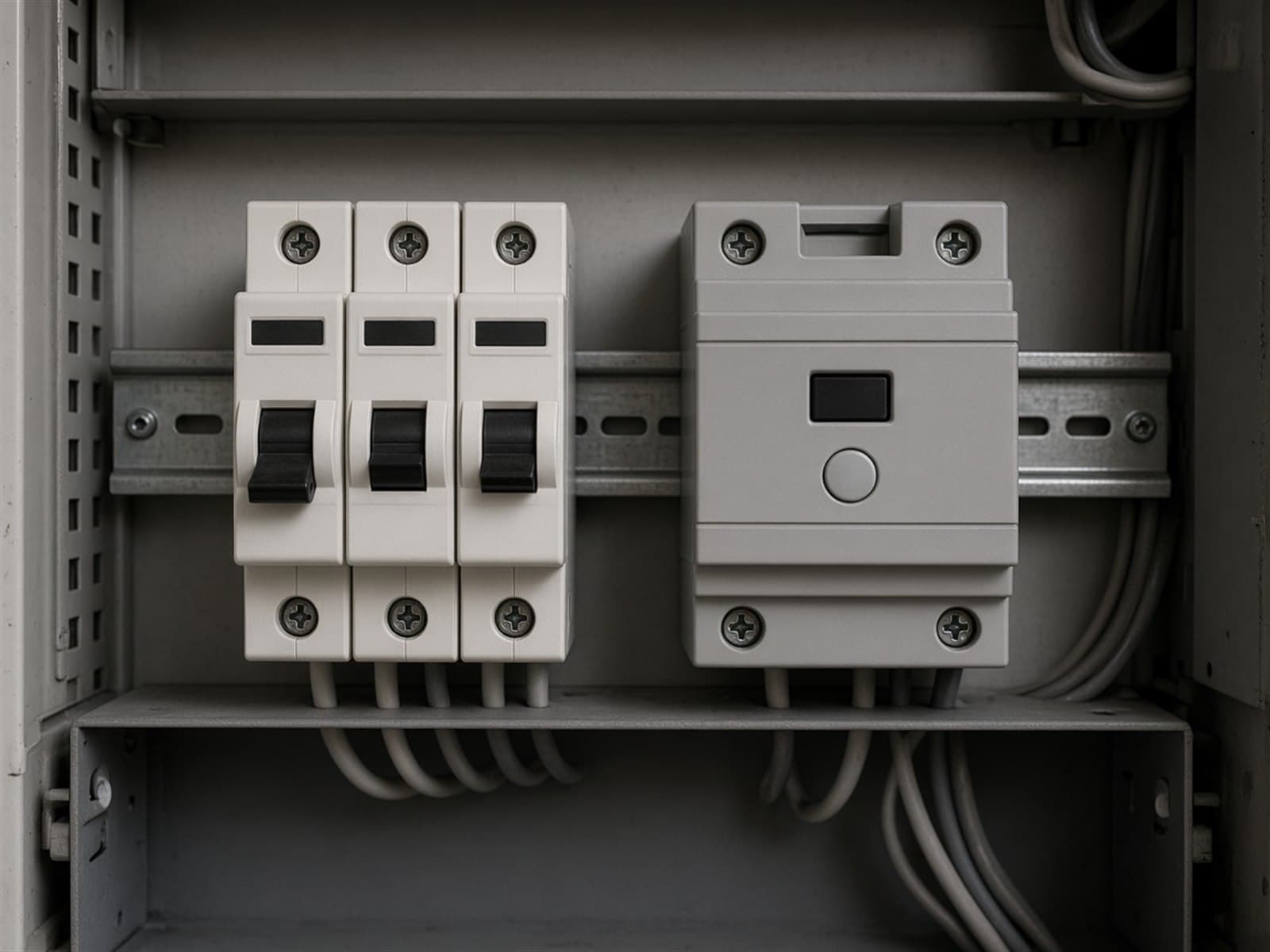
The call from Kurtdoğmuş usually starts with the season: 'All summer there was no problem. Winter came, we went up to the house on Friday evening, lit the stove, and an hour later the living-room lights went. We reset the breaker, and a bit later it tripped again. The cable of the lamp above the stove looks blackened.' Every part of that sentence is information. The fault appearing only when the stove or fireplace burns says it depends on heat. The one-hour delay says the cable needs time to heat; as the pipe heats, the sheath beside it heats too, insulation resistance falls, and finally the cores make contact. The breaker tripping says phase–neutral short; the RCD tripping says phase has leaked to the metal pipe, the protective conductor or damp timber. The blackened cable is the place itself. In a weekend house this fault can go unnoticed for weeks; when the house is empty the stove does not burn and the fault goes quiet. That is why the survey starts with the stove out and the flue cold.
In a timber house the usual field picture is this: the wall is timber panelling or log, the cable is tacked onto it with clips. The stove pipe passes through the wall in a metal sleeve and connects to the flue; the lighting run passes just above that sleeve, sometimes through the same hole. The wall light beside the fireplace is fed through the stone or brick surface beside the fireplace mouth; the cable is buried in hot stone. A lamp hangs from the ceiling above the stove and its cable sits right in the rising hot air. In some houses the cable is clamped or wired to the flue pipe because 'it ran straight'. A baked cable is easy to recognise: the sheath has lost its colour, turned brown or black, is hard and brittle to the touch and cracked in places; the core insulation shows through and has darkened too. At the point of the short the copper has melted and the timber around it carries a soot stain. Log houses have one more problem: logs dry and settle over the years; a cable pulled taut along a log slips out of its clips with that movement and can drop even closer to the pipe.
This explains why the fault is inevitable. PVC-insulated domestic cables such as NYM and NYA are designed for a conductor temperature of 70 °C in normal operation. That limit is for the heat produced by the cable's own current; the cable being heated from outside as well is not in the calculation. The surface of a stove pipe and the area around a fireplace can go far above that limit while burning and heat a cable a few centimetres away by radiation. At high temperature PVC first softens; as the heat continues, its plasticiser evaporates and the material hardens, becomes brittle and cracks. Every burn–cool cycle advances that ageing. A stove lit every weekend through a winter can finish in a few seasons insulation that should last years. So the problem is not a 'bad cable'; it is the right cable in the wrong place. Upsizing the breaker, wrapping the cable in tape or pulling a new NYM along the same route does not solve it; the same heat ages the new cable the same way.
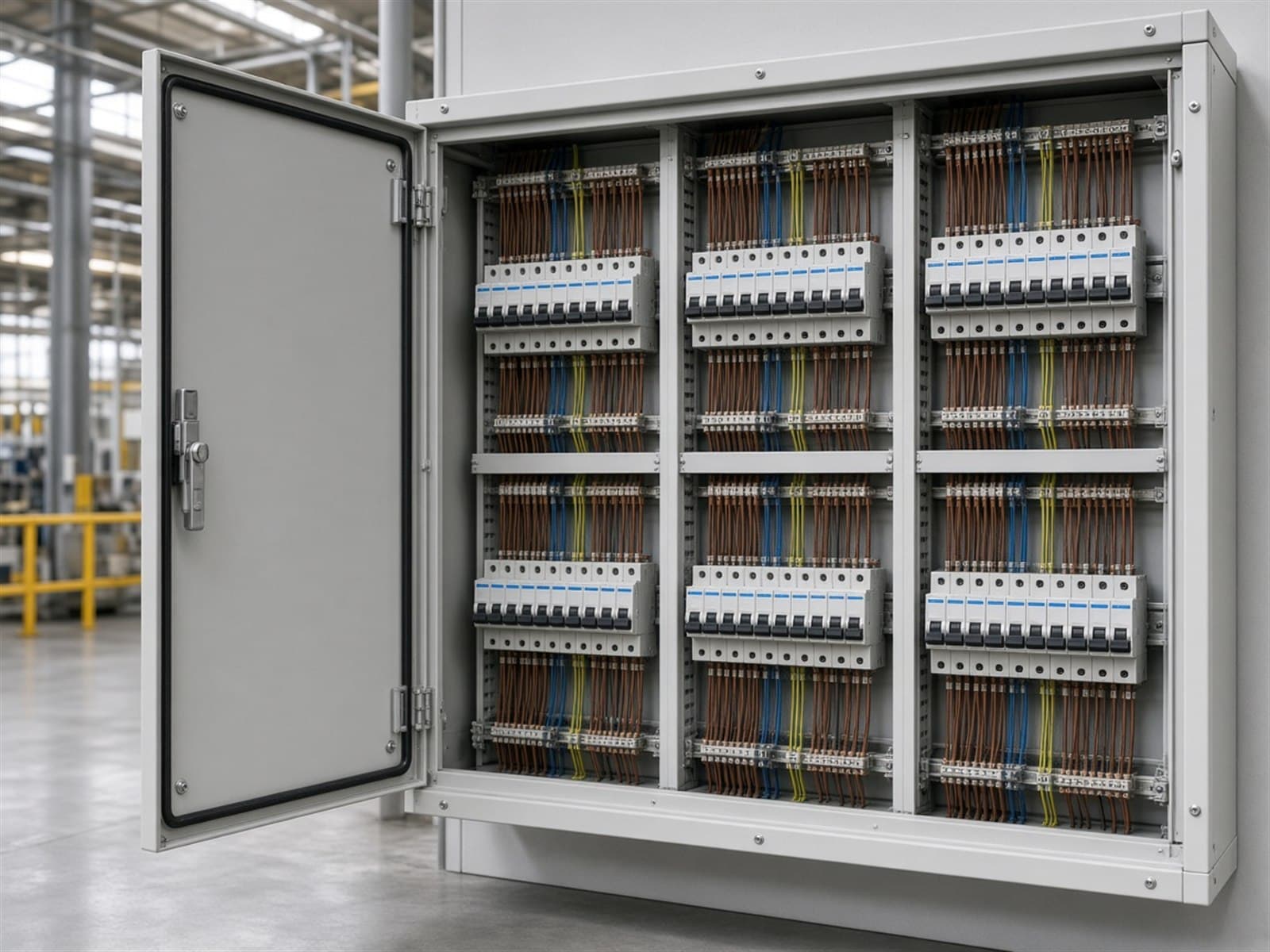
The survey is done with the stove and fireplace out and the flue cold. First the panel is read: which breaker trips, which rooms it feeds, whether its rating fits the cable section; 10 A should sit at the head of a 1.5 mm² lighting run, 16 A at the head of a 2.5 mm² socket run. An upsized, constantly tripping breaker is common in these houses and is corrected the moment it is found. Then the route is traced: the tripping run's cable is followed from the panel, and the points where it passes closest to the flue, the stove pipe, the fireplace mouth and the pipe sleeve are marked and measured. Baked, blackened or cracked sheath is noted. The run is opened at both ends and a megger applies 500 V DC; phase–neutral, phase–earth and neutral–earth insulation resistance are read. A healthy run reads in the megaohm range; on a baked cable it falls. If needed a second reading is taken while the stove burns, without touching the cable, with a thermal camera or infrared thermometer; it shows how high the cable's surface temperature climbs beside the pipe and where it falls with distance. That reading decides where the new route goes.
Tape patching is not a fix; wrapping a baked sheath in tape melts the tape under the heat too and hides the brittle insulation. Tying the cable to the flue pipe, passing it through the same wall sleeve as the stove pipe or burying it in hot stone is not done, and where it has been done it is removed. Upsizing the breaker is no fix; the breaker protects the cable, and a bigger one leaves a baked cable heating for longer. Bridging or disabling the RCD is a breach of the trade. Nobody works on a live run beside a hot pipe while the stove burns; the relevant breaker is switched off and the work is done with the flue cold. Building a flue, sweeping it, installing a stove or fireplace and changing the pipe and sleeve belong to the flue and stove tradesman; the electrician's job is the route of the run, the type of cable, the box where the joint is made and the protection.
The repair has three parts and their order matters. The first is distance. The most correct and cheapest fix is to take the cable out of the heat zone. The run is moved away from the flue, the stove pipe, the pipe sleeve and the fireplace mouth; the new route passes where the thermal reading showed the temperature falling. The cable does not share the flue's wall penetration, is not tied to the pipe and is not buried in hot stone. On a timber surface the run is carried in metal conduit or metal trunking, or in non-combustible trunking; in a log house the cable is given slack for the logs to settle and is not tacked taut. Metal conduit or trunking is bonded to the protective conductor. The second is the cable. On the short section where heat cannot be avoided, for example the ceiling lamp above the stove or the wall light beside the fireplace, the last metre is made with silicone-insulated cable. SiHF is a multi-core flexible cable with silicone insulation and a silicone sheath; SiAF is a silicone-insulated single core used inside conduit. These cables are made for temperatures PVC cannot take; the working class is read from the manufacturer's label, and most are in the 180 °C class. Silicone cable is not as tough as PVC against mechanical knocks, so it is protected in metal conduit or flexible conduit. The third is the joint. The point where the silicone cable meets the normal run is kept outside the heat zone and made with a porcelain terminal inside a metal box. A porcelain terminal does not soften or darken in heat as a plastic one does. The lamp holder and fitting must also suit the heat; a domestic plastic holder is not used above a stove.
The panel side is simple. When renewed, the run that passes the flue is moved onto its own breaker where possible and labelled; if there is a problem next winter the owner sees which line dropped. The breaker is chosen by section: 10 A for 1.5 mm² lighting, 16 A B-curve for 2.5 mm² sockets. The run stays under the 30 mA RCD. Schneider iC60, Siemens 5SL or Legrand RX3: whichever body is in the panel, a breaker of the same family is added and the bar torque follows its label. Earthing is measured; in weekend houses the protective conductor may never have been pulled to some rooms, and metal conduit and a metal box are only safe with a sound protective conductor. Which run is moved, how many metres are done in silicone cable and which fitting is changed are written on site at the survey, not guessed on the phone.
Usually a cable passes too close to the flue, stove pipe or fireplace. Radiant heat bakes the PVC sheath; as insulation thins, a phase–neutral short trips the breaker, or leakage to the body trips the 30 mA RCD. The run is measured with the stove out.
No. Tape melts in the heat too and hides the brittle insulation. The run is moved away from the flue; the last metre where heat cannot be avoided is done in silicone cable.
PVC domestic cable is built for a 70 °C conductor temperature. SiHF and SiAF silicone cables are made for high temperature, mostly in the 180 °C class; the class is read from the label. They are used in metal conduit for mechanical protection.
A porcelain terminal does not soften or darken in heat as plastic does. The point where silicone cable meets the normal run is made outside the heat zone, inside a metal box, with a porcelain terminal.
No. Building and sweeping the flue and installing the stove and fireplace belong to the flue and stove tradesman. The electrician's job is the run's route, the cable type, the box and the protection.
There is no fixed minute. Istanbul 24/7. Arrival depends on the queue at that moment and the road to north Pendik. A 30-minute claim is not invented.
Yes, we work 24/7 across Pendik including Kurtdoğmuş, with no difference for nights, weekends or public holidays. Average arrival is no fixed minutes. In terraced buildings no drill or breaker is used after 22:00; the fault is located silently with a FLIR thermal imager and a cable tracer, and noisy permanent work is booked for the next working day.
No. Our first priority is getting the critical loads running safely. After isolating the faulty leg at the board, the technician restores the boiler, refrigerator and lighting circuits within the first ten minutes. If the concealed run is permanently broken, a temporary safe line is installed in fire-retardant trunking. The boiler is afterwards always moved to a dedicated circuit, because a faulty socket sharing that leg will stop it at midnight.
Kurtdoğmuş, Pendik. The map is centered on the neighborhood. Arrival changes with the hour and the traffic.