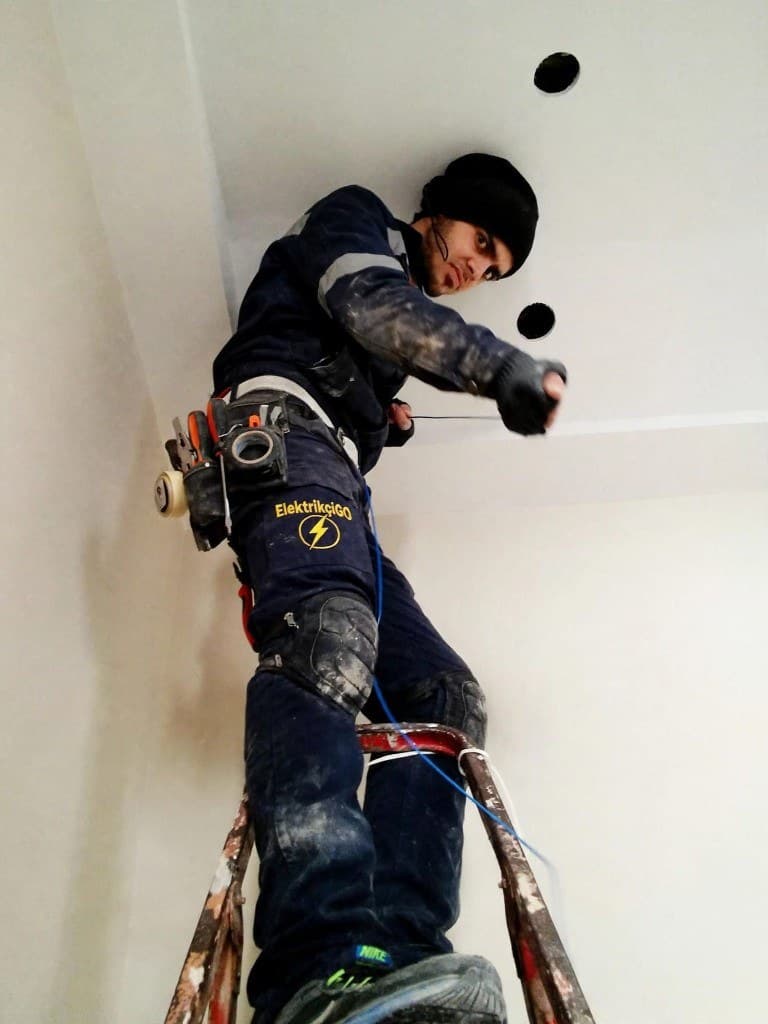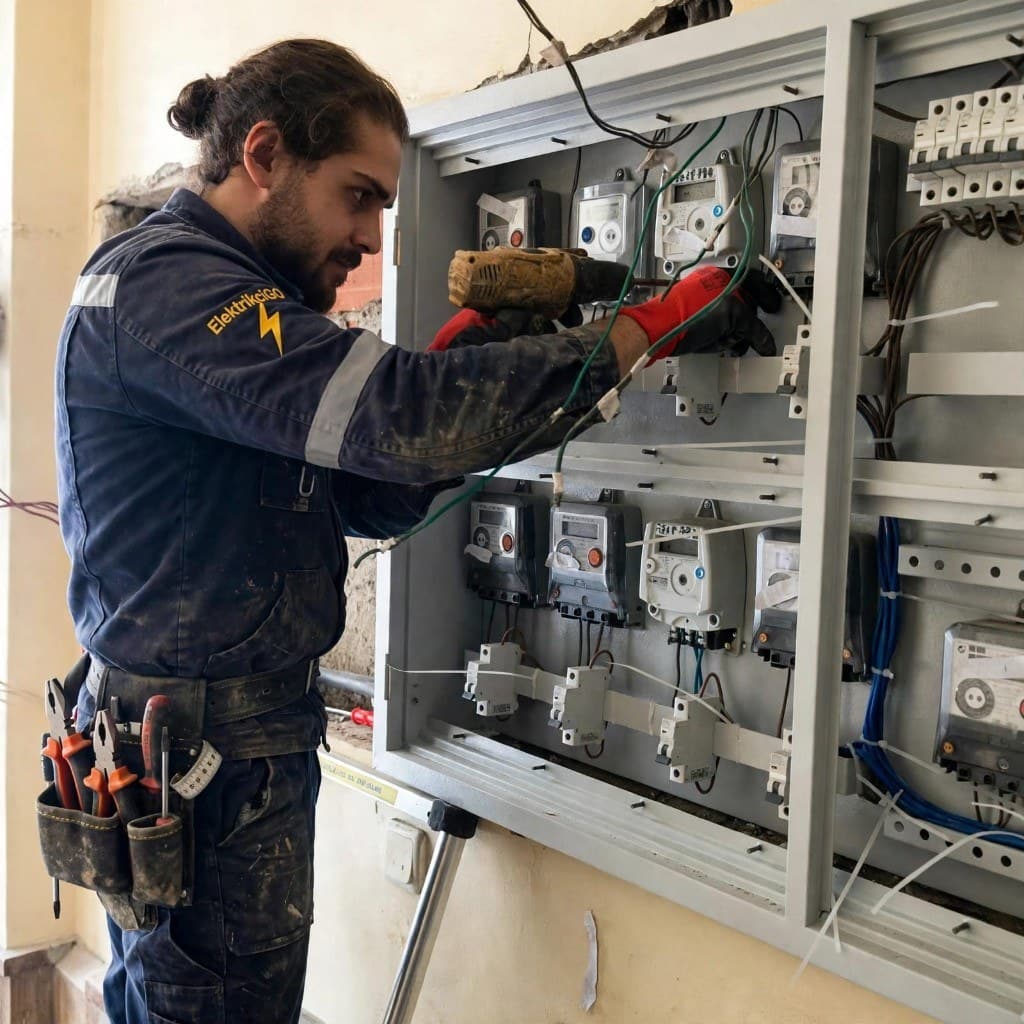
Founding master
Adnan Şemiye18 years in the field
MYK-certified master
Adnan Şemiye reads this job in the field. The price is written before work starts.
Pendik district
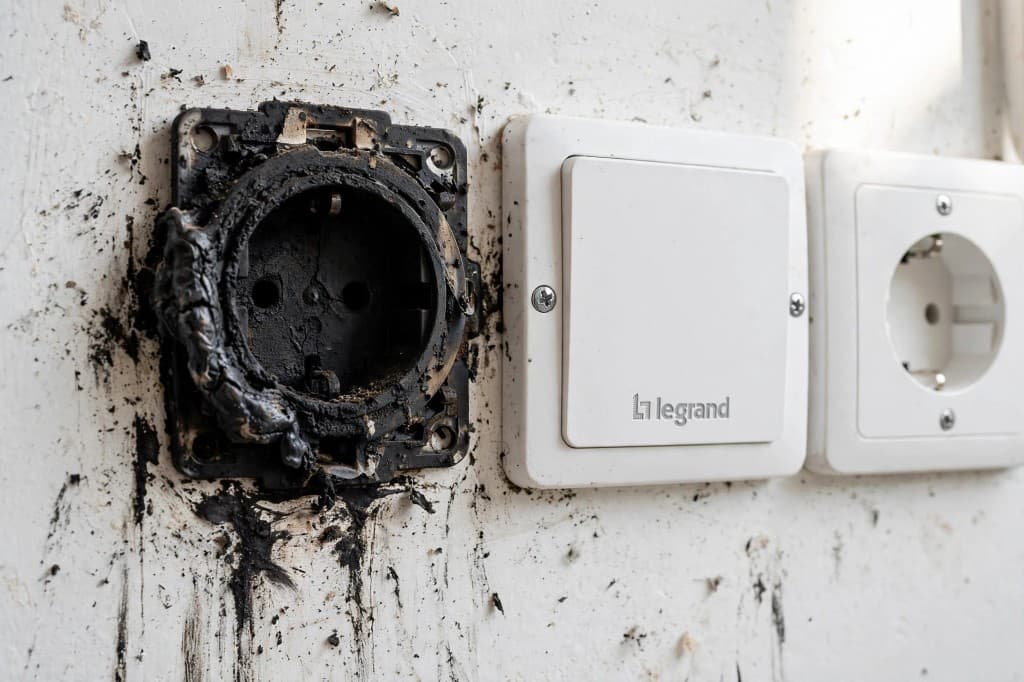
Emirli 24/7 emergency electrician. In this Pendik neighbourhood we respond without a minute promise to midnight breaker tripping, residual current device faults, burnt sockets and consumer unit failures. In apartment and complex stock, saturated kitchen circuits, bathroom water heater runs and riser overheating are measured on site. Certified technicians, faults proven with a True-RMS clamp meter and a megohmmeter, written price approval and an official 1 year workmanship guarantee.
Founding master
Adnan Şemiye18 years in the field
MYK-certified master
Adnan Şemiye reads this job in the field. The price is written before work starts.
From the field
 Emergency van · +90 582 403 10 87
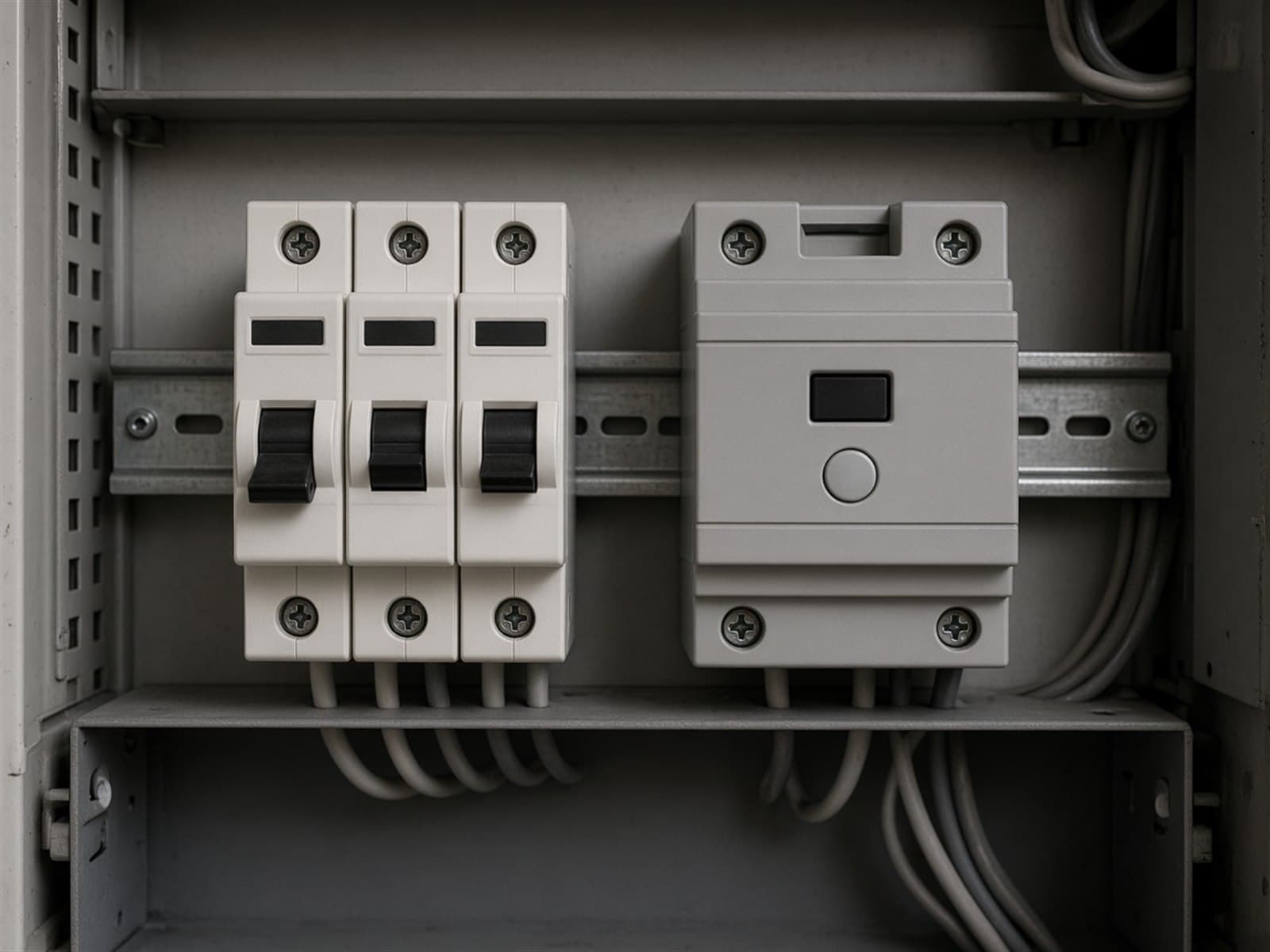
The call from Emirli usually starts with a sound: 'At night we hear scratching and running in the ceiling, for a few days the upstairs bedroom lamp has been flickering, last night the breaker tripped, we reset it, in the morning it tripped again.' Sometimes the sentence ends worse: 'There is a faint smell of burnt plastic in the hallway.' Every part of these sentences is information. The sound in the ceiling says there are rodents in the attic. The flickering lamp says a core has a loose or partly broken contact. The breaker tripping again and again says two cores touched: a phase–neutral short. The burning smell is the most serious: somewhere insulation is heating or an arc is forming. In that case the first job is to keep that run's breaker off and not reset it again. The survey starts at the panel before going into the attic, but it does not end without going into the attic.
In the attic the usual picture is this: a thick layer of dust under the tiles, rodent droppings between the joists, nests of wool, paper and insulation material in the corners. Cables lie loose on the joists; some are old NYM from the year the house was built, some are runs added later, pulled at random from one junction box to the next. A gnawed cable is easy to recognise: teeth marks on the outer sheath, sheath stripped off completely in places, white inner filler spilling out, nicks in the core insulation and, in some spots, bare copper shining. At the point of the short the copper has melted, the sheath around it has blackened, and the nearby timber carries a soot stain. Sometimes the junction box has no lid and the rodent has got inside, nesting on top of the terminal row. Dry timber, nest material and gnawed copper side by side are the attic fire risk itself.
This distinction explains how serious the job is. When two cores touch fully, current rises instantly; the breaker's magnetic trip cuts the circuit within milliseconds. That is annoying, but it is protection working. The real danger starts on a single gnawed core. The rodent breaks some of the copper strands; the few strands left try to carry the same current and, with the smaller section, heat at that point. As the broken strand ends move closer and apart, a small series arc forms. In a series arc the current is no higher than the normal load current; the breaker does not see it as overcurrent. The RCD does not see it either, because if current is not leaking to earth the balance between phase and neutral is not broken. So a point in the attic can spark for weeks and no protection in the panel trips. The flickering lamp and the smell are the field signs of this. An arc fault detection device, AFDD, is an extra protection that can detect this kind of series arc; it can be recommended where the panel has room and compatibility, but the real fix is getting the damaged cable out of the attic.
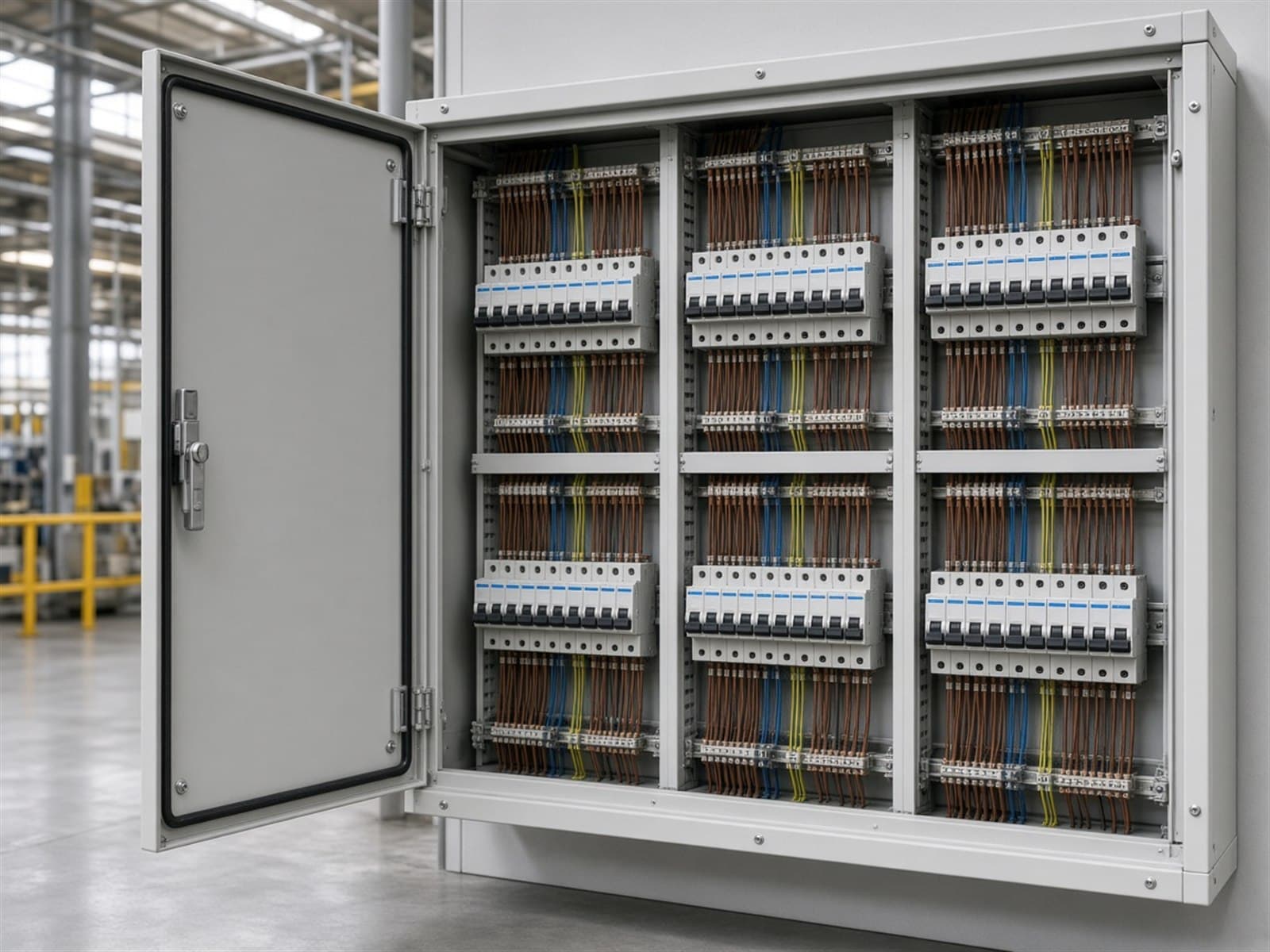
First the panel is read: which breaker trips, which rooms it feeds, whether its rating fits the cable section. A common mistake in Emirli's older houses is a constantly tripping breaker taken for 'weak' and upsized: 16 A instead of 10 A at the head of a 1.5 mm² lighting run, 20 or 25 A instead of 16 A at the head of a 2.5 mm² socket run. That means leaving a gnawed cable to heat for longer. Then the run is isolated: the line fed by the tripping breaker is disconnected and its lamps and sockets are checked one by one. Then the attic. Nobody works live in the attic; the relevant breakers are switched off, the main switch is dropped if needed, and the work goes forward by torchlight. Each cable is traced by eye end to end; teeth marks, stripped sheath, bare copper and blackened spots are marked. The run is opened at both ends and a megger applies 500 V DC; phase–neutral, phase–earth and neutral–earth insulation resistance are read. A healthy run reads in the megaohm range; on a gnawed cable the value drops sharply or goes to zero. The test also reveals a core thinned inside the sheath that the eye does not see.
Tape patching is not a fix. It is the most common wrong move in the field: the gnawed spot is wrapped in insulating tape, the breaker is reset and the job is called done. The tape loosens in the first summer, the rodent gnaws the tape too, and the broken strands inside the core stay as they were. If a rodent gnawed one point it has gnawed other points on the same cable; the one visible wound is not the whole damage. Random taped joints in the attic are in the same class; a joint without a box, a terminal lying open on timber and a lidless junction box are an invitation to the rodent and fuel for a fire. Upsizing the breaker is no fix either; the breaker protects the cable, and if the cable is gnawed a bigger breaker only hides the damage. Bridging or disabling the RCD is a breach of the trade. Pest control and closing the rodent's entry points into the roof belong to the pest-control service and the roofer; the electrician's job is to renew the damaged run and protect the new one so it cannot be gnawed again.
The repair has three parts, and all three answer the same rodent. The first is the conduit. The gnawed runs are removed from the attic, new NYM is pulled in their place, and this time the cable passes through galvanised steel flexible conduit. Steel flexible conduit bends between the joists, but a rodent's teeth cannot cut galvanised steel. Plastic flexible conduit, PVC flex, is not enough for this job; a rodent gnaws plastic too. On straight routes rigid galvanised steel conduit can be used as well. The conduit is clamped to the joist, and the cable lies loose, not taut, inside it. Because metal conduit is a conductive body it is bonded to the protective conductor and its continuity is measured; the conduit becomes part of the earthing system. The second is the box. Every joint in the attic goes into a lidded, halogen-free, flame-retardant junction box; the conduit enters through a gland and the lid is screwed down. Halogen-free material does not produce dense toxic smoke and corrosive gas when it burns; even if a small arc starts in a timber attic the box does not carry the flame. Joints are made with terminals or spring connectors, not tape. The third is protection. Each run's breaker is chosen by its cable section: 10 A for a 1.5 mm² lighting run, 16 A B-curve for a 2.5 mm² socket run. Breakers that were upsized earlier are brought back to the right value. Runs through the attic stay under the 30 mA RCD.
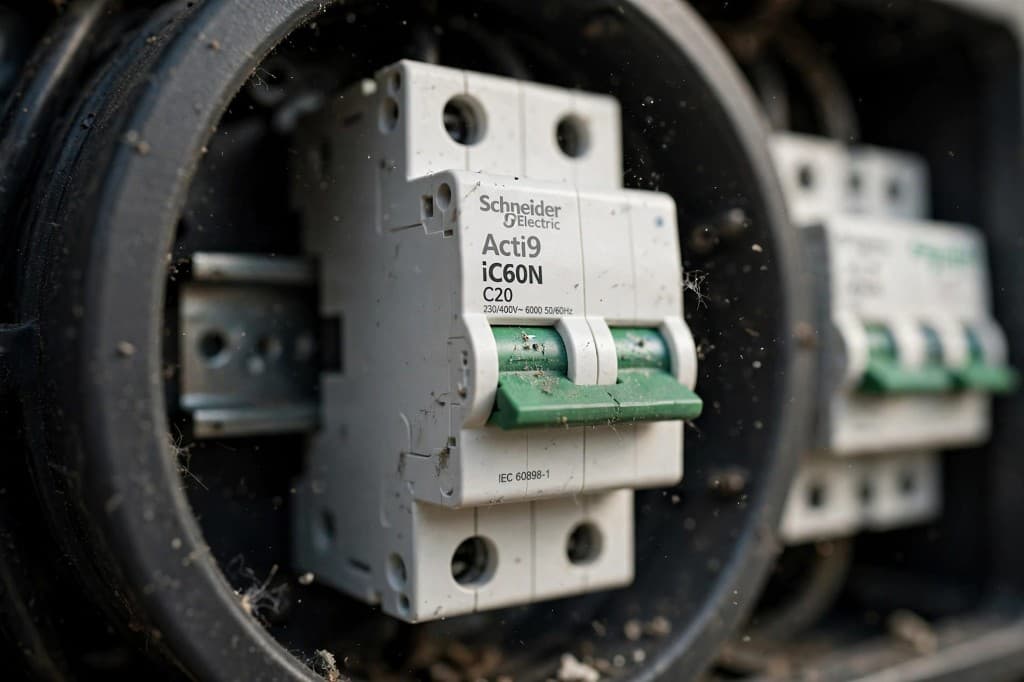
The panel side means something simple on site. In the panels of Emirli's older houses the whole upper floor is often on a single breaker; when one attic run is gnawed the whole floor goes dark and the fault is hunted room by room for days. During renewal the attic runs are split onto separate breakers where possible and labelled in the panel; at the next problem the owner sees which line dropped. Schneider iC60, Siemens 5SL or Legrand RX3: whichever body is in the panel, a breaker of the same family is used and the bar torque follows its label. Earthing is measured; in older houses the protective conductor may never have been pulled, or may be broken in the attic. In that case the new run is pulled with three cores and the protective conductor is carried back to the panel. If an arc fault detection device is wanted, the panel's module space and its fit with the existing RCD are read on site. Which runs are renewed, how many metres of conduit are needed and how the breakers are split is written at the survey, not guessed on the phone.
It can be. If rodents gnaw the attic cable a core can partly break and a hidden arc can form. A series arc may not trip the breaker or the RCD. If the lamp flickers or there is a burning smell, keep that run's breaker off and have the run measured.
No. Tape loosens, the rodent gnaws the tape too, and broken strands inside the core remain. The gnawed run is renewed end to end and put in galvanised steel flexible conduit.
Rodents gnaw plastic flexible conduit too. Galvanised steel resists teeth. Metal conduit is bonded to the protective conductor and its continuity is measured.
No. The breaker protects the cable. A 1.5 mm² lighting run is protected at 10 A, a 2.5 mm² socket run at 16 A. A bigger breaker leaves a gnawed cable heating for longer.
No. Pest control and closing roof entry points belong to the pest-control service and the roofer. The electrician's job is to renew the damaged run and protect the new one.
The real fix is getting the damaged cable out of the attic. An AFDD is extra protection that can detect a series arc; it can be recommended on site if the panel has room and compatibility.
There is no fixed minute. Istanbul 24/7. Arrival depends on the queue at that moment and the road to north Pendik. A 30-minute claim is not invented.
With dispatch coordinated from our Pendik hub and GPS-tracked vans patrolling the main Pendik corridors, average arrival in Emirli is no fixed minutes. When the technician departs, their name, vehicle plate and a live tracking link are sent by SMS or WhatsApp. We do not promise an undeliverable time; if we are busy the next shift is stated plainly.
The survey fee is stated clearly on the call, with no surprises. The binding price is written only after on-site measurement: no figure is given before the clamp current, terminal temperature and insulation resistance have been seen. No work starts without approval. The brand and model of switchgear fitted, the measured values and the labour charge go onto a signed service report, and parts and labour carry an official 1 year guarantee.
Service covers the neighborhoods of Istanbul's 39 districts. Not the whole of Turkey. A survey is not a binding quote.
Emirli, Pendik. The map is centered on the neighborhood. Arrival changes with the hour and the traffic.