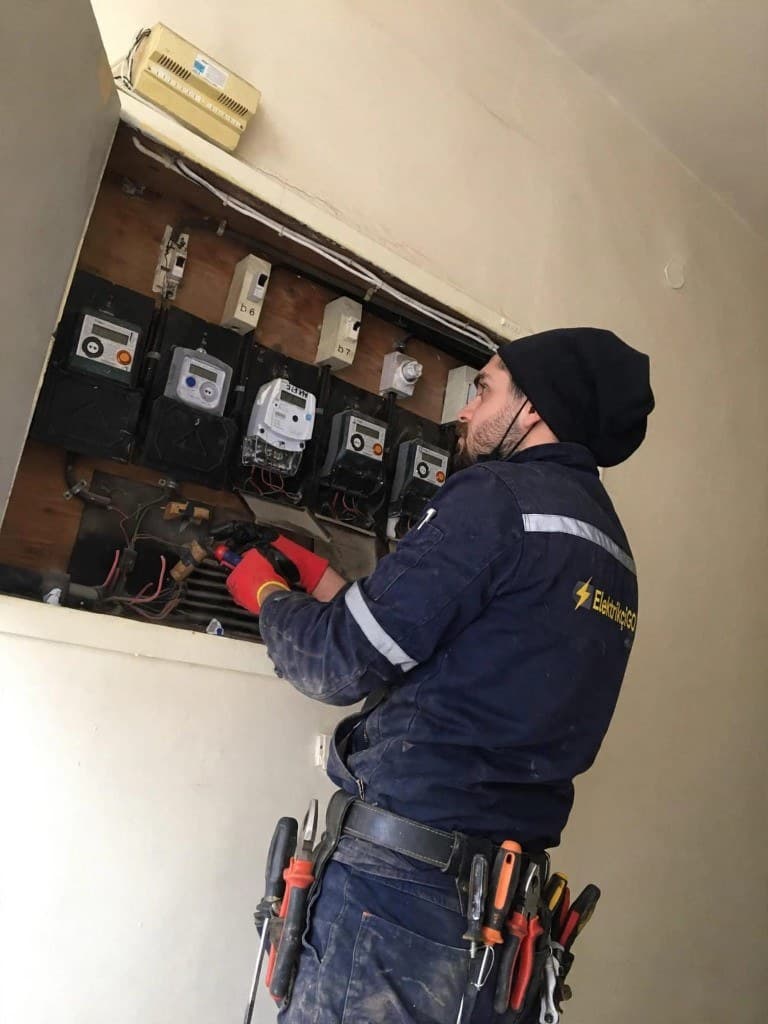
Founding master
Adnan Şemiye18 years in the field
MYK-certified master
Adnan Şemiye reads this job in the field. The price is written before work starts.
Tuzla district
Tepeören 24/7 emergency electrician. In this Tuzla neighbourhood we respond without a minute promise to midnight breaker tripping, residual current device faults, burnt sockets and consumer unit failures. In apartment and complex stock, saturated kitchen circuits, bathroom water heater runs and riser overheating are measured on site. Certified technicians, faults proven with a True-RMS clamp meter and a megohmmeter, written price approval and an official 1 year workmanship guarantee.
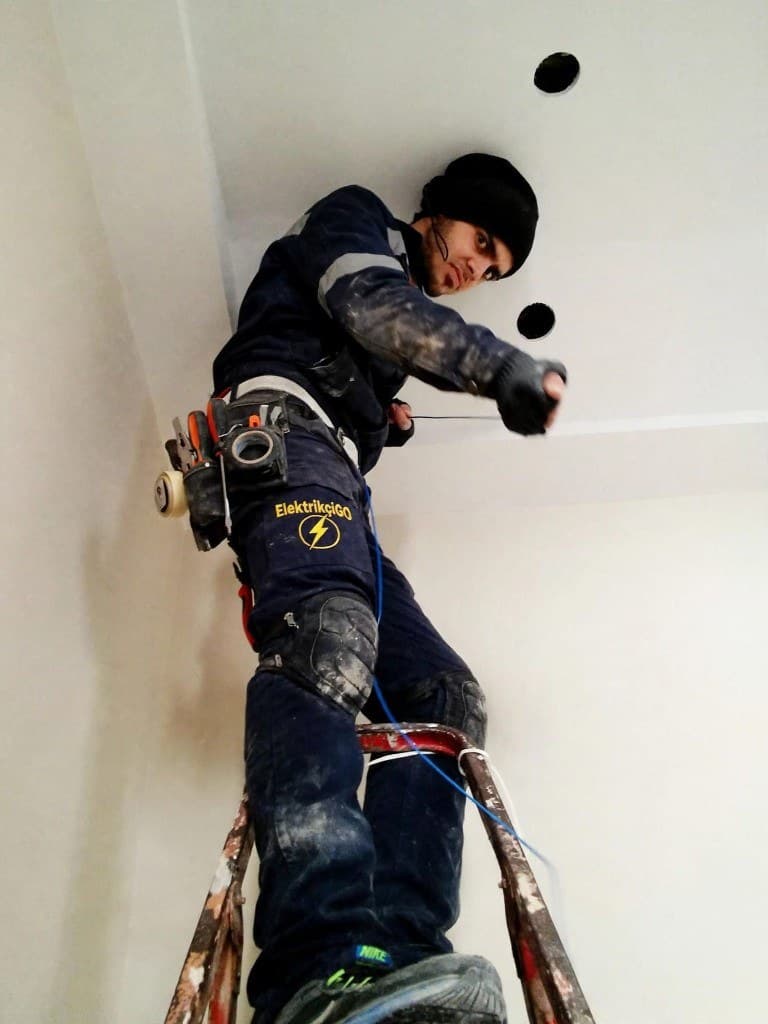
Founding master
Adnan Şemiye18 years in the field
MYK-certified master
Adnan Şemiye reads this job in the field. The price is written before work starts.
From the field
 Emergency van · +90 582 403 10 87
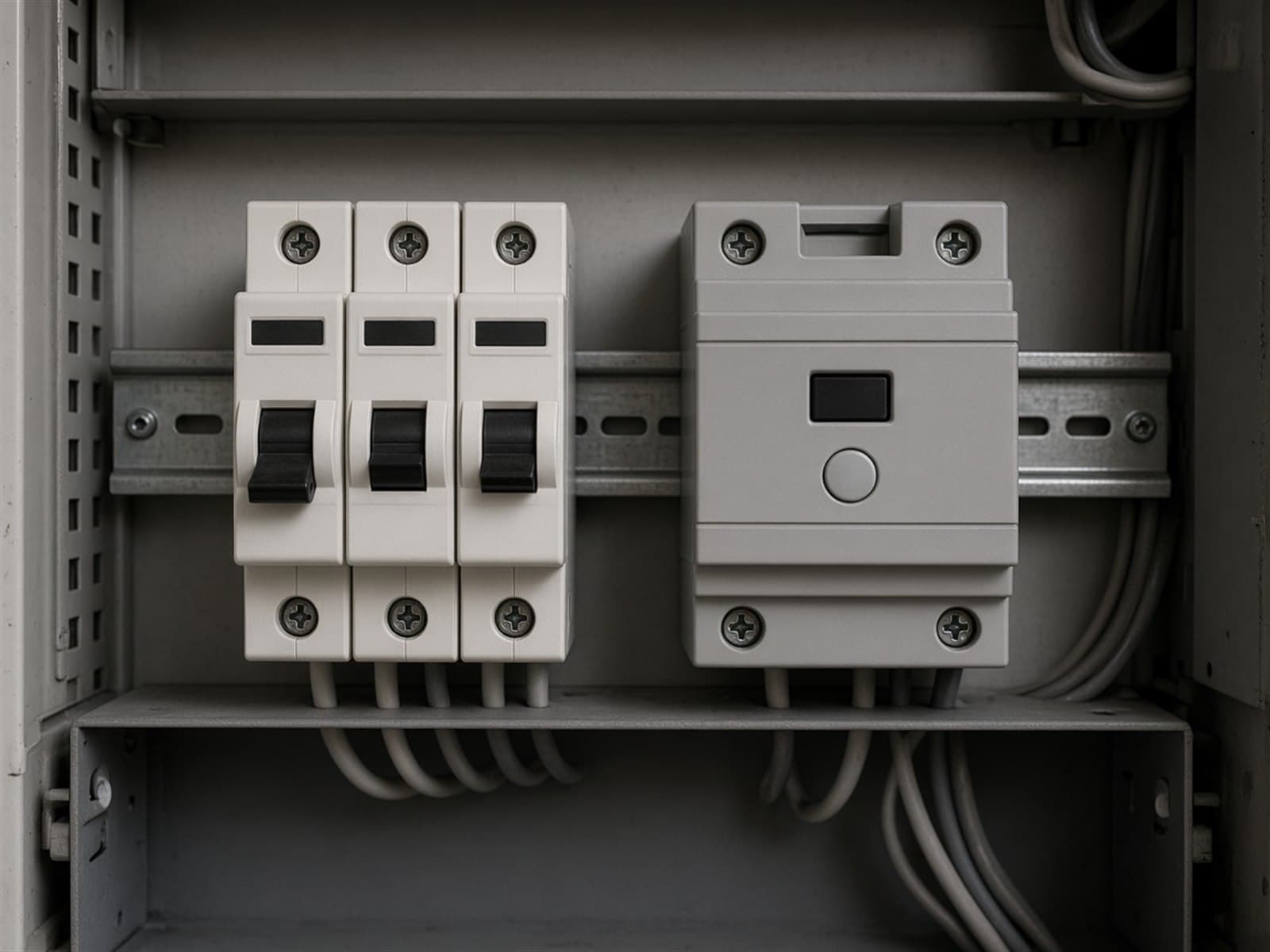
This call from Tepeören usually comes at the start of the pool season, in the evening: 'We filled the pool and switched the lights on. One of the four lamps did not come on at all, one flickered. There is a loud hum from the plant room, the top of the transformer is very hot, there is a burning smell. But no breaker tripped, and the RCD is still in.' Sometimes it comes at a later stage: 'Smoke came out of the transformer, we switched it off.' Every part of this description says something. One lamp not lighting at all or flickering suggests the problem is not in the whole circuit but in that lamp's housing or cable. The hum and the heat say the transformer is loaded above its rated power: as the current through the winding rises, magnetic forces vibrate the core laminations, copper and iron losses turn into heat, the winding varnish starts to cook and gives off that smell. The RCD staying in is the part that surprises the owner most, but it is not a fault; it is the result of how the circuit is built. The first step is to get everyone out of the water, switch off the lighting transformer's primary breaker, let the transformer cool, and not leave a humming transformer running on the idea that 'it will pass'. No lamp is touched before everyone is out of the pool and the transformer is off.
The underwater part of a pool is electrically the most dangerous zone. That is why underwater lighting is not fed at mains voltage but at safety extra-low voltage (SELV); the special rules for swimming pools are collected in IEC 60364-7-702. In the classic layout each lamp or lamp group is fed from the 12 V AC secondary of a safety isolating transformer to EN 61558-2-6. There is reinforced insulation between this transformer's primary and secondary windings; the secondary is galvanically separate from the mains and is not earthed. The RCD measures the difference between the currents through phase and neutral on the primary side. When there is leakage into the water on the secondary side, that current returns through the pool water to the secondary winding itself; no difference appears between the phase and neutral currents on the primary side. That is why the RCD does not trip, and not tripping is the point of the design: a separated 12 V circuit does not create a dangerous touch voltage for a person in the water. The problem is not voltage but current. A classic 300 W halogen PAR56 lamp draws about 25 A at 12 V. When water gets into the lamp housing two things happen. The hot halogen lamp meets cold water and bursts, or a short-circuit path forms inside it; dirty, chlorinated water also bridges the two ends of the lamp. The secondary current rises above the lamp's rated current. An old transformer with no fuse or thermal protection on its secondary tries to carry this current for hours, hums, heats up and its winding cooks.
The paths water takes into the housing are known. The gasket behind the front glass hardens and cracks over the years because of chlorine, the seasonal swing of pool water temperature and sun on a pool left empty in winter. The gland where the cable enters the back of the housing loosens or its seal ages. If the glass screws were not tightened evenly at a lamp change, the gasket stays open on one side. The cable itself can be a path: the conduit from the niche to the deck is full of water, by design; but if the cable sheath is torn somewhere, water travels inside the sheath towards the housing. In wet-niche fittings a spare coil of cable is left inside the niche; this coil lets the lamp be lifted onto the deck without draining the pool. If there is no coil, or the cable was cut short, the lamp can only be removed by lowering the water level. Another weak point of this layout is voltage drop. On a line carrying high current at 12 V even a small resistance takes a large share. On a 10 m run of 2×4 mm² copper, a 300 W halogen's 25 A drops about 2.3 V; the lamp sees around 10 V instead of 12 V. On the same run a 30 W LED PAR56 draws about 2.5 A and the drop stays around 0.2 V. That is why size and terminal tightness are read separately on old halogen installations; a loose terminal heats and darkens at this current. Converting to LED cuts the current to a tenth, relieving both transformer and cable; but whether the LED lamp is compatible with 12 V AC and the existing transformer type is read from the maker's documentation.
The survey starts in the plant room. The breaker feeding the lighting transformer, the RCD it sits under, and whether the pump and filter circuits are separate are read. The transformer's label is read: rated power, secondary voltage, the EN 61558-2-6 mark, whether there is a fuse or thermal protection on the secondary. If the transformer body is discoloured, a terminal has melted or there is a trace of burnt varnish, this transformer is not repaired but replaced, because in a cooked winding there is no guarantee that the reinforced insulation between primary and secondary is still intact, and that insulation is what the whole system's safety rests on. If the transformer is sound, measurement begins. The lamps are separated one by one at the secondary terminal. Each lamp is connected on its own and energised briefly, and the secondary current is measured with a clamp meter; a lamp drawing clearly above its rated current is a wet or shorted lamp. A lamp drawing no current at all is either burnt out or has a broken cable. Then the line is switched off and the insulation measured. The insulation resistance of a SELV circuit is measured at 250 V DC and must be at least 0.5 MΩ. LED lamps and their drivers are disconnected before this test, because the test voltage can damage a driver. The test separates whether the cable up to the niche is sound and whether the leak is in the cable or the housing. Nothing is measured inside the pool water; the lamp is taken out of the niche with nobody in the pool and the transformer off.
The repair starts at the lamp. In a wet-niche fitting the lamp is lifted onto the deck with its coil; the housing is opened, and if there is water and green copper corrosion the lamp and gasket are replaced. In place of the halogen PAR56, a resin-filled, IP68 LED PAR56 suitable for 12 V AC is fitted. In a resin-filled lamp the driver and LED board are protected from water by the filling; even if the gasket ages, water cannot reach the electronics. Halogen lamps are designed to be water-cooled; a lamp out of the water is not run for long, and testing is kept short. The cable is removed from the housing gland and checked along its sheath. A cable with a torn sheath or a joint in it is replaced. The part from the niche to the deck box is run in a cable suited to immersion, for example H07RN-F or the cable supplied by the fitting's maker, with no joint in between. No joint is made under water or inside the conduit. The deck box stands above the water level, at the height given by the maker and the regulations; it is sealed against water that may rise up the conduit, so the terminals inside stay dry. On the line from the deck box to the transformer in the plant room, the size is chosen for the lamp current and run length. Then the transformer is replaced: a safety isolating transformer to EN 61558-2-6, sized with a margin over the total lamp power, with a fuse or thermal protection on its secondary for each lamp or lamp group. The transformer stands outside the pool zones, in a dry, ventilated place. Its primary side is protected by a breaker and a 30 mA RCD. At the final test each lamp's current, the secondary voltage and the insulation resistance of the SELV circuit are read again.
The lamp is fed from the secondary of a 12 V safety transformer that is unearthed and galvanically separate from the mains. Current leaking into the water returns to the secondary, no difference appears on the primary side, and the RCD does not see it. That is by design; the fault is found by measuring lamp current and the transformer.
Everyone gets out of the pool, the transformer's primary breaker is switched off and the transformer is left to cool. A humming transformer is not left running. A cooked transformer is not repaired; it is replaced with a new safety transformer with a protected secondary.
In a wet-niche fitting with a cable coil left in the niche, the lamp is lifted onto the deck and no draining is needed. If there is no coil or the fitting is surface-mounted, the water level is lowered. This is seen on site at the survey.
Yes. A resin-filled, IP68 LED PAR56 suitable for 12 V AC is chosen. Current drops to about a tenth, relieving transformer and cable. Compatibility with the existing transformer and any RGB controller is read from the maker's documentation.
No joint is made under water or inside the conduit rising from the niche to the deck. The cable runs unbroken from the niche to the deck box; joints are made in the dry deck box above water level.
There is no fixed minute. Istanbul 24/7. Arrival depends on the queue at that moment and E-5 and TEM traffic. A 30-minute claim is not invented.
In Tepeören we handle everything on the customer side of the meter: breaker tripping and residual current device faults, burnt sockets and terminals, board renewal and breaker replacement, earthing installation with resistance testing, lighting and chandelier mounting, dedicated circuits for boilers and air conditioning, and surge arresters. Measurement uses a True-RMS clamp meter, a megohmmeter and a FLIR thermal imager.
In most cases no. The fault is first narrowed down branch by branch at the board, then pinpointed with a FLIR thermal imager and an inductive cable tracer, so no needless breaking is done. Where leakage is in an underground or under-screed run, a cable fault locator usually narrows it to within a metre and only that area is opened. If breaking is unavoidable it is reported in writing and approved first.
Tepeören, Tuzla. The map is centered on the neighborhood. Arrival changes with the hour and the traffic.