Founding master
Adnan Şemiye18 years in the field
MYK-certified master
Adnan Şemiye reads this job in the field. The price is written before work starts.
Tuzla district
Anadolu 24/7 emergency electrician. In this Tuzla neighbourhood we respond without a minute promise to midnight breaker tripping, residual current device faults, burnt sockets and consumer unit failures. In apartment and complex stock, saturated kitchen circuits, bathroom water heater runs and riser overheating are measured on site. Certified technicians, faults proven with a True-RMS clamp meter and a megohmmeter, written price approval and an official 1 year workmanship guarantee.

Founding master
Adnan Şemiye18 years in the field
MYK-certified master
Adnan Şemiye reads this job in the field. The price is written before work starts.
From the field
Emergency van · +90 582 403 10 87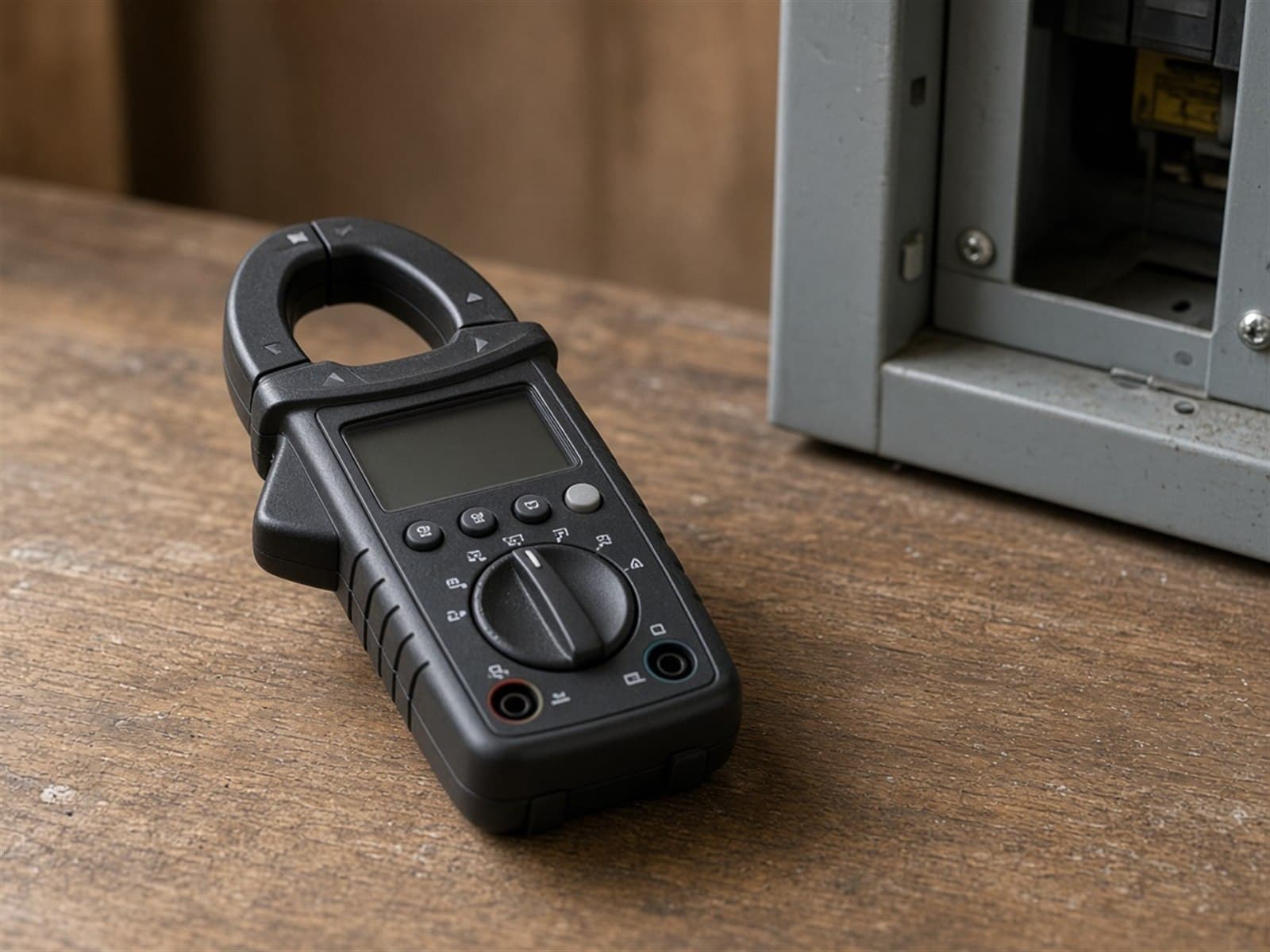
On a Type K thermocouple yellow is positive and red is negative. The controller terminal has a plus and a minus mark. A reversed tip pulls the value the controller sees toward negative as temperature rises. The controller thinks the barrel is cold and sends the SSR a permanent on command. The operator sees the setpoint holding on the display, because someone has manually put the controller on a high number; the tip is still reversed. The electrician writes the controller make, an Omron E5 or an ENDA, and lifts the wires. A small heat, not a lighter, warm air, should make the value rise when it meets the positive tip. If it does not rise, the tip is reversed or the cable is open at a joint. If the joint is taped onto the barrel's hot sheet, a second thermocouple forms there and the reading lies. The joint moves to the cool side.
When a thermocouple breaks, a controller set correctly closes the output; that is called upscale burnout. If the controller was not put on that protection, an open tip also heats all the way. The two are split with a clamp. If the output LED is dark and current is zero, the controller is doing the protection; then the search is for a broken tip, not a heater. If the output is dark but current is there, the SSR is stuck, even if the tip is healthy. Three readings sit on the same sheet: tip polarity, output LED, clamp current. A barrel heater is not ordered before one of them is written. Watt and volt are on the band; the next zone's band is not fitted, because putting 400 V on a 230 V band opens the band within an hour.

A ceramic band is a heater wrapped around the barrel. Tens of ohms are seen between its two ends. A continuity beeper beeps here and calls it a fault; that beep is the heater doing its job. The real measurement is 500 V DC insulation against the barrel body, with the two ends joined together. If the body is zero, the band is leaking to the barrel, and the smell of plastic comes from there too. The band is not pulled while the barrel is hot. When it cools, the clamp is loosened; if the band is cracked it changes, and if there is no crack and only the tail is leaking, the tail is renewed. The tail is the maker's high-temperature conductor. NYM is not jointed onto that tail. NYM melts at the barrel's 300 degrees and sticks to the body. The fixed panel feed is NYY and does not come as far as the barrel; it ends at the machine base.
Three or four zones of the barrel can sit behind the same three-phase fuse. If one has charred, upsizing the whole fuse hides a stuck SSR on the other zones. Each zone's conductor is clamped on its own, while control for that zone is off. The SSR of the zone that has current changes, the one with no current stays. The fuse rating is calculated from the sum of the bands' watts, not copied from the next shop's fuse. In a shop between houses, if the riser is thin the calculation is not enough and voltage is written too. If voltage falls under 200 volts while the bands are on, the problem is the long thin feed in Tuzla Anadolu. Then the talk is not about the band, it is about the section between the panel and the meter. Meter work goes with the distribution company's permission; a pirate riser is not pulled.
When a small shop shuts the machine in the evening it does not fully cut the heaters, because heating in the morning takes time. That half-cut gets mixed up with a stuck SSR. The electrician asks what position the operator left at night, and writes the measurement against that. Heat left on purpose for the night, and fault heat, are split by the clamp against the control command. If there is no command and there is current, it is a fault. If there is a command and the operator said so, the band is not pulled as a fault. In Tuzla Anadolu the shop is under a house. At midnight smoke goes upstairs. The first job is to cut the power, not to start pulling the barrel. Pulling a riser up to the flat above is not this note's subject.
A small thermoregulator that holds the injection mould at a steady temperature sits with its own heater, its own pump and its own thermostat. Its hose goes to the mould's water channel. When the hose clamp loosens, water fills the machine base and the box there. That water is not the barrel band's leak to the body. The electrician pulls the thermoregulator's plug, opens the box lid, and if he sees water he does not move on to the band's clamp. The box is dried, the clamp is renewed, and the thermoregulator is put on its own 30 mA run. The barrel bands are not tied to that run. If water has splashed the band's ceramic face, the band is wet too; then there are two faults and one is not closed in place of the other. If the electrician pulls a band before the mould maker opens the water channel, he changes wet ceramic as if it were a dry fault.
If the thermoregulator's pump locks with scale, water does not circulate, the heater boils inside the vessel, and the thermostat opens late because its probe is sitting in dry air. The vessel swells. The electrician does not force the pump by hand. The plug is out before the lid is opened. If the impeller is full of scale, mechanical cleaning is written and a heater is not ordered. The heater changes only if it is leaking to the vessel. That leak is a different terminal from the band insulation measured against the barrel: it is the thermoregulator's own body. In Tuzla Anadolu these units are put under the house, in a narrow room. If the room has no ventilation and the unit's own fan stops, the room heats and the thermostat also reads the room. The fan is a separate fault and is not mixed with the band. If the fan is stopped, the thermoregulator is not handed back.
When the dryer hopper's filter clogs with dust, the fan spins but air does not pass. The filter is not an electrical part, it is written, and the fan body does not change. A temperature reading taken while the filter is blocked makes the hopper look sick. Before the reading the filter is held up to the light. If light does not pass, the call ends at the hopper and does not go down to the barrel. In Tuzla Anadolu these filters are forgotten on a narrow shelf under the house. If there is no spare, the fan is pulled for nothing. The electrician does not invent a spare filter, he writes the absence. Once the absence is written, the operator stops wanting the barrel band changed. That sentence is the page's real split: a smell is not always the band, sometimes it is the hopper's stopped air.
Three lines first: thermocouple polarity, output LED, clamp current. If current is there with no command, the SSR changes and the band stays. If the tip is reversed, the band does not change. The smell coming from the resin is written separately when those three are clean.
No. Because the band is a heater, resistance between the ends is low and it beeps. The fault is insulation between the band and the barrel body dying. The megger is held against the body, not between the two ends.
If the operator left it on purpose and there is a control command, it is not a fault. If the clamp sees current with no command, the SSR is stuck. The band is not pulled without asking which of the two it is.
A lighter burns the tip and also wrecks the reading. Warm air is enough. If the value does not rise in the positive direction, the polarity is reversed or a second junction has formed at a joint. The joint is lifted off the barrel sheet.
It does, because a blocked filter makes a smell of char in the barrel and a band gets ordered while the band is healthy. The filter is held up to the light. If light does not pass, the call ends at the hopper and the barrel is not clamped. In Tuzla Anadolu the filter is forgotten on the shelf under the house. If there is no spare, the absence is written and the fan is not pulled for nothing.
In Anadolu we handle everything on the customer side of the meter: breaker tripping and residual current device faults, burnt sockets and terminals, board renewal and breaker replacement, earthing installation with resistance testing, lighting and chandelier mounting, dedicated circuits for boilers and air conditioning, and surge arresters. Measurement uses a True-RMS clamp meter, a megohmmeter and a FLIR thermal imager.
In most cases no. The fault is first narrowed down branch by branch at the board, then pinpointed with a FLIR thermal imager and an inductive cable tracer, so no needless breaking is done. Where leakage is in an underground or under-screed run, a cable fault locator usually narrows it to within a metre and only that area is opened. If breaking is unavoidable it is reported in writing and approved first.
Anadolu, Tuzla. The map is centered on the neighborhood. Arrival changes with the hour and the traffic.