Founding master
Adnan Şemiye18 years in the field
MYK-certified master
Adnan Şemiye reads this job in the field. The price is written before work starts.
Tuzla district
Postane 24/7 emergency electrician. In this Tuzla neighbourhood we respond without a minute promise to midnight breaker tripping, residual current device faults, burnt sockets and consumer unit failures. In apartment and complex stock, saturated kitchen circuits, bathroom water heater runs and riser overheating are measured on site. Certified technicians, faults proven with a True-RMS clamp meter and a megohmmeter, written price approval and an official 1 year workmanship guarantee.

Founding master
Adnan Şemiye18 years in the field
MYK-certified master
Adnan Şemiye reads this job in the field. The price is written before work starts.
From the field
Emergency van · +90 582 403 10 87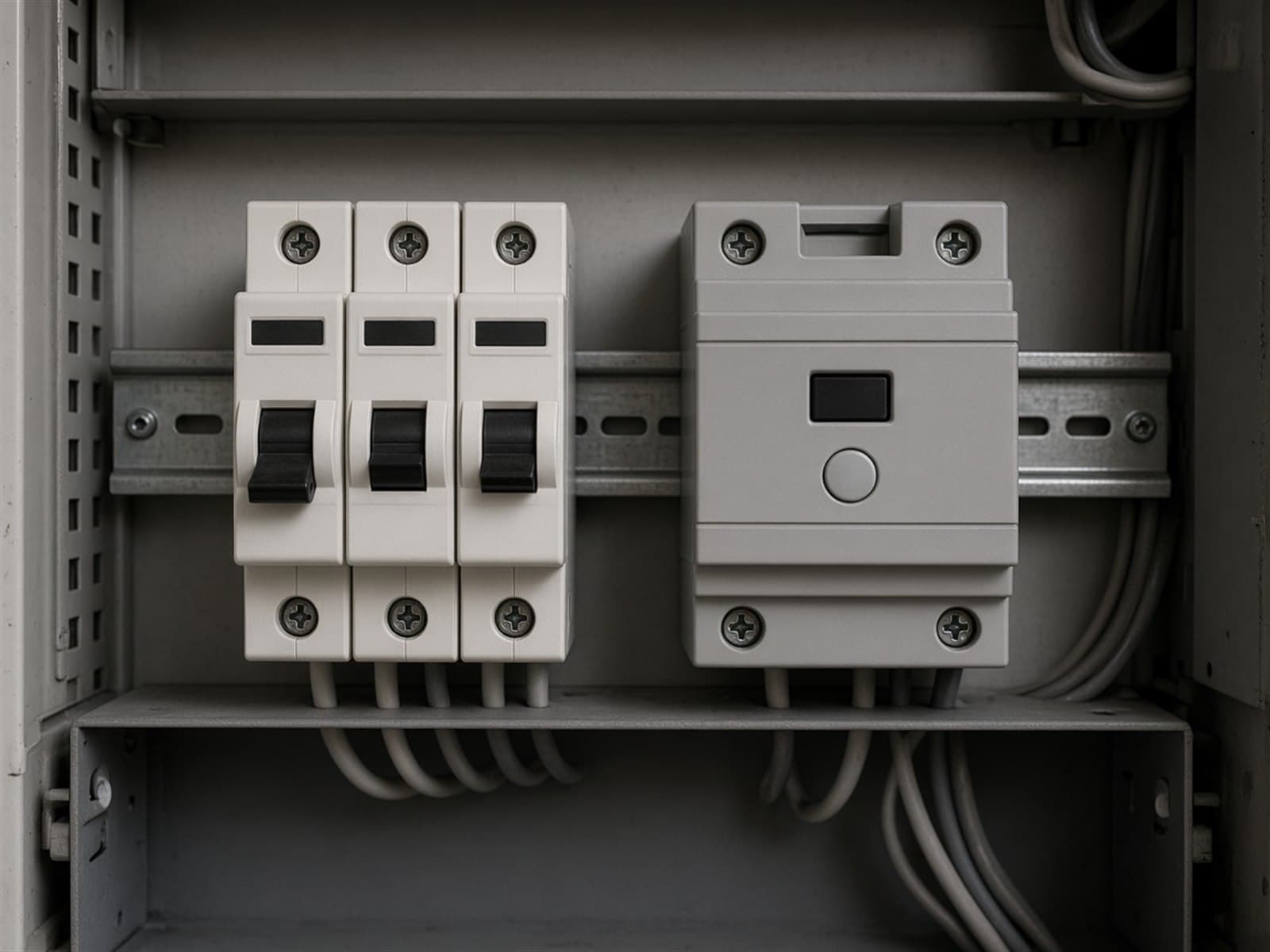
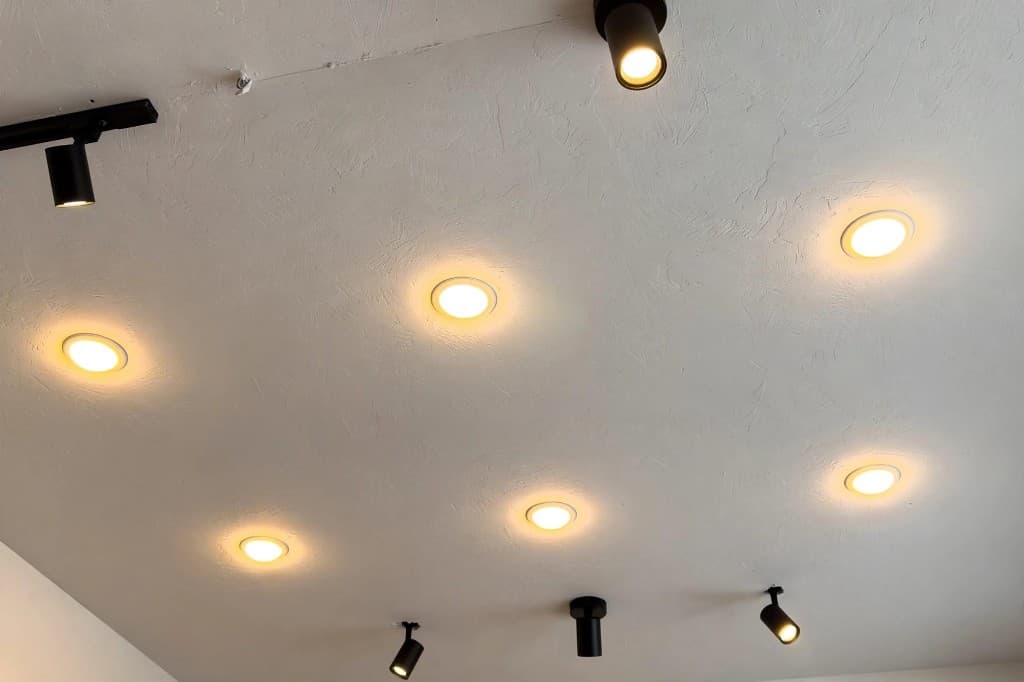
This call from Postane usually comes after a bulb change: 'The kitchen bulb blew. I switched off, stood on a chair, and while unscrewing the bulb my finger touched the edge of the holder and it shocked me. The switch was definitely off; the light had gone out.' Sometimes it comes with another complaint: 'The LED bulb in the bedroom glows faintly at night when it is off, giving a dim light in the dark.' Or with an observation made with a pen tester: 'With the switch off I touched the tester to the holder and its light came on.' Every part of this description says something. The light going out shows the circuit opens at the switch, but not which conductor it opens in. If the switch breaks the neutral, the lamp still goes out, because the current's return path is broken; the phase, regardless of the switch position, keeps reaching the lamp, the holder and the inside of the fitting. Getting a shock with the switch off says there is phase at the holder at that moment. An LED glowing faintly when off suggests one end of the lamp is at phase and the other sits on a path that is not fully open. The first step is to switch that lighting line's breaker off at the panel, change the bulb only after the line is off, and never again trust the fact that 'the switch is off'. The holder is not touched before it is measured.
A lighting circuit has three conductors: phase, neutral and the protective conductor PE. In a correct connection the phase comes from the panel to the switch, the conductor from the switch to the lamp is the switched phase, and the neutral goes from the junction box straight to the lamp. When the switch is off, the only live conductor to the lamp is cut and the lamp, the holder and the inside of the fitting are left dead. In renovations this arrangement can be broken. In old installations the colours of the conductors in the junction box may not follow the standard; the rule of brown, black and grey for phase, blue for neutral and green-yellow for PE may not hold in every flat. Someone changing a chandelier connects two conductors without telling them apart, pairs the conductors going to the switch wrongly, or wires the switch in series with the neutral in the junction box. The result is a circuit where the switch breaks the neutral. In this circuit the lamp goes on and off with the switch and everything seems to work; but even when off the lamp is at phase. The construction of the E27 holder makes the danger worse. The holder has two contacts: the centre contact and the threaded shell the bulb screws into. In a correct connection the switched phase goes to the centre contact and the neutral to the threaded shell, because the part a finger can touch while a bulb is put in or taken out is the thread. If the holder is reversed, the threaded shell is at phase while the lamp is on. If the switch breaks the neutral, the threaded shell and centre contact are at phase even with the lamp off. The two faults exist separately, but together they let someone changing a bulb touch the phase in every case.
An LED glowing when off can be part of this picture too. With a switch that breaks the neutral, when the switch is open the conductor between lamp and switch stays connected to phase through the lamp. This conductor runs side by side with neutral and PE conductors in the junction box and conduit; there is a small capacitance between them. A very small current passes through the lamp via this capacitance. An incandescent bulb does not light on this current. But the driver circuit of some LED bulbs slowly charges its internal capacitor with this small current and gives a short flash at intervals or a continuous dim light. The longer the line and the longer the conductor runs beside other conductors, the more pronounced this effect. Glowing when off is not on its own proof of a reversed connection. Illuminated switches, leading-edge dimmers and correctly connected but very long switch lines can produce a similar glow; dimmer-related glow is described on the Maltepe Büyükbakkalköy note. That is why the diagnosis is made by measurement, not by eye. A pen tester is not a diagnostic tool either; its light depends on a small current through the body, may not light on a dry floor or with insulating shoes, and may light misleadingly on a capacitive voltage.
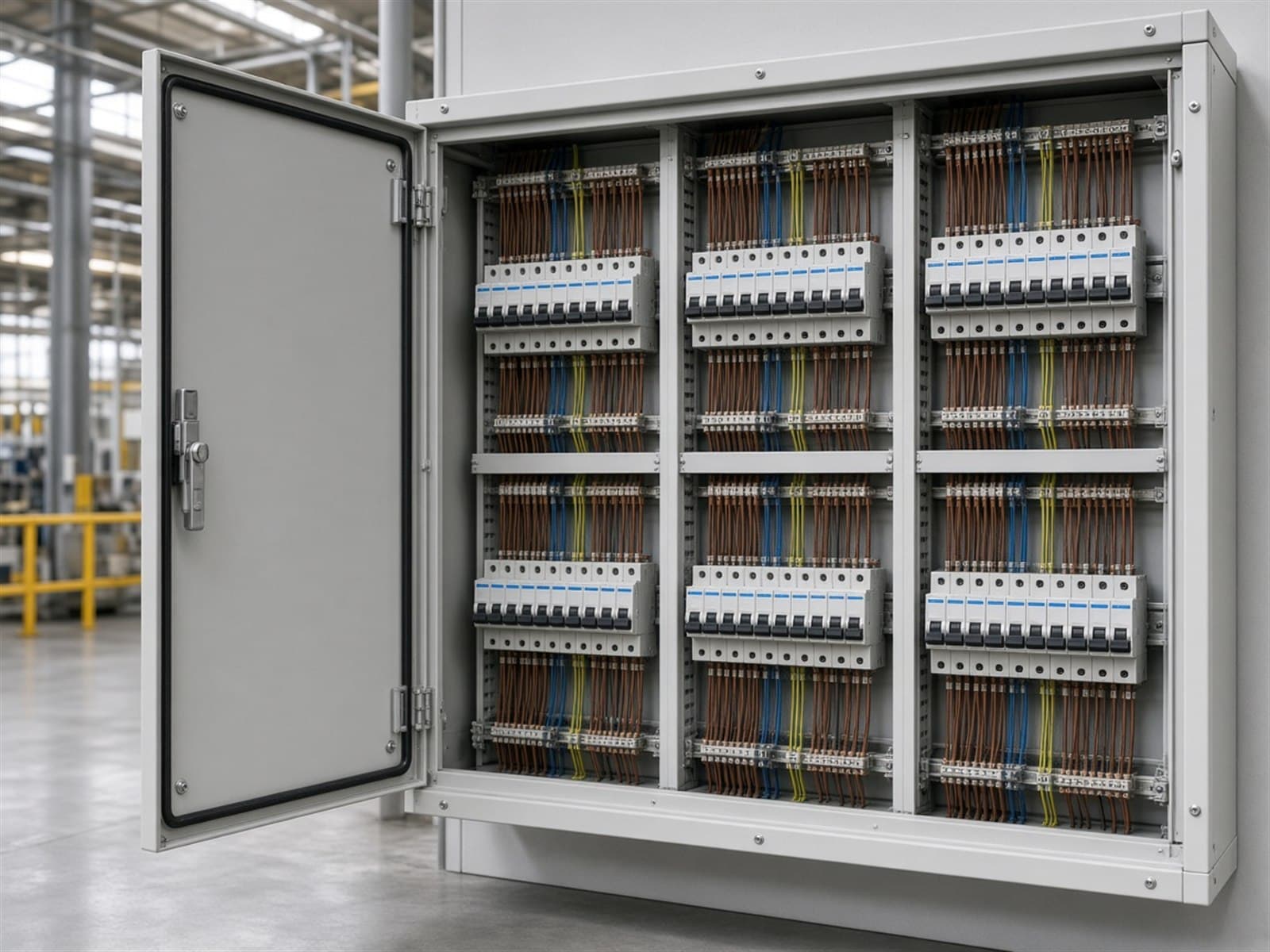
The survey starts at the panel: which breakers feed the lighting lines, which RCD they sit under and whether the breakers are labelled are read. Measurement is made with a two-pole voltage tester; the tester itself is first proven on a known voltage source. The first measurement is at the switch. The switch cover is removed; with the switch off there should be phase voltage to PE at the input terminal and none at the output terminal. If there is no voltage at the input but there is voltage at the holder, the switch is wired into the neutral. The second measurement is at the lamp. With the line live and the switch off, voltage is measured between the holder's centre contact and PE and between the threaded shell and PE; both should be near zero. With the switch on, phase voltage should read between the centre contact and PE and near zero between the threaded shell and PE. If phase reads on the threaded shell, the holder is reversed. The same measurements are then repeated at the other lighting points in the flat, because a mistake made in one renovation rarely stays at one point. Then the line is switched off, dead is proven and the junction box is opened. In the box the conductor colours, which conductor goes to the switch and which to the lamp, the state of the joints and the tightness of the terminals are read. If the colours do not follow the standard, the conductors are identified by measurement and marked.
This repair has clear limits too. A heater such as a towel rail in a bathroom needs a double-pole switch that cuts phase and neutral together; that is described on the Tuzla İçmeler note. A lighting switch is single-pole, and a single-pole switch always cuts the phase. Schuko sockets carry no polarity with respect to plug orientation; so whether a plug-in lamp's switch cuts the phase or the neutral depends on which way round the plug is inserted. With plug-in lamps, pulling the plug before changing a bulb is the only safe way. In fixed lighting, a correct connection ensures the lamp really is dead with the switch off. But even with a correct connection, switching the breaker off before changing a bulb is a good habit, because in shared junction boxes a conductor from another line may have reached the same fitting. The staircase timer, common-area lighting and the building panel are the manager's and building electrician's job; this repair inside the flat is on the customer side after the meter. Choosing, selling and hanging the chandelier itself is not this note's subject; this note is about the phase going through the switch to whatever chandelier hangs there, and the holder being connected correctly. The RCD does not see this fault, because in a reversed connection no current leaks to earth; the RCD only opens when someone touches the phase and current passes through their body to earth. That is why a reversed connection is corrected by measurement, however good the RCD.
If the switch cuts the neutral instead of the phase, the lamp goes out but the holder stays at phase. Anyone touching the holder's thread or contact while changing a bulb gets a shock. The switch must be moved onto the phase.
One cause is a switch breaking the neutral; the capacitance of the dead switch line passes a small current through the lamp. An illuminated switch, a dimmer and a very long switch line can cause a similar glow. The diagnosis is made by measurement.
No. Its light depends on a small current through the body; it may not light on a dry floor and may light misleadingly on a capacitive voltage. The switch and holder are measured to PE with a two-pole voltage tester.
In the reversed connection itself no current leaks to earth, so the RCD sees nothing. It opens only when someone touches the phase and current passes through their body to earth. The fault is corrected by measurement.
The phase from the switch goes to the holder's centre contact and the neutral to its threaded shell. That way the threaded part a finger can touch while a bulb goes in or out stays on neutral.
There is no fixed minute. Istanbul 24/7. Arrival depends on the queue at that moment and E-5 and TEM traffic. A 30-minute claim is not invented.
In Postane we handle everything on the customer side of the meter: breaker tripping and residual current device faults, burnt sockets and terminals, board renewal and breaker replacement, earthing installation with resistance testing, lighting and chandelier mounting, dedicated circuits for boilers and air conditioning, and surge arresters. Measurement uses a True-RMS clamp meter, a megohmmeter and a FLIR thermal imager.
In most cases no. The fault is first narrowed down branch by branch at the board, then pinpointed with a FLIR thermal imager and an inductive cable tracer, so no needless breaking is done. Where leakage is in an underground or under-screed run, a cable fault locator usually narrows it to within a metre and only that area is opened. If breaking is unavoidable it is reported in writing and approved first.
Service covers the neighborhoods of Istanbul's 39 districts. Not the whole of Turkey. A survey is not a binding quote.
Postane, Tuzla. The map is centered on the neighborhood. Arrival changes with the hour and the traffic.