Founding master
Adnan Şemiye18 years in the field
MYK-certified master
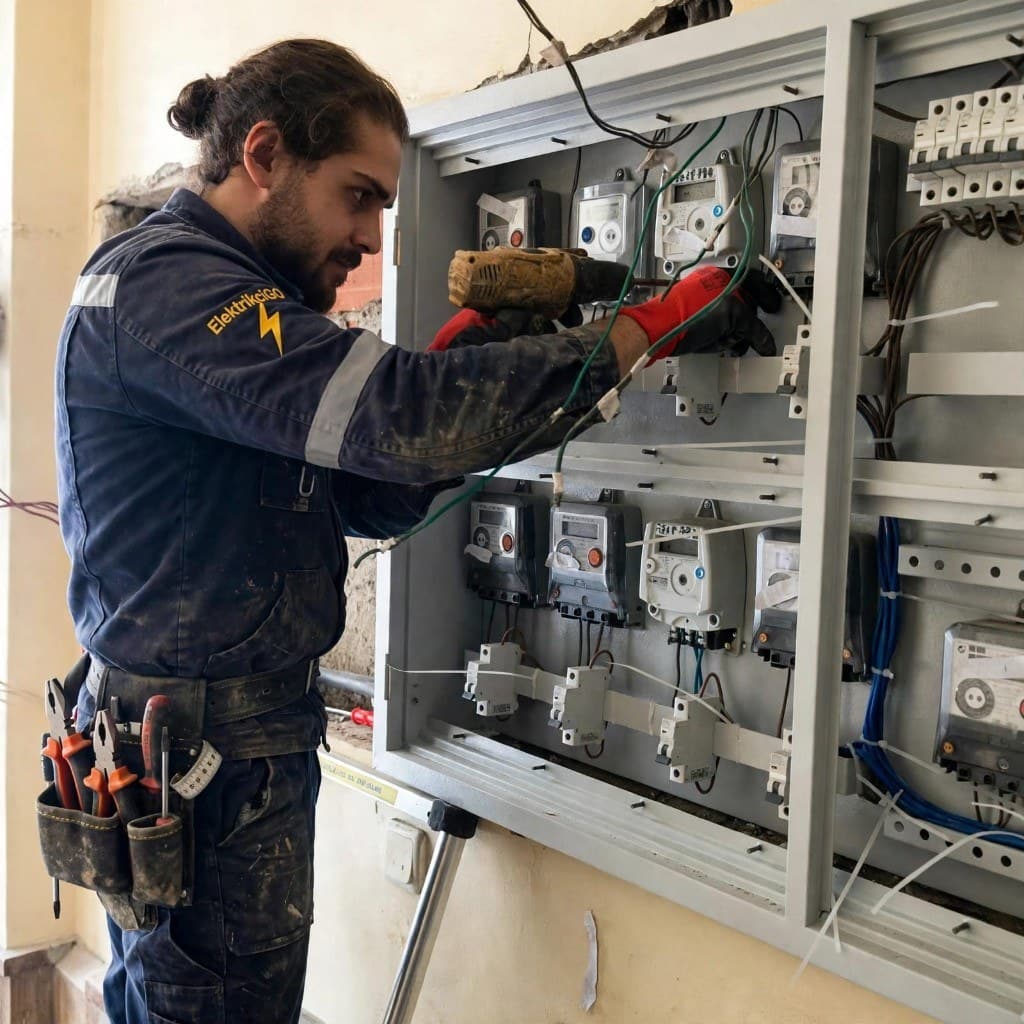
Adnan Şemiye reads this job in the field. The price is written before work starts.
Tuzla district
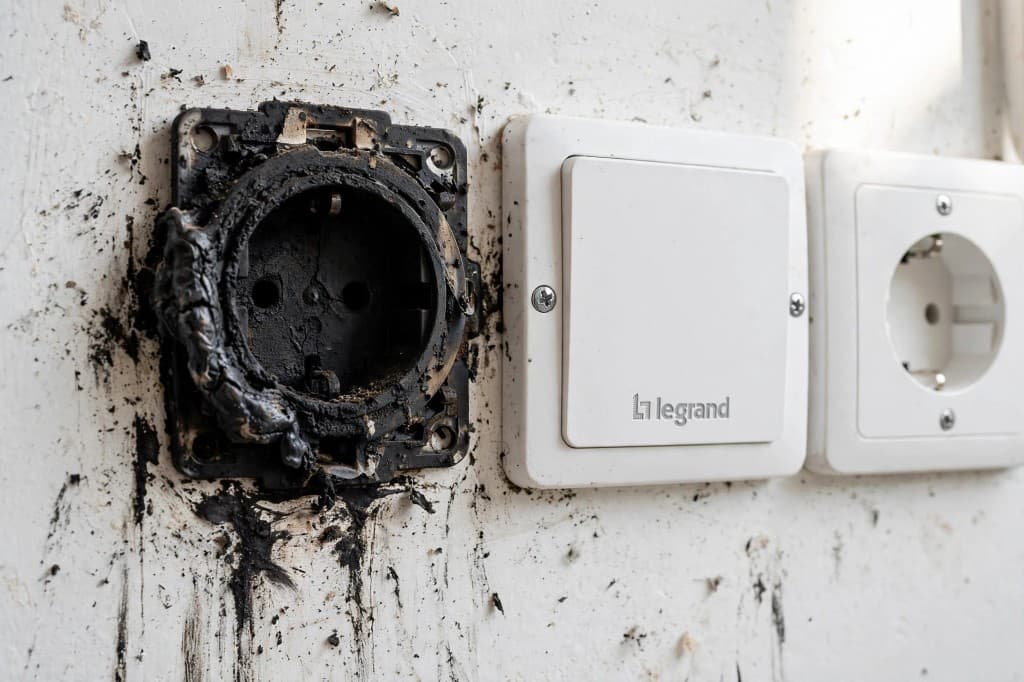
Mescit 24/7 emergency electrician. In this Tuzla neighbourhood we respond without a minute promise to midnight breaker tripping, residual current device faults, burnt sockets and consumer unit failures. In apartment and complex stock, saturated kitchen circuits, bathroom water heater runs and riser overheating are measured on site. Certified technicians, faults proven with a True-RMS clamp meter and a megohmmeter, written price approval and an official 1 year workmanship guarantee.
Founding master
Adnan Şemiye18 years in the field
MYK-certified master
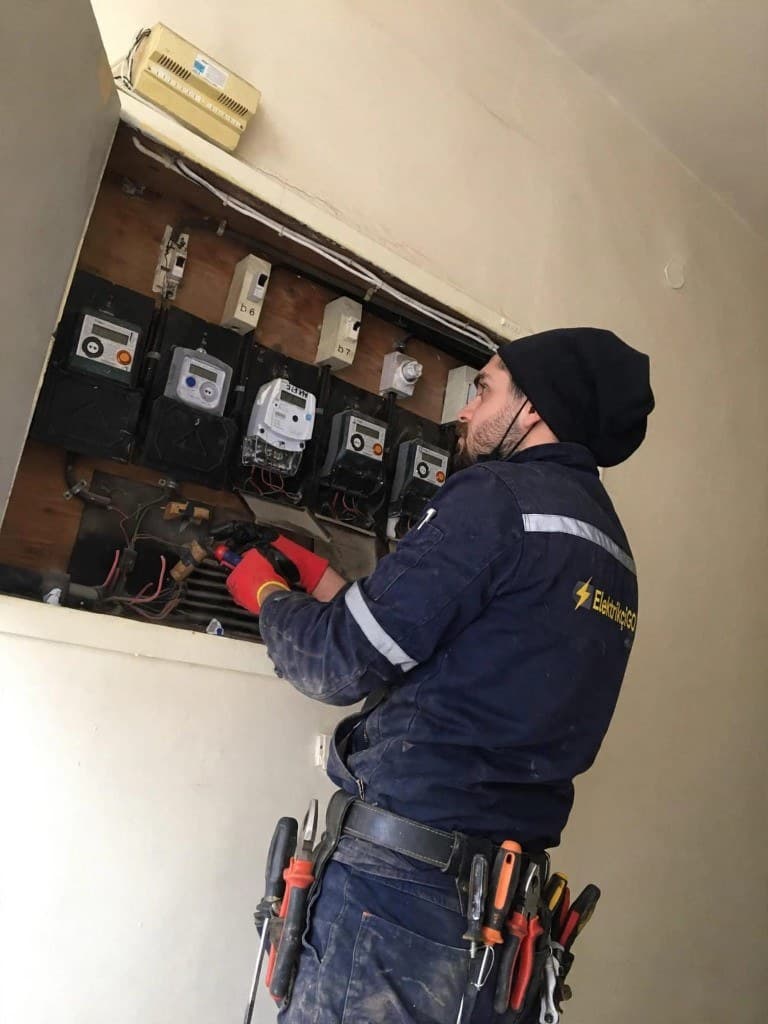
Adnan Şemiye reads this job in the field. The price is written before work starts.
From the field
 Emergency van · +90 582 403 10 87
This call from Mescit starts with a new set of keys: 'We took the flat over last month. The first days were fine. When we ran the washing machine two switches in the panel dropped at once; one for the bathroom and sockets, the other for the living room. We reset them, they dropped again on the spin cycle. It happened once with the oven too. The contractor's electrician came and changed the RCD, same thing. The appliance is new, the flat is new; we do not understand what we are breaking.' This description is unlike the fault of old flats. In old stock one RCD trips alone and the cause is usually an aged appliance, a wet junction box or a worn circuit. In a new flat two RCDs dropping at the same moment, and only while one particular appliance runs, is the signature of an installation error. In a new panel each RCD watches the phase and neutral of its own group together; if the current going out equals the current coming back the RCD is silent. If a circuit's phase leaves a breaker under RCD A but its neutral is connected to RCD B's neutral bar, then the moment current flows in that circuit RCD A sees it leave and not return, and RCD B sees it return and not leave. For both this is a 'leakage' far above thirty milliamps; the current is the ten amps the washing machine draws. Which one drops first depends on reaction time; usually both drop. At no load nothing shows because there is no current in the faulty circuit; the test button works too, because the test button exercises the RCD's own internal circuit, not the installation. That is why the sentence 'we pressed the test button, it tripped, it is fine' at handover is not an acceptance check. The owner's first step is simple: do not use the appliance that triggers the fault, do not keep resetting the RCDs, inform the contractor in writing and wait for the survey. Replacing the RCD is not the cure; the RCD worked correctly and reported a faulty installation.
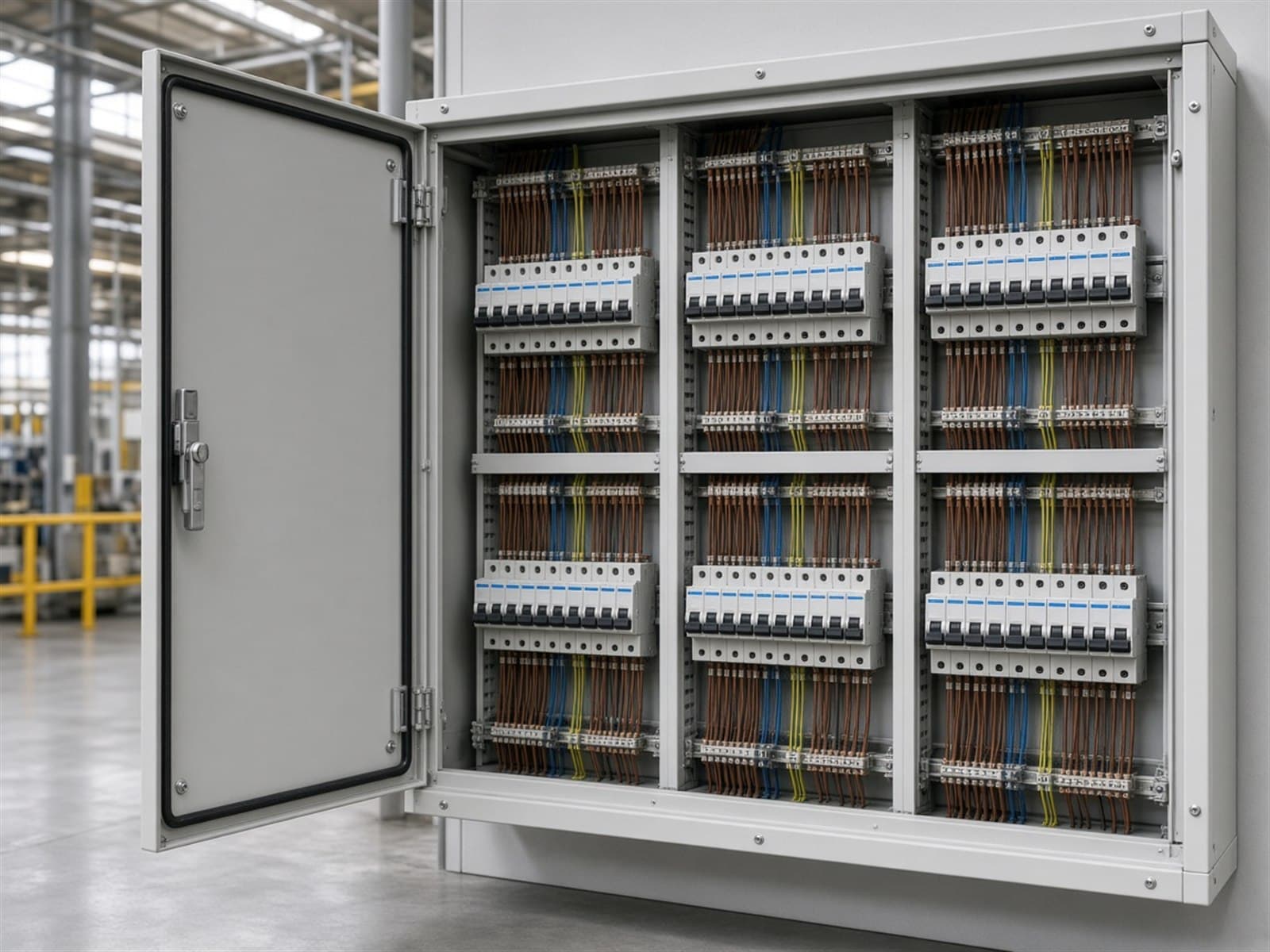
In Mescit's new flat the panel is a flush box in the hall or entrance: a 40 or 63 A main switch on top, two or three 30 mA RCDs below it, and under each RCD the B10 lighting, C16 socket, C20 or C25 oven, C16 washer and dishwasher, C16 combi and C20 air-conditioner breakers. The groups are set in the design: wet-room sockets, washer and dishwasher on one RCD; living-room and bedroom sockets with lighting on the other; the kitchen oven and the air conditioner sometimes on a third. Each RCD has its own neutral bar, and only the neutrals of the circuits under that RCD may use it; the two bars must not touch, must not be bridged and must not be mixed. The fault sits exactly here. On site the panel fitter wires a hundred flats' panels in the same days; the blue conductors arrive in a bundle, and which belongs to which circuit is often read from a guess, not a label. When one blue conductor is pressed into the wrong bar nothing heats up, no spark appears, the lamp lights, the socket works. Because the power does not fail, the contractor's electrician does not see the fault either. A rarer but more dangerous second fault is the two neutral bars being linked with a bridge wire; then the RCDs trip at random under load, and when one RCD is switched off the other group's neutral still carries a live return path. The new flat's other faults of this kind wait in the same silence: phase and neutral swapped at a socket, a socket's earth conductor left loose inside the box, the bathroom's equipotential bonding forgotten, a breaker's label not matching its real circuit, site terminals tightened by hand rather than with a torque tool, low insulation that appears only when a driver or appliance is connected to an unloaded circuit. None of them puts a lamp out; all of them appear at the first load, the first wet hand or the first fault. To count a new flat as sound because it is new is therefore to accept it without measuring.
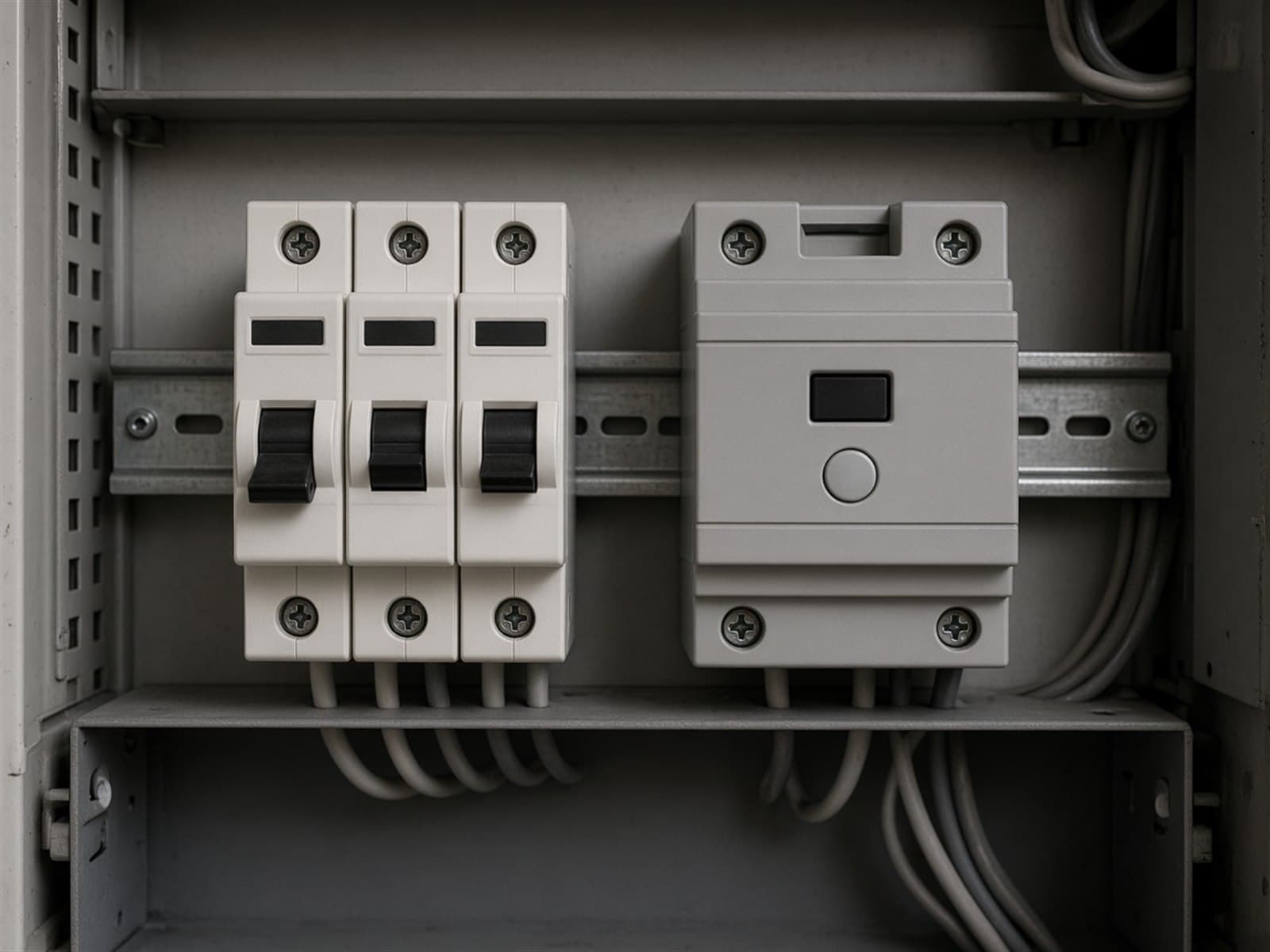
The survey starts at the panel and every step is written down. First the panel cover is opened and compared with the design or the labels: main switch rating, number of RCDs, each RCD's rated residual current and type, breaker curves and ratings, which circuit sits under which RCD. With a two-pole tester the phase–neutral, phase–PE and neutral–PE voltages are read; more than a few volts between neutral and PE under load says the incoming neutral or the earth is weak. Then the flat is walked: a simple socket tester goes into every socket first, and phase–neutral swaps and broken earths are caught here; but a socket tester does not reliably show a neutral–earth swap, so at a suspect socket voltage and PE continuity are measured separately with the two-pole tester. PE continuity is confirmed with a low-resistance measurement between the earth bar in the panel and the earth pin of every socket; in a new flat this is expected below one ohm, and an earth conductor left loose reads infinite. The RCD is tested with a tester, not with its button: trip time at rated residual current must be under three hundred milliseconds for a general-type RCD and under forty milliseconds at five times rated current; in a ramp test the trip current should read between fifteen and thirty milliamps. That the RCD does not trip at half rated current is also recorded. Loop impedance is measured at the farthest socket of each RCD group; the value shows that the circuit's breaker will open in time on a short circuit and in a new flat is usually below one ohm. Insulation is measured at 500 V DC between phase–PE, neutral–PE and phase–neutral with no appliance plugged in and the LED drivers disconnected; the threshold is one megohm but a new installation is expected in the hundreds of megohms, and a single-digit value means a crushed cable or a wet box. In the bathroom the equipotential bonding of the water pipe, the radiator and the metal parts of the shower tray is confirmed by eye and by measurement. Finally every terminal in the panel is checked at the torque the maker specifies; a site terminal is usually either loose or over-tightened and both are the first year's hot spot.
A crossed neutral is found in two ways and both are written down. The first is live and quick: the leakage clamp is closed around each RCD's own phase and neutral conductors together. In a correctly wired group the outgoing and returning currents cancel and the clamp reads a few milliamps near zero. Then the circuits in the flat are loaded in turn: a known load, say a heater, is plugged into the washing-machine socket. The moment the faulty circuit is loaded the clamp readings on both RCDs jump at once to the load current, say the full ten amps; RCD A sends the current, RCD B takes it back. With a note of which circuit was loaded at which socket, the owner of the crossed neutral is found. The second way is dead and conclusive: the main switch is opened, dead is proved with the two-pole tester, the blue conductors on RCD B's neutral bar are removed one by one, and continuity is measured between each conductor's end and the phase–neutral shorted by a shorting plug at that circuit's socket. A blue conductor that gives continuity with the phase of a breaker under RCD A is on the wrong bar. All bars are mapped this way; every blue conductor gets a numbering ferrule carrying its breaker's circuit number, so the breaker order and the terminal order on the neutral bar match one to one; the neutrals are moved to their own bar. Once the bars are separated, with the RCDs and all neutrals still disconnected, insulation is measured at 500 V DC between each neutral bar and the main PE bar and between the two neutral bars: if a low resistance remains between the two bars or between a bar and PE even though the bridge in the panel is gone, the fault is not in the panel but in a cable crushed inside a conduit or a junction box where neutral and PE touch, and that circuit is traced separately. That there is no bridge between the two bars, and will be none, is also written. The other defects found in the same session each get their own line: the number of the socket with reversed polarity, the socket with a loose PE end, the RCD that exceeds the trip-time limit on the tester or trips above fifty milliamps on the ramp, loop impedance above one ohm, a circuit reading low insulation, a breaker not matching its label, a terminal that does not hold torque, a bathroom with missing equipotential bonding. Each line carries the measured value, the place of measurement, the instrument used and a photograph. The list is given to the owner and, at the owner's request, to the contractor and the building-inspection or supervising firm; in the warranty period after handover the correction is the contractor's obligation and the written list is the record of that obligation. A finding that directly threatens life does not wait: a live metal body, a wet-room socket with no PE or neutral bars bridged together are de-energised and tagged on the spot; that is not a repair, it is cutting off the danger. If the contractor will not make the correction or the owner does not want to wait, the work is delivered with the same measurements: neutrals moved, terminals torqued, the loose PE connected, the reversed socket corrected, and the RCD re-measured with the tester, the sockets with polarity and continuity, the circuit with insulation, so that before and after sit side by side in one report. The work on this page is the customer side after the meter; the meter panel, the riser and the building's main distribution belong to the estate management and the distribution company.
Most likely not. Two RCDs dropping at the same moment and only while one particular appliance runs shows that circuit's neutral is connected to the other RCD group's bar. It is an installation fault; it is found with a leakage clamp and continuity measurement, written down, and the neutral is moved to its own bar.
The RCD is working correctly; it is reporting an imbalance in the installation. A new RCD sees the same imbalance. The cure is not to change the RCD but to map the neutral bars and bring the crossed neutral back to its own group.
The test button only exercises the RCD's own internal circuit; it does not test the installation, the neutral bars, polarity or earth. An acceptance check is trip time and trip current with a tester, polarity and PE continuity at every socket, loop impedance and insulation measurement.
The owner arranges it; ideally the measuring is done before the key handover day, before furniture goes in. Measurement, mapping and the photographed list in one flat take a few hours; the survey fee is stated on the call and a binding figure is written on site.
In the warranty period the correction is the contractor's obligation; the written defect list is its record. A finding that endangers life is de-energised immediately. If the owner does not want to wait, the correction is done with the same measurements and before–after is written in one report.
The green light says the phase–neutral order is right and the earth is connected to something; it does not reliably show a neutral–earth swap or the earth resistance. Earth is confirmed with a sub-one-ohm continuity measurement between the panel bar and the socket.
I do not invent minutes. Calls are queued across Tuzla, Pendik, Kartal and Maltepe; the arrival time is given on the phone. An acceptance check is planned by appointment.
With dispatch coordinated from our Pendik hub and GPS-tracked vans patrolling the main Tuzla corridors, average arrival in Mescit is no fixed minutes. When the technician departs, their name, vehicle plate and a live tracking link are sent by SMS or WhatsApp. We do not promise an undeliverable time; if we are busy the next shift is stated plainly.
The survey fee is stated clearly on the call, with no surprises. The binding price is written only after on-site measurement: no figure is given before the clamp current, terminal temperature and insulation resistance have been seen. No work starts without approval. The brand and model of switchgear fitted, the measured values and the labour charge go onto a signed service report, and parts and labour carry an official 1 year guarantee.
Mescit, Tuzla. The map is centered on the neighborhood. Arrival changes with the hour and the traffic.