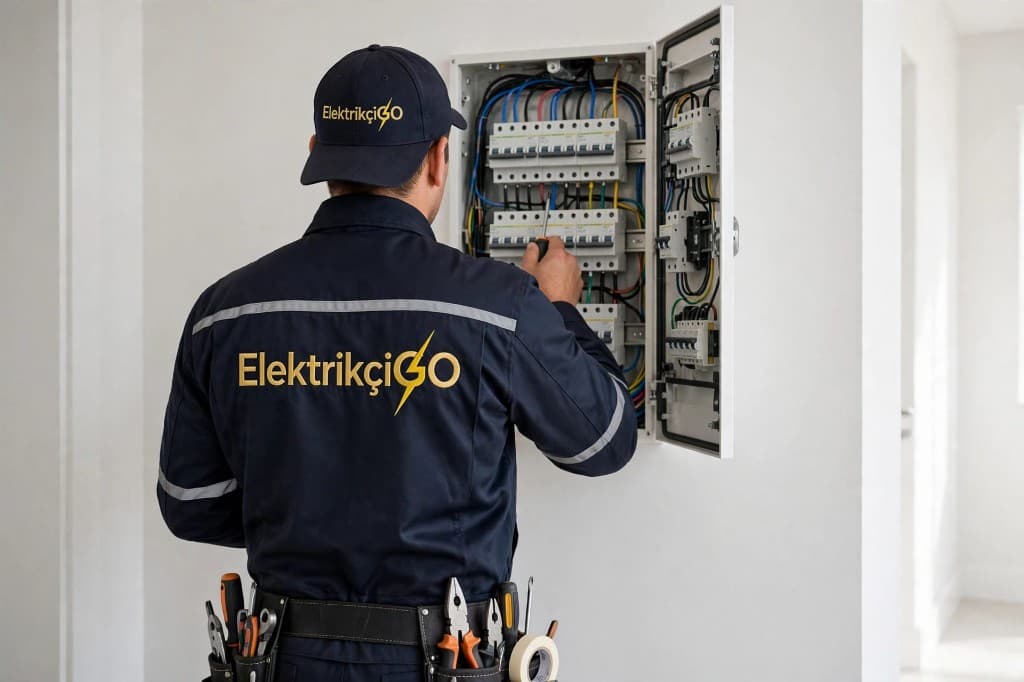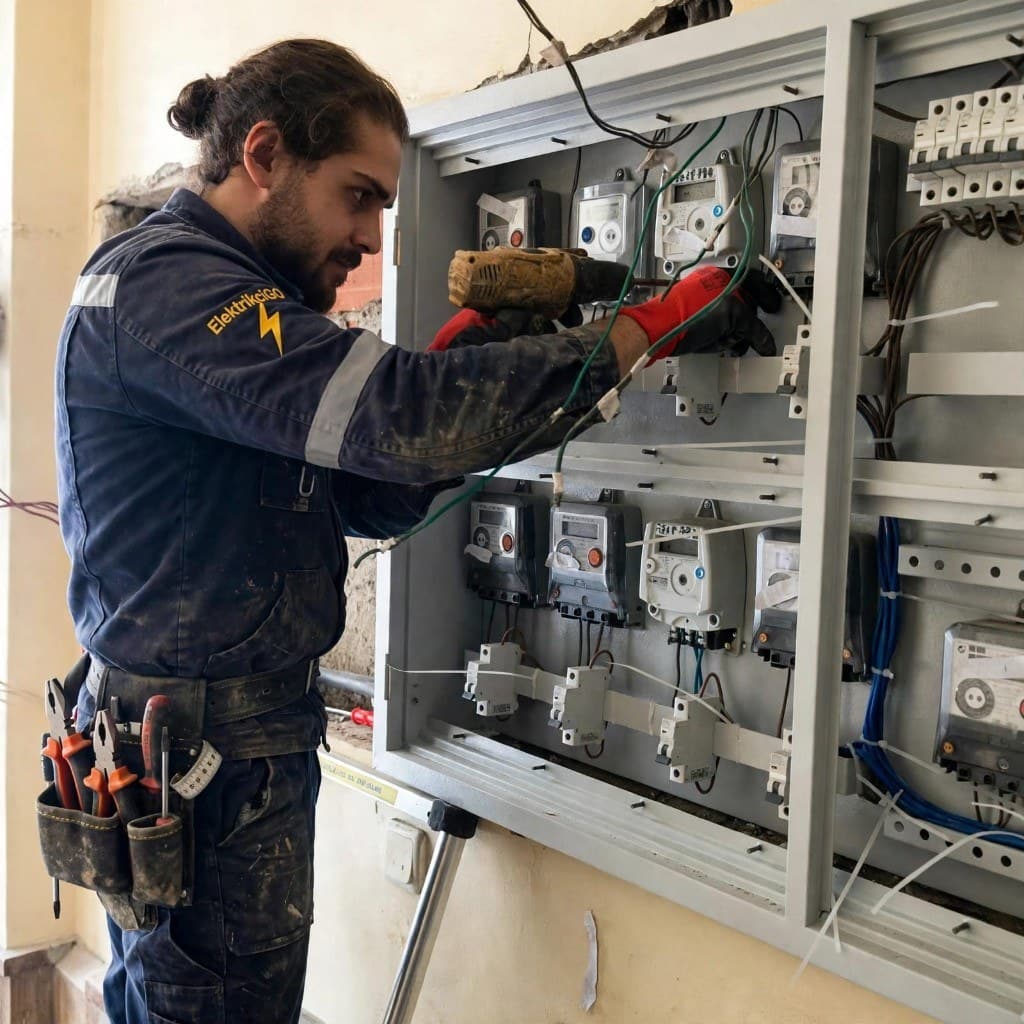
Founding master
Adnan Şemiye18 years in the field
MYK-certified master
Adnan Şemiye reads this job in the field. The price is written before work starts.
Tuzla district
İçmeler 24/7 emergency electrician. In this Tuzla neighbourhood we respond without a minute promise to midnight breaker tripping, residual current device faults, burnt sockets and consumer unit failures. In apartment and complex stock, saturated kitchen circuits, bathroom water heater runs and riser overheating are measured on site. Certified technicians, faults proven with a True-RMS clamp meter and a megohmmeter, written price approval and an official 1 year workmanship guarantee.
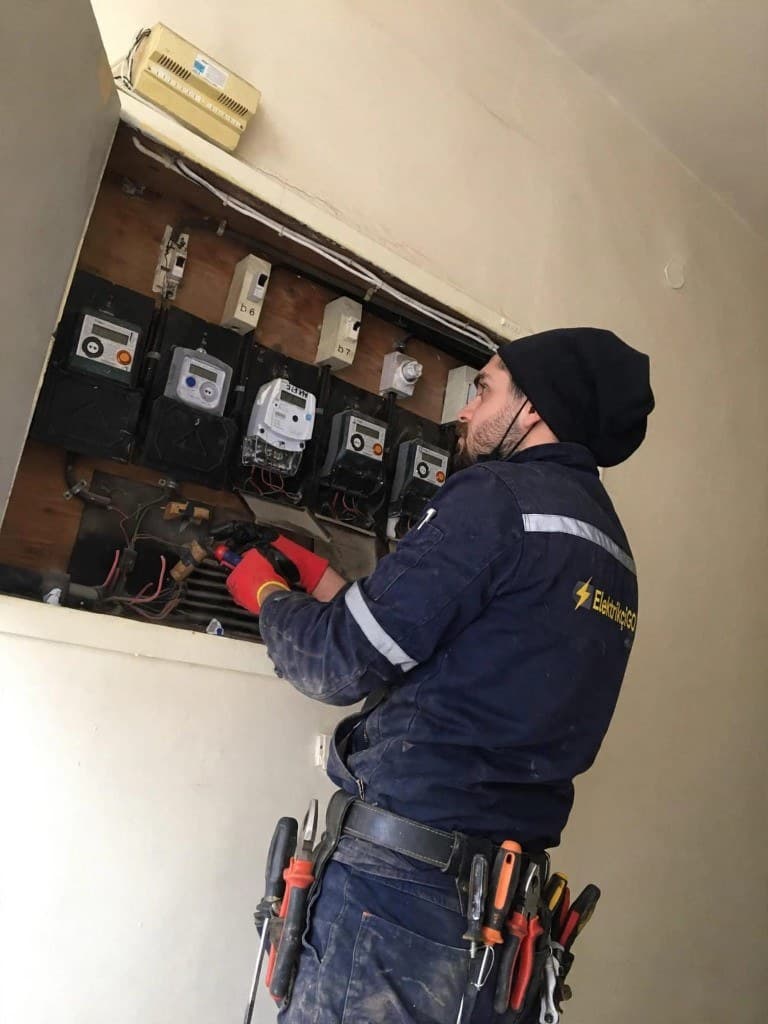
Founding master
Adnan Şemiye18 years in the field
MYK-certified master
Adnan Şemiye reads this job in the field. The price is written before work starts.
From the field
 Emergency van · +90 582 403 10 87
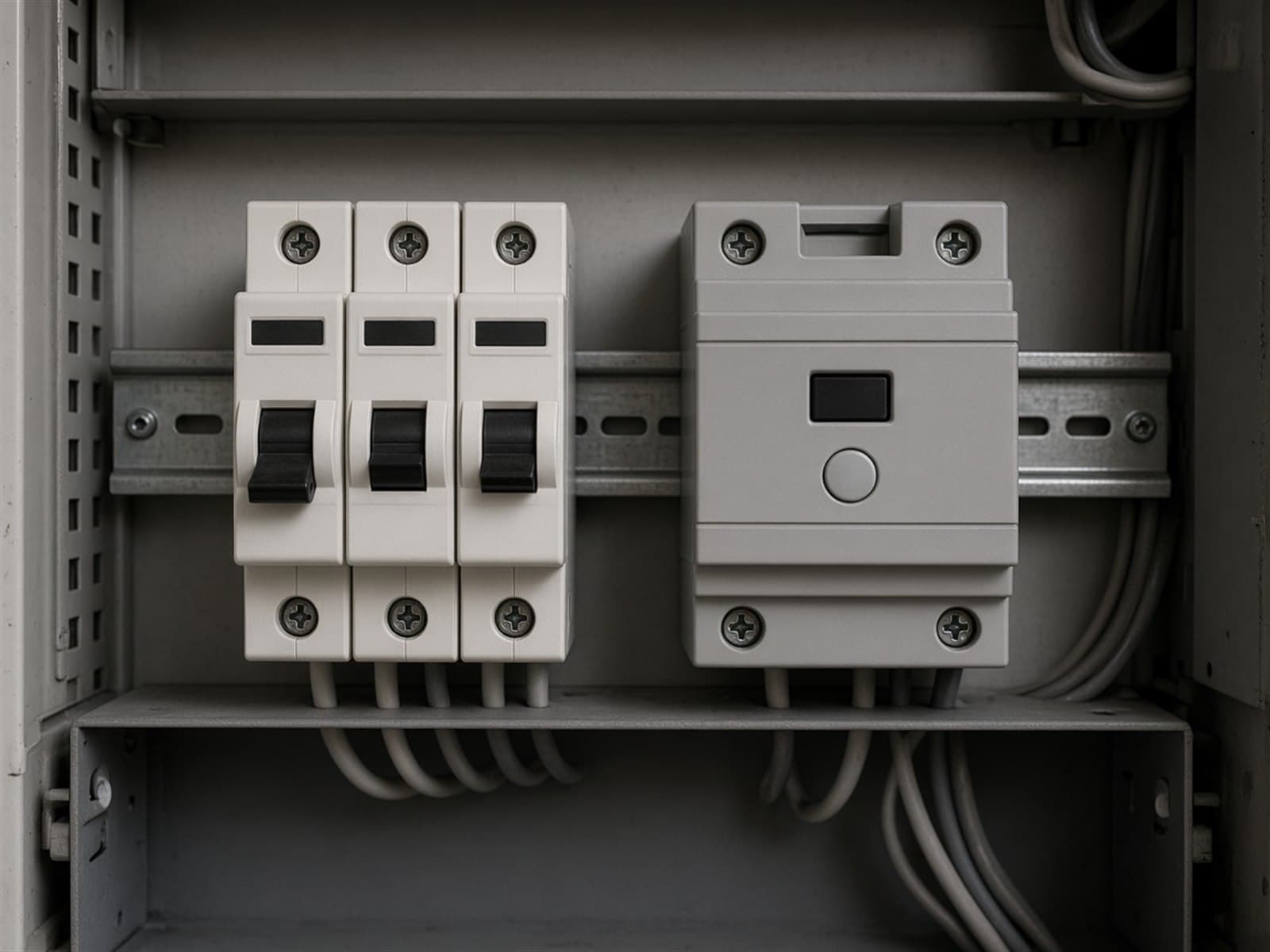
This call from İçmeler usually starts at a change of season: 'We switched the kombi off and started running the towel rail on electricity. In the morning when we press its switch the RCD trips and the whole flat goes dark. When we reset the RCD and press again it sometimes trips again, and on the third try it holds. Once it has warmed up there is no problem all day.' Sometimes the description is a little different: 'The towel rail had always worked since we had the bathroom done. Last month the kombi was serviced; they drained and refilled the system, and since that day the RCD trips when we switch the rail on.' Every part of this description says something. The RCD tripping only when the towel rail is switched on shows the leak is in that appliance or the line feeding it. Tripping cold and holding once warm points to insulation that changes with moisture; this behaviour is the known signature of heating elements. Its starting after a kombi service or after the system was drained suggests the element may have run for a while out of the water, dry. The first step is to switch the towel rail off, reset the RCD only with the appliance disconnected, and not bridge the RCD so it holds or carry on testing by plugging the rail into another socket. No testing is done in a wet room, with wet hands and with an appliance whose leak is unknown.
A towel-rail element consists of a heating wire running through the middle of a metal sheath. The gap between wire and sheath is filled with compacted magnesium-oxide powder; this powder conducts heat well but does not conduct electricity. The sheath is connected to the rail's body and to the appliance's PE conductor. The element is sized to give its heat to the water or fluid around it. In a rail on the heating circuit with an element fitted later, the element sits in the circuit's water. When the system is drained for a kombi service, when the circuit's pressure falls over time or when air is left in the upper part of the rail, part of the element can end up out of the water. The part out of the water cannot give off its heat, and the sheath temperature rises far above its design value. This overheating can crack the sheath at once, or it speeds up fatigue and corrosion of the metal with every cycle. Heating water passes through different metals; the kombi's heat exchanger, copper or steel pipes, aluminium or steel radiators and the stainless element sheath all share the same water. Over time pinhole-sized corrosion points can open in the sheath. When the sheath is pierced, water or water vapour reaches the magnesium-oxide filling. Magnesium oxide is a hygroscopic material; as it gets damp its insulation resistance falls and a small leakage path forms between the heating wire and the sheath.
The behaviour of this leakage path explains the complaint. When the element is cold and has been off for a long time, the filling is at its dampest; the moment the switch is pressed the leakage can exceed the RCD's threshold and the 30 mA RCD trips. Over a few attempts the element warms a little, some of the moisture evaporates, the leakage falls below the threshold and the RCD holds. As the element runs through the day and dries out, the leakage falls further. When it is switched off and cools overnight, the filling draws in moisture again and the next morning the same cycle repeats. As the hole in the sheath grows this window closes and the RCD starts tripping on every attempt. Throughout this process the RCD is doing its job. The danger is in the bathroom where protection is missing. If the rail's plug is in an unearthed socket, if the socket's PE contact is not connected or if the bathroom line is not under an RCD, the leakage current has no path back to earth through PE. Then the sheath, the rail's body and the heating water in the circuit can rise to a dangerous touch voltage, and that voltage becomes a current only when someone with wet hands touches the rail and another earthed metal part at the same time. That is why the rail's own supply arrangement is part of the fault too. A plug pushed into a socket in the wet room, right beside the rail and open to splashing water, both breaks the zone rules and leaves PE continuity to a plug contact.
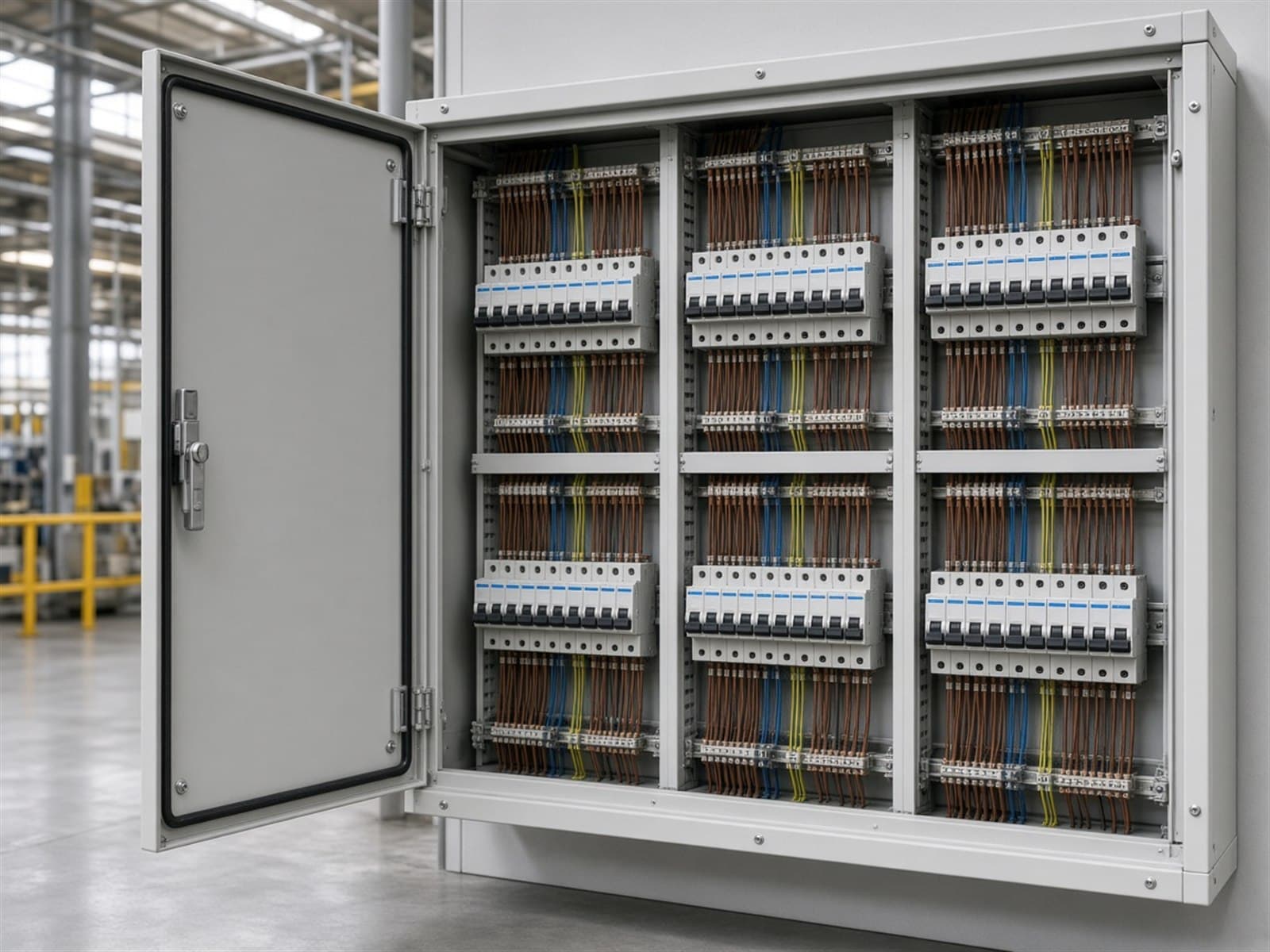
The survey starts at the panel: which breaker and which RCD feed the bathroom line, the RCD's type and which other lines sit under the same RCD are read. The RCD is proven to work with its test button. Then the rail's supply arrangement is checked: is it on a plug or fixed; if on a plug, where in the bathroom is the socket, how far from the bath or shower, is the socket's PE contact connected. After the line is switched off and dead is proven by measurement, the key separation is made: the element is disconnected from the supply line and measured on its own. With a megger at 500 V DC, the insulation resistance is read with the element's phase and neutral ends joined, against the sheath, that is, the PE end. In a sound element this value is very high; a low value shows the leak is inside the element. The measurement is made with the element cold, because the leak shows most then. Next the element's own resistance is measured and checked against the power on its label. The supply line is measured separately too: with the element removed, the line's phase–PE and neutral–PE insulation, the back of the socket or connection point, moisture and corrosion in the junction box. Finally the continuity of the protective conductor from the rail body to the panel's PE bar is measured. This order separates whether the leak is in the element or the line; the element or the RCD is not replaced on a guess.
If the leak is in the element, the element is not repaired but replaced. Drying the moisture out of an element with a pierced sheath gives temporary relief; as long as the hole stays open the moisture returns. Replacement is both an electrical and a plumbing job and the two sides are planned together: if the rail is on the heating circuit its valves are closed, the rail is drained to below the element and the old element is removed. The new element's thread size, length and power are chosen from the rail manufacturer's table; a high-power element is not fitted in a small rail. If the element has its own thermostat or over-temperature protection, it is proven to work. The element is fitted with its seal, the rail is filled and bled, and the circuit pressure is brought to the value the kombi requires. Only then is the element energised; a single test in a dry rail can send the new element down the same path. In rails on the heating circuit, both valves are not left closed while the element runs, because the heated water has nowhere to expand; this setting is made together with the plumber. When a kombi service or system drain is needed, the person doing it is told the rail has an element, and the element is kept off for that period.
If the element's sheath is pierced, the magnesium oxide inside draws in moisture and the leakage is highest when cold. As the element warms the moisture evaporates and the leakage falls below the RCD's threshold. It is a sign the element needs replacing.
No. If the RCD trips, the protection is working. If it is bridged, the leak sits on the rail's body and in the heating water; in a wet room that means a risk of shock.
Most often because it ran dry, out of the water. When the system is drained, pressure drops or air is left in the rail, the element cannot give off its heat and its sheath overheats. Over time corrosion can also pierce the sheath.
It should not. The element is fed from the bathroom line by a fixed connection; a double-pole switch cutting phase and neutral together is placed outside the bath and shower zones. The element head is at least IPX4.
Replacement is both an electrical and a plumbing job. The rail is drained, the right element fitted, the rail filled and bled, and only then is the element energised. The appliance is not put into use without insulation and PE measurements.
There is no fixed minute. Istanbul 24/7. Arrival depends on the queue at that moment and E-5 and TEM traffic. A 30-minute claim is not invented.
We have no fixed shop; ElektrikçiGO is a mobile, service-area team working on site across Tuzla. The call lands on the phone, an appointment is set and the technician comes to your address. When they depart, their name, vehicle plate and a live tracking link are shared so you know in advance who is at your door. The survey is done on site and the binding figure written after measurement.
Yes. Parts fitted carry the manufacturer's warranty and the workmanship an official 1 year ElektrikçiGO guarantee. On completion the brand and model of switchgear used, the measured insulation and earth resistance values and the trip time of the 30 mA device are written onto a signed service report and handed to the customer. A copy is kept on file so values can be compared at the next inspection.
Service covers the neighborhoods of Istanbul's 39 districts. Not the whole of Turkey. A survey is not a binding quote.
İçmeler, Tuzla. The map is centered on the neighborhood. Arrival changes with the hour and the traffic.