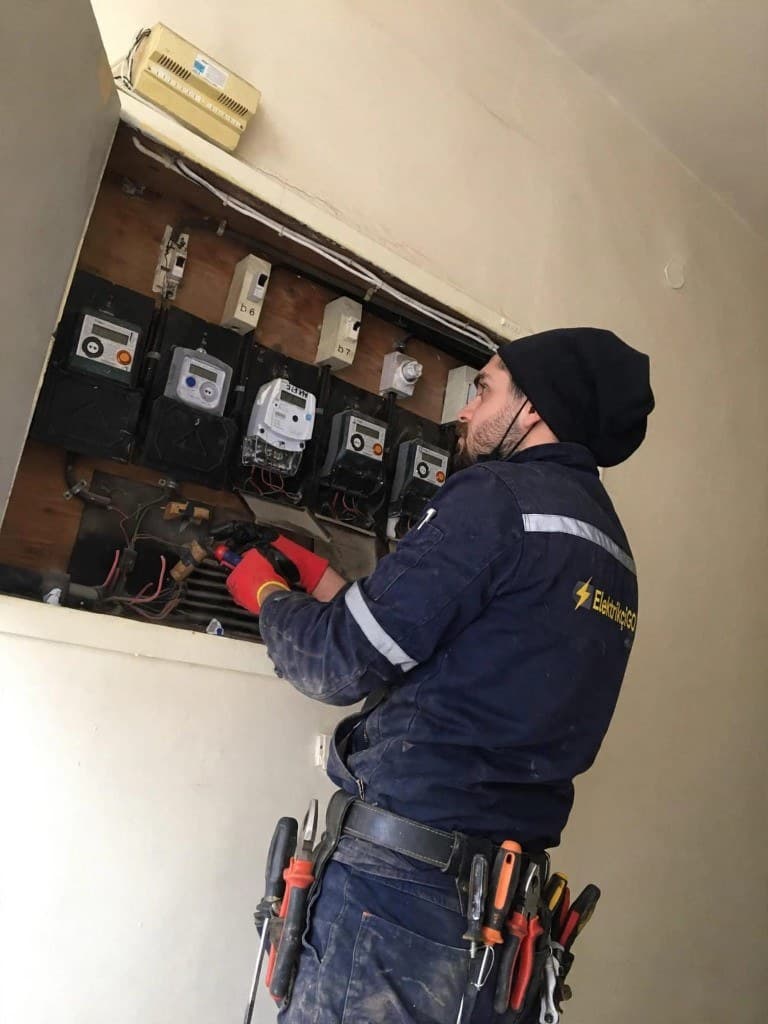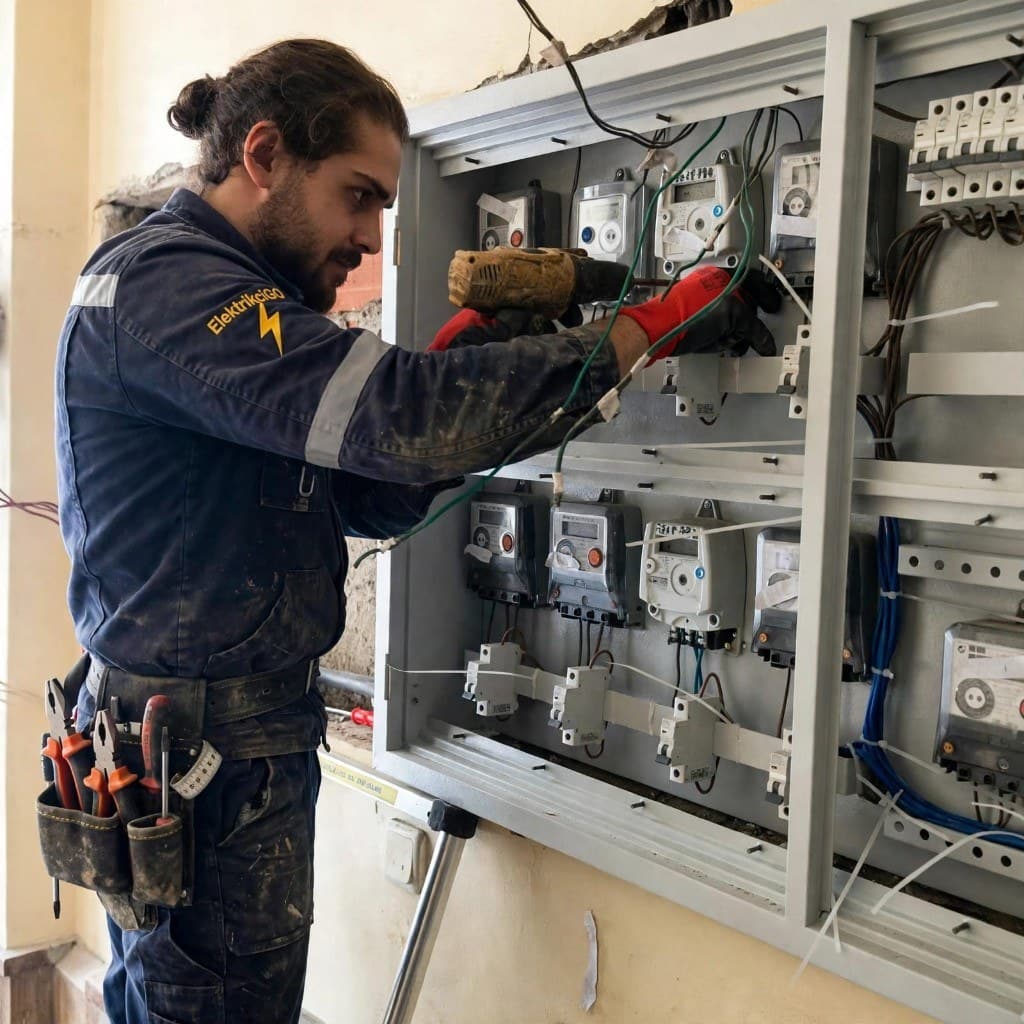
Founding master
Adnan Şemiye18 years in the field
MYK-certified master
Adnan Şemiye reads this job in the field. The price is written before work starts.
Sultanbeyli district
Battalgazi 24/7 emergency electrician. In this Sultanbeyli neighbourhood we respond without a minute promise to midnight breaker tripping, residual current device faults, burnt sockets and consumer unit failures. In apartment and complex stock, saturated kitchen circuits, bathroom water heater runs and riser overheating are measured on site. Certified technicians, faults proven with a True-RMS clamp meter and a megohmmeter, written price approval and an official 1 year workmanship guarantee.
Founding master
Adnan Şemiye18 years in the field
MYK-certified master
Adnan Şemiye reads this job in the field. The price is written before work starts.
From the field
 Emergency van · +90 582 403 10 87
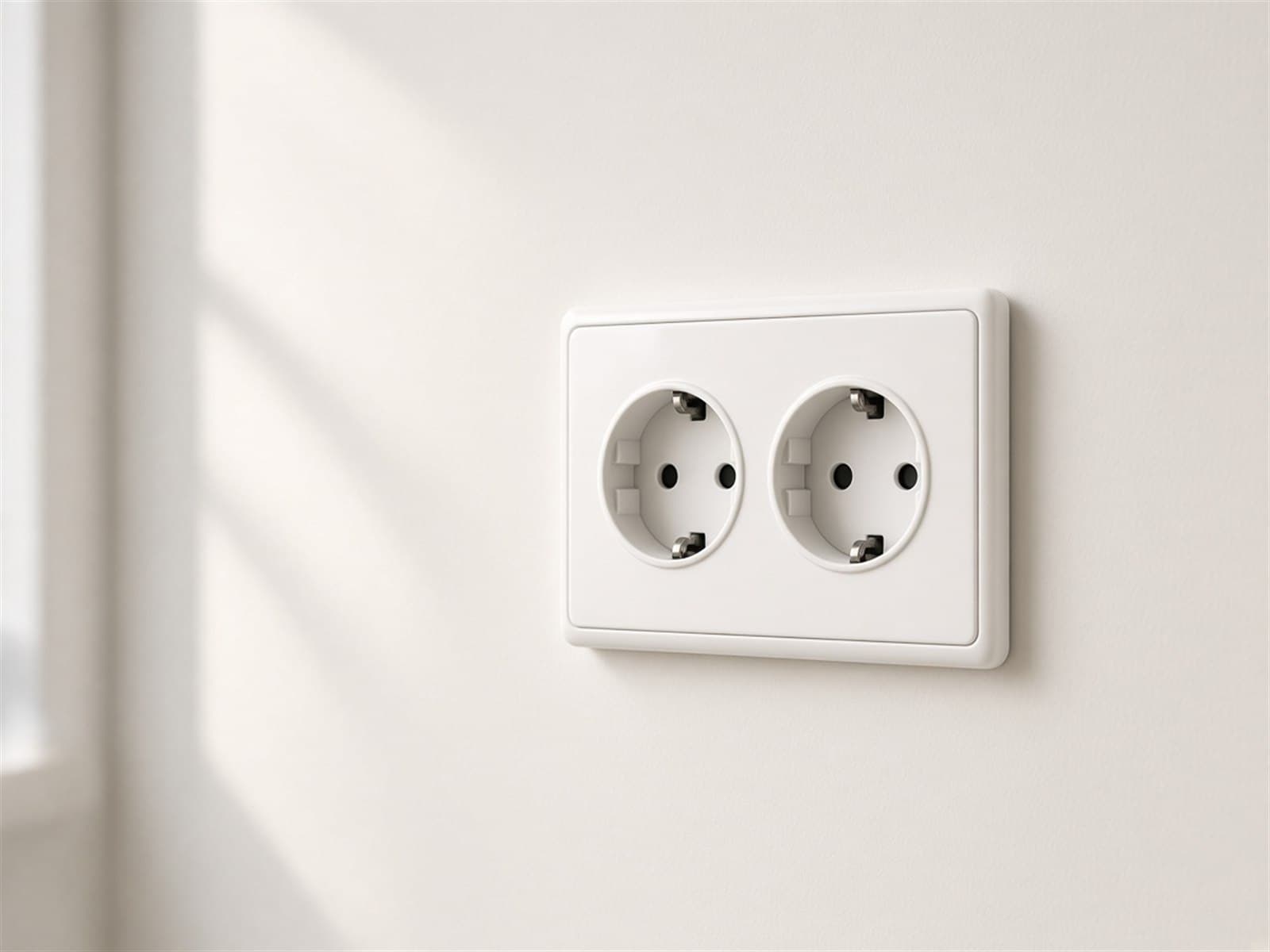
This call from Battalgazi usually comes from a tenant and belongs to winter: 'We live in the semi-basement, the back wall faces the soil. Two or three days after it rains the RCD trips towards dawn; we reset it, sometimes it trips again the same night. At the foot of the back room's wall the paint has blistered, there is a white layer of salt, the edge of the socket cover has gone green. When we touch the fridge door there is a slight tingle. In summer nothing happens.' There are three separate clues in this description and all three point to the same place. The first is the season: the fault comes with rain, disappears in a dry week and is absent in summer; the tripping towards dawn is no coincidence, relative humidity is highest in the coldest hour of the night and condensation on the cold wall surface adds to the capillary damp. The second is the place: the salt bloom, the blistering paint and the greening socket are all on the same wall, the one against the soil; the sockets on the interior partitions show none of this. The third is the RCD's behaviour: it trips not when an appliance starts but at no load and at a fixed hour; that is not a load-current fault but a leakage from the installation itself to earth. The tingling is a separate warning. If the fridge is plugged into a socket on that wall and the socket's protective conductor is either not connected or a leakage path has formed between phase and protective conductor in the damp box, the appliance body carries a small voltage; if the RCD does not trip, either there is no RCD in the flat's panel or that group, like lighting, sits outside it. The first step is therefore clear: the sockets on the soil-side wall are not used, no load is put on them through an extension lead, the RCD is not reset again and again on the idea that 'maybe it has passed', the fridge is moved to a socket on an interior wall and a survey is requested. Replacing the RCD is not the cure; the RCD worked correctly and reported the leakage in the wet wall. Drying the wall is not the electrician's job either; the source of the damp is outside, and that work belongs to the waterproofer and the building owner.
In Battalgazi's sloped streets a building enters the street at ground level on one facade and a metre and a half to two metres below the soil on the back. That back wall is usually an uninsulated retaining or block wall; outside it there is no membrane, no drain pipe and no gravel fill, the garden soil rests directly against the wall. Rainwater saturates the soil, the wall absorbs the water and the water climbs by capillary pull through the pores of brick and plaster. The rising water is not only water; it carries the soil's sulphate and nitrate salts. As the water evaporates from the inner face the salts stay behind, bloom white on the plaster, and these salts are hygroscopic: even when the wall looks dry they hold moisture from the air and make the plaster conductive. This band, thirty to a hundred centimetres above the floor, is exactly the height at which flush socket boxes are set. Inside the box the phase, neutral and protective conductor enter terminals a few centimetres apart; the socket's brass springs and screws are in the same box. Wet plaster and salt work in from the back of the box and the conduit mouth; they build a high-resistance but continuous leakage path between the phase terminal and the protective conductor or the metal box. That path means a few milliamps of leakage, and when the leakage of several sockets adds up it reaches the threshold of the 30 mA RCD; the RCD trips towards dawn when the damp is highest. The same damp oxidises brass: green copper oxide spoils the spring's elasticity, the contact area with the plug shrinks, contact resistance rises and under a continuous load such as a fridge or a heater the socket heats, the plastic darkens, and the sour smell is that smell. On the cable side things are quieter: PVC insulation withstands water, but the copper core greens inward from the terminal end in the damp box, creeps under the sheath by capillary action and the cross-section shrinks. If the flat has no RCD the end of this chain is different: the leakage warns nobody, appliances with conductive bodies discharge not through the protective conductor but through the hand that touches them, and that is the tingling. If the flat has an RCD but groups such as lighting sit outside it, a switch or a wall light on the wet wall carries the same danger. That is why a damp wall is not a paint problem but an installation problem, and it does not get better unless the damp is dried or the installation is taken off that wall. Anti-damp paint, a water repellent applied to the inner face or a dehumidifier in the room does not change the water inside the wall; the capillary rise continues until it is cut from outside.

The survey starts at the wall, not the panel, because the map of the fault is the map of the wall. The moisture meter is read on the soil-side wall at ten, thirty, sixty and a hundred centimetres above the floor and at one-metre spacing; the same readings are repeated on the interior partition opposite. A profile that is high low down on the soil-side wall and falls as it climbs, against a flat and low reading on the interior wall, says the source of the damp is the soil outside; if the profile is also high up top or rises towards the ceiling the job changes, there is then a leak from above and that is a different note. A thermal camera makes the cold wet zone visible to the eye; wet plaster is a few degrees colder than its surroundings because of evaporation, and whether the socket boxes sit inside that cold patch is read in one frame. Then the sockets are mapped: every socket, switch and wall light in the flat is written down with its wall and its height above the floor; those on the soil-side wall are marked separately. At the panel the RCD and breakers are read; is there an RCD, which groups sit under it, is lighting outside it. Measurement begins after the main switch is off and dead has been proved with a two-pole tester. First circuit by circuit: each circuit's phase and neutral are disconnected from the breaker and the neutral bar, appliances are unplugged, and insulation is measured at 500 V DC phase–PE, neutral–PE and phase–neutral. A dry interior-wall circuit reads hundreds of megohms; the soil-side wall's circuit in the same flat reads a few megohms or even below one megohm, and lower still in a wet week. Then socket by socket: the sockets on the suspect circuit are taken out of their boxes and each box is measured at its own terminals to find which boxes collect the leakage; usually the two or three lowest sockets carry all of it. With the boxes open they are inspected: white salt, green oxide, blackened brass, a damp trace from the conduit mouth, and whether the protective conductor is really connected. At the same time the owner is shown where the leakage passes: one probe of the meter is touched to the wet, salty mortar behind the box and the other to the phase terminal, and the surface leakage resistance is read; a value of a few hundred kilohms or lower shows to the eye that the fault comes not from a breakdown of the cable's insulation but from salted mortar turning conductive with moisture and giving a path to the body. If a dry-week and a wet-week measurement can be put side by side they are; the difference between the two values is the indisputable record of the damp's effect on the installation and is given to the building owner in writing. At the end of the survey two lists emerge: the sockets in the wet band to be abandoned, and the sockets on sound walls to stay.
The repair has one principle: the installation leaves the wet band, the wet band does not leave the installation. The low sockets on the soil-side wall are abandoned; the conductors are not left loose in the box but removed from the panel or the nearest dry junction box; an end that cannot be removed is cut back one by one and capped with heat-shrink sleeving, and the box's conduit mouth is sealed damp-tight with duct sealant so that the wall's moisture does not travel by capillary action through the conduit to the panel or the other boxes; the empty box is closed with a lid and the lid is marked 'disused'. Fitting a new socket into the wet box, filling the box with silicone or seating an IP44 socket in the same wet box as a 'damp-location socket' is no cure; the damp comes from behind the box and from the conduit mouth, and a lid in front of the socket does not stop it. The new circuit runs above the wet band: halogen-free, flame-retardant surface trunking or conduit at least a hundred and twenty centimetres above the floor, higher according to the damp profile; the trunking is fixed from the dry upper part of the wall rather than with plugs that will not hold in its wet part, with the shallowest possible holes or with no drilling at all using MS-polymer mounting adhesive; a deep hole in a retaining wall means piercing whatever damp barrier exists outside. The cable is 3×2.5 mm² NYM, or 3×2.5 mm² H07Z1-U in halogen-free conduit; the protective conductor comes from the panel with the new circuit and is not borrowed from the old wet box. The sockets are surface-mounted, lidded, IP44; the lid is against dust and splashing drops, not against capillary damp, which is why the socket's position matters more than its lid. Connections are made with spring terminals and ferrules; a stranded conductor crushed under a screw is the first connection to loosen and the first to oxidise in a damp environment. The wet-wall group gets its own 30 mA RCBO in the panel, so that a leakage that may develop again on this wall in future drops only that group and does not black out the flat's lighting and the other rooms. The fridge and, if there is one, the chest freezer get their own line and their own RCBO; a fridge left dead all night because of the damp wall's leakage is a week of that family's food. The sound sockets on the interior walls stay, but the protective-conductor continuity and sub-one-ohm resistance of every one is measured and written down. If the flat has no RCD at all, a main 30 mA RCD or group RCBOs are added at the panel; the RCD does not dry the damp wall but it protects the hand that touches it. As the work ends every new circuit is measured again at 500 V DC, the RCD and RCBOs are tested with a tester for trip time and current, the abandoned boxes are photographed and put into the written report together with the dry–wet values from the survey. The last line of the report is always the same: the source of the damp is outside, exterior membrane, drainage and capillary-break injection are the waterproofer's job; the installation has been taken off that wall, and no new socket is opened on that wall until it has dried.
Damp rising by capillary action from the wall against the soil wets the socket boxes at skirting height and builds a leakage path between phase and protective conductor. In the coldest hour of the night the damp is highest and the leakage passes the threshold. In summer the wall dries, the leakage falls and the fault vanishes, but the salts stay in the box.
Yes. Either there is no RCD in the flat or that socket's protective conductor is not connected; the voltage on the body flows through the hand that touches it instead of the protective conductor. Move the fridge to a socket on an interior wall, do not use that socket and ask for a survey. Adding an RCD and measuring PE continuity is the first job.
No. An IP44 lid is against dust and splashing drops; the damp comes from behind the box and the conduit mouth. The box in the wet band is abandoned and closed; the new circuit runs above the band in halogen-free surface trunking and the IP44 surface socket is fitted there.
No. Neither changes the water and salt inside the wall; the capillary rise continues until it is cut from outside with a membrane, drainage or capillary-break injection. That work belongs to the waterproofer and the building owner. The electrician's job is to take the installation off that wall.
Whoever asks for the survey calls; the dry–wet measured values and the photographed report are given in writing to both tenant and building owner. The electrician does not decide the split. A finding that endangers life does not wait; it is de-energised and tagged immediately.
I do not invent minutes. Calls are queued across Sultanbeyli, Pendik, Kartal, Maltepe and Tuzla; the arrival time is given on the phone. A damp survey is planned by appointment, preferably in a rainy week.
We have no fixed shop; ElektrikçiGO is a mobile, service-area team working on site across Sultanbeyli. The call lands on the phone, an appointment is set and the technician comes to your address. When they depart, their name, vehicle plate and a live tracking link are shared so you know in advance who is at your door. The survey is done on site and the binding figure written after measurement.
Yes. Parts fitted carry the manufacturer's warranty and the workmanship an official 1 year ElektrikçiGO guarantee. On completion the brand and model of switchgear used, the measured insulation and earth resistance values and the trip time of the 30 mA device are written onto a signed service report and handed to the customer. A copy is kept on file so values can be compared at the next inspection.
Service covers the neighborhoods of Istanbul's 39 districts. Not the whole of Turkey. A survey is not a binding quote.
Battalgazi, Sultanbeyli. The map is centered on the neighborhood. Arrival changes with the hour and the traffic.