Founding master
Adnan Şemiye18 years in the field
MYK-certified master
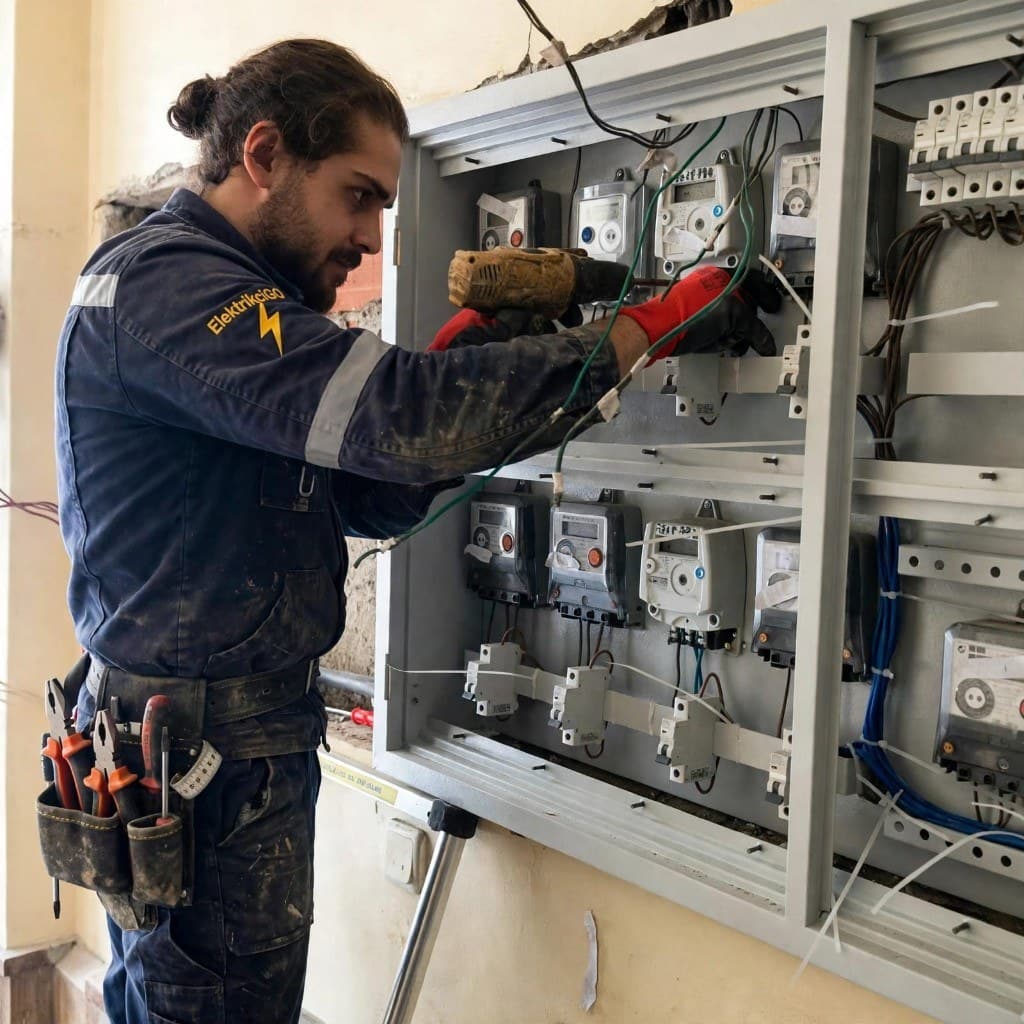
Adnan Şemiye reads this job in the field. The price is written before work starts.
Sultanbeyli district
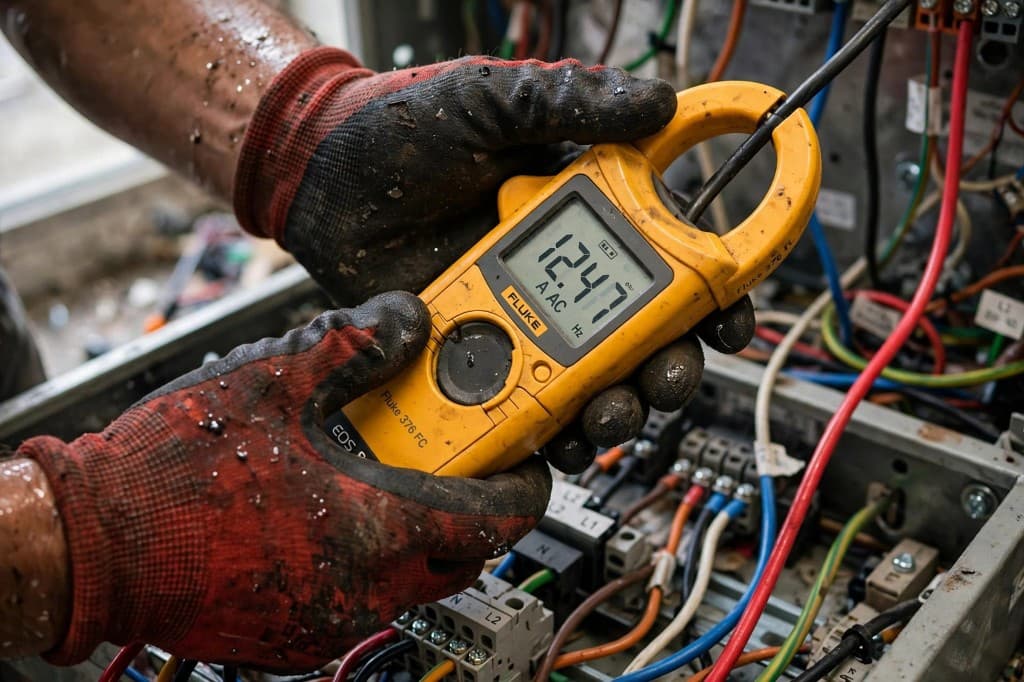
Abdurrahmangazi 24/7 emergency electrician. In this Sultanbeyli neighbourhood we respond without a minute promise to midnight breaker tripping, residual current device faults, burnt sockets and consumer unit failures. In apartment and complex stock, saturated kitchen circuits, bathroom water heater runs and riser overheating are measured on site. Certified technicians, faults proven with a True-RMS clamp meter and a megohmmeter, written price approval and an official 1 year workmanship guarantee.

Founding master
Adnan Şemiye18 years in the field
MYK-certified master
Adnan Şemiye reads this job in the field. The price is written before work starts.
From the field
Emergency van · +90 582 403 10 87
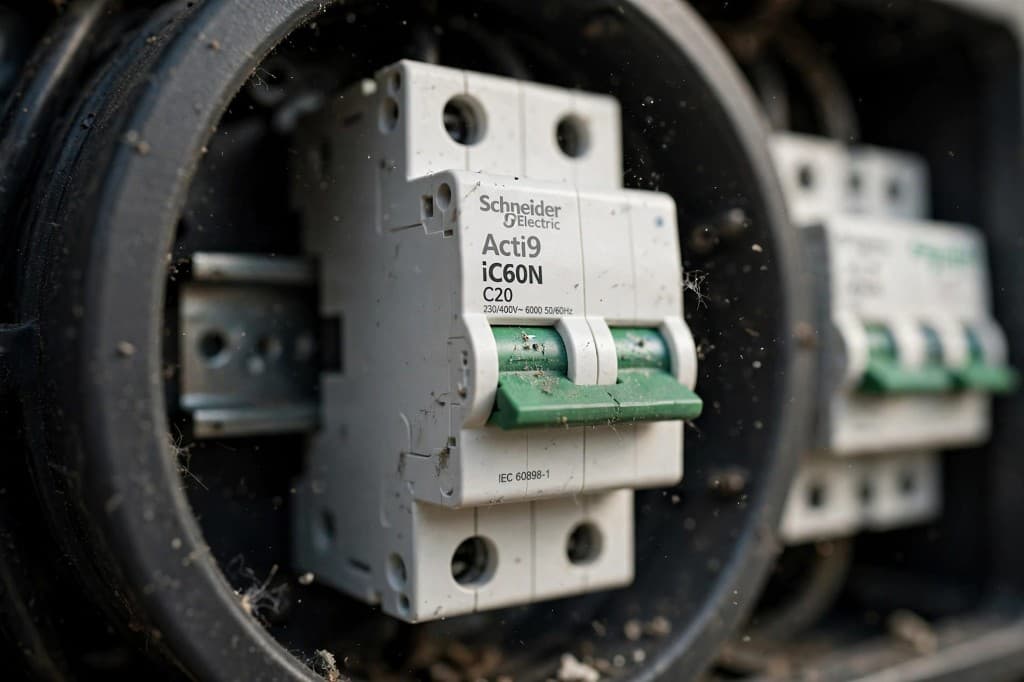
A fuse that drops at the start of the arc is often doing the right job: the section is not enough for the current. Taking it up to 50 amperes heats the wire, turns the insulation brown, and a month later there is a smell. If the electrician sees a brown mark, he writes the mark, not a new fuse. If the mark is at a joint, the joint is renewed, lugged, not taped. If the mark runs along the riser, a section job opens. The welding machine's own fuse stays according to the input current on the machine label. A machine that says 16 A on the label does not get 32 A, because the machine's internal conductor is sized for 16 A. The outside riser is one sum, the internal fuse is another.
Many stick machines strike the arc with high frequency. That strike gives a short leak onto the earth path. The leak crosses the threshold of the house 30 mA device. The device cuts the whole building. The operator bridges the device. The bridge leaves the bathroom upstairs with no protection. The right split: the shop run is not taken from upstream of the building device, it is split at the shop panel with its own device. The building device stays 30 mA for the flats. The shop device is the type the machine maker asks for; the type is not invented, the label is read. The bridge comes off. If the arc still trips after it comes off, the machine's earth leak is real, and the clamp and insulation are written then. A measurement is not taken while the bridge is in place, because the measurement shows the health of the bridge, not of the machine.
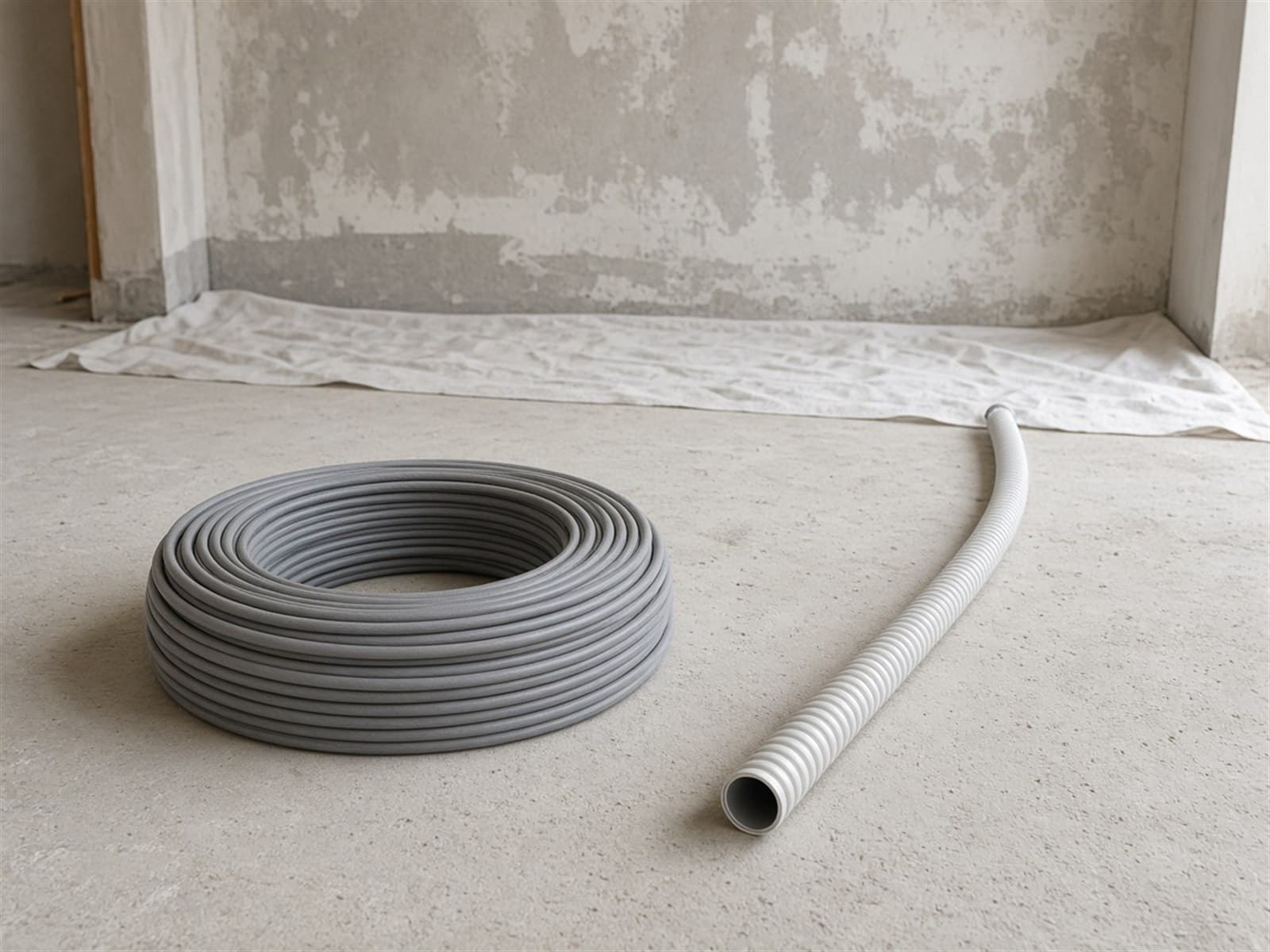
The electrode holder's own cable comes with the machine, it sees oil and spark, and it is H07RN-F class. That cable is not buried in a wall and is not lengthened with a joint. A joint heats in the holder and the hand burns. The riser, in the wall, is NYY, and it ends inside the panel. If the last metre from the panel to the machine is dragged on the floor, it is rubber cable again, not NYM. NYM splits on the floor within a month and iron dust enters the split. NYA is not wrapped onto railing iron and called earth. The machine body sits on the earth bar in the panel, with its own green-yellow. If the body is left floating, the high-frequency strike comes out on the operator's hand.
If the label says 60 percent duty cycle, the machine can weld six minutes in ten. If the operator holds it for the whole ten, input current stays above the label, the fuse heats, and it drops. That is not a riser fault. The electrician reads the cycle to the operator and does not upsize the fuse. If the cycle is being exceeded, either they wait or another machine whose label matches continuous current is talked about. If the rectifier bridge inside the machine has charred from exceeding the cycle, the inside is opened then. The inside is not opened before the cycle is read. A charred bridge is often the result of an upsized fuse, not the cause.
In Abdurrahmangazi, after the weld, the door leaf is cleaned with an angle grinder. If the grinder is plugged into the same extension as the welding machine, both loads sit on the end of the riser at once. The extension is the thin reel from the market, its section is 1.5 millimetres, and it is not for welding. The electrician does not write the reel and leave it, because the reel heats and it sits in iron dust. The grinder wants its own run: its own breaker, its own socket, up off the bench, where the spark does not enter. The welding machine is not plugged into that socket. If the socket lid is broken and full of iron dust, the socket changes and the breaker is not upsized. If the grinder's own cable is torn, it is renewed with H07RN-F from the body, not with a joint. A jointed grinder cable heats in the hand.
The operator clamps the return cable to the bench leg. The leg is painted, contact is at one point, the arc goes weak, and the operator turns the current all the way up. The raised current heats the riser. The electrician writes the place where the return clamp sees paint, has the paint taken off at that point, and seats the clamp on clean sheet. The bench does not stand in for the building earth. The machine body still goes to the panel bar. If the clamp is loose, the arc closes through the watch on the operator's arm. That is written separately from the residual-current device tripping. If the device trips, the answer is a split, not a bridge. If the clamp does not hold, there is paint. The two are not closed in one sentence. If the ground floor in Sultanbeyli is damp, the clamp also takes rust; rust is the same laziness as paint, and both are cleaned.
When a door frame is welded on the ground floor the arc lasts a long time. Upstairs the fridge and the lamp are affected together. If the electrician writes only the shop panel, the neighbor's complaint stays in the air. In the next flat, with permission, the voltage at the lamp holder is read while an arc is struck. If the drop matches the drop in the shop, the riser is shared and the section job belongs to the building, and the neighbor's socket does not change. If the drop is only in the neighbor's flat, that flat's own joint has loosened and the welding has revealed it. The two measurements are written in the same hour. If the building manager wants one flat's fuse upsized, that request is refused, because a big fuse hides the riser's heat. In Sultanbeyli this talk happens at the door, not inside the shop. The price said at the door depends on the Zs measured inside.
The hinge hole of a door frame is a point of sheet that heats during welding. That heat is not an electrical fault, it burns the paint, and contact gets worse when the return clamp lands there. The electrician does not use the hinge hole as earth. The return clamp stays on the frame, on an unpainted face, until the weld is finished, then it comes off. A clamp forgotten on the frame rusts the next day and wrecks the paint of the new door. That line is work left with the ironworker, written beside the electrical measurement so the two do not mix. In Abdurrahmangazi three doors go out in a day. Three clamps forgotten on three doors look, by late afternoon, like three separate weak arcs. All three are the same laziness, and none of them is a machine fault.
Usually no. A thin riser drops voltage on arc current. Voltage is written idle and on the arc. If the difference is large, the talk is about section and the inside of the machine is not opened. A pirate riser is not pulled as a fix.
It is not changed before Zs is measured. If impedance is high, a D-curve does not open on a short and the riser heats. If the value fits, the D-curve goes on the welder circuit only, not on the flat's lamp.
No. A bridge leaves the bathroom upstairs with no protection. The shop is split onto its own device, and the building device stays 30 mA. A measurement is not taken while the bridge stays.
No. The holder cable is H07RN-F, it does not grow by a joint, and a joint heats in the hand. The last metre dragged on the floor is rubber cable too. NYM splits within a month and iron dust gets in. The riser in the wall is NYY.
No. In the next flat, with permission, the voltage at the lamp holder is read while an arc is struck. If the drop matches the shop, the riser is shared, the neighbor's socket does not change, and the section belongs to the building. If the drop is only in the neighbor's flat, that flat's joint has loosened. The manager's wish to upsize one fuse is refused. In Sultanbeyli this talk happens at the door. The price at the door depends on the Zs measured inside.
No. The hole heats during welding, burns the paint, contact gets worse when the clamp lands there, and the operator turns the current all the way up. The clamp stays on an unpainted face and comes off when the work is finished. A clamp forgotten on the frame rusts the next day. In Abdurrahmangazi three doors go out in a day. Three forgotten clamps look, in the evening, like three separate weak arcs, and none of them is a machine fault.
In Abdurrahmangazi we handle everything on the customer side of the meter: breaker tripping and residual current device faults, burnt sockets and terminals, board renewal and breaker replacement, earthing installation with resistance testing, lighting and chandelier mounting, dedicated circuits for boilers and air conditioning, and surge arresters. Measurement uses a True-RMS clamp meter, a megohmmeter and a FLIR thermal imager.
In most cases no. The fault is first narrowed down branch by branch at the board, then pinpointed with a FLIR thermal imager and an inductive cable tracer, so no needless breaking is done. Where leakage is in an underground or under-screed run, a cable fault locator usually narrows it to within a metre and only that area is opened. If breaking is unavoidable it is reported in writing and approved first.
Service covers the neighborhoods of Istanbul's 39 districts. Not the whole of Turkey. A survey is not a binding quote.
Abdurrahmangazi, Sultanbeyli. The map is centered on the neighborhood. Arrival changes with the hour and the traffic.