Founding master
Adnan Şemiye18 years in the field
MYK-certified master
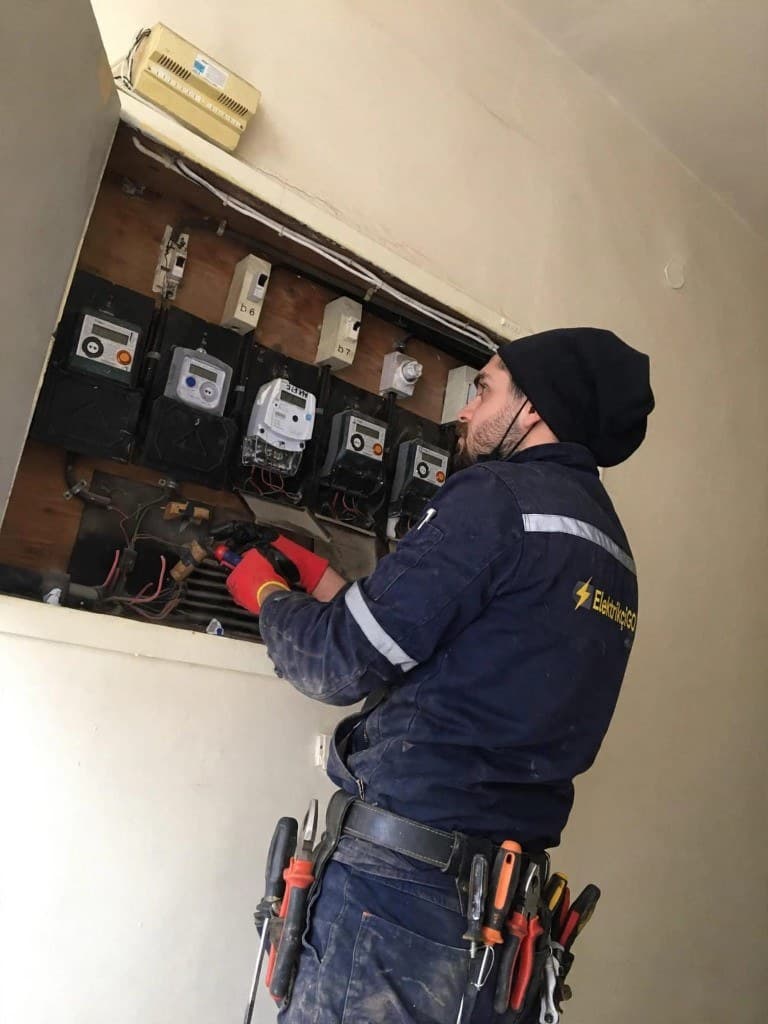
Adnan Şemiye reads this job in the field. The price is written before work starts.
Kadıköy district
Göztepe 24/7 emergency electrician. In this Kadıköy neighbourhood we respond without a minute promise to midnight breaker tripping, residual current device faults, burnt sockets and consumer unit failures. In apartment and complex stock, saturated kitchen circuits, bathroom water heater runs and riser overheating are measured on site. Certified technicians, faults proven with a True-RMS clamp meter and a megohmmeter, written price approval and an official 1 year workmanship guarantee.

Founding master
Adnan Şemiye18 years in the field
MYK-certified master
Adnan Şemiye reads this job in the field. The price is written before work starts.
From the field
Emergency van · +90 582 403 10 87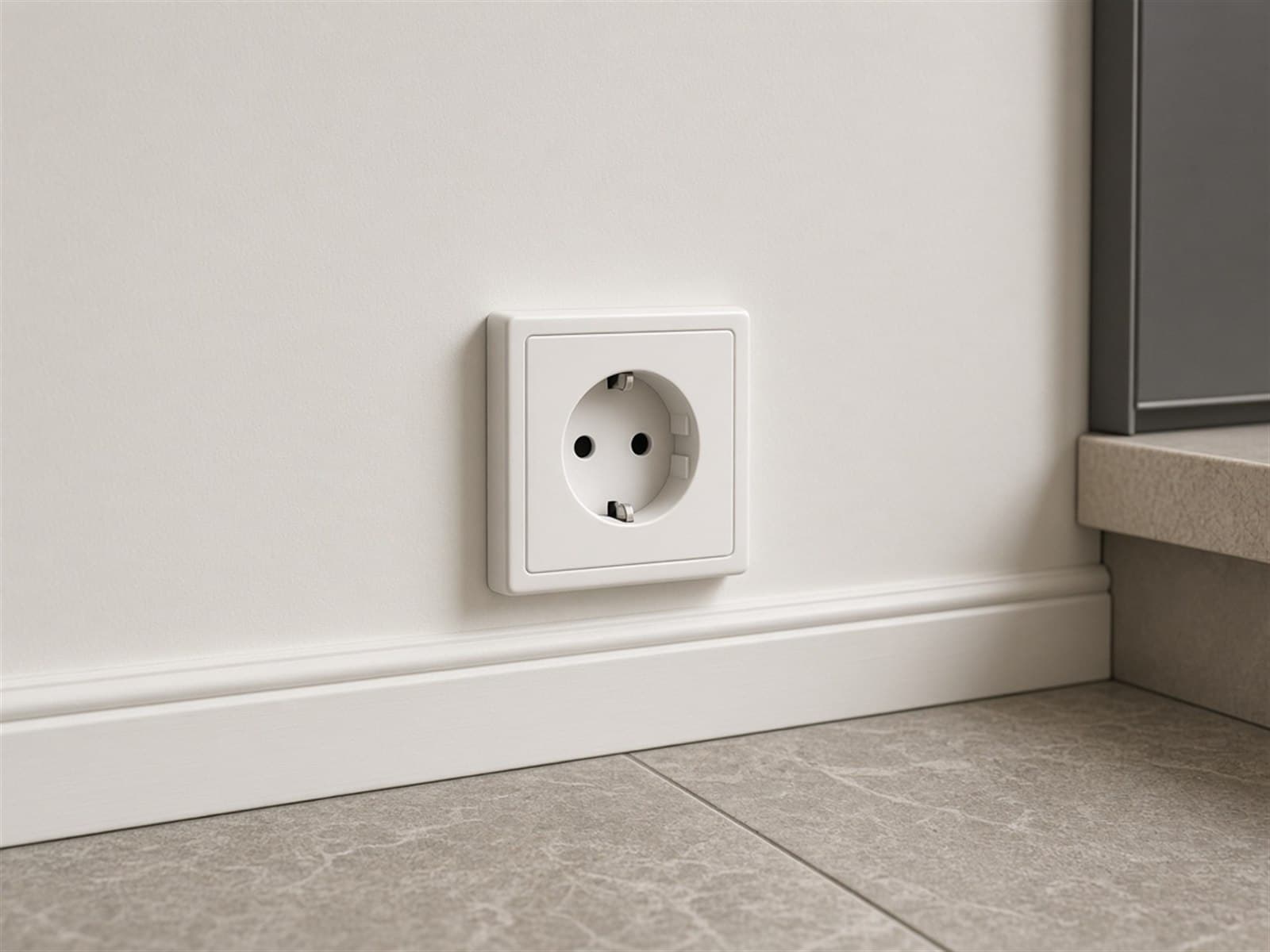
My first question on the phone is timing. Inside a miniature circuit breaker there are two separate protections. The magnetic part opens faster than the eye can see when current jumps very high, that is, in a short circuit. The thermal part opens by heating, within minutes, when current stays a little above the rating for a long time, that is, in an overload. If the breaker falls the moment you switch the oven on, as soon as the knob turns, with a pop or a spark, that is a short circuit; one conductor is touching another or touching earth. If the breaker trips after the oven and the hob have run together for ten minutes, with no warning before, that is usually an overload; the circuit is being forced to carry more than it can. The two have different cures. In a short circuit I find the damaged point. In an overload the cable is sound but not enough, and upsizing the breaker burns the cable. That one question decides which material I set off with.
In Göztepe kitchens the overload sum is simple and I do it with you. Divide the power on the appliance label by 230 volts and you have the approximate current. A 3.5 kilowatt built-in oven draws about 15 amps. A 7.2 kilowatt induction hob, with every zone at full power, asks for about 31 amps. A dishwasher goes above 2 kilowatts while heating, about 9 amps. In an old kitchen all of these are usually on one 2.5 square millimetre circuit behind a 16 amp breaker. The sum explains itself: the oven alone fills the circuit, and when the hob comes on the breaker's thermal part opens. The job in that case is not to raise the breaker to 25 amps; a 2.5 square millimetre cable carrying 25 amps continuously heats inside the wall. A separate run from the panel, sized for the power on the label, is pulled for the hob and the oven and connected to its own breaker. Labor for a cooker or oven circuit is between 2,200 and 4,500 TRY.
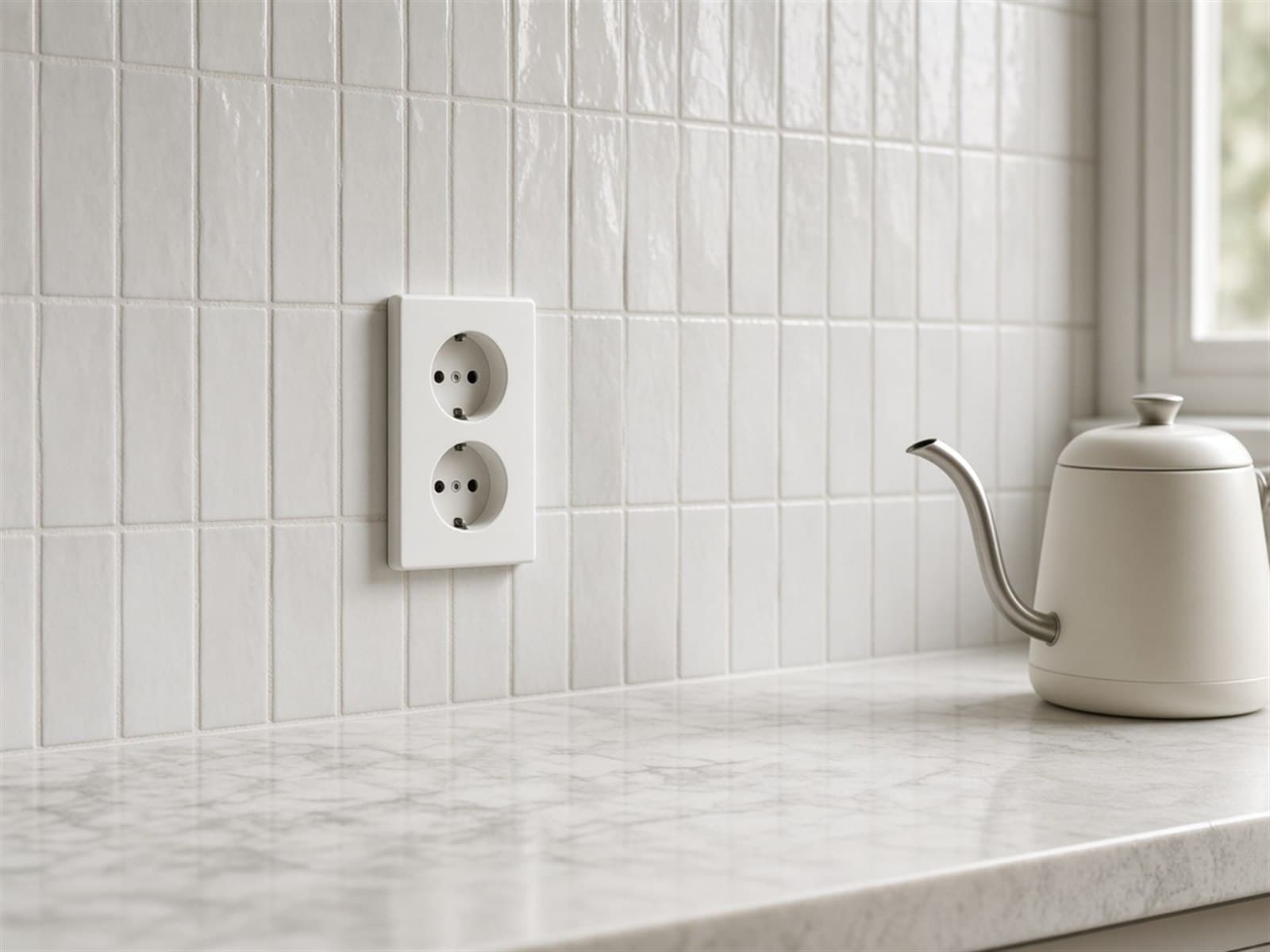
The most common cause of a short circuit after a kitchen fit is the hanging screw of a wall cabinet or the plug of a worktop profile. In an old building the cable does not run in a straight line in the wall; it crosses from socket to socket, sometimes just under the plaster, sometimes dropping from an old junction box. The fitter drills where the cabinet hangs and does not know where the cable is. If the screw pierces the insulation and touches a conductor, two things can happen. If it cuts phase and neutral together, the breaker trips at once. If it only finds the phase and touches a metal profile connected to earth, the residual-current device trips. In both cases the clue is the same: the fault started after the day the cabinet went up. So my first question is which cabinet went up last. I mark the cable's route on the wall surface with a cable tracer and find the screw where the mark crosses. I cut the power before I take the screw out; pulling a screw on a live circuit brings the spark to your hand.
Wrapping the cable a screw pierced in insulating tape and closing the plaster brings the same fault back a few months later, in the dark. Tape loosens with heat and damp gets in. The right repair is to cut out the damaged part, join the two ends with a connector, and put that joint inside a junction box whose lid can be opened. If the box will sit behind the cabinet, I write its place in my note and put it where its lid can be reached. If the cable is NYA, that is, single-core conductor running in conduit, a new piece can be pulled through the conduit; if it is an old circuit buried without conduit, the repair is limited and the wall may need opening. I do not open a wall without your approval. A short circuit solved inside a socket or junction box without breaking the wall is 800 to 1,800 TRY, and one solved inside the wall with approved opening is 2,000 to 4,500 TRY. Paint and plaster are not my work; I close the opening clean and leave the painting to its trade.
Behind an induction hob there is a small terminal box with metal bridges inside. Those bridges decide whether the hob is fed on one phase, two or three. The maker's diagram is drawn on the box lid. Most Göztepe flats are single-phase, so the hob is bridged for one phase and fed by one heavy circuit. The trouble is a hob that arrives bridged for a two-phase connection, or a fitter who connects the cable without looking at the diagram. With the wrong bridge, a phase joins the neutral terminal or another phase directly. The hob's breaker falls the first time it is switched on, and sometimes the terminal box blackens. Before blaming the hob I open the lid, compare the bridges with the diagram, and measure that each core of the supply cable sits on the right terminal. If the bridge is right and the breaker still trips, the electronics inside the hob are faulty; that belongs to the maker's service, and I say so plainly.
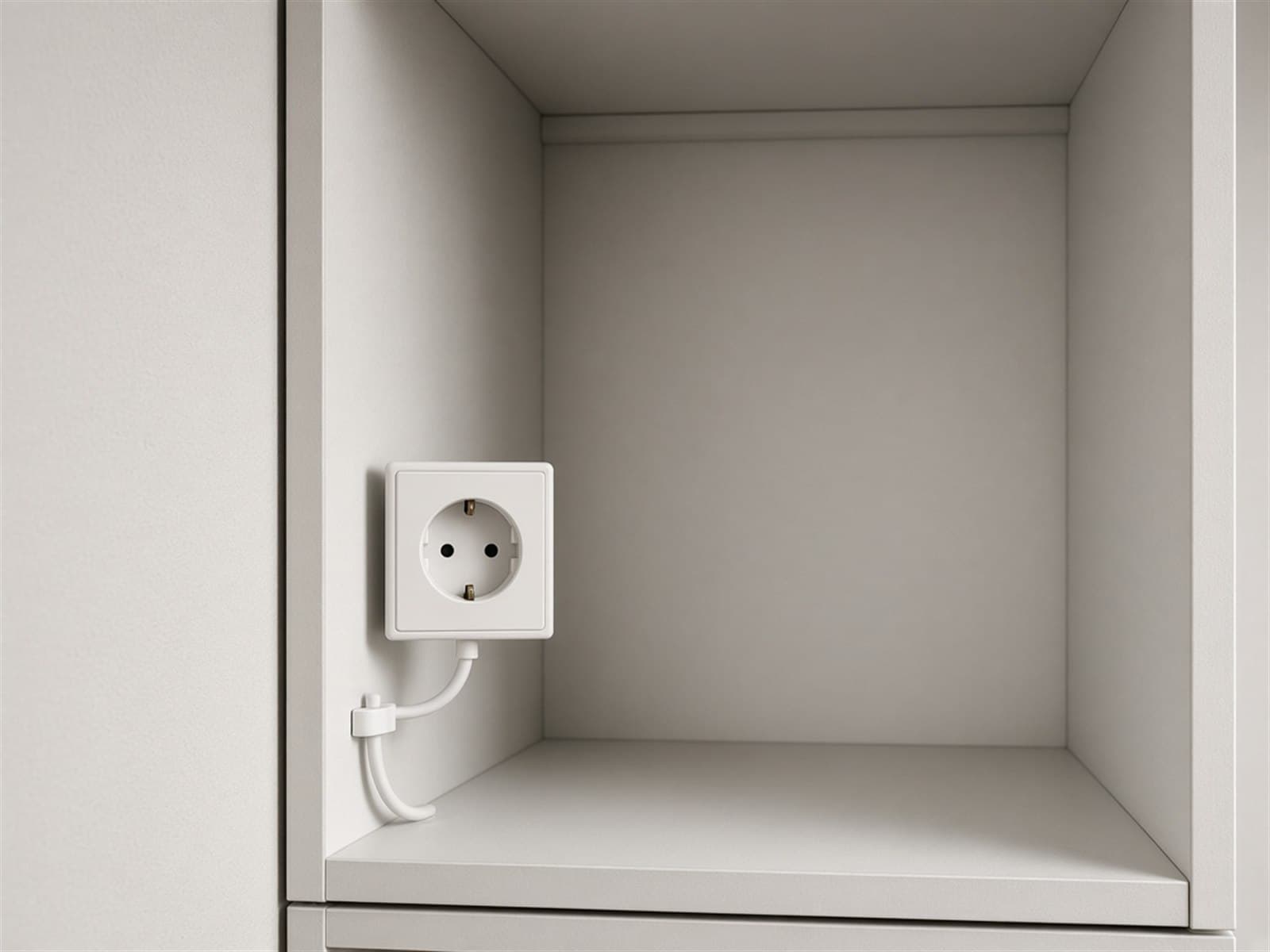
In a new kitchen a small but stubborn source of short circuits is the cooker hood and the LED lights under the wall cabinets. The fitter often connects the hood's cable to the old ceiling light tail or behind the nearest socket, wraps the joint in tape and pushes it inside the cabinet. The under-cabinet lights' driver gets squeezed into a void close to the hob's heat. As the driver heats, the parts inside it age, and one day the lighting breaker trips as the light comes on and the whole kitchen is left in the dark. I separate the lighting group from the socket group and first take the driver out to leave the circuit on its own. If the circuit is sound, the driver is the culprit; I do not change the light and the driver together, I first write which one is faulty. I connect the hood's tail with a connector and a covered box instead of tape. A hood tail, if the wall stays closed, is 900 to 1,800 TRY, and changing one spotlight is 600 to 1,100 TRY.
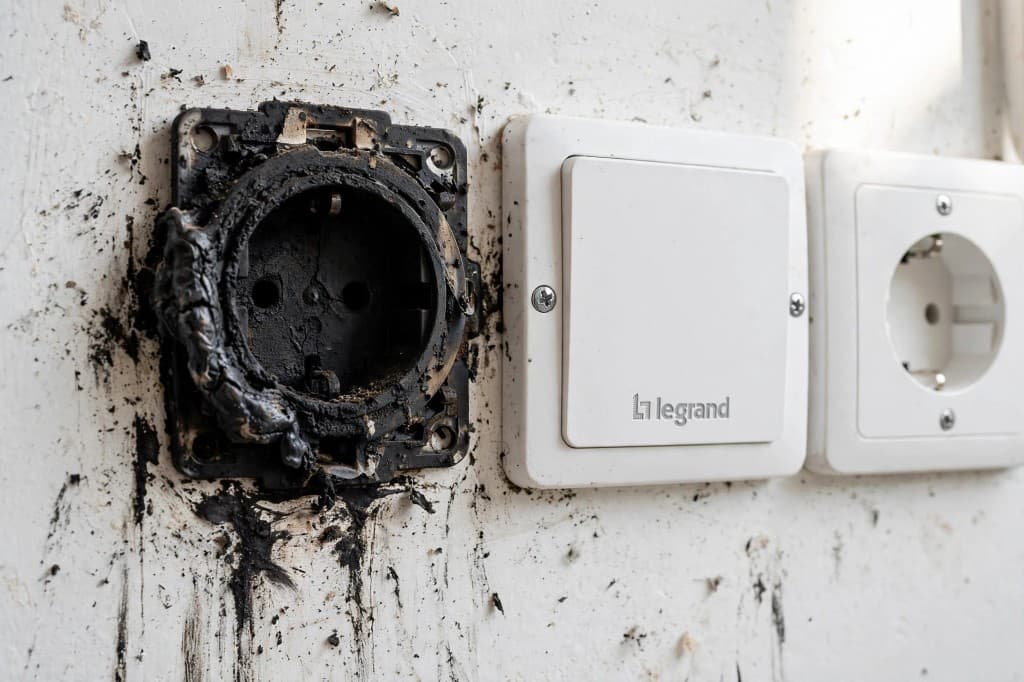
Before the electrician arrives, once the kitchen is finished, the hob's cable is sometimes connected to an extension lead or an ordinary socket under the worktop. An ordinary socket and a multi-way extension are not made for the current a hob draws at full power. On the first day it seems to work, because the zones were not all on at once. At a holiday meal, when four zones come on together, the extension's plug heats, the plastic softens, the contact blackens, and in the end it shorts. Behind a smoking kitchen socket in Göztepe there is often this story. I do not leave a hob on an extension. I replace the melted socket, but I do not plug the hob back into it; I write a separate circuit for the hob. Fitting a socket on a tail already in the appliance void is 900 to 1,600 TRY, and replacing a burnt socket is 800 to 1,400 TRY. If a washer and a dishwasher are piled onto one socket, a run per appliance is 1,800 to 3,200 TRY.
A residual-current device falling in the kitchen gets mistaken for a short circuit, but it is something else. The device measures the difference between the current leaving on the phase and the current returning on the neutral, and opens when the difference passes 30 milliamps. In Göztepe kitchens the most common source of that difference is the heating element of the dishwasher or the washing machine. Over the years the element's metal sheath cracks from limescale; the crack is dry when cold, conducts when the water heats, and part of the current goes from the body to earth. That is why the device trips not at the start of the programme but in the minute the machine starts heating. You can separate this at home: unplug the machine, raise the device, and see whether it trips for the rest of the day. If it does not, the culprit is most likely the machine. I measure the insulation at the machine's plug and on its circuit and write that the circuit is sound. Replacing the element is the appliance service's job. I do not bridge the device and I do not lower its sensitivity.
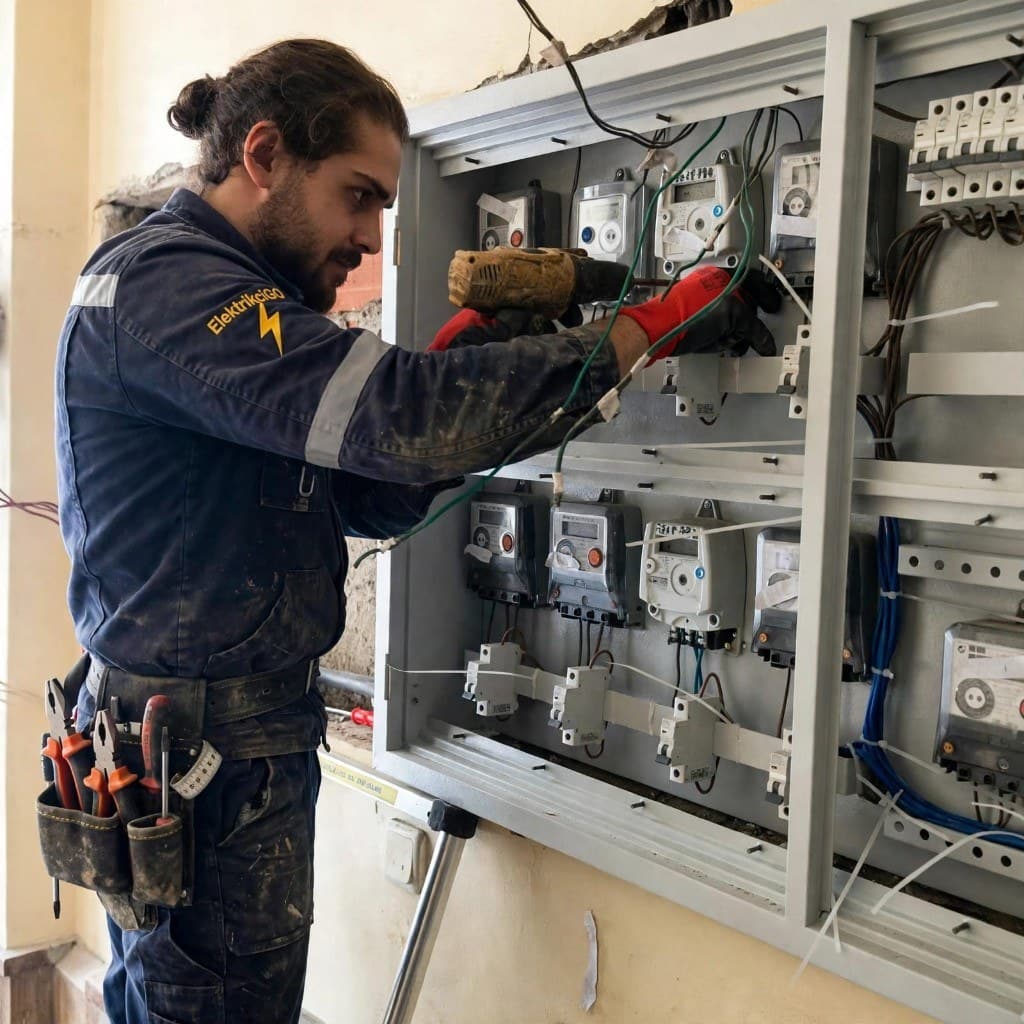
On the fault day my aim is to leave the kitchen safe and usable. I repair the pierced cable with a junction box, replace the burnt socket, correct the hob's bridge to the diagram, and if there is an overload I tell you not to run the hob and oven together at full power and write the new circuit. In Göztepe the lasting answer is usually the kitchen's own circuits: one run for the hob and oven, one each for the dishwasher and the washer, a separate group for the worktop sockets, and a 30 mA residual-current device ahead of them all. The cable is pulled as NYM under the plaster or as NYA in conduit, sized for the power on the appliance label. If the panel is not enough, new Schneider or Siemens breakers are added to the flat panel. Renewing the kitchen and bathroom circuits together is 8,000 to 18,000 TRY in labor and is written after a survey, apart from the fault invoice. If you call before the kitchen cabinets go up, this work is done without breaking the wall or taking a cabinet down.
If it trips at once with a pop, the short is in the oven or its cable. If it trips after a few minutes, the circuit is not enough. I separate the two by measuring, and write the circuit before blaming the oven.
No. The breaker protects the cable. Putting 25 amps behind a 2.5 square millimetre cable lets the cable heat inside the wall. The answer is a separate circuit of the right size.
Most likely a hanging screw or plug has gone into the cable. I take out the screws of the last cabinet fitted, find the cable route with a tracer, and repair the damaged part with an accessible junction box.
Not if the hob's power is high. A hob is bridged to the diagram in its terminal box and connected fixed to its own circuit. An extension or multi-way socket melts over time.
Unplug the machine and raise the device. If it does not trip again, the problem is most likely the machine's element and belongs to the appliance service. I measure the circuit and write that it is sound.
Yes, that is the cheapest moment. Before the cabinets go up I pull the circuits for the hob, the oven, the dishwasher and the worktop sockets; afterwards no cabinet comes down.
No. I close the opening clean, and the paint and plaster are left to their trade. I do not open the wall without your approval and I say the price before opening it.
In Göztepe we handle everything on the customer side of the meter: breaker tripping and residual current device faults, burnt sockets and terminals, board renewal and breaker replacement, earthing installation with resistance testing, lighting and chandelier mounting, dedicated circuits for boilers and air conditioning, and surge arresters. Measurement uses a True-RMS clamp meter, a megohmmeter and a FLIR thermal imager.
In most cases no. The fault is first narrowed down branch by branch at the board, then pinpointed with a FLIR thermal imager and an inductive cable tracer, so no needless breaking is done. Where leakage is in an underground or under-screed run, a cable fault locator usually narrows it to within a metre and only that area is opened. If breaking is unavoidable it is reported in writing and approved first.
Service covers the neighborhoods of Istanbul's 39 districts. Not the whole of Turkey. A survey is not a binding quote.
Göztepe, Kadıköy. The map is centered on the neighborhood. Arrival changes with the hour and the traffic.