Founding master
Adnan Şemiye18 years in the field
MYK-certified master
Adnan Şemiye reads this job in the field. The price is written before work starts.
Kadıköy district
Caferağa 24/7 emergency electrician. In this Kadıköy neighbourhood we respond without a minute promise to midnight breaker tripping, residual current device faults, burnt sockets and consumer unit failures. In apartment and complex stock, saturated kitchen circuits, bathroom water heater runs and riser overheating are measured on site. Certified technicians, faults proven with a True-RMS clamp meter and a megohmmeter, written price approval and an official 1 year workmanship guarantee.
Founding master
Adnan Şemiye18 years in the field
MYK-certified master
Adnan Şemiye reads this job in the field. The price is written before work starts.
From the field
Emergency van · +90 582 403 10 87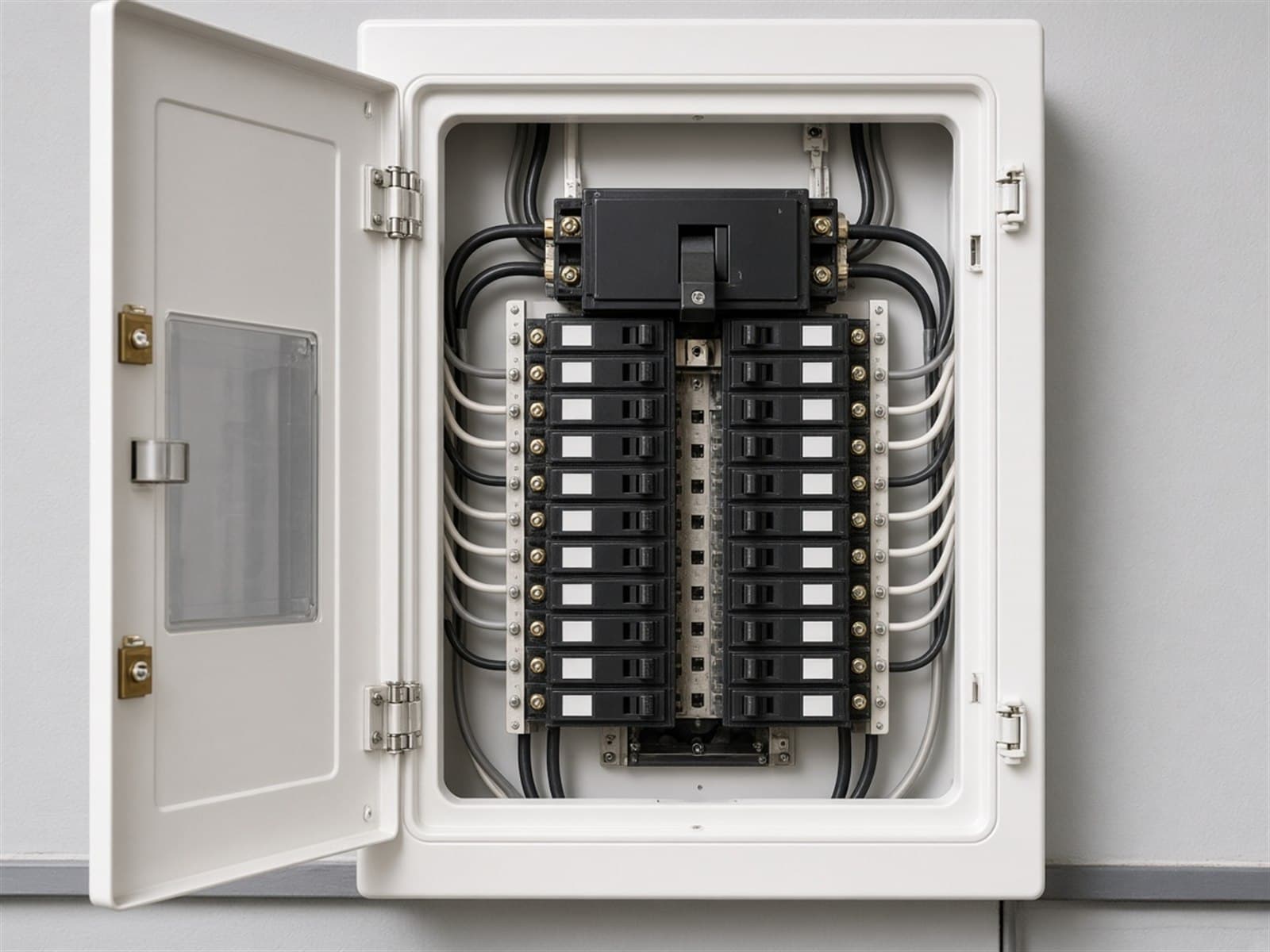
Behind a main switch that trips at night in Caferağa there is usually a winter evening. The boiler runs, an electric heater beside it, the oven in the kitchen, the washing machine and a water heater in the bathroom. All of them pass through the main switch at the end of the one supply cable that comes from the meter. If the switch's incoming screw has loosened over the years, the contact area shrinks and the heat collects there. The hot screw also warms the thermal element inside the switch, and the switch opens as if it had seen an overload. When it cools it stays up, and when the load returns it falls again. That picture is not a short circuit, but it is more treacherous than one, because every time it opens the screw blackens a little more. If the body of the main switch is warm, if there is a brown ring on its plastic, or if a sharp smell comes from behind the cover, I do not wait for the morning. A loose incoming terminal is not fixed by tightening; the blackened end is cut and connected again.
Before I set off I ask you for three things. First, drop every group breaker. Then raise the main switch once. If it stays up, raise the groups one by one and tell me which one makes it fall. That group is where the fault is. You can leave it down and keep the rest of the home on until morning; the fridge and the boiler are usually on another group. If the main switch falls even with every group down, the fault is in the main switch itself, its incoming terminal or the residual-current device, and that is the picture I come out for at night. My second question is the smell. If there is a smell, leave the main switch down and do not open the cover. My third question is the building. Is the stair light on, does the neighbour's bell ring? If the building is dark, the outage is on the grid, and you call the 186 fault line, not me. Those three answers decide which part goes on top of the bag on the way.
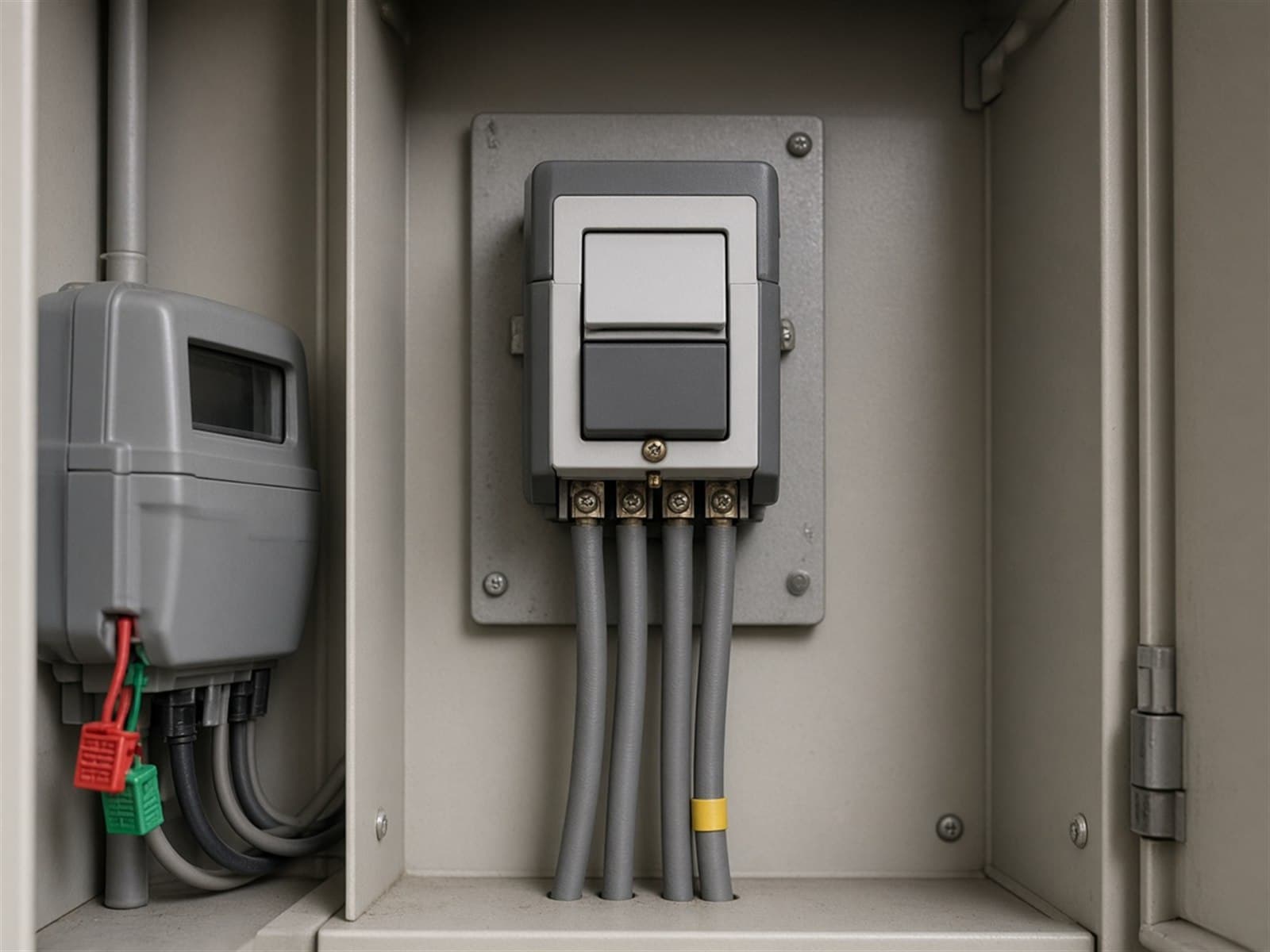
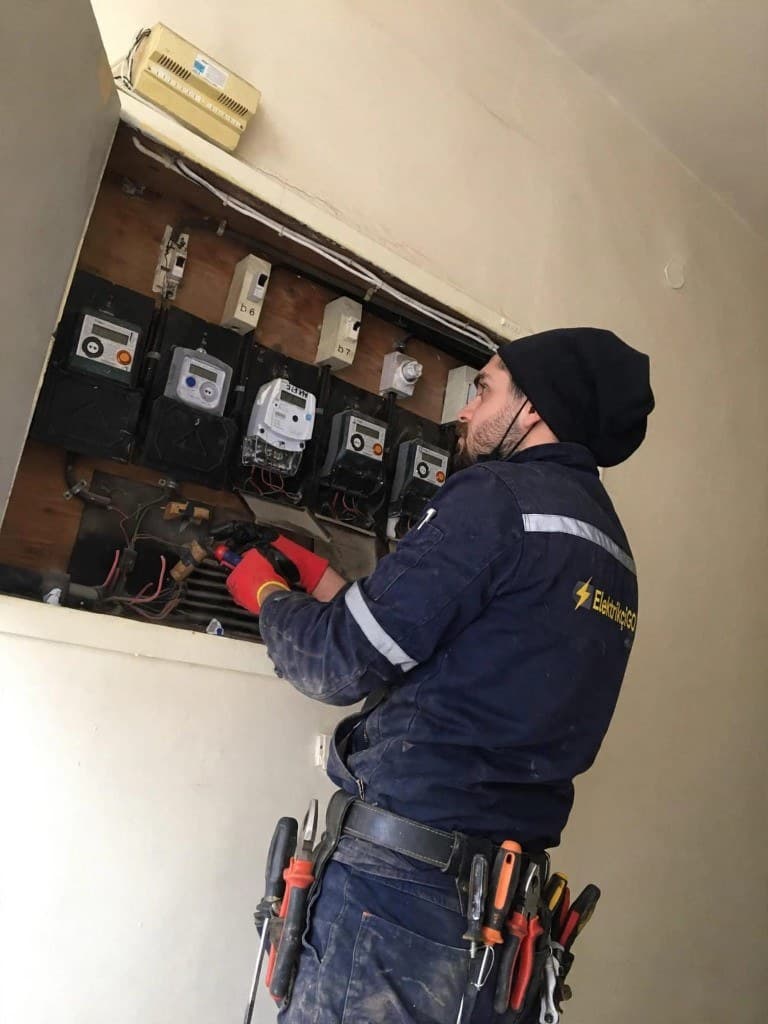
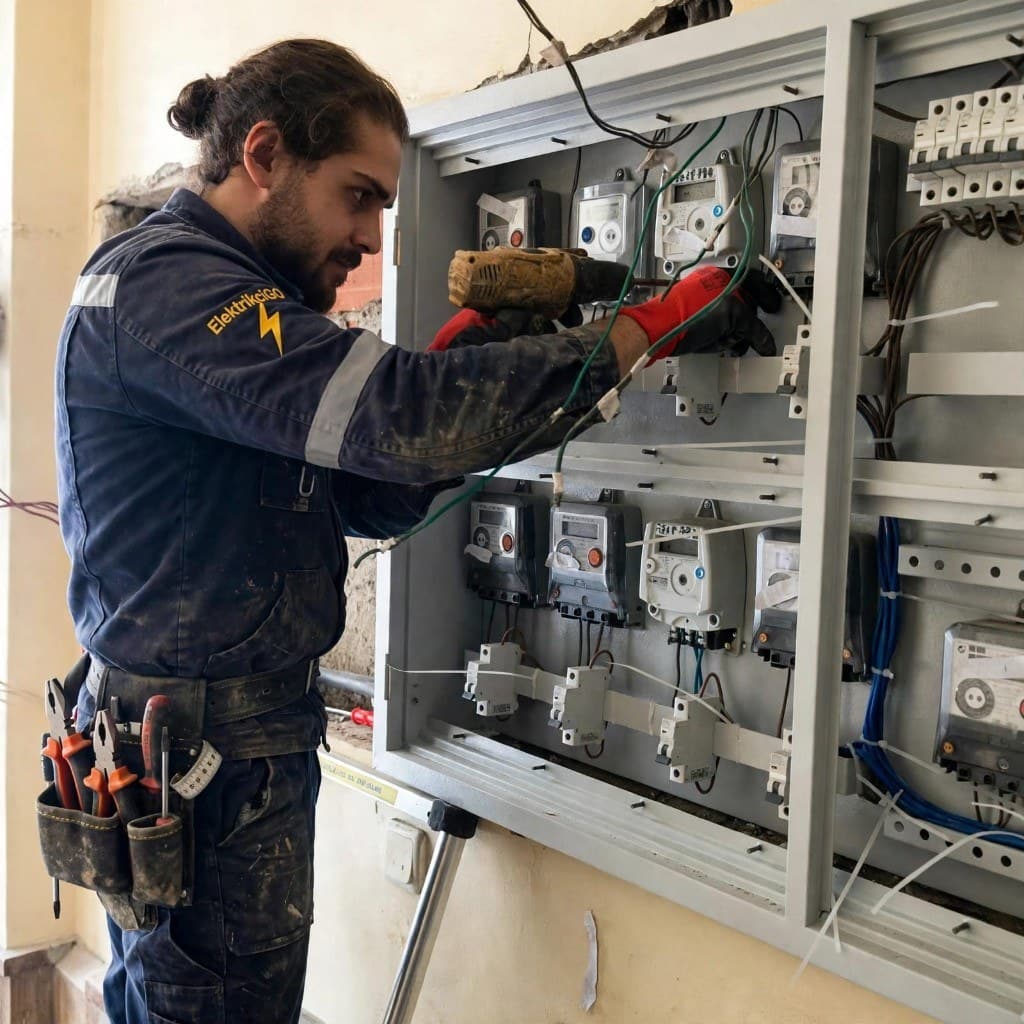
In Caferağa buildings the meters usually sit side by side in a cupboard on the ground floor or under the stairs. The meter itself, its seal and the riser that reaches it belong to the distribution company; on the Asian side that is AYEDAŞ. I do not open a sealed meter, lift its cover or put a screwdriver into its terminals. My work is the cable that runs from the meter outlet to the flat, the flat's main switch and the inside of the panel. If the smell comes from above the meter, if the meter display has gone dark, or if the meter's terminal cover is blackened, I show you and tell you to call 186. If the smell comes from the cable at the meter outlet, outside the seal and not under it, that is my side. In old buildings that outlet cable is sometimes aluminium, sometimes an old NYM that is too thin. A blackened end at the meter outlet often explains on its own why the main switch in the flat panel trips at night.
In a half-century-old building, if the supply to the flat is aluminium and its end has been clamped directly into the copper terminal of a new breaker, the two metals eat each other. A thin oxide layer forms on the aluminium surface, that layer does not conduct, and the contact point heats. When aluminium heats it slowly creeps, and the screw loosens a little more every winter. So I clean the aluminium end and move it onto copper with anti-oxide compound and a bi-metal joint made for aluminium to copper. Just tightening the end and leaving holds until next winter, and then the same night call comes back. Renewing the whole supply cable is a separate job; a new copper run is pulled from the meter cupboard to the flat, its size chosen for the flat's load. I do not do that on the night. On the night I make the end safe and write the renewal as a survey note.
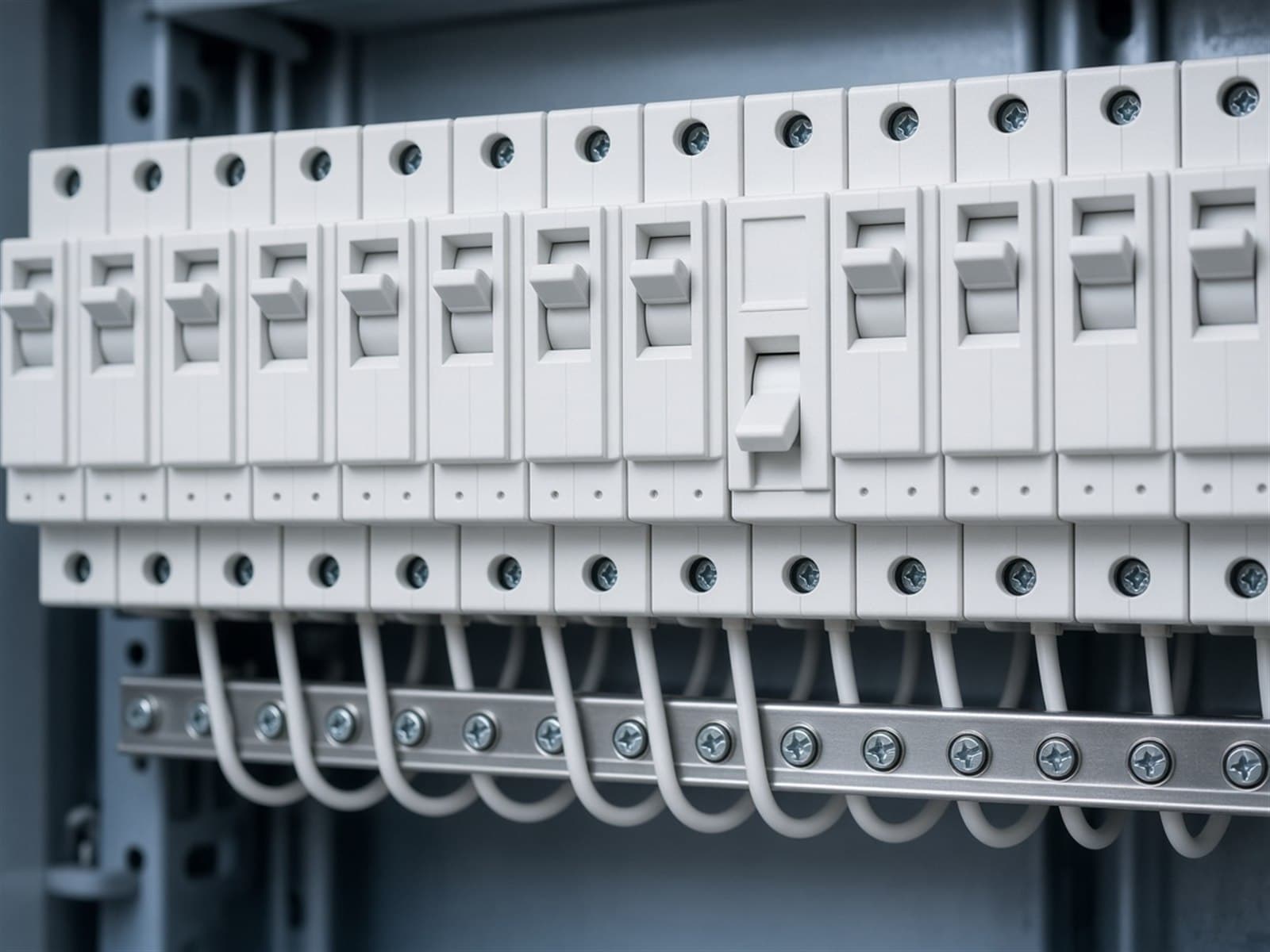
A story often seen in Caferağa: the fuse box was removed years ago, Schneider Easy9 or Siemens 5SL breakers were lined up on the same rail in its place, and in the last renovation a 30 mA residual-current device was added at the head. Since the day it was fitted the device trips now and then, most of all in the evening when the lights come on. The cause is usually not the device. In old wiring the groups share neutrals: the living-room socket's phase comes from one breaker, its neutral from another group's junction box. The device compares the current leaving on the phase with the current returning on the neutral. If the neutral returns through another group, the device takes that for a leak and trips. Replacing the device does not fix this; the new one trips too. To find the borrowed neutral I separate the groups one by one and measure that each group's phase and neutral go and return on the same path. I connect the borrowed neutral I find back to its own group. That is a leak-finding job and it is between 1,000 and 2,000 TRY.
Faced with a device that trips at night, the first job is not to blame it but to test it. A device that does not trip when its test button is pressed is faulty; looking as if it works does not make it safe. A device that trips but takes too long to open is replaced too. I measure that with a tester and write you the result. If the device is sound and still trips, the problem is in the circuits: a borrowed neutral, a wet balcony socket, a damp bathroom extractor fan or a water heater with a cracked element. I do not bridge a 30 mA device and I do not swap it for a 300 mA one. 300 mA is used at a building's entrance against fire; in a flat it does not protect a person. If the device is to change, I fit a body of the same sensitivity, from the same family and matching the panel's comb. That replacement is between 1,200 and 2,400 TRY. Only testing it and writing the trip time is 600 to 1,000 TRY, and I leave without changing the device.
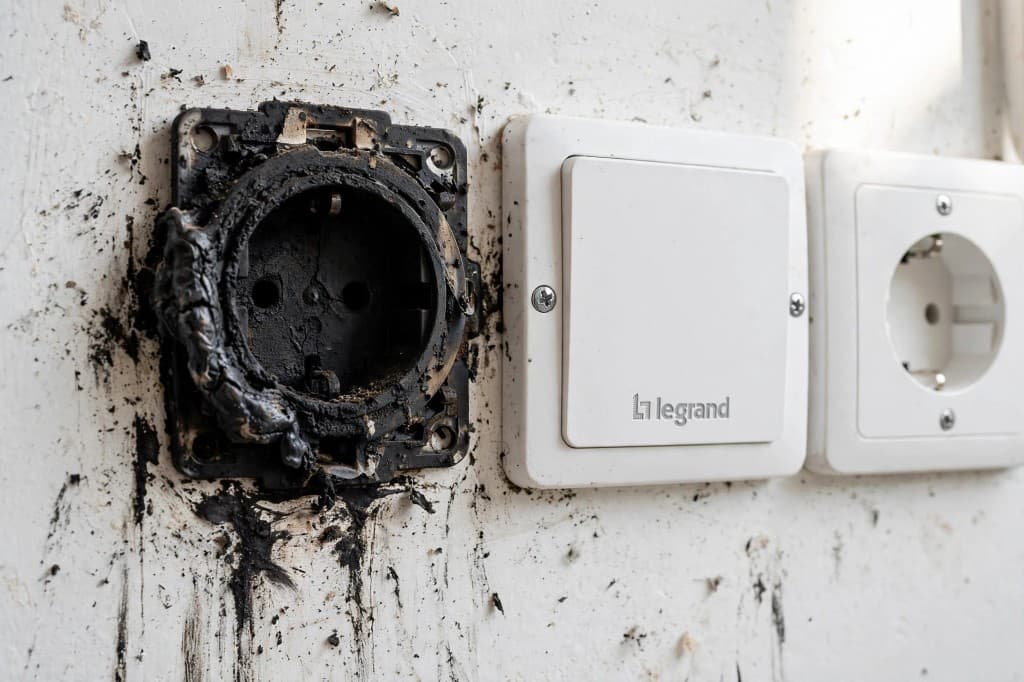
When I come at night my aim is not to renew the whole installation but to leave the home safe until morning and as much of it on as possible. If the main switch's incoming terminal has burnt, I cut the blackened end, replace the switch with a new one of the same rating, and connect the incoming cable at the right torque. If the faulty group is clear I isolate it and turn the rest on; the fridge, the boiler and the lighting usually run until morning. If I see a problem on the meter side I do not touch it, I tell you to call 186 and show you what I saw in a photo. I do not leave an exposed busbar in the panel, a gap with no cover, or a joint held with tape; I tell you where I closed something temporarily. The difference for a night or public holiday call is not buried in the day list; it is said on the phone before I leave. A home panel fault visit is 1,200 to 2,800 TRY, and a hot busbar or a burnt incoming terminal is 1,500 to 3,500 TRY. Parts are written separately.
Caferağa is not only flats; its market streets have cafés, delicatessens, hairdressers and small offices. A main switch that trips at night in a shop means the chilled display, the coffee machine and the till do not work at opening time. If a delicatessen's display fridge stays without power for a few hours, the stock goes in the bin. So on a shop call I first ask which group the fridges are on. A picture I often see in shops is a coffee machine, a kettle and a toaster on one socket behind the counter and one 16 amp breaker. In the morning rush, when all three run together, the breaker opens on its thermal part, a waiter raises it, and an hour later it falls again. On a night fault I keep the fridges separate, isolate the faulty group and leave the shop ready to open. A run per appliance behind the counter is written later, after a survey and after closing time; a wall is not opened in the middle of a working shop. The invoice is issued in the shop's trading name.
Before I leave I give you a short note. The first line is what I found: which end had heated, which group was isolated, what the device test showed. The second line is what I replaced or tightened, and the replaced part is handed to you. The third line is the work I deliberately did not do that night. In Caferağa that third line is usually one of these: a new copper supply from the meter outlet to the flat, renewing a panel left over from the fuse era, replacing a two-core circuit with no earth, or separating the borrowed neutrals across the whole flat. I do not bury those in the fault invoice; I write them with a separate survey and a separate price. Renewing a fuse board is 4,000 to 8,000 TRY in labor, and renewing a flat panel is 3,500 to 7,500 TRY. Full-flat rewiring is the subject of another page. The note is for you; the next electrician reads from the same paper too and does not start by guessing.
If it falls even with every group down, if its body is warm, or if there is a smell, yes. If it falls on one group only, you can leave that group down and wait for the morning. I say the night difference before I leave.
If the smell comes from above the meter or its sealed cover, call the 186 fault line. If it comes from the flat cable at the meter outlet, that is my side. If you are not sure, drop your main switch first and then call both of us.
It will stop tripping, but it will not protect you either. The 30 mA device is the only thing that protects a person from a shock. I look for why it trips; usually it is a borrowed neutral or a wet circuit.
No. The main switch's rating follows the supply cable's size and the contracted power. A bigger one leaves a heating cable unprotected.
Working does not make it safe, but it is not part of the night fault either. If a fuse holder has heated, I move that group to a breaker that night. Renewing the whole panel I write separately after a survey.
If the building and the street are dark, the outage is on the grid and belongs to the 186 fault line. I do not work on the grid. If your flat is still dark after the power returns, that is when you call me.
Send the note I leave. It says what I found, what I replaced, and which job needs doing separately. An invoice is issued if asked for.
In Caferağa we handle everything on the customer side of the meter: breaker tripping and residual current device faults, burnt sockets and terminals, board renewal and breaker replacement, earthing installation with resistance testing, lighting and chandelier mounting, dedicated circuits for boilers and air conditioning, and surge arresters. Measurement uses a True-RMS clamp meter, a megohmmeter and a FLIR thermal imager.
In most cases no. The fault is first narrowed down branch by branch at the board, then pinpointed with a FLIR thermal imager and an inductive cable tracer, so no needless breaking is done. Where leakage is in an underground or under-screed run, a cable fault locator usually narrows it to within a metre and only that area is opened. If breaking is unavoidable it is reported in writing and approved first.
Service covers the neighborhoods of Istanbul's 39 districts. Not the whole of Turkey. A survey is not a binding quote.
Caferağa, Kadıköy. The map is centered on the neighborhood. Arrival changes with the hour and the traffic.