Reading estimate 4,000–12,000 TRY
I do not treat a PLC input-output as a program line
If the input is lit and there is no field voltage, the LED is lying. If the output is dark and the transistor has stayed short, the field is still live. Someone who treats the two as a program line and raises the value finishes the card with a 24 volt short as well. Siemens S7-1200 and S7-1500, Schneider Modicon M221 and M241, Omron CP1 and NX sit in the same notebook: the common terminal, the 0 V reference, the card fuse, an open 4–20 mA analog wire. LiYCY is a shielded analog run. NYM is not wall wiring for this card. I do not write a bridge on a safety input. Drive OCF and OV have their own pages. Here the input and the output the PLC sees are separated. If there is no backup a line does not change that day. The reading estimate is 4,000–12,000 TRY. The card and the program are approved separately. This page is not a quote.

On this page
An LED can lie
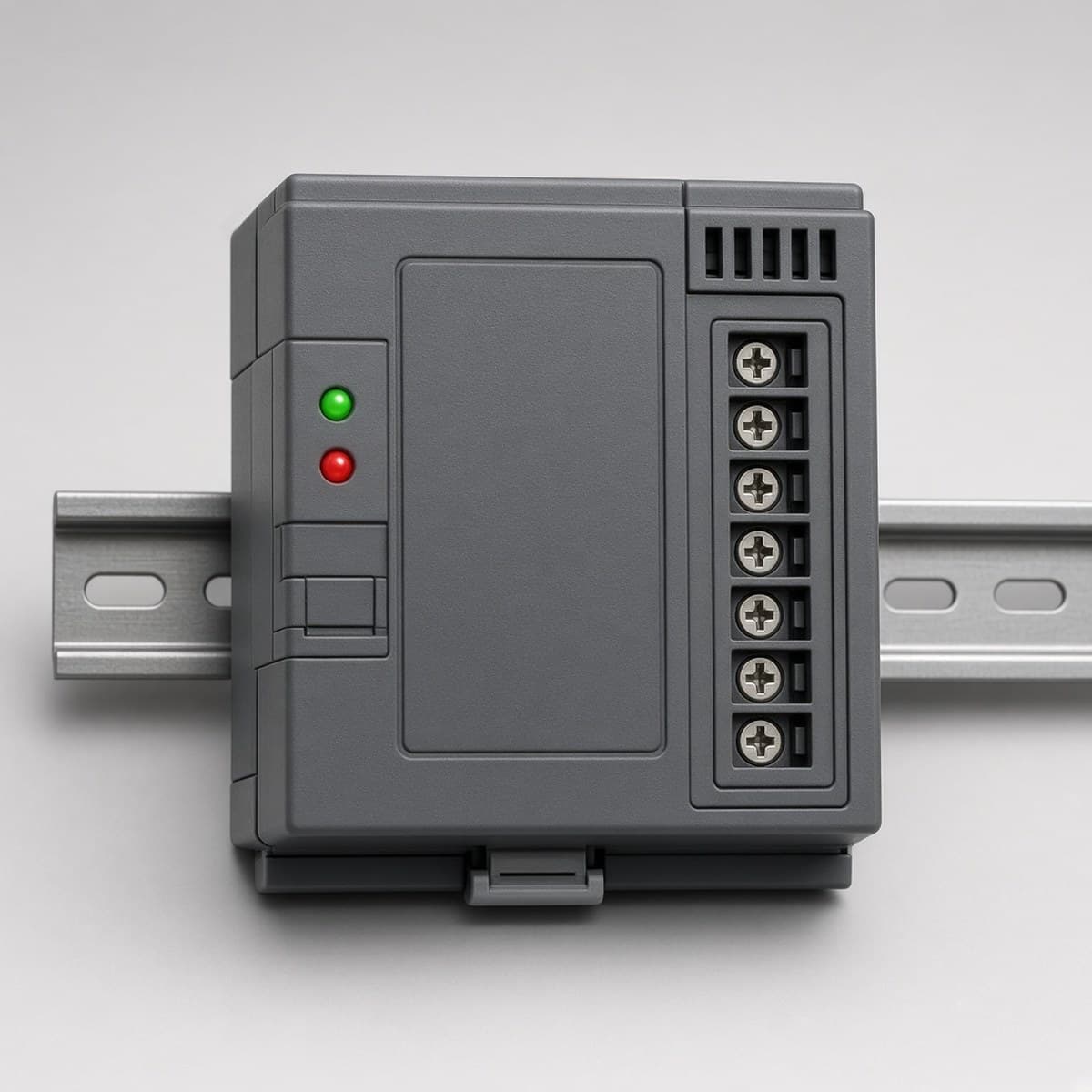
The lamp, the terminal, 0 volts
An input LED says the optocoupler inside the card has lit. It does not say the 24 volts in the field. The sensor may be crushed, the LiYCY screen may have touched the body, the common may be loose. The LED lights, the meter reads zero on the terminal. I do not correct the program to match that lit lamp. First the volts on the terminal, then the common, then the 0 V bar. A line does not change before the three are written. The order is the same on a Siemens SM 1221 or 1511 input, a Schneider TM3 input and an Omron NX-ID. The brand name is not a substitute for the order of the measurement.
An output LED says the transistor or the relay has been triggered. It does not say the field has turned. If the contactor coil has burnt the LED lights and the shaft does not move. The coil is measured. The replacement is not buried in the program band. The reverse is more dangerous: the LED is dark, the transistor has stayed short, the field is still 24 volts. The operator thinks it stopped. The shaft turns. That sentence is also a neighbour of the welded-contactor page. Here the output face of the card is separated. The power pole sits there. I do not close the two in one WhatsApp line.
A 24 volt short, the card fuse
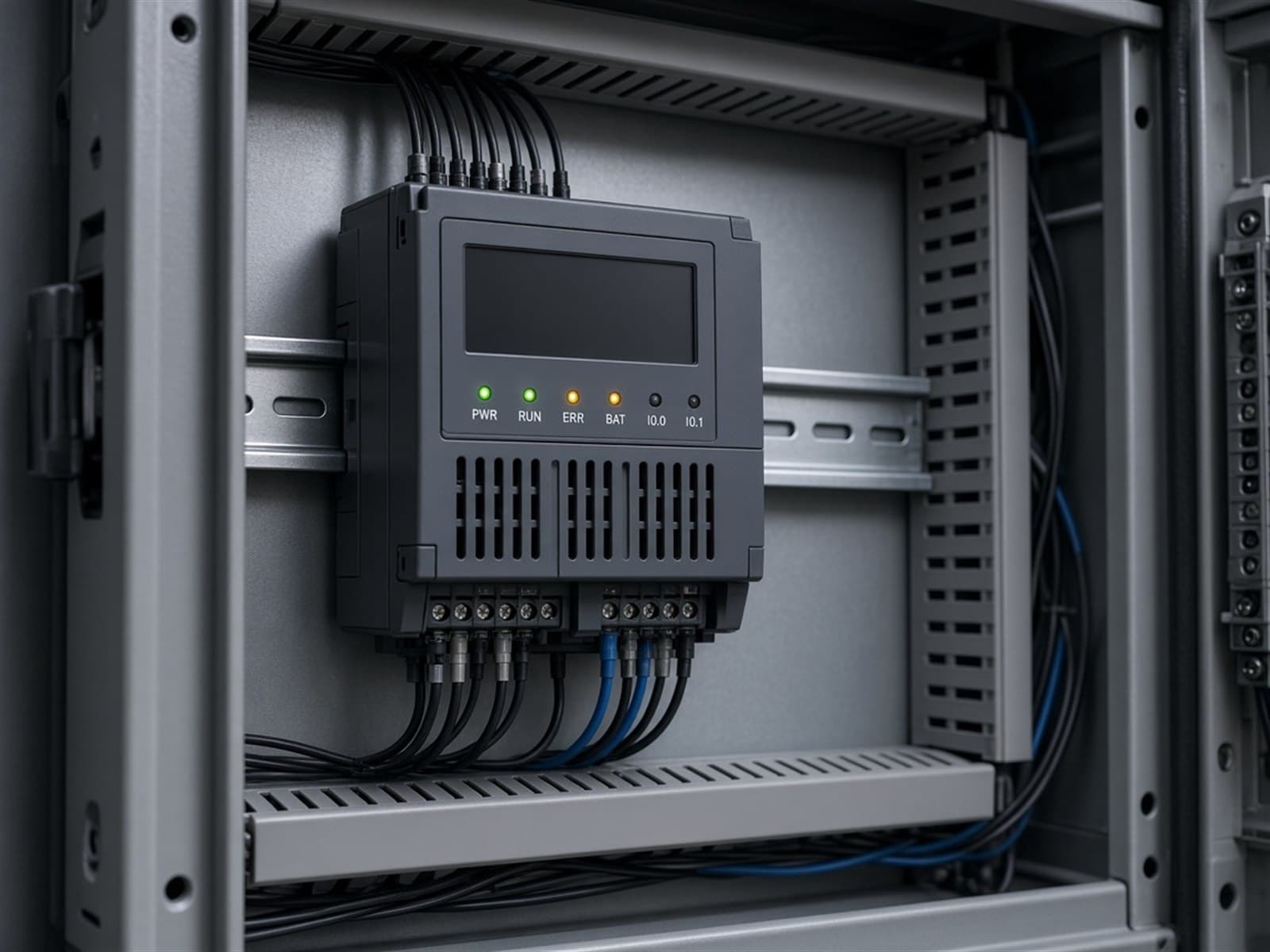
The supply, the common, a spare feed
If the 24 volt bar shorts, the card's internal fuse or an external glass or miniature breaker opens. All input LEDs go dark. The operator says the PLC died. The processor is often still standing. What died is the 24 volt face of the card. I do not raise the fuse to revive the card. The short is in the field cable, a wet box or a crushed LiYCY. Fitting 10 A in place of 4 A before the short is found lets the next short eat the processor as well. If the DC OK lamp on a Phoenix or Weidmüller 24 V supply has gone dark, that lamp first, then the card.
If the common (M, COM, 0 V) is loose, half the card lies. One group of inputs lights, the neighbour group stays dark. A programmer treats that group as a cleared marker. Before I correct the marker I read 0 V continuity between the bar and the card. If there is no ferrule, if the terminal has heated, the lug is renewed. Torque is read from the N·m on the card family's label. Tightness of the hand is not a unit on this job. A single NYA core is not bent onto an SM terminal without a ferrule.
An open analog wire, 4–20 mA
The screen, milliamps, the shield
When a 4–20 mA wire breaks the HMI often writes 0, an overflow or 'wire break'. A programmer shifts the scale. The scale is not shifted. First the clamp or the mA range on the wire, with the transmitter in place. 0 mA is a break. Around 3.8 mA is a broken-wire alarm on most transmitters, not a scale error. 21 mA is an overflow, a short or a wrong supply. I do not close the three in one line that says the sensor broke. If an Enda or similar process device has its own page I do not carry it there. Here the mA the PLC analog card sees is separated.
The shield lands at one point on 0 V or PE. A shield that lands at both ends makes a loop and the analog value shakes. A shaking value drives a PID mad, a valve flies, an oven overflows. I do not silence that by burying the shield in the program. LiYCY or a similar shielded pair is for analog. A three-core NYM is not written onto this job. A single NYA core is not left as an analog return. If a 0 V and a motor cable share the same trunking, the trunking is separated first. The card does not change.
No bridge on a safety input
Force, a jumper, a door lock
I do not write a jumper on a safety door, an emergency-stop loop or a light-curtain input. Forcing a safety bit to 1 is the same sentence as leaving the door open. A force list in TIA Portal, EcoStruxure or CX-Programmer is written into the site note. A forgotten force eats a hand the next morning. So that it is not forgotten I lift the force before the job closes. If I cannot lift it I do not close the job. A safety relay — Siemens 3SK, Schneider XPS, Omron G9SA — sits in its own body. I do not reduce it to a PLC output.
A door lock is not a fat input. The lock's 24 volts come from a separate supply. The PLC input only sees the state. I do not steal the supply from a PLC output and run the lock so that it 'works a bit'. Running it that way buries the safety loop in the program band. Burying it is a second invoice and also an injury. I write neither. On the night shift I do not leave a force list as 'we will look in the morning'. A force left until morning is a forgotten force.
A drive code is not closed on this page
OCF, OV, the output command
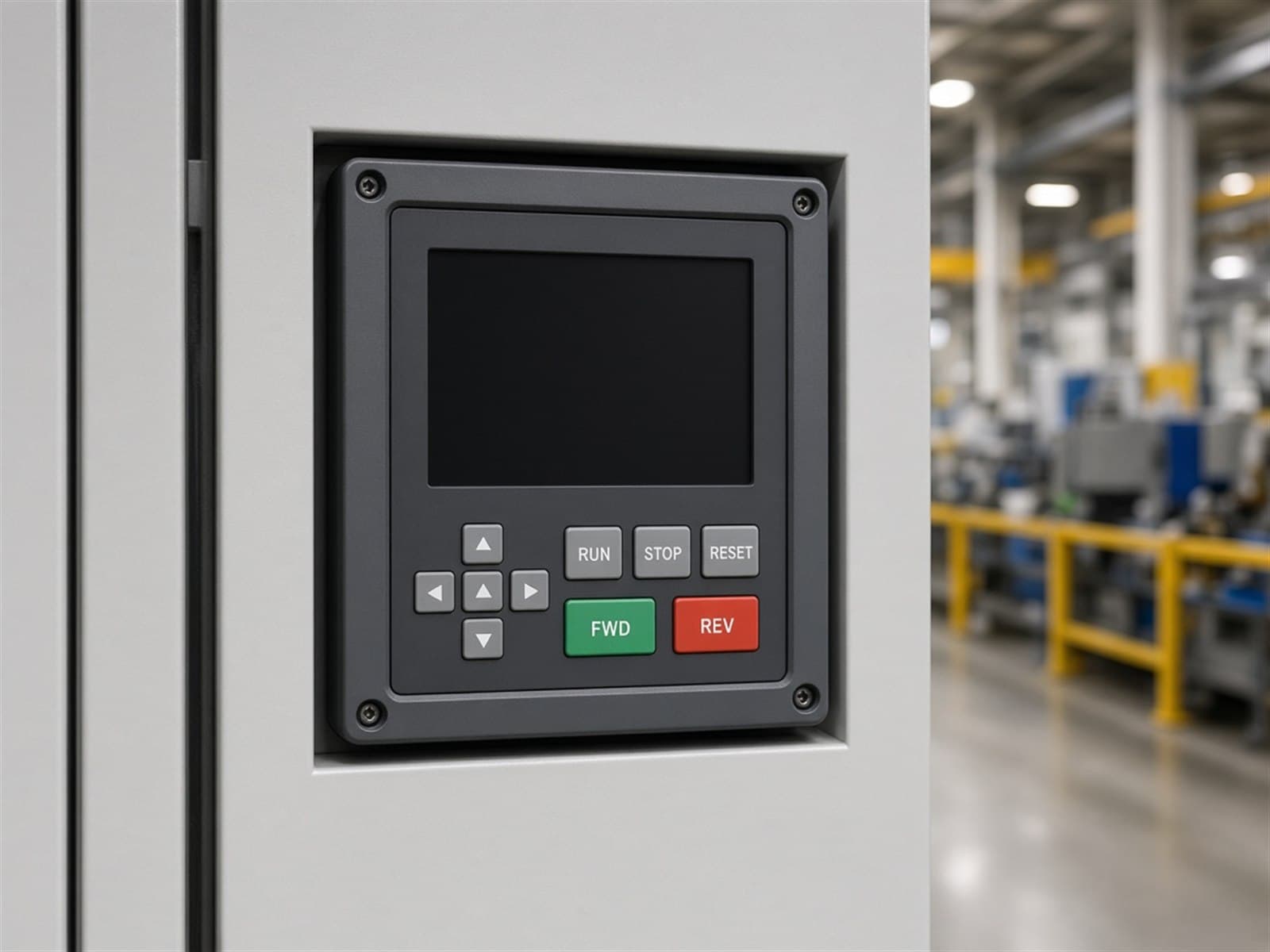
Schneider Altivar OCF and Omron F7 OV have their own pages. Here I only separate this: has the PLC output said run to the drive, or has the drive written its own code. If the output is dark and the drive is turning, either the output transistor is short or a contactor has welded. If the output is lit and the drive is writing OCF, the fault is not on the PLC card. I do not stuff the two into one semantic sack that says automation broke. The PLC programming service page points here and to those two drive pages. The pointer is not a new neighbourhood route.
An autotune on an empty oven and a parameter number are not printed on this page either. I do not open a cover live. The DC bus in a drive stays charged for a while. The 24 volt bar on a PLC card can also hold for a short time, but the real danger is the drive cover. I do not mix the two with the same screwdriver. If there is a smell the drive is not reset a second time. If the smell is on the card side, the 24 volt supply and the terminals are looked at. The program is not written from memory.
The cable family is the card's language

LiYCY, NYM, NYA
Digital 24 volts over a short run ride a flexible control cable. Analog and encoder are LiYCY or an equivalent shielded pair. NYY is a panel feed, not an analog return. NYM is a wall run. It is not written onto an SM terminal. NYA is a single core inside conduit. It is not an analog return without a ferrule. I do not stuff the three into one trunking that says they are all cable. A motor cable and an analog do not walk in the same trough. If they do, the value shakes, the PID flies, the card stays innocent. Changing an innocent card is a second invoice.
If Profinet, Modbus TCP or EtherNet/IP is broken the HMI dies and the card LEDs keep living. The operator says the PLC went. What went is often the switch or the connector. I do not treat the switch as a program line. Tightening the connector and changing the card brings the same dead screen the next day. An industrial RJ45 has a metal lock. A home connector comes out under vibration. I do not bury a connector that came out inside a program backup.
What lands in the notebook at handover
Which terminal, which mA, which backup
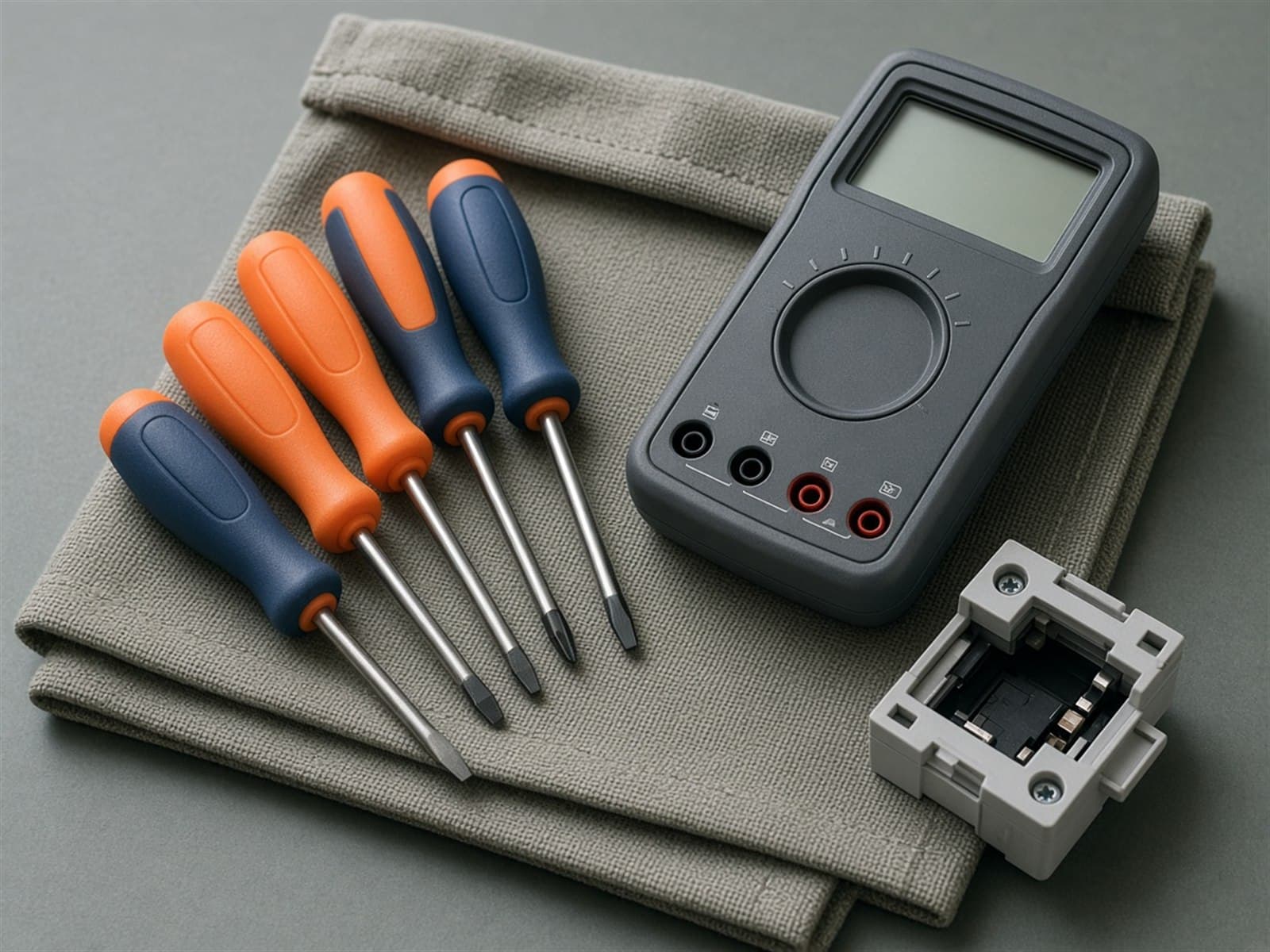
I write which input is lying, the volts on the terminal, common continuity, the analog mA and the date of the backup folder. If the card has to change, a separate approval. If a line has to change, the backup first, the password with you. The job does not close before the force list is empty. 4,000–12,000 TRY is the reading band. The card and the program sit outside it. Nights and public holidays are a separate rate. We work as an approved technician network. There is no promise of a minute. I do not leave for Gebze from this page.
I do not save the backup on the desktop as 'final'. The folder's name is the date. The password does not go inside the folder. A second change is not written on top of the first backup. If it is, the way back dies. A dead way back leaves the 10,000–35,000 program band to luck. I do not leave it to luck. If I did I would be repairing memory, not the line. Repairing memory is not this page's promise.
I do not lock a price on the phone. The range I give is an estimate drawn from similar jobs. The binding figure is written after I have seen and measured the fault, before I start. Extra work does not begin without your approval. Payment is on completion, invoiced, in Turkish lira. Nights and public holidays are a separate rate, and I say so before I leave. We work as an approved technician network. I give you the arrival window for your district on the call, and a live location link is shared once the technician sets off.
What this page does not write
Colour, a parameter, a district copy
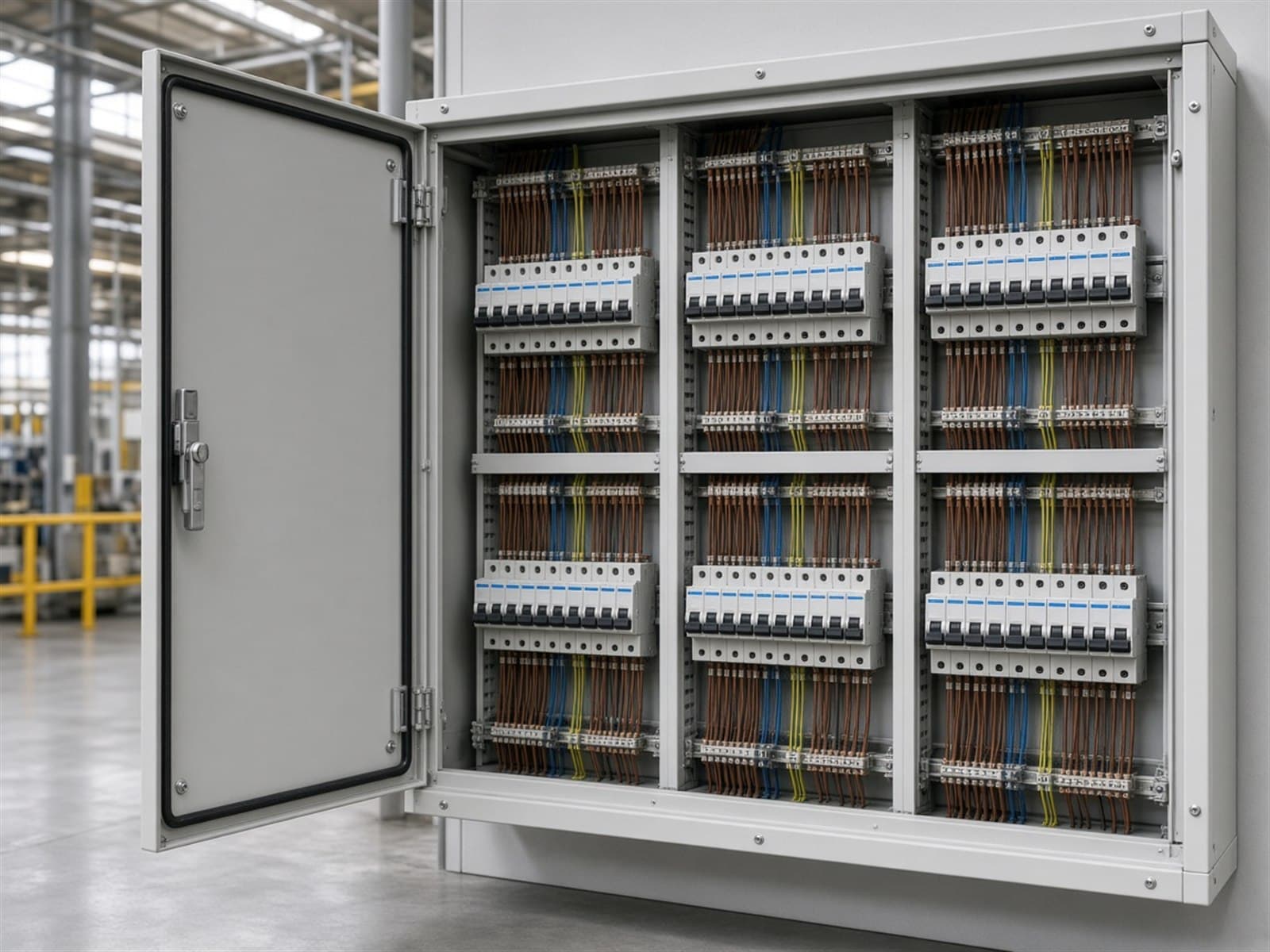
I do not write which colour goes to which terminal. I read the terminal from the print on the card. I do not print a parameter number. I do not leave a force on a safety bit. A district name does not invent a new I/O fault. I read the same card in Pendik and in Tuzla in the same order. I do not publish the page by copying it and changing the neighbourhood name. A socket and a door phone are not part of this job.
If the writing in the photo is OCF the drive page speaks. If the body in the photo is a welded contactor the panel page speaks. If the hum in the photo is Sirius that path speaks. I do not stuff the four into one sack that says the PLC broke. This page is the input and output face of the card. The program is not touched without a backup. If it is, I cannot put the line back the next morning. I do not like that morning.
Questions I hear on this fault
Questions I hear on this fault
If the LED is on, is the input true?
No. The LED says the optocoupler. It does not say field volts. The 24 volts on the terminal first.
The output is dark and the shaft is turning. Is it the program?
No. The transistor may be short or a contactor welded. Field volts are read.
Should I raise the 24 volt fuse?
No. The short is in the field cable. 10 A in place of 4 A eats the processor.
If the common is loose?
Half the card lies. 0 V continuity is read between the bar and the card.
4–20 mA shows 0. Should I shift the scale?
No. 0 mA is a break. mA on the wire first.
Is 3.8 mA a scale error?
No. On most transmitters it is a broken-wire alarm.
Does the shield land at both ends?
No. One point. Both ends make a loop and the value shakes.
Can NYM be analog?
No. Analog is LiYCY or an equivalent shielded pair.
A jumper on a safety input?
I do not write one. Forcing it to 1 is leaving the door open.
Do you leave the force list until morning?
No. A forgotten force eats a hand. The force is lifted before the job closes.
Can a PLC output replace a 3SK?
No. The safety relay sits in its own body.
Is OCF closed here?
No. It has its own page. Here the output command is separated.
Is OV here?
No. Omron OV has its own path.
Does a line change without a backup?
No. If there is no copy the program is not touched that day.
Do you break the password?
No. If it is with you, bring it. If not, the job becomes a read.
The HMI died. Did the PLC die?
Often the switch or the connector. If the card LEDs are alive the processor may be standing.
Is this page a diagram?
No. I do not write a colour or a parameter. I read the terminal from the print.
A separate district page?
No. The measurement is the same on both sides of Istanbul.
Gebze?
No. Istanbul.
Do you change a line at night?
On a cleared alarm only a note. A force is not left until morning.
Price band?
4,000–12,000 TRY is the reading estimate. Card and program are approved separately.
One person?
Yes. The person who answers measures. No broker.
Do you write a note?
If you want, I write the terminal volts, the mA and the backup date shortly. A site note.
A photo?
The writing on the screen, cover closed. Do not flash the inside.
Is a welded contactor here?
No. It has its own page. Here the output face of the card is separated.
Save the backup on the desktop as final?
No. The folder's name is the date. The password is not inside the folder.