Reading estimate 4,000–12,000 TRY
I do not restart an Altivar OCF as if it were not an SCF
OCF is the Schneider Altivar overcurrent code. SCF is a short circuit and does not want a restart. On packaging lines, compressors and conveyors in Istanbul I do not close the two with the same button. The reading estimate is 4,000–12,000 TRY, not a quote.
On this page
The sentence where OCF stops
OCF, SCF, OHF, OLF
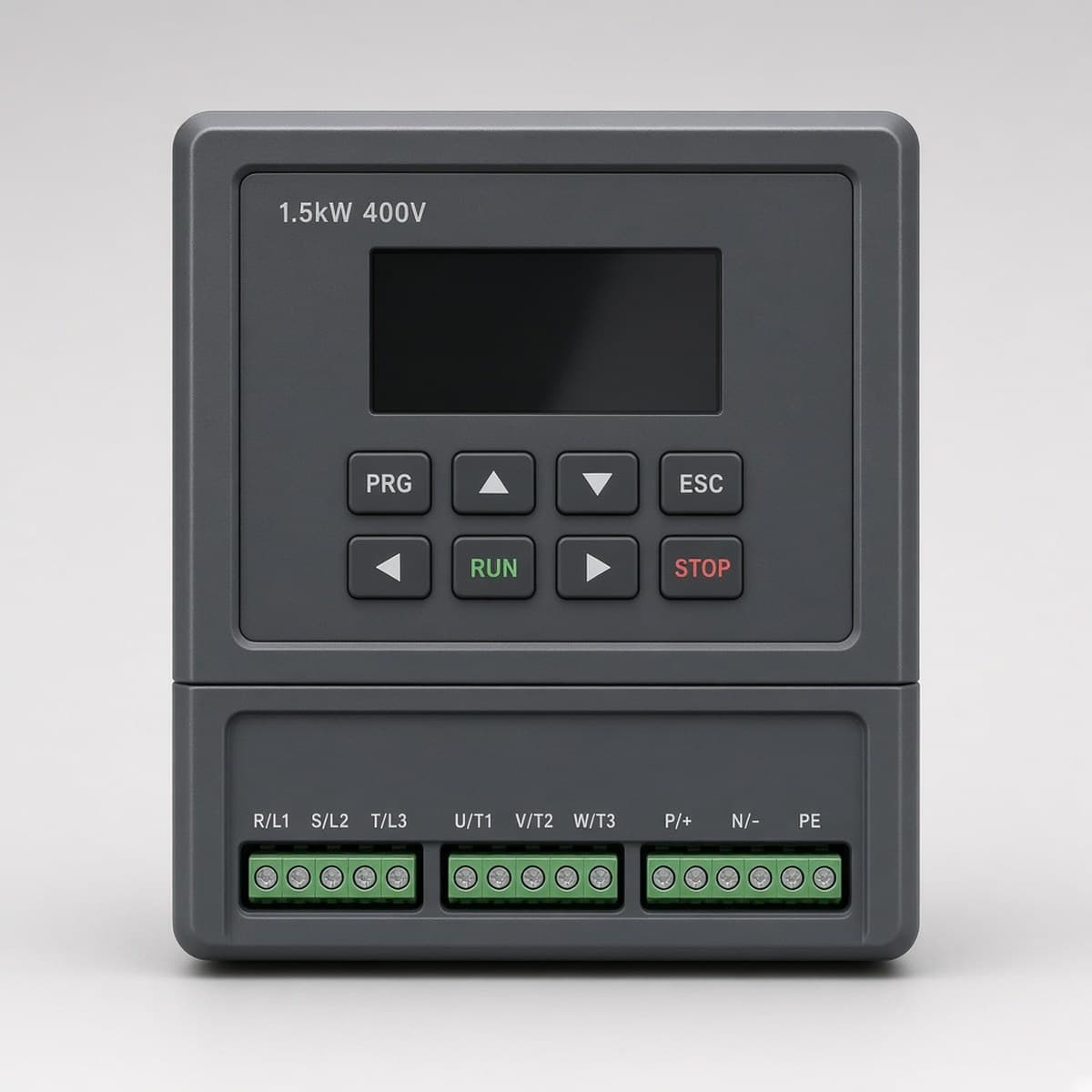
OCF says current crossed the threshold. SCF says the output saw a short circuit, and on that code there is no start until the motor cable is measured. OHF is heat. OLF is a load that lasted too long. I do not write the four as one line that says the drive faulted. I read which letters are lit from the photo, not from a guess.
USF is undervoltage. PHF is a lost phase. They are not OCF. Keeping a motor running on a missing supply phase heats the winding. I measure the incoming voltage on three phases first. I do not change a drive board for a missing input phase before I have looked at the output current.
The three things I want on the phone
Letters, moment, nameplate
I want every letter on the display, whether the code came at start or under load, and the motor nameplate. OCF can be cleared once if there is no smell. On SCF that once does not exist. I do not have an Istanbul packaging line reset again and again from the phone. The operator's good intention puts the IGBT into a second fault.
I do not have the cover opened. An Altivar's DC bus does not empty the moment the supply is cut. I do not want the inside photographed with a torch. Cover closed, display read, nameplate read. The rest is my measurement. This page does not give a terminal order. A wrong terminal saves an SCF for the next start.
The order of the measurement does not change on an Altivar
Shaft first, then insulation, then the data
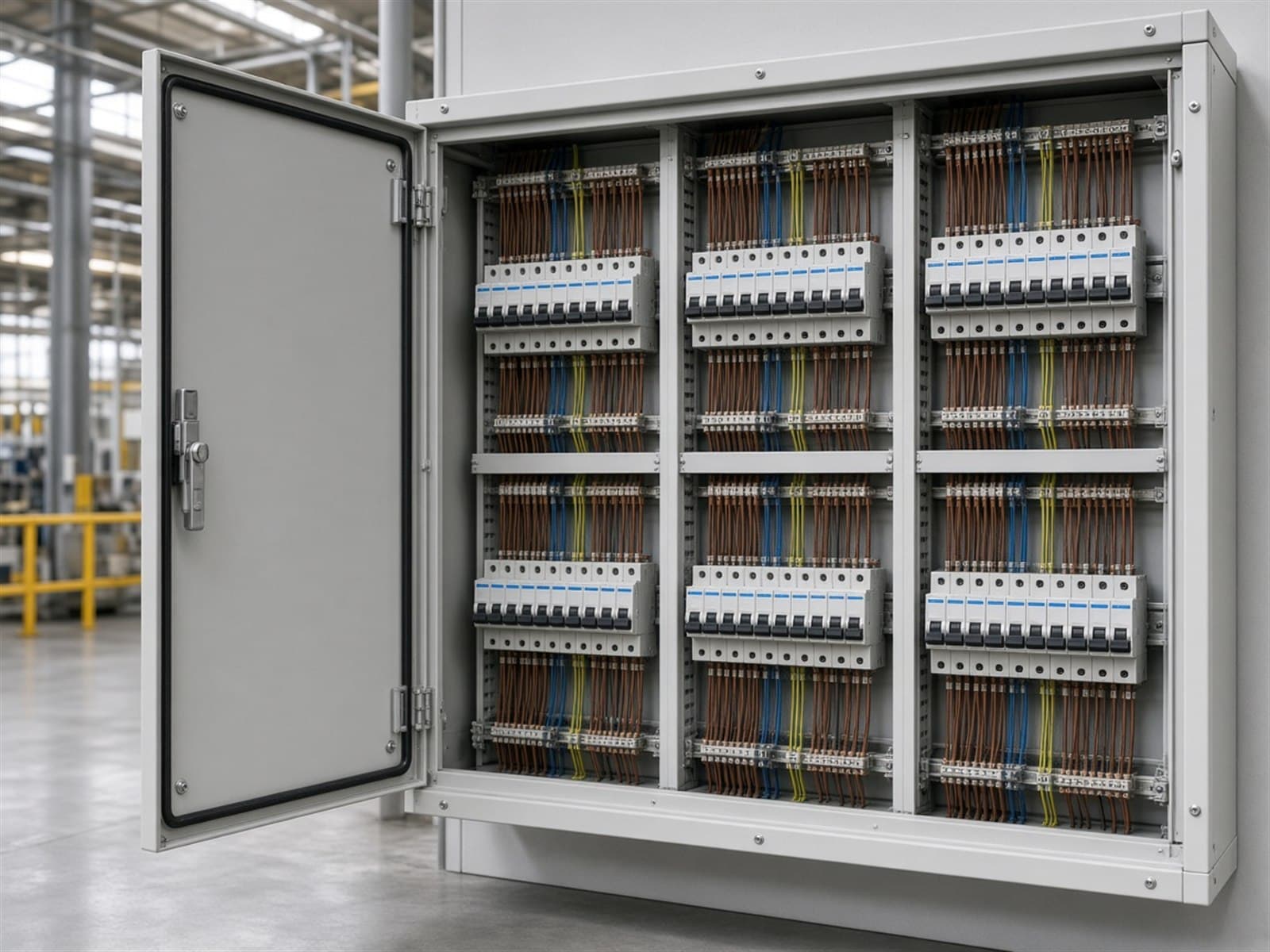
I disconnect the motor from the drive. If the shaft does not turn, OCF is mechanical before it is electrical. A valve stuck on a compressor's pressure side, a box jammed on a belt, a product frozen in a mixer. I do not solve those with a parameter. If the shaft is free I measure insulation. Low insulation is the cable or the winding. If it is clean I compare the nameplate current with the motor current in the drive.
I read the current threshold and the acceleration time against the load. I do not pull them up. A short ramp writes OCF at start. Raising the threshold hides the code. A brake resistor or the DC bus is not the subject of this OCF page. Those belong to OV and to stopping. On an OCF page I do not move on to the power board before insulation and the shaft are clean.
The same letters on three lines, three separate jobs
Compressor, belt, mixer
On a compressor, OCF at start comes with the discharge valve closed. Lengthening the time without opening the valve delays the code. It does not remove the cause. On a belt, a jammed box locks the shaft. A reset before the box is removed brings the same OCF back a second later. If the product in a mixer has set, the blade does not turn. I do not write a drive fault before the product is emptied.
All three jobs can sit on the same Istanbul industrial estate. I do not split the page by neighbourhood. The measurement walks in the same order. If the road is long I say so when you call. I do not change what the code means. An OCF is not written as a door-phone or a socket job. This is an industrial panel.
Megger the winding, not the drive
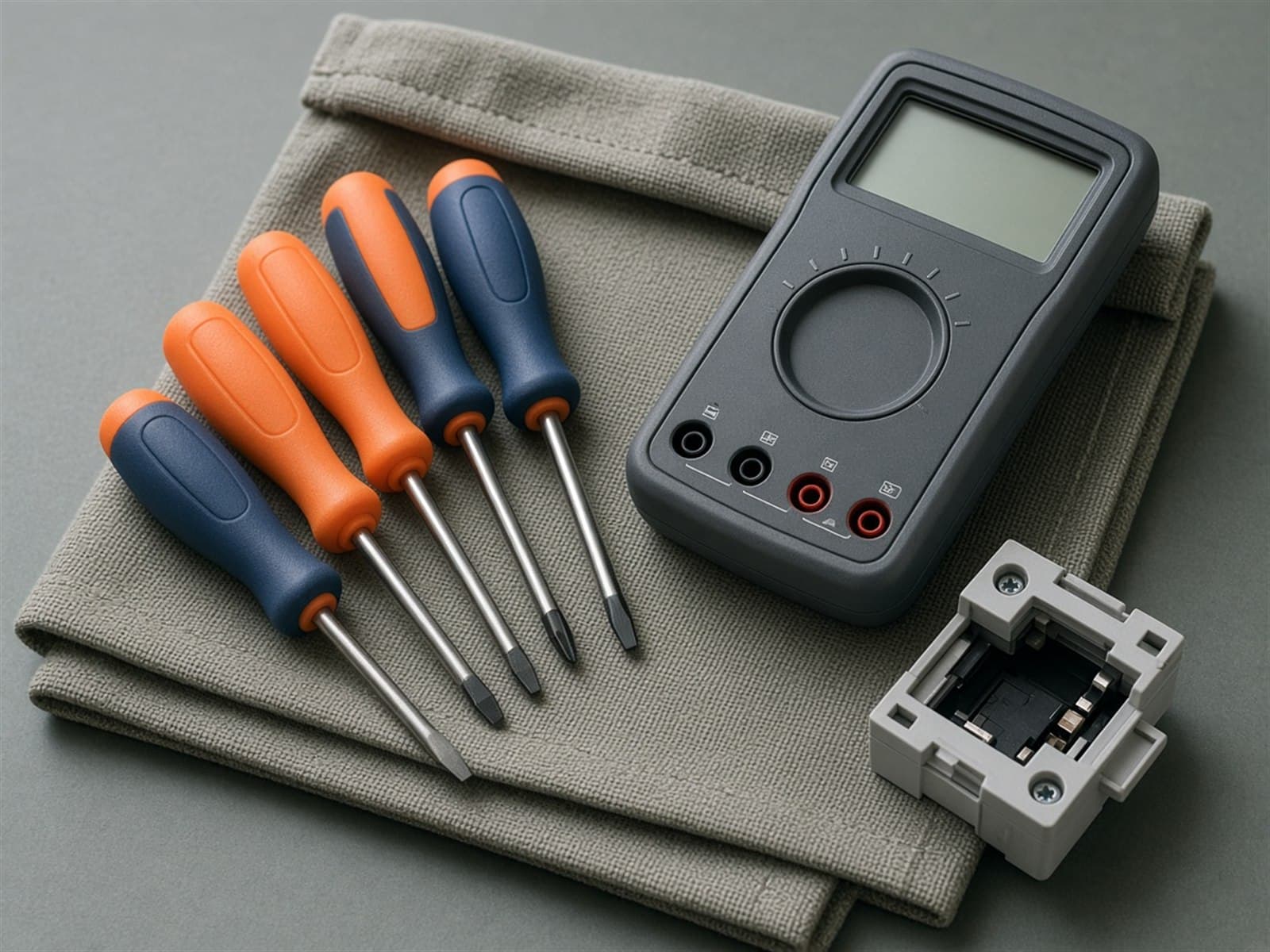
A megger is not pressed onto an IGBT
Insulation is not measured until the U V W terminals of the Altivar are off the motor cable. A megger pressed through the DC bus and the IGBTs burns the power board. The reading is taken at the motor leads and on the cable cores. The drive stays closed. That order does not change on ATV12, ATV320, ATV630 or the older ATV31 / ATV71 families. Even when the letters are OCF the megger path is the same.
On a 400 V motor winding I use a 500 V DC megger on site. Phase to phase and each phase to earth are read separately. A clean winding sits in the megohm range. A few hundred kiloohms point to damp, condensation or cracked enamel. Zero or ohm-range is a short or a winding on earth. I do not invent those figures on the phone. I do not write a value the meter did not show.
Until the motor terminal box is open the cable and the winding stay mixed. I take the cable off the drive and off the motor terminals. Core to core and core to screen or earth are separate. A screened motor cable is not the same job as NYY. NYY is a panel feed. On a long drive-to-motor run the cable is screened. NYM is wall wiring. NYA is a single core inside conduit. It is not left between a drive and a motor.
What is seen before an IGBT burns
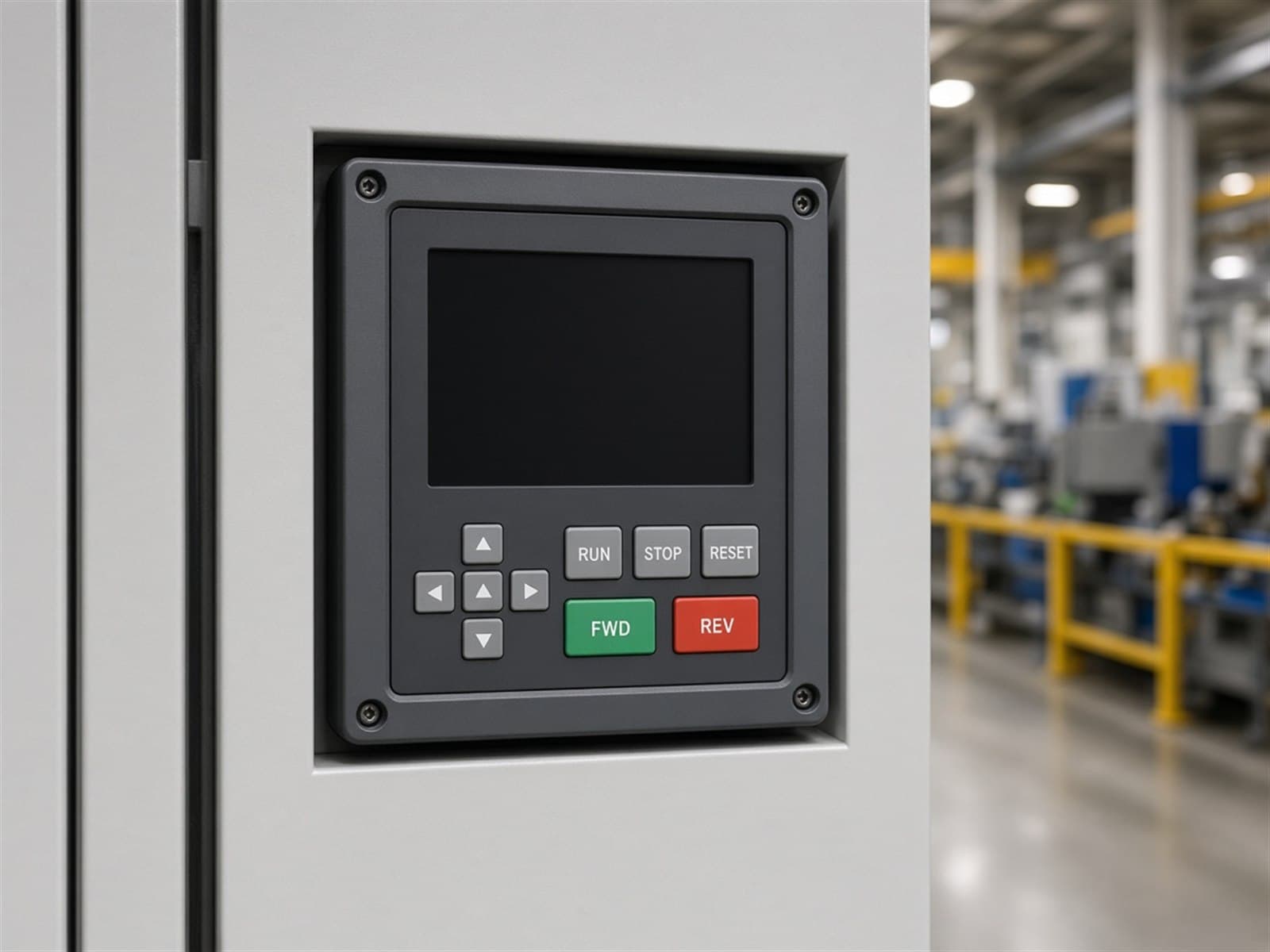
Smell, single-phase pull, a swollen bus capacitor
If OCF returns and a smell appears, the power stage is discussed, not another reset. An IGBT fault on site usually carries three signs: a burnt smell from the drive body, unbalanced output current, and a swollen DC-bus capacitor. I do not check a capacitor with a finger while the cover is open. The cover opens once discharge is confirmed. I do not shrink the smell into one sentence that says change the board. Shaft and insulation must be clean first.
If an output contactor sits between the drive and the motor, a welded contact leaves a single phase. The motor hums, current runs away on one core, and the Altivar writes OCF or SCF. Bridging the contactor to test it tries the IGBT a second time. A compensation capacitor is not fitted on the output. Compensation belongs on the supply side, at a Schneider or Siemens panel incoming. A capacitor on the drive output looks like a short to the switching edge.
The power board comes onto the table only when the shaft is free, insulation is clean and the output cable is sound. A spare Altivar is not fitted because it sits on the shelf. Without the motor plate, the ramp and the switching frequency moving with it, the first start writes OCF again. Changing a board for a smell, a habit, or the sentence let us try once more burns the same IGBT a second time.
A screened cable and a factory reset do not clear OCF
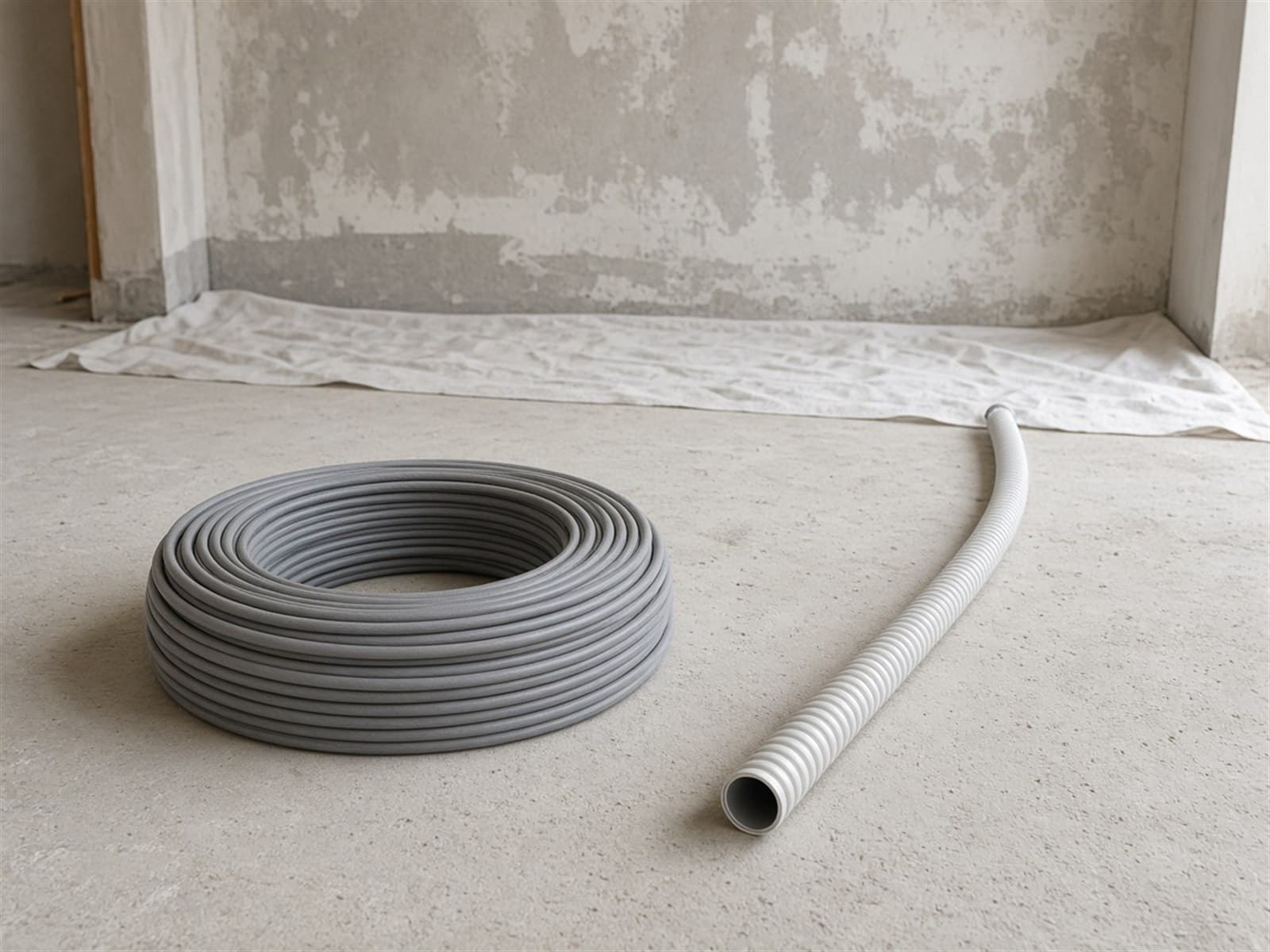
Screen, cable length, parameter
On a long motor run an unscreened cable radiates the steep edge from the drive output. Nearby PLC inputs glitch, a residual-current device will not hold, or OCF arrives early. The screen goes down at one end or both ends as Schneider wrote; I do not bond both ends from a guess. I do not leave the screen on the panel sheet with a random screw. It lands on the earth bar with the right clamp. Cross-section is read from motor current and length. A thin core heats and hides OCF as heat.
When the run passes tens of metres an output reactor or a dV/dt filter is discussed, not a bigger threshold. The filter is chosen against the drive family and the switching frequency. An ATV320 and an ATV630 are not fitted at random from the same shelf. Raising switching frequency shortens the noise and heats the cable and the IGBT. A hot output comes back as OCF or OHF. I do not pull the frequency to the ceiling so that it sounds quiet.
A return to factory settings wipes motor current, ramp times, switching frequency and the autotune result. I do not press the factory menu so that OCF will reset and recover. An autotune on an empty shaft writes OCF again on the first loaded start. Parameters are rewritten from the plate: kW, voltage, current, frequency and pole count. With no plate I do not touch a parameter. A wrong current brings the same letters back on the first start.
No second start before the check
The check list is short and is not skipped. Are the letters OCF or SCF. Is there a smell. Does the shaft turn by hand. Is the drive output disconnected. Was the megger pressed on the drive or on the cable. Was the motor plate read. Are the ramp and the plate current in the book. If one box is empty, no energy. The list does not change by neighbourhood. On a Pendik, Tuzla or İkitelli panel the order is the same.
What lands in the notebook at the close
Letters, insulation, approval
I write whether it was OCF or SCF, the insulation figure, and whether the shaft turned. If the cable or the motor has to change I take a separate approval. The power board is discussed only when those two are clean. 4,000–12,000 TRY is the reading band. Material sits outside it.
On a packaging line OCF is usually a jammed box or a short ramp. On a compressor it is a closed discharge valve. In a mixer it is a set product. The letters are the same in all three. The screw is not. If I see SCF these sentences stop. There is no start until the motor cable is measured. In Istanbul I do not ask the operator for a second reset. Closing the screen does not close the fault. If insulation is low, the cable or the winding changes. If the shaft is locked, the mechanics are freed. Only when both are clean does the power board come onto the table. I do not fit a board because of a smell, a habit, or because a spare is on the shelf.
If the operator closes the screen and restarts the line, the counter is cleared, not the fault. I write that counter back into the book. Ramp, nameplate current, the shaft by hand and insulation sit on the same line. If one is empty the job does not close. If the letters in the photo are not OCF I do not paste this page's sentences onto that job. USF and PHF are supply work. OHF is heat. I do not close the four in one sentence that says the drive failed.
The DC bus stays charged with the cover open. That is why I do not poke the board in place. Measurement starts after the supply is off and time has passed, with the cover closed. The same cover rule holds on a night call in Istanbul.
I do not lock a price on the phone. The range I give is an estimate drawn from similar jobs. The binding figure is written after I have seen and measured the fault, before I start. Extra work does not begin without your approval. Payment is on completion, invoiced, in Turkish lira. Nights and public holidays are a separate rate, and I say so before I leave. We work as an approved technician network. I give you the arrival window for your district on the call, and a live location link is shared once the technician sets off.
Questions I hear on this fault
Questions I hear on this fault
Are OCF and SCF the same button?
No. On OCF, one reset is possible if there is no smell. On SCF there is no start until the motor cable is measured.
Are OHF and OLF also OCF?
No. OHF is heat. OLF is a long load. I separate the letters from the photo. I do not count the four as one fault.
If I see USF or PHF?
Three-phase incoming voltage first. I do not treat a missing phase as a drive board. Those codes are not OCF.
Can I open the cover?
No. The bus can stay charged after the supply is cut. I open the cover once discharge is confirmed.
Should we raise the current threshold?
No. The threshold hides the code and heats the cable. I read the time from the load. I do not pull the threshold up.
Is one reset enough?
On OCF, and with no smell, once. If it returns, stop. On SCF that once does not exist.
If the compressor valve is closed?
OCF comes at start. Lengthening the ramp without opening the valve delays the code. The valve first.
If a box is jammed on the belt?
It locks the shaft. A reset before the box is removed brings the code back. Changing the drive does not remove the box.
If the product in the mixer has set?
The blade does not turn. I do not write a drive fault before the product is emptied. The mechanics are freed first.
Can it be done without the motor nameplate?
No. A wrong current produces OCF at start. I do not touch a parameter before I see the plate.
Is this page a diagram?
No. I do not write a terminal order or a parameter number. I read the terminal off the device label.
When does the power board change?
When insulation and the shaft are clean and the measurement points at the board. Not from a smell or from a habit of resetting.
What is the price band for?
4,000–12,000 TRY is the estimate for the reading and the measurement. Cable, motor and board are approved separately. It is not a quote.
Does the night rate change?
The measurement does not change. The rate does. I say the difference before I leave. There is no reset on SCF at night either.
Is there a separate district page?
No. The measurement is the same on both sides of Istanbul. A neighbourhood name does not invent a new OCF.
Does an intercom technician come?
No. OCF is an industrial panel code. It is not written onto a door-phone circuit.
Can a spare Altivar be fitted?
Not before the motor data and the parameters move with it. A wrong current writes the same OCF on the first start.
Is a megger pressed onto the drive?
No. U V W are disconnected. The megger is read on the motor and the cable. Insulation through the drive burns the IGBT.
Does a factory reset clear OCF?
No. Current, ramp and autotune go. Without rewriting the plate the first start brings the same letters.
Can NYY be the motor cable?
A short run sometimes carries it. On a long run the cable is screened. NYA is not left between drive and motor.
Should the photo show an open cover?
No. Display and nameplate, with the cover closed. Do not photograph the inside yourself.
Does one person come?
Yes. The person who answers measures. There is no broker. Arrival depends on traffic. There is no promise of a minute.
Do you write a note?
If you want, I write the letters, the insulation and the state of the shaft shortly. A site note, not a laboratory certificate.